

Pork, fresh, variety meats and by-products, chitterlings, cooked, simmered
Whole food · Pork Products

Photo: Wikipedia
Chitterlings, or chitlins, are the cleaned and simmered small intestines of a pig, prized for their unique, slightly chewy yet tender texture and a mild, savory flavor that readily absorbs seasonings. Nutritionally, they are a dense source of protein and fat, providing a substantial energy boost with virtually no carbohydrates.
Calorie split: 21% protein · 0% carbs · 79% fat
↓ Full nutrition💚 Why it's loved
People love chitterlings for their deeply savory, comforting flavor and the way they become a flavorful sponge for rich broths, hot sauces, and spices. They hold immense cultural significance, often being a centerpiece dish for holidays and family gatherings in the American South and other global cuisines.
⚠️ Watch-outs & how to enjoy it better
The primary downside is the intensive and meticulous cleaning process required to remove impurities and odor, which can be off-putting. Due to their high fat and cholesterol content, they should be consumed in moderation by those managing heart health. To counteract this, practice strict portion control (e.g., a 3-4 oz serving) and pair them with high-fiber sides like collard greens or black-eyed peas to balance the meal.
Key benefits
- High-quality complete protein source
- Rich in iron and zinc
- Contains vitamin B12
- Zero carbohydrates, suitable for keto diets
- Traditional source of calories and nutrients in many cuisines
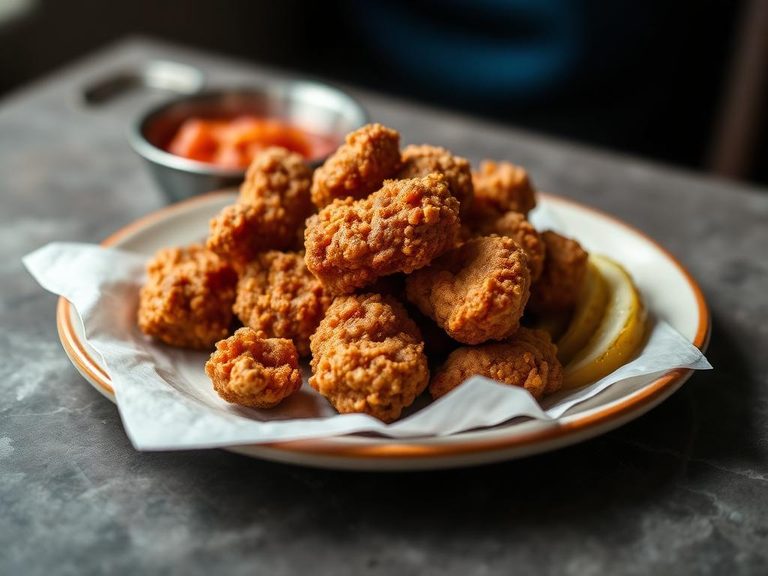
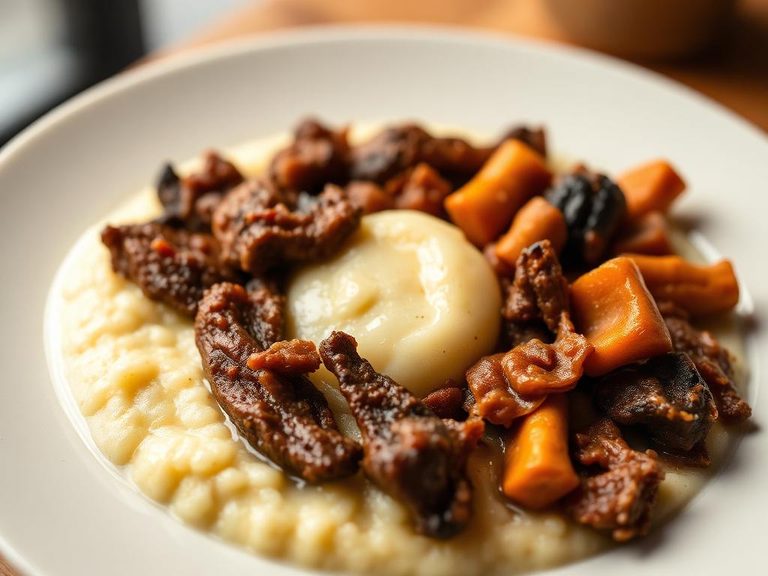
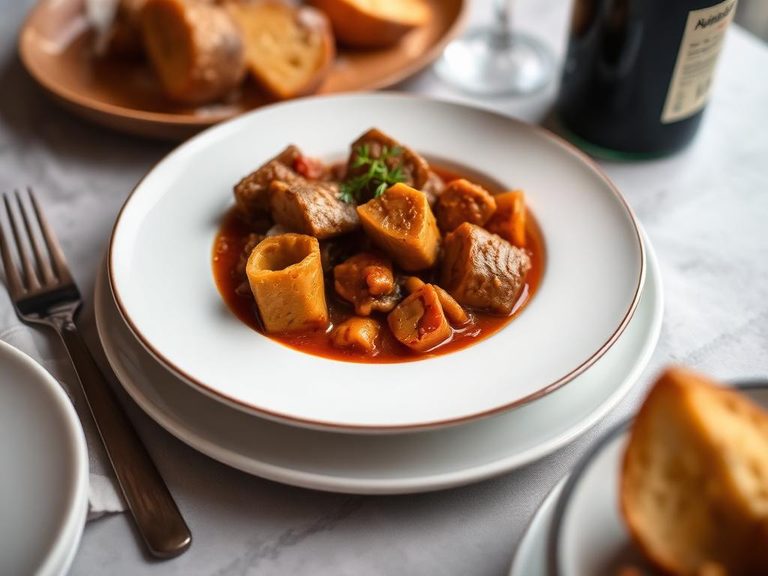
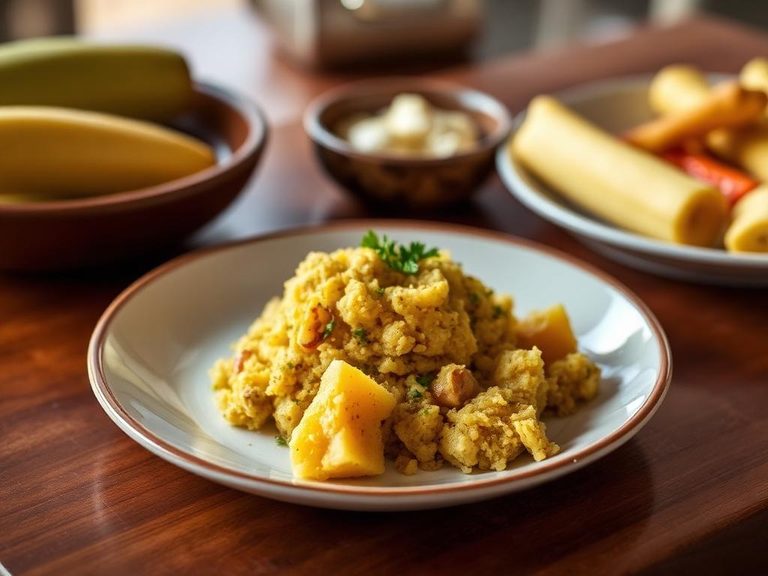
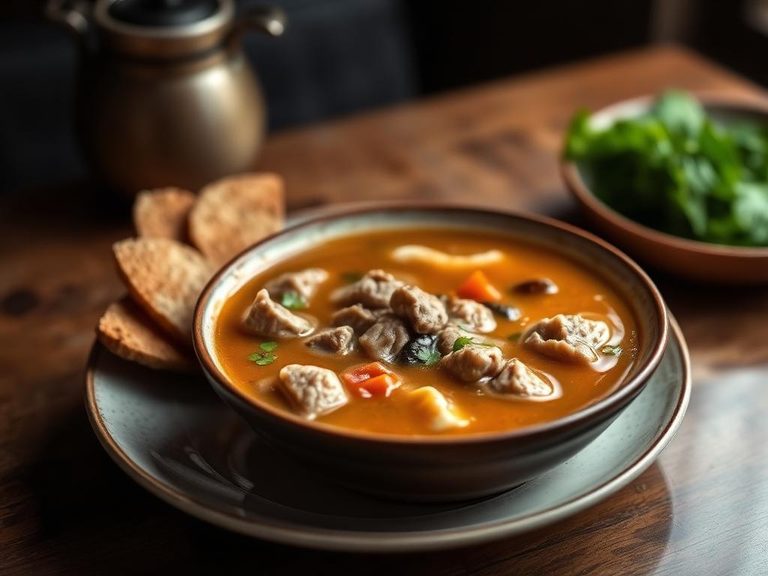
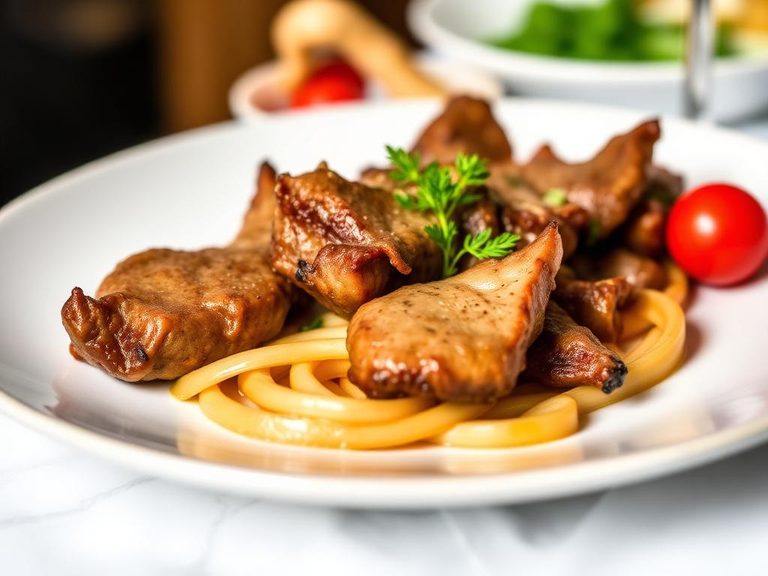
🍽️ Popular dishes
🌍 Where it's eaten
💡 Did you know?
The tradition of eating chitterlings in the American South is directly linked to the history of slavery, as enslaved people were often given the less desirable offal cuts and transformed them into a celebrated culinary tradition.
Full nutrition (USDA data · scales with serving)
| Water | 67.9 g |
| Energy | 233 kcal |
| Energy | 975 kj |
| Protein | 12.5 g |
| Total lipid (fat) | 20.3 g |
| Ash | 0.30 g |
| Carbohydrate, by difference | 0.00 g |
| Fiber, total dietary | 0.00 g |
| Total Sugars | 0.00 g |
| Calcium, Ca | 25.0 mg |
| Iron, Fe | 1.5 mg |
| Magnesium, Mg | 9.0 mg |
| Phosphorus, P | 66.0 mg |
| Potassium, K | 14.0 mg |
| Sodium, Na | 18.0 mg |
| Zinc, Zn | 1.9 mg |
| Copper, Cu | 0.05 mg |
| Manganese, Mn | 0.09 mg |
| Selenium, Se | 27.0 ug |
| Vitamin C, total ascorbic acid | 0.00 mg |
| Thiamin | 0.01 mg |
| Riboflavin | 0.05 mg |
| Niacin | 0.09 mg |
| Pantothenic acid | 0.09 mg |
| Vitamin B-6 | 0.00 mg |
| Folate, total | 1.0 ug |
| Folic acid | 0.00 ug |
| Folate, food | 1.0 ug |
| Folate, DFE | 1.0 ug |
| Choline, total | 471 mg |
| Vitamin B-12 | 0.42 ug |
| Vitamin B-12, added | 0.00 ug |
| Vitamin A, RAE | 0.00 ug |
| Retinol | 0.00 ug |
| Carotene, beta | 0.00 ug |
| Carotene, alpha | 0.00 ug |
| Cryptoxanthin, beta | 0.00 ug |
| Vitamin A, IU | 0.00 iu |
| Lycopene | 0.00 ug |
| Lutein + zeaxanthin | 0.00 ug |
| Vitamin E (alpha-tocopherol) | 0.23 mg |
| Vitamin E, added | 0.00 mg |
| Tocopherol, beta | 0.00 mg |
| Tocopherol, gamma | 0.03 mg |
| Tocopherol, delta | 0.00 mg |
| Tocotrienol, alpha | 0.04 mg |
| Tocotrienol, beta | 0.00 mg |
| Tocotrienol, gamma | 0.00 mg |
| Tocotrienol, delta | 0.00 mg |
| Vitamin D (D2 + D3), International Units | 0.00 iu |
| Vitamin D (D2 + D3) | 0.00 ug |
| Vitamin D3 (cholecalciferol) | 0.00 ug |
| Vitamin K (phylloquinone) | 0.00 ug |
| Alcohol, ethyl | 0.00 g |
| Caffeine | 0.00 mg |
| Theobromine | 0.00 mg |
Fat & fatty acid profile (per 100g)
| Fatty acids, total saturated | 9.5 g |
| SFA 4:0 | 0.00 g |
| SFA 6:0 | 0.00 g |
| SFA 8:0 | 0.02 g |
| SFA 10:0 | 0.00 g |
| SFA 12:0 | 0.00 g |
| SFA 14:0 | 0.29 g |
| SFA 15:0 | 0.00 g |
| SFA 16:0 | 5.1 g |
| SFA 17:0 | 0.16 g |
| SFA 18:0 | 3.9 g |
| SFA 20:0 | 0.03 g |
| SFA 22:0 | 0.00 g |
| Fatty acids, total monounsaturated | 7.1 g |
| MUFA 14:1 | 0.00 g |
| MUFA 15:1 | 0.00 g |
| MUFA 16:1 | 0.37 g |
| MUFA 18:1 | 6.6 g |
| MUFA 20:1 | 0.13 g |
| MUFA 22:1 | 0.00 g |
| Fatty acids, total polyunsaturated | 1.2 g |
| PUFA 18:2 | 0.98 g |
| PUFA 18:3 | 0.03 g |
| PUFA 18:3 n-3 c,c,c (ALA) | 0.03 g |
| PUFA 18:3 n-6 c,c,c | 0.00 g |
| PUFA 18:4 | 0.00 g |
| PUFA 20:2 n-6 c,c | 0.06 g |
| PUFA 20:3 | 0.00 g |
| PUFA 20:4 | 0.15 g |
| PUFA 20:5 n-3 (EPA) | 0.00 g |
| PUFA 22:5 n-3 (DPA) | 0.00 g |
| PUFA 22:6 n-3 (DHA) | 0.00 g |
| Fatty acids, total trans | 0.00 g |
| Cholesterol | 277 mg |
Amino acid profile (per 100g)
Estimated from Pork, cured, salt pork, raw — USDA does not publish this profile for Pork.
| Tryptophan | 0.02 g |
| Threonine | 0.17 g |
| Isoleucine | 0.13 g |
| Leucine | 0.35 g |
| Lysine | 0.42 g |
| Methionine | 0.07 g |
| Cystine | 0.04 g |
| Phenylalanine | 0.19 g |
| Tyrosine | 0.08 g |
| Valine | 0.24 g |
| Arginine | 0.52 g |
| Histidine | 0.06 g |
| Alanine | 0.28 g |
| Aspartic acid | 0.42 g |
| Glutamic acid | 0.69 g |
| Glycine | 0.36 g |
| Proline | 0.27 g |
| Serine | 0.19 g |
FAQ
What exactly are chitterlings?
Chitterlings (often called 'chitlins') are the cleaned and cooked small intestines of a pig. They are a type of organ meat or offal.
How do you prepare them safely?
They require extensive cleaning to remove debris and odor. This involves repeated rinsing, soaking in salted water or vinegar, and sometimes boiling in water with aromatics before the final cooking method.
Are they high in cholesterol?
Yes, like many organ meats, chitterlings are high in dietary cholesterol. Individuals with specific dietary restrictions should consult a healthcare provider.
Nutrient density (calculated · NRF9.3)
Nutrient Rich Foods index: beneficial nutrients (protein, fiber, vitamins, minerals) minus saturated fat, added sugar & sodium, per 100 kcal.
NRF9.3 index — Fulgoni, Keast & Drewnowski, 2009. Computed from USDA nutrients.
Weight-loss friendliness (composite index)
Energy density 2.33 kcal/g · 21% calories from protein · 0.0 g fiber · 0.0 g sugar per 100 g.
Composite of energy density (Rolls et al., 1999), protein & fiber satiety, minus sugar. A calculated heuristic — ranks satiety-per-calorie, not a clinical measure.
Dietary load (calculated from USDA values)
Potential renal acid load. Positive = acid-forming, negative = alkaline-forming.
Sodium-to-potassium ratio: 1.29 (lower is better — aim for ≤ 1)
Sodium:potassium per WHO potassium guidance. Computed from USDA nutrients.