

Orange juice, no pulp, not fortified, from concentrate, refrigerated
Whole food · Fruits and Fruit Juices
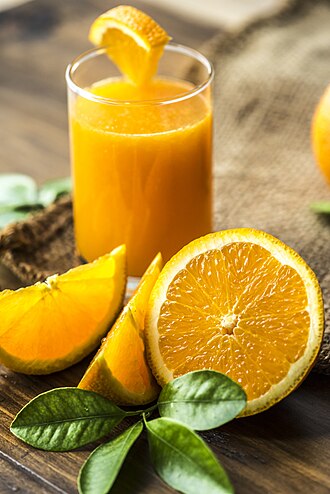
Photo: Wikipedia
A clear, vibrant citrus beverage made by reconstituting concentrated juice, offering a consistent, sweet-tart flavor without any fibrous pulp. This refrigerated version delivers a clean, refreshing mouthfeel and a notable dose of natural carbohydrates for quick energy, primarily from fruit sugars.
Calorie split: 6% protein · 88% carbs · 6% fat
↓ Full nutrition💚 Why it's loved
People cherish it for its bright, familiar citrus flavor that is both comforting and energizing, making it a staple breakfast beverage. Its versatility shines in everything from a standalone drink to a base for smoothies, marinades, and cocktails.
⚠️ Watch-outs & how to enjoy it better
The high natural sugar content can cause rapid blood sugar spikes, particularly concerning for those managing diabetes. To mitigate this, pair it with a source of protein or healthy fat (like eggs or nuts) to slow sugar absorption, and practice portion control by limiting intake to 4-6 ounces.
Key benefits
- Provides a concentrated source of natural fruit carbohydrates for energy.
- Contains vitamin C, an antioxidant that supports immune function.
- Hydrating due to its high water content.
- Offers a convenient way to consume fruit-derived nutrients.
- Low in fat and contains no added sugars in this pure form.
🍽️ Popular dishes


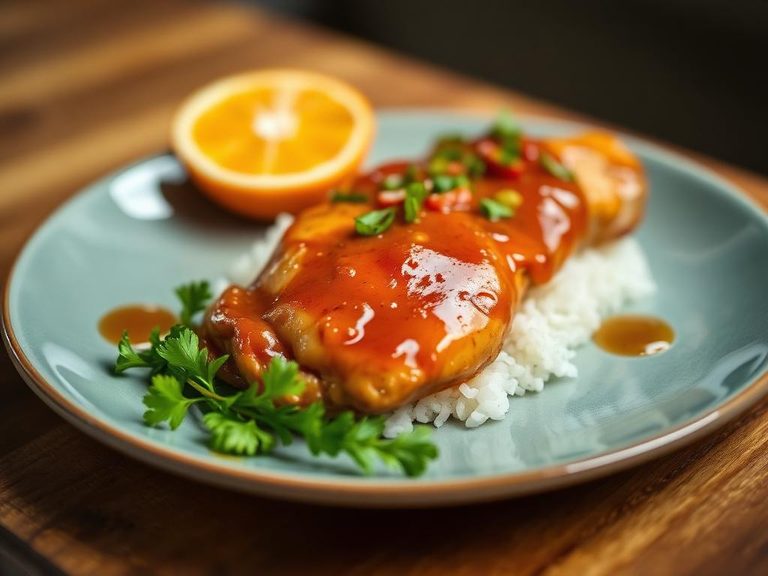
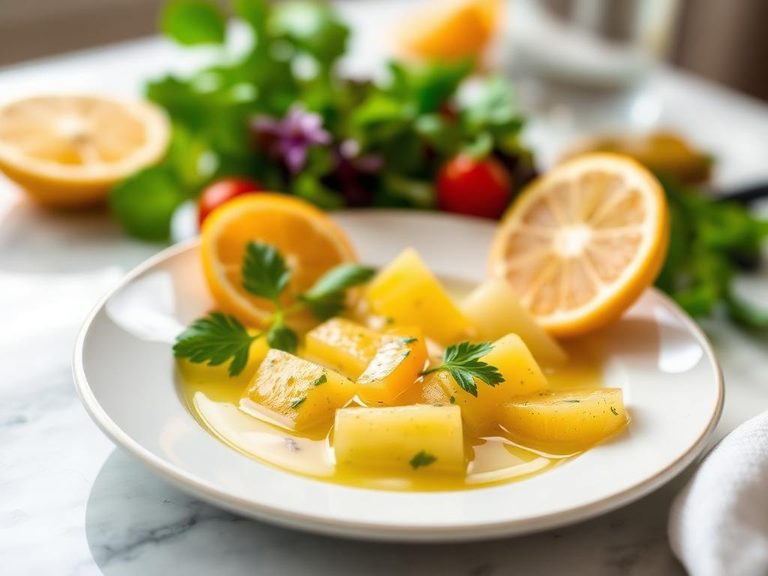
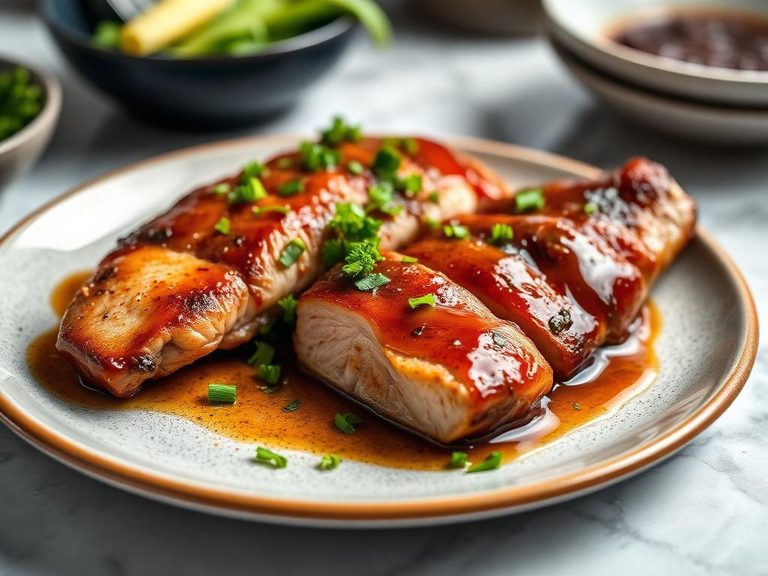
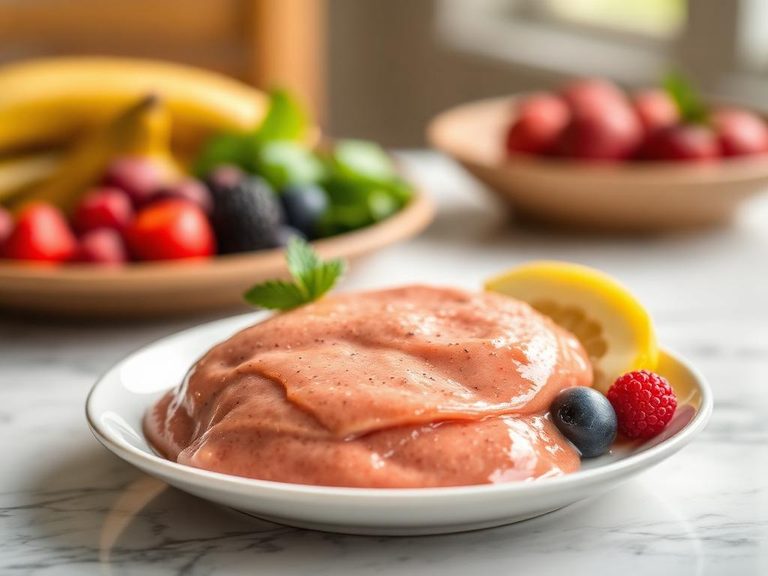
🌍 Where it's eaten
💡 Did you know?
The process of concentrating and later reconstituting juice was developed in the early 20th century to solve the problem of transporting perishable fresh juice over long distances, revolutionizing the global citrus industry.
Full nutrition (USDA data · scales with serving)
| Water | 88.3 g |
| Energy (Atwater General Factors) | 47.2 kcal |
| Energy (Atwater Specific Factors) | 45.7 kcal |
| Nitrogen | 0.12 g |
| Protein | 0.73 g |
| Total lipid (fat) | 0.33 g |
| Ash | 0.35 g |
| Carbohydrate, by difference | 10.3 g |
| Sugars, Total | 8.3 g |
| Sucrose | 4.4 g |
| Glucose | 1.8 g |
| Fructose | 2.1 g |
| Lactose | 0.00 g |
| Maltose | 0.00 g |
| Galactose | 0.00 g |
| Citric acid | 706 mg |
| Malic acid | 161 mg |
| Oxalic acid | 0.00 mg |
| Quinic acid | 12.3 mg |
| Calcium, Ca | 12.8 mg |
| Iron, Fe | 0.06 mg |
| Magnesium, Mg | 10.6 mg |
| Phosphorus, P | 18.1 mg |
| Potassium, K | 180 mg |
| Sodium, Na | 5.2 mg |
| Zinc, Zn | 0.03 mg |
| Copper, Cu | 0.03 mg |
| Manganese, Mn | 0.03 mg |
| Vitamin C, total ascorbic acid | 26.9 mg |
| Thiamin | 0.07 mg |
| Niacin | 0.04 mg |
| Vitamin B-6 | 0.04 mg |
| Folate, total | 29.9 ug |
Fat & fatty acid profile (per 100g)
Estimated from Orange juice, frozen concentrate, unsweetened, undiluted — USDA does not publish this profile for Orange juice.
| Fatty acids, total saturated | 0.06 g |
| SFA 4:0 | 0.00 g |
| SFA 6:0 | 0.00 g |
| SFA 8:0 | 0.00 g |
| SFA 10:0 | 0.00 g |
| SFA 12:0 | 0.00 g |
| SFA 14:0 | 0.00 g |
| SFA 15:0 | 0.00 g |
| SFA 16:0 | 0.04 g |
| SFA 17:0 | 0.00 g |
| SFA 18:0 | 0.01 g |
| SFA 20:0 | 0.00 g |
| SFA 22:0 | 0.00 g |
| SFA 24:0 | 0.00 g |
| Fatty acids, total monounsaturated | 0.05 g |
| MUFA 14:1 | 0.00 g |
| MUFA 15:1 | 0.00 g |
| MUFA 16:1 | 0.01 g |
| MUFA 16:1 c | 0.01 g |
| MUFA 17:1 | 0.00 g |
| MUFA 18:1 | 0.04 g |
| MUFA 18:1 c | 0.04 g |
| MUFA 20:1 | 0.00 g |
| MUFA 22:1 | 0.00 g |
| MUFA 22:1 c | 0.00 g |
| MUFA 24:1 c | 0.00 g |
| Fatty acids, total polyunsaturated | 0.06 g |
| PUFA 18:2 | 0.05 g |
| PUFA 18:2 n-6 c,c | 0.05 g |
| PUFA 18:2 CLAs | 0.00 g |
| PUFA 18:3 | 0.02 g |
| PUFA 18:3 n-3 c,c,c (ALA) | 0.02 g |
| PUFA 18:3 n-6 c,c,c | 0.00 g |
| PUFA 18:3i | 0.00 g |
| PUFA 18:4 | 0.00 g |
| PUFA 20:2 n-6 c,c | 0.00 g |
| PUFA 20:3 | 0.00 g |
| PUFA 20:3 n-3 | 0.00 g |
| PUFA 20:3 n-6 | 0.00 g |
| PUFA 20:4 | 0.00 g |
| PUFA 20:5 n-3 (EPA) | 0.00 g |
| PUFA 22:4 | 0.00 g |
| PUFA 22:5 n-3 (DPA) | 0.00 g |
| PUFA 22:6 n-3 (DHA) | 0.00 g |
| Fatty acids, total trans | 0.00 g |
| Fatty acids, total trans-monoenoic | 0.00 g |
| TFA 16:1 t | 0.00 g |
| TFA 18:1 t | 0.00 g |
| TFA 22:1 t | 0.00 g |
| TFA 18:2 t not further defined | 0.00 g |
| Fatty acids, total trans-polyenoic | 0.00 g |
| Cholesterol | 0.00 mg |
Amino acid profile (per 100g)
Estimated from Orange juice, frozen concentrate, unsweetened, undiluted — USDA does not publish this profile for Orange juice.
| Tryptophan | 0.01 g |
| Threonine | 0.04 g |
| Isoleucine | 0.03 g |
| Leucine | 0.05 g |
| Lysine | 0.06 g |
| Methionine | 0.01 g |
| Cystine | 0.01 g |
| Phenylalanine | 0.04 g |
| Tyrosine | 0.02 g |
| Valine | 0.05 g |
| Arginine | 0.31 g |
| Histidine | 0.02 g |
| Alanine | 0.07 g |
| Aspartic acid | 0.44 g |
| Glutamic acid | 0.15 g |
| Glycine | 0.04 g |
| Proline | 0.38 g |
| Serine | 0.08 g |
| Hydroxyproline | 0.00 g |
FAQ
How does 'from concentrate' differ from 'not from concentrate'?
'From concentrate' means the water was removed for transport/storage and added back later. 'Not from concentrate' is pasteurized and bottled directly. Nutritionally, they are very similar; the primary difference is in processing and sometimes flavor nuance.
Why is there no sugar listed if it's sweet?
The nutrition label likely lists 'Total Sugars' which includes naturally occurring fruit sugars (fructose). 'Added Sugars' would be zero if no extra sugar was put in during processing.
Is this a good source of vitamin C?
While oranges are rich in vitamin C, the concentration and reconstitution process can degrade some of it. However, many brands add back vitamin C as a preservative, so it can still be a good source—check the nutrition label for the % Daily Value.
Nutrient density (calculated · NRF9.3)
Nutrient Rich Foods index: beneficial nutrients (protein, fiber, vitamins, minerals) minus saturated fat, added sugar & sodium, per 100 kcal.
NRF9.3 index — Fulgoni, Keast & Drewnowski, 2009. Computed from USDA nutrients.
Weight-loss friendliness (composite index)
Energy density 0.47 kcal/g · 6% calories from protein · 0.0 g fiber · 0.0 g sugar per 100 g.
Composite of energy density (Rolls et al., 1999), protein & fiber satiety, minus sugar. A calculated heuristic — ranks satiety-per-calorie, not a clinical measure.
Dietary load (calculated from USDA values)
Potential renal acid load. Positive = acid-forming, negative = alkaline-forming.
Sodium-to-potassium ratio: 0.03 (lower is better — aim for ≤ 1)
Sodium:potassium per WHO potassium guidance. Computed from USDA nutrients.