

Lamb, New Zealand, imported, tenderloin, separable lean only, cooked, fast fried
Whole food · Lamb, Veal, and Game Products
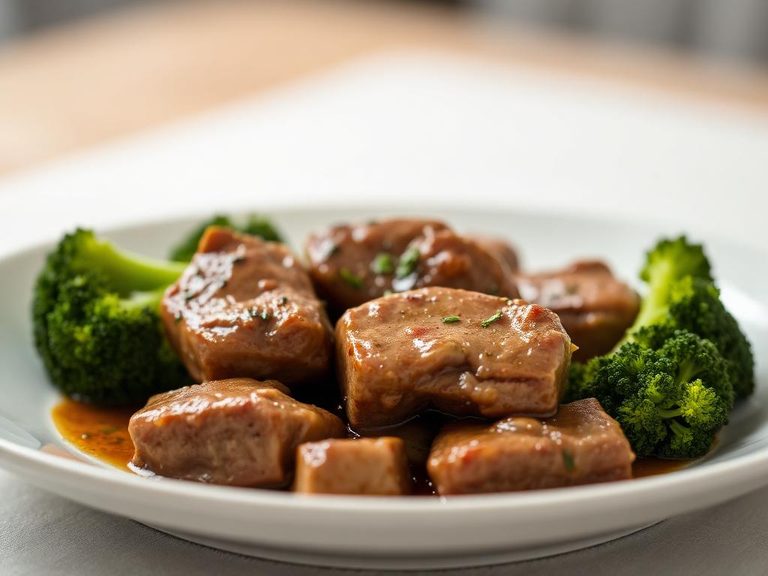
This is the prized, lean inner muscle of New Zealand lamb, flash-fried to a tender, juicy finish. It offers a clean, delicate lamb flavor without excessive gaminess, with a fine-grained texture that melts in the mouth. Nutritionally, it's a powerhouse of high-quality protein with minimal fat and zero carbohydrates.
Calorie split: 72% protein · 0% carbs · 28% fat
↓ Full nutrition💚 Why it's loved
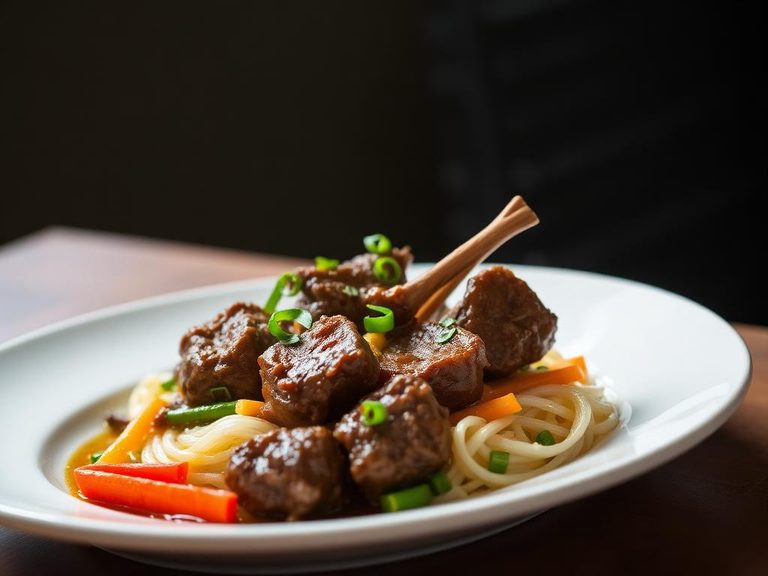
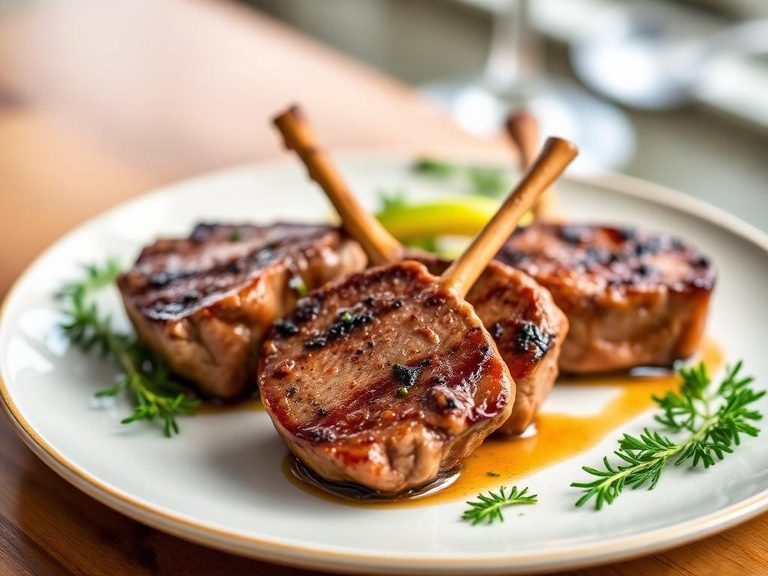
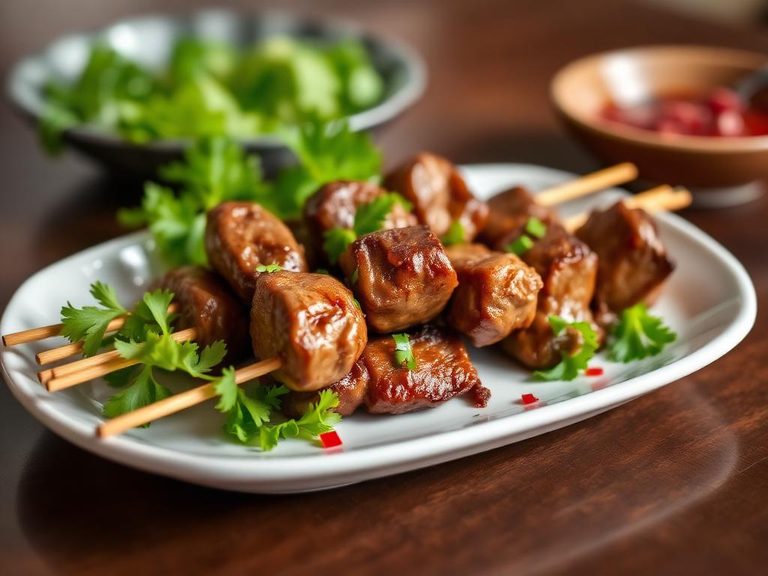
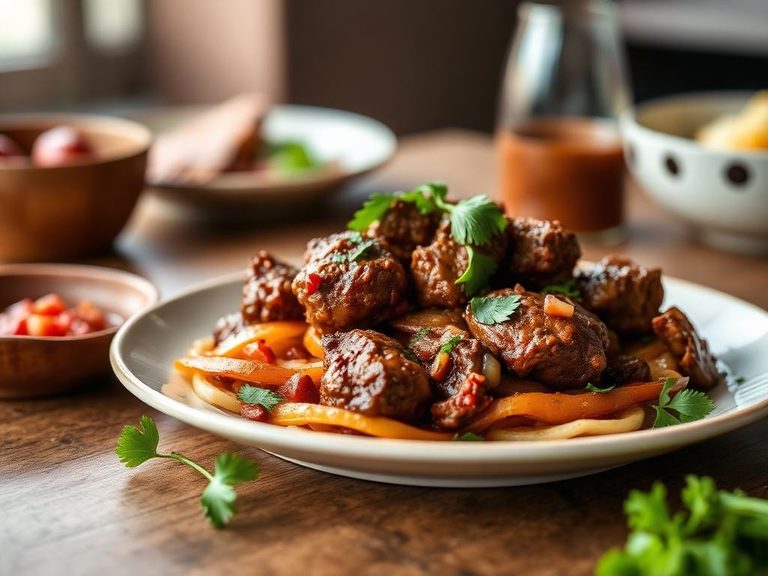
People adore its exceptional tenderness and mild, sweet flavor that doesn't overpower other ingredients. Its quick cook time and versatility make it a favorite for everything from stir-fries to elegant pan-seared medallions.
⚠️ Watch-outs & how to enjoy it better
As a red meat, it can be high in cholesterol and purines, which may be a concern for some individuals. For optimal tenderness and flavor, it requires careful, quick cooking; overcooking can make it tough and dry. Pair it with fiber-rich vegetables like broccoli or asparagus to balance the meal.
Key benefits
- Excellent source of complete, high-quality protein for muscle maintenance.
- Very low in fat, especially saturated fat, compared to other lamb cuts.
- Naturally carb-free, suitable for ketogenic and low-carb diets.
- Rich in essential minerals like iron, zinc, and selenium.
- Quick-cooking, making it ideal for fast weeknight meals.
🍽️ Popular dishes
🌍 Where it's eaten
💡 Did you know?
New Zealand lamb is often considered 'spring lamb' and is typically processed at a younger age, contributing to its renowned tenderness and mild flavor compared to older lamb or mutton.
Full nutrition (USDA data · scales with serving)
| Water | 66.4 g |
| Energy | 155 kcal |
| Energy | 649 kj |
| Protein | 27.9 g |
| Total lipid (fat) | 4.8 g |
| Ash | 1.4 g |
| Carbohydrate, by difference | 0.00 g |
| Fiber, total dietary | 0.00 g |
| Total Sugars | 0.00 g |
| Calcium, Ca | 5.0 mg |
| Iron, Fe | 2.1 mg |
| Magnesium, Mg | 31.0 mg |
| Phosphorus, P | 268 mg |
| Potassium, K | 433 mg |
| Sodium, Na | 59.0 mg |
| Zinc, Zn | 2.8 mg |
| Copper, Cu | 0.18 mg |
| Manganese, Mn | 0.02 mg |
| Selenium, Se | 6.5 ug |
| Vitamin C, total ascorbic acid | 0.00 mg |
| Thiamin | 0.10 mg |
| Riboflavin | 0.30 mg |
| Niacin | 9.1 mg |
| Pantothenic acid | 1.1 mg |
| Vitamin B-6 | 0.28 mg |
| Vitamin B-12 | 2.4 ug |
| Vitamin A, RAE | 2.0 ug |
| Retinol | 2.0 ug |
| Carotene, beta | 0.00 ug |
| Carotene, alpha | 0.00 ug |
| Cryptoxanthin, beta | 0.00 ug |
| Vitamin A, IU | 5.0 iu |
| Lycopene | 0.00 ug |
| Lutein + zeaxanthin | 0.00 ug |
| Vitamin E (alpha-tocopherol) | 0.55 mg |
| Vitamin D (D2 + D3), International Units | 1.0 iu |
| Vitamin D (D2 + D3) | 0.00 ug |
| Vitamin D3 (cholecalciferol) | 0.00 ug |
| Alcohol, ethyl | 0.00 g |
| Caffeine | 0.00 mg |
| Theobromine | 0.00 mg |
Fat & fatty acid profile (per 100g)
| Fatty acids, total saturated | 1.8 g |
| SFA 4:0 | 0.00 g |
| SFA 6:0 | 0.00 g |
| SFA 8:0 | 0.00 g |
| SFA 10:0 | 0.01 g |
| SFA 12:0 | 0.01 g |
| SFA 14:0 | 0.08 g |
| SFA 16:0 | 0.77 g |
| SFA 17:0 | 0.07 g |
| SFA 18:0 | 0.83 g |
| SFA 20:0 | 0.01 g |
| SFA 22:0 | 0.02 g |
| SFA 24:0 | 0.00 g |
| Fatty acids, total monounsaturated | 1.4 g |
| MUFA 14:1 | 0.01 g |
| MUFA 15:1 | 0.00 g |
| MUFA 16:1 | 0.05 g |
| MUFA 16:1 c | 0.04 g |
| MUFA 17:1 | 0.00 g |
| MUFA 18:1 | 1.4 g |
| MUFA 18:1 c | 1.2 g |
| MUFA 20:1 | 0.00 g |
| MUFA 22:1 | 0.00 g |
| MUFA 22:1 c | 0.00 g |
| MUFA 24:1 c | 0.00 g |
| Fatty acids, total polyunsaturated | 0.45 g |
| PUFA 18:2 | 0.21 g |
| PUFA 18:2 n-6 c,c | 0.16 g |
| PUFA 18:2 CLAs | 0.05 g |
| PUFA 18:3 | 0.11 g |
| PUFA 18:3 n-3 c,c,c (ALA) | 0.11 g |
| PUFA 18:3 n-6 c,c,c | 0.00 g |
| PUFA 18:4 | 0.00 g |
| PUFA 20:2 n-6 c,c | 0.00 g |
| PUFA 20:3 | 0.01 g |
| PUFA 20:3 n-3 | 0.00 g |
| PUFA 20:3 n-6 | 0.01 g |
| PUFA 20:4 | 0.05 g |
| PUFA 20:4 n-6 | 0.05 g |
| PUFA 20:5 n-3 (EPA) | 0.04 g |
| PUFA 22:5 n-3 (DPA) | 0.03 g |
| PUFA 22:6 n-3 (DHA) | 0.01 g |
| Fatty acids, total trans | 0.17 g |
| Fatty acids, total trans-monoenoic | 0.17 g |
| TFA 16:1 t | 0.01 g |
| TFA 18:1 t | 0.15 g |
| TFA 18:2 t,t | 0.00 g |
| Fatty acids, total trans-polyenoic | 0.00 g |
| Cholesterol | 94.0 mg |
Amino acid profile (per 100g)
| Tryptophan | 0.31 g |
| Threonine | 1.3 g |
| Isoleucine | 1.3 g |
| Leucine | 2.2 g |
| Lysine | 2.4 g |
| Methionine | 0.91 g |
| Cystine | 0.37 g |
| Phenylalanine | 1.1 g |
| Tyrosine | 0.97 g |
| Valine | 1.4 g |
| Arginine | 1.9 g |
| Histidine | 0.59 g |
| Alanine | 1.4 g |
| Glutamic acid | 3.9 g |
| Glycine | 1.2 g |
| Proline | 0.90 g |
| Serine | 0.95 g |
FAQ
How is this cut different from lamb leg or shoulder?
The tenderloin is the most tender, leanest muscle from the loin area. Unlike the leg or shoulder, which are larger, tougher muscles suited for slow roasting or braising, the tenderloin is best for very quick, high-heat cooking like frying or grilling.
What does 'separable lean only' mean?
It means the cut has been meticulously trimmed of all visible fat and connective tissue, leaving only the pure, lean muscle meat. This results in the very low fat content listed in its nutrition profile.
Why is it 'imported' from New Zealand?
New Zealand has a world-renowned, grass-fed lamb industry. The country's climate and farming practices produce high-quality lamb that is exported globally for its consistent flavor and tenderness.
What's the best way to cook it to avoid toughness?
Cook it very quickly over high heat. Preheat your pan or grill, season the meat, and sear it for just 1-2 minutes per side for medium-rare. Let it rest for a few minutes before slicing to allow the juices to redistribute.
Nutrient density (calculated · NRF9.3)
Nutrient Rich Foods index: beneficial nutrients (protein, fiber, vitamins, minerals) minus saturated fat, added sugar & sodium, per 100 kcal.
NRF9.3 index — Fulgoni, Keast & Drewnowski, 2009. Computed from USDA nutrients.
Weight-loss friendliness (composite index)
Energy density 1.55 kcal/g · 72% calories from protein · 0.0 g fiber · 0.0 g sugar per 100 g.
Composite of energy density (Rolls et al., 1999), protein & fiber satiety, minus sugar. A calculated heuristic — ranks satiety-per-calorie, not a clinical measure.
Dietary load (calculated from USDA values)
Potential renal acid load. Positive = acid-forming, negative = alkaline-forming.
Sodium-to-potassium ratio: 0.14 (lower is better — aim for ≤ 1)
Sodium:potassium per WHO potassium guidance. Computed from USDA nutrients.