

Lamb, New Zealand, imported, sweetbread, cooked, soaked and simmered
Whole food · Lamb, Veal, and Game Products

Photo: Wikipedia
New Zealand sweetbread is the thymus gland of a lamb, prized for its exceptionally tender, velvety texture and mild, creamy flavor that absorbs sauces beautifully. After proper soaking and simmering, it transforms into a delicate, melt-in-the-mouth delicacy with a subtle, clean taste. It's a protein powerhouse with virtually no carbohydrates, making it a nutrient-dense choice for low-carb diets.
Calorie split: 59% protein · 0% carbs · 41% fat
↓ Full nutrition💚 Why it's loved
Culinary enthusiasts adore sweetbread for its luxurious, custard-like texture and its ability to be a blank canvas for bold flavors—from crispy pan-fried preparations to rich, saucy braises. It's celebrated in many gourmet traditions as a true test of a chef's skill in transforming an offal cut into a refined dish.
⚠️ Watch-outs & how to enjoy it better
Its reputation as an organ meat can be off-putting to some, and its delicate nature requires careful preparation (soaking, cleaning) to remove any residual blood or impurities. For those new to offal, the initial idea can be a mental hurdle. To counteract this, start with a well-prepared restaurant dish to appreciate the flavor, or choose a recipe with a strong sauce (like a lemon-caper butter) that complements rather than masks its subtle taste.
Key benefits
- High-quality complete protein source
- Very low carbohydrate content
- Rich in essential minerals like zinc and selenium
- Contains B vitamins, particularly B12
- Naturally low in sugar
🍽️ Popular dishes

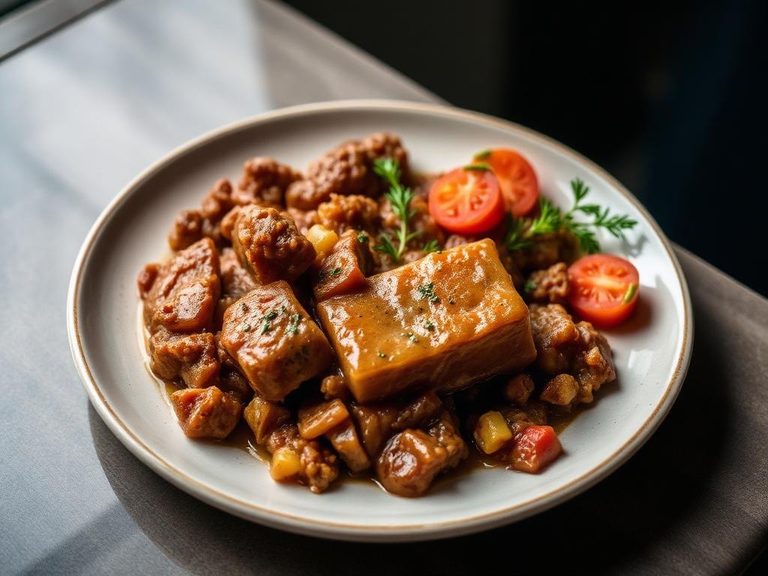
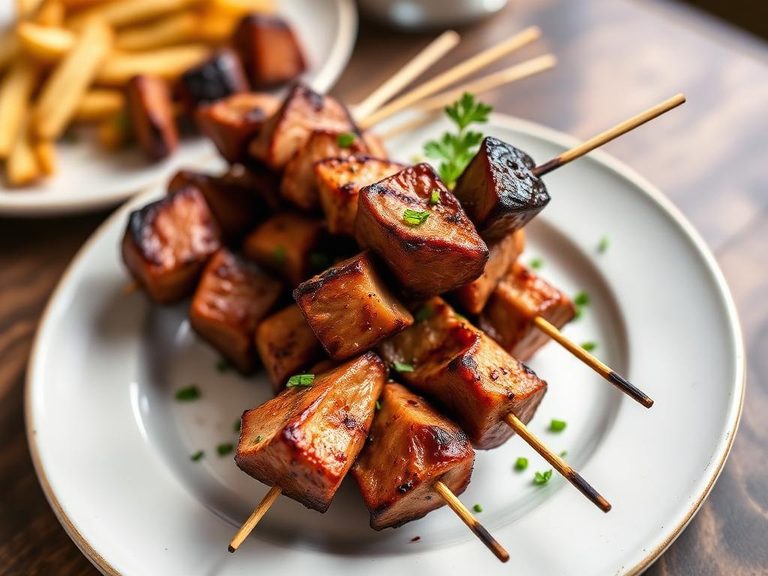
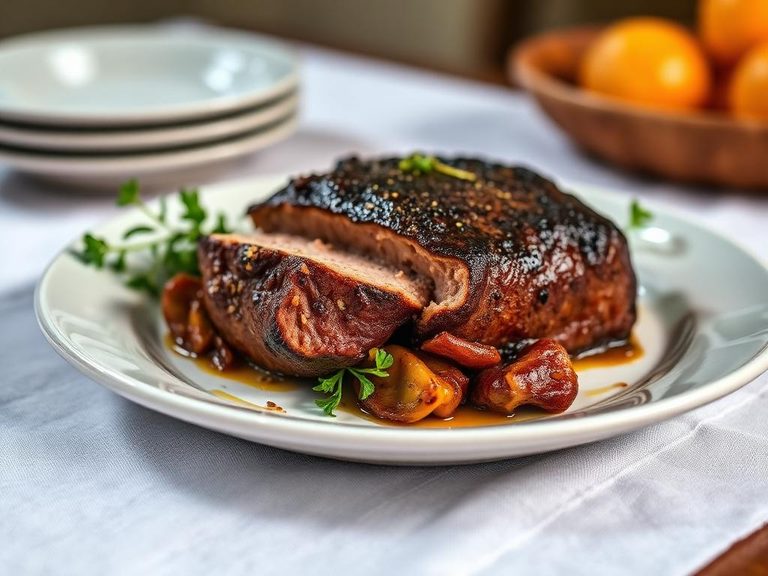

🌍 Where it's eaten
💡 Did you know?
Sweetbreads are not from the stomach (bread) but are the thymus gland, and the name likely derives from the Old English 'brǣd' meaning 'flesh' or 'meat,' not the baked good.
Full nutrition (USDA data · scales with serving)
| Water | 72.6 g |
| Energy | 144 kcal |
| Energy | 602 kj |
| Protein | 21.1 g |
| Total lipid (fat) | 6.6 g |
| Ash | 2.6 g |
| Carbohydrate, by difference | 0.00 g |
| Fiber, total dietary | 0.00 g |
| Total Sugars | 0.00 g |
| Calcium, Ca | 6.0 mg |
| Iron, Fe | 1.1 mg |
| Magnesium, Mg | 25.0 mg |
| Phosphorus, P | 550 mg |
| Potassium, K | 354 mg |
| Sodium, Na | 52.0 mg |
| Zinc, Zn | 1.9 mg |
| Copper, Cu | 0.07 mg |
| Manganese, Mn | 0.02 mg |
| Selenium, Se | 14.9 ug |
| Vitamin C, total ascorbic acid | 0.00 mg |
| Thiamin | 0.07 mg |
| Riboflavin | 0.10 mg |
| Niacin | 1.4 mg |
| Pantothenic acid | 0.73 mg |
| Vitamin B-6 | 0.00 mg |
| Vitamin B-12 | 2.5 ug |
| Vitamin A, RAE | 8.0 ug |
| Retinol | 8.0 ug |
| Carotene, beta | 0.00 ug |
| Carotene, alpha | 0.00 ug |
| Cryptoxanthin, beta | 0.00 ug |
| Vitamin A, IU | 28.0 iu |
| Lycopene | 0.00 ug |
| Lutein + zeaxanthin | 0.00 ug |
| Vitamin E (alpha-tocopherol) | 1.1 mg |
| Vitamin D (D2 + D3), International Units | 6.0 iu |
| Vitamin D (D2 + D3) | 0.20 ug |
| Vitamin D3 (cholecalciferol) | 0.20 ug |
| Alcohol, ethyl | 0.00 g |
| Caffeine | 0.00 mg |
| Theobromine | 0.00 mg |
Fat & fatty acid profile (per 100g)
| Fatty acids, total saturated | 2.3 g |
| SFA 4:0 | 0.00 g |
| SFA 6:0 | 0.00 g |
| SFA 8:0 | 0.00 g |
| SFA 10:0 | 0.01 g |
| SFA 12:0 | 0.01 g |
| SFA 14:0 | 0.11 g |
| SFA 16:0 | 1.0 g |
| SFA 17:0 | 0.10 g |
| SFA 18:0 | 1.0 g |
| SFA 20:0 | 0.01 g |
| SFA 22:0 | 0.04 g |
| SFA 24:0 | 0.00 g |
| Fatty acids, total monounsaturated | 1.8 g |
| MUFA 14:1 | 0.00 g |
| MUFA 15:1 | 0.00 g |
| MUFA 16:1 | 0.06 g |
| MUFA 16:1 c | 0.04 g |
| MUFA 17:1 | 0.00 g |
| MUFA 18:1 | 1.8 g |
| MUFA 18:1 c | 1.6 g |
| MUFA 20:1 | 0.01 g |
| MUFA 22:1 | 0.00 g |
| MUFA 22:1 c | 0.00 g |
| MUFA 24:1 c | 0.01 g |
| Fatty acids, total polyunsaturated | 0.39 g |
| PUFA 18:2 | 0.18 g |
| PUFA 18:2 n-6 c,c | 0.12 g |
| PUFA 18:2 CLAs | 0.06 g |
| PUFA 18:3 | 0.07 g |
| PUFA 18:3 n-3 c,c,c (ALA) | 0.07 g |
| PUFA 18:3 n-6 c,c,c | 0.00 g |
| PUFA 18:4 | 0.00 g |
| PUFA 20:2 n-6 c,c | 0.00 g |
| PUFA 20:3 | 0.01 g |
| PUFA 20:3 n-3 | 0.00 g |
| PUFA 20:3 n-6 | 0.01 g |
| PUFA 20:4 | 0.05 g |
| PUFA 20:4 n-6 | 0.05 g |
| PUFA 20:5 n-3 (EPA) | 0.03 g |
| PUFA 22:5 n-3 (DPA) | 0.04 g |
| PUFA 22:6 n-3 (DHA) | 0.02 g |
| Fatty acids, total trans | 0.17 g |
| Fatty acids, total trans-monoenoic | 0.17 g |
| TFA 16:1 t | 0.01 g |
| TFA 18:1 t | 0.16 g |
| TFA 18:2 t,t | 0.00 g |
| Fatty acids, total trans-polyenoic | 0.00 g |
| Cholesterol | 462 mg |
Amino acid profile (per 100g)
| Tryptophan | 0.23 g |
| Threonine | 1.0 g |
| Isoleucine | 0.95 g |
| Leucine | 1.6 g |
| Lysine | 1.8 g |
| Methionine | 0.69 g |
| Cystine | 0.28 g |
| Phenylalanine | 0.83 g |
| Tyrosine | 0.73 g |
| Valine | 1.1 g |
| Arginine | 1.4 g |
| Histidine | 0.45 g |
| Alanine | 1.1 g |
| Glutamic acid | 3.0 g |
| Glycine | 0.90 g |
| Proline | 0.68 g |
| Serine | 0.72 g |
FAQ
What part of the animal is sweetbread?
Sweetbread is the thymus gland, typically from a young lamb or calf. It is an organ meat, not muscle meat.
Why does it need soaking and simmering?
Soaking in cold water (often with vinegar or salt) draws out any residual blood and impurities, while simmering tenderizes the gland and sets its delicate texture before final cooking.
Is sweetbread high in cholesterol?
Like most organ meats, sweetbread contains dietary cholesterol. However, current nutritional science suggests dietary cholesterol has a minimal impact on blood cholesterol for most people, and it is also rich in nutrients that support health.
Nutrient density (calculated · NRF9.3)
Nutrient Rich Foods index: beneficial nutrients (protein, fiber, vitamins, minerals) minus saturated fat, added sugar & sodium, per 100 kcal.
NRF9.3 index — Fulgoni, Keast & Drewnowski, 2009. Computed from USDA nutrients.
Weight-loss friendliness (composite index)
Energy density 1.44 kcal/g · 59% calories from protein · 0.0 g fiber · 0.0 g sugar per 100 g.
Composite of energy density (Rolls et al., 1999), protein & fiber satiety, minus sugar. A calculated heuristic — ranks satiety-per-calorie, not a clinical measure.
Dietary load (calculated from USDA values)
Potential renal acid load. Positive = acid-forming, negative = alkaline-forming.
Sodium-to-potassium ratio: 0.15 (lower is better — aim for ≤ 1)
Sodium:potassium per WHO potassium guidance. Computed from USDA nutrients.