

Lamb, New Zealand, imported, loin, boneless, separable lean and fat, raw
Whole food · Lamb, Veal, and Game Products

Photo: Wikipedia
This is a premium cut of lean, boneless New Zealand lamb loin, prized for its delicate, fine-grained texture and clean, subtly sweet flavor. Nutritionally, it's a powerhouse of high-quality protein with minimal fat, making it a lean choice for red meat lovers. Its raw state offers a blank canvas for a wide range of culinary preparations.
Calorie split: 70% protein · 0% carbs · 30% fat
↓ Full nutrition💚 Why it's loved
People love it for its tender, melt-in-the-mouth texture when cooked properly and its mild, non-gamey flavor that appeals even to those who are cautious about lamb. Its versatility shines from quick searing to slow roasting, making it a favorite for both weeknight meals and elegant dinners.
⚠️ Watch-outs & how to enjoy it better
As a red meat, it is high in purines, which individuals with gout or kidney issues should moderate. It also contains dietary cholesterol, so those managing blood lipids should be mindful of portion size. To counteract, balance with fiber-rich vegetables and consider a marinade with acidic ingredients like lemon or vinegar to enhance digestibility.
Key benefits
- Excellent source of complete protein for muscle maintenance
- Very low in carbohydrates, suitable for low-carb diets
- Provides essential minerals like zinc and iron
- Lean cut with minimal saturated fat compared to other red meats
- Source of B vitamins, particularly B12
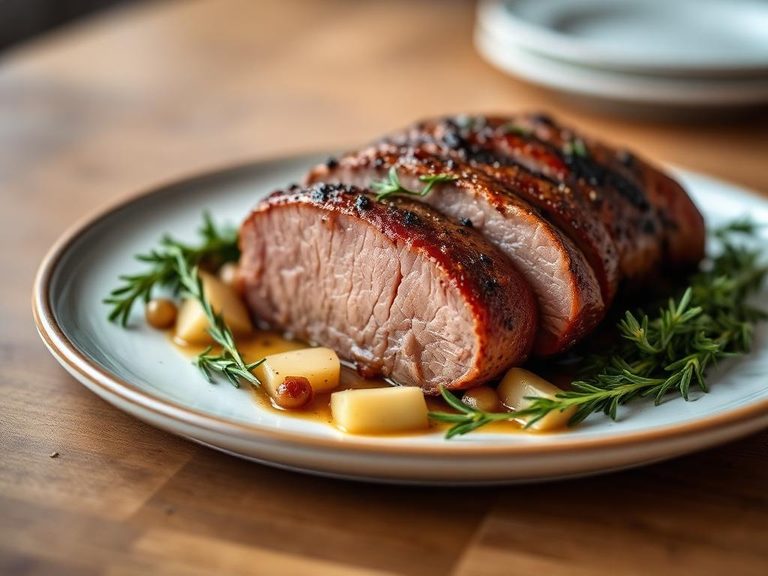
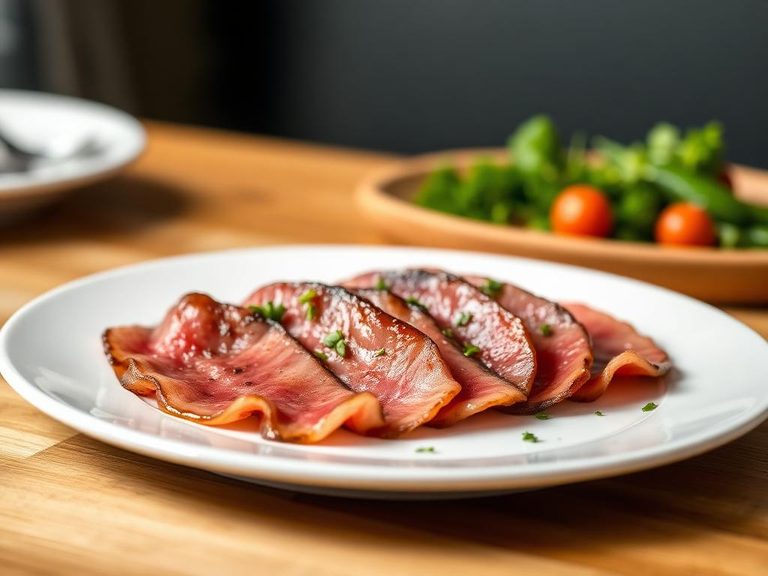
🍽️ Popular dishes
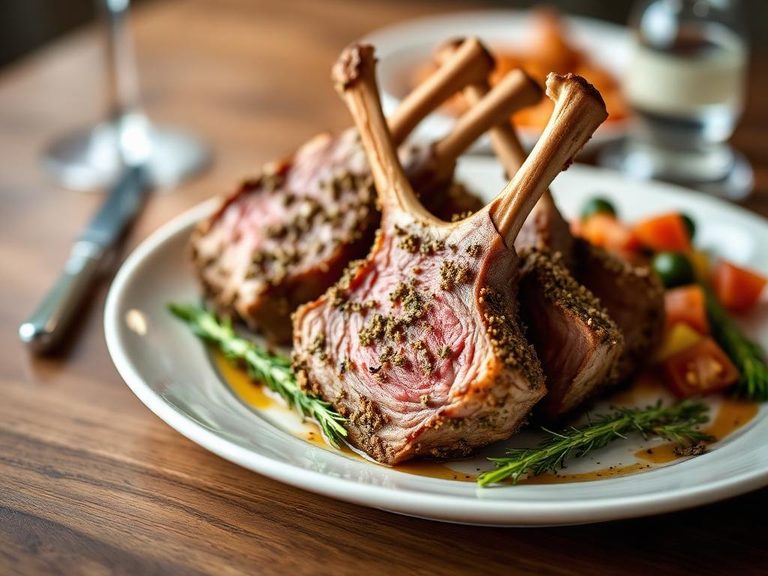
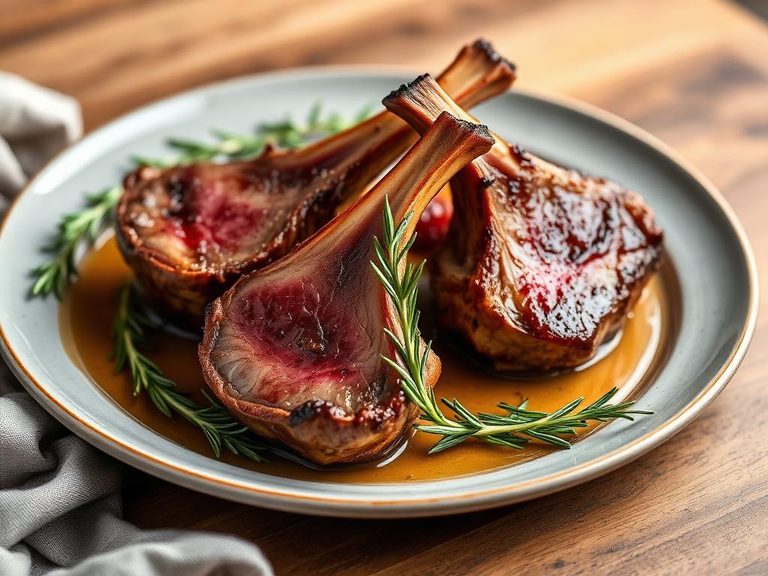
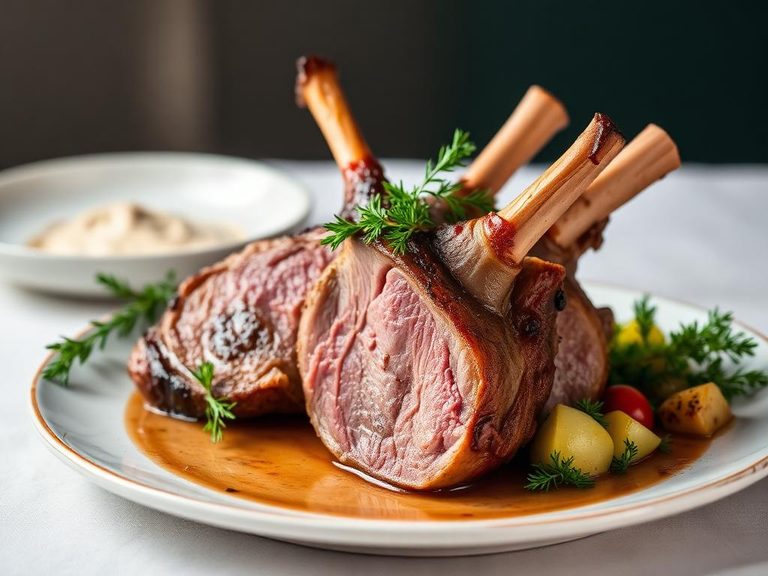
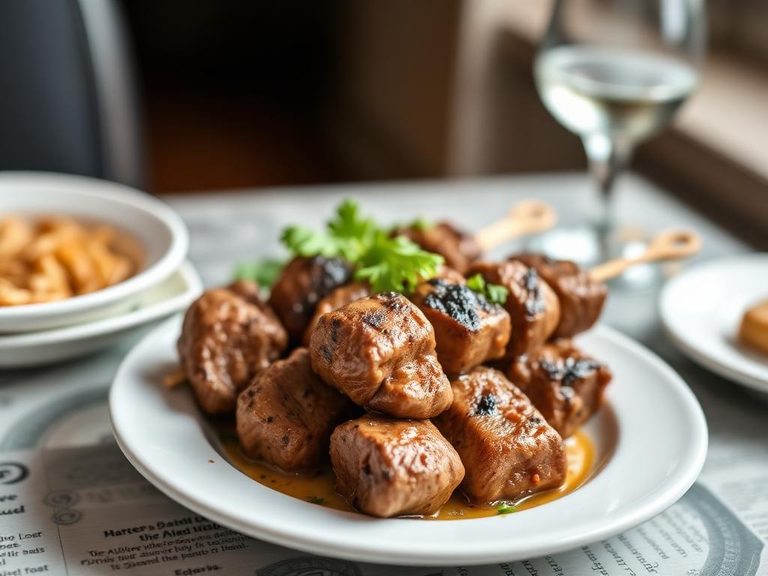
🌍 Where it's eaten
💡 Did you know?
New Zealand lamb is often considered 'spring lamb' because the country's reversed seasons allow for a year-round supply of young, tender meat to global markets.
Full nutrition (USDA data · scales with serving)
| Water | 74.4 g |
| Energy | 122 kcal |
| Energy | 509 kj |
| Protein | 21.4 g |
| Total lipid (fat) | 4.0 g |
| Ash | 1.2 g |
| Carbohydrate, by difference | 0.00 g |
| Fiber, total dietary | 0.00 g |
| Total Sugars | 0.00 g |
| Calcium, Ca | 4.0 mg |
| Iron, Fe | 1.6 mg |
| Magnesium, Mg | 26.0 mg |
| Phosphorus, P | 217 mg |
| Potassium, K | 368 mg |
| Sodium, Na | 60.0 mg |
| Zinc, Zn | 2.1 mg |
| Copper, Cu | 0.13 mg |
| Manganese, Mn | 0.01 mg |
| Selenium, Se | 2.9 ug |
| Vitamin C, total ascorbic acid | 0.00 mg |
| Thiamin | 0.07 mg |
| Riboflavin | 0.16 mg |
| Niacin | 6.3 mg |
| Pantothenic acid | 0.54 mg |
| Vitamin B-6 | 0.17 mg |
| Vitamin B-12 | 1.1 ug |
| Vitamin A, RAE | 2.0 ug |
| Retinol | 2.0 ug |
| Carotene, beta | 0.00 ug |
| Carotene, alpha | 0.00 ug |
| Cryptoxanthin, beta | 0.00 ug |
| Vitamin A, IU | 6.0 iu |
| Lycopene | 0.00 ug |
| Lutein + zeaxanthin | 0.00 ug |
| Vitamin E (alpha-tocopherol) | 0.34 mg |
| Vitamin D (D2 + D3), International Units | 1.0 iu |
| Vitamin D (D2 + D3) | 0.00 ug |
| Vitamin D3 (cholecalciferol) | 0.00 ug |
| Alcohol, ethyl | 0.00 g |
| Caffeine | 0.00 mg |
| Theobromine | 0.00 mg |
Fat & fatty acid profile (per 100g)
| Fatty acids, total saturated | 1.3 g |
| SFA 4:0 | 0.00 g |
| SFA 6:0 | 0.00 g |
| SFA 8:0 | 0.00 g |
| SFA 10:0 | 0.01 g |
| SFA 12:0 | 0.01 g |
| SFA 14:0 | 0.07 g |
| SFA 16:0 | 0.62 g |
| SFA 17:0 | 0.05 g |
| SFA 18:0 | 0.52 g |
| SFA 20:0 | 0.00 g |
| SFA 22:0 | 0.01 g |
| SFA 24:0 | 0.00 g |
| Fatty acids, total monounsaturated | 0.99 g |
| MUFA 14:1 | 0.01 g |
| MUFA 15:1 | 0.00 g |
| MUFA 16:1 | 0.03 g |
| MUFA 16:1 c | 0.03 g |
| MUFA 17:1 | 0.00 g |
| MUFA 18:1 | 0.95 g |
| MUFA 18:1 c | 0.88 g |
| MUFA 20:1 | 0.00 g |
| MUFA 22:1 | 0.00 g |
| MUFA 22:1 c | 0.00 g |
| MUFA 24:1 c | 0.00 g |
| Fatty acids, total polyunsaturated | 0.28 g |
| PUFA 18:2 | 0.13 g |
| PUFA 18:2 n-6 c,c | 0.09 g |
| PUFA 18:2 CLAs | 0.04 g |
| PUFA 18:3 | 0.06 g |
| PUFA 18:3 n-3 c,c,c (ALA) | 0.06 g |
| PUFA 18:3 n-6 c,c,c | 0.00 g |
| PUFA 18:4 | 0.00 g |
| PUFA 20:2 n-6 c,c | 0.00 g |
| PUFA 20:3 | 0.00 g |
| PUFA 20:3 n-3 | 0.00 g |
| PUFA 20:3 n-6 | 0.00 g |
| PUFA 20:4 | 0.03 g |
| PUFA 20:4 n-6 | 0.03 g |
| PUFA 20:5 n-3 (EPA) | 0.03 g |
| PUFA 22:5 n-3 (DPA) | 0.02 g |
| PUFA 22:6 n-3 (DHA) | 0.01 g |
| Fatty acids, total trans | 0.07 g |
| Fatty acids, total trans-monoenoic | 0.07 g |
| TFA 16:1 t | 0.00 g |
| TFA 18:1 t | 0.07 g |
| TFA 18:2 t,t | 0.00 g |
| Fatty acids, total trans-polyenoic | 0.00 g |
| Cholesterol | 66.0 mg |
Amino acid profile (per 100g)
| Tryptophan | 0.24 g |
| Threonine | 1.0 g |
| Isoleucine | 0.96 g |
| Leucine | 1.7 g |
| Lysine | 1.9 g |
| Methionine | 0.70 g |
| Cystine | 0.28 g |
| Phenylalanine | 0.84 g |
| Tyrosine | 0.74 g |
| Valine | 1.1 g |
| Arginine | 1.4 g |
| Histidine | 0.45 g |
| Alanine | 1.1 g |
| Glutamic acid | 3.0 g |
| Glycine | 0.92 g |
| Proline | 0.69 g |
| Serine | 0.73 g |
FAQ
How is New Zealand lamb different from other lamb?
New Zealand lamb is typically from sheep that graze on open pastures year-round, resulting in a leaner, milder-flavored meat with a distinctively clean taste.
What's the best way to cook boneless lamb loin?
For best results, sear it quickly over high heat to create a crust, then finish in a moderate oven until the internal temperature reaches 145°F (63°C) for medium-rare, ensuring it remains juicy and tender.
Is this a good cut for grilling?
Yes, it's excellent for grilling, especially when cut into thick medallions or steaks. Its leanness means it cooks fast, so watch carefully to avoid overcooking.
Nutrient density (calculated · NRF9.3)
Nutrient Rich Foods index: beneficial nutrients (protein, fiber, vitamins, minerals) minus saturated fat, added sugar & sodium, per 100 kcal.
NRF9.3 index — Fulgoni, Keast & Drewnowski, 2009. Computed from USDA nutrients.
Weight-loss friendliness (composite index)
Energy density 1.22 kcal/g · 70% calories from protein · 0.0 g fiber · 0.0 g sugar per 100 g.
Composite of energy density (Rolls et al., 1999), protein & fiber satiety, minus sugar. A calculated heuristic — ranks satiety-per-calorie, not a clinical measure.
Dietary load (calculated from USDA values)
Potential renal acid load. Positive = acid-forming, negative = alkaline-forming.
Sodium-to-potassium ratio: 0.16 (lower is better — aim for ≤ 1)
Sodium:potassium per WHO potassium guidance. Computed from USDA nutrients.