

Lamb, New Zealand, imported, flap, boneless, separable lean and fat, cooked, braised
Whole food · Lamb, Veal, and Game Products
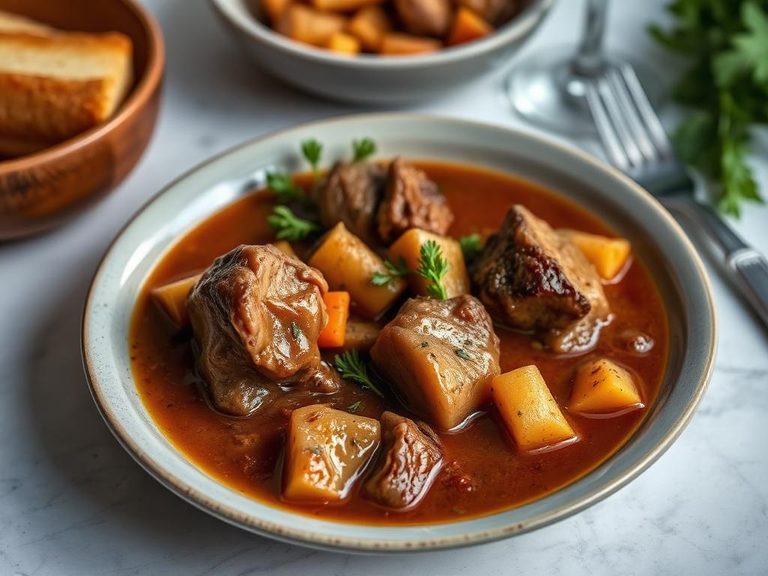
This is the boneless, fatty flap of New Zealand lamb, slow-braised until fork-tender. The cooking method transforms its rich marbling into a succulent, melt-in-your-mouth texture with a deep, savory flavor. It's a calorie-dense, high-protein cut with minimal carbohydrates.
Calorie split: 22% protein · 0% carbs · 78% fat
↓ Full nutrition💚 Why it's loved
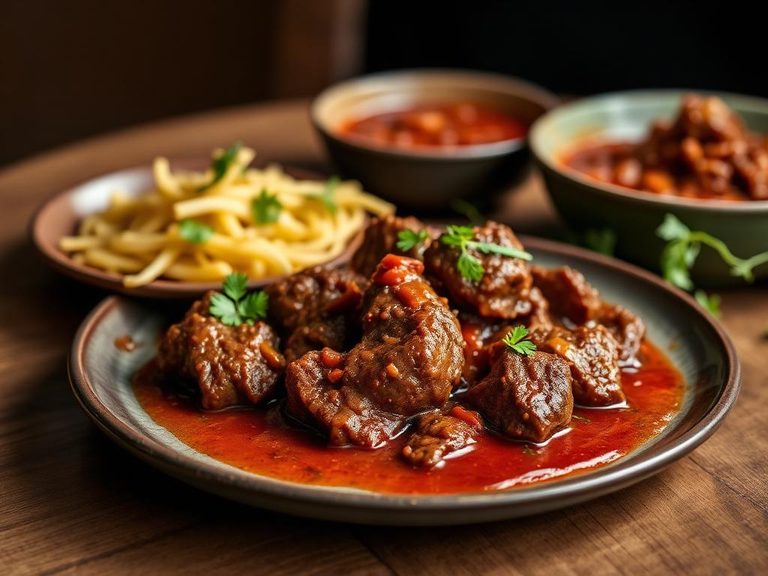
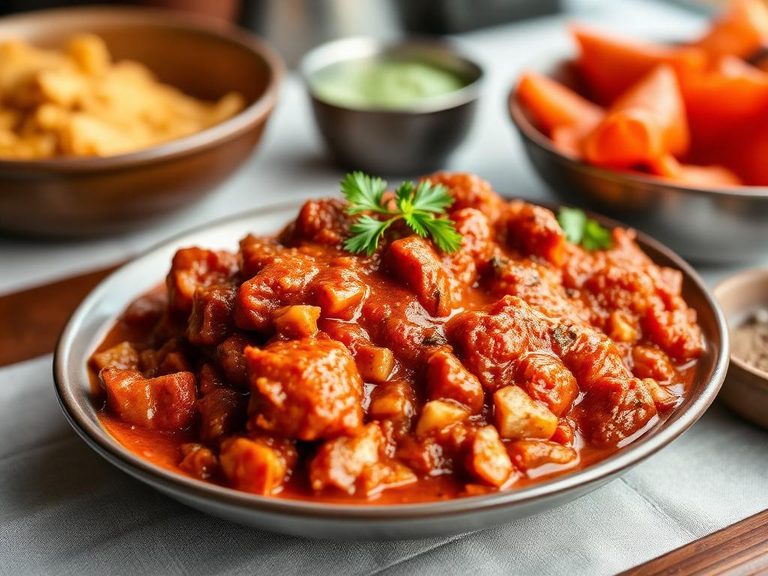
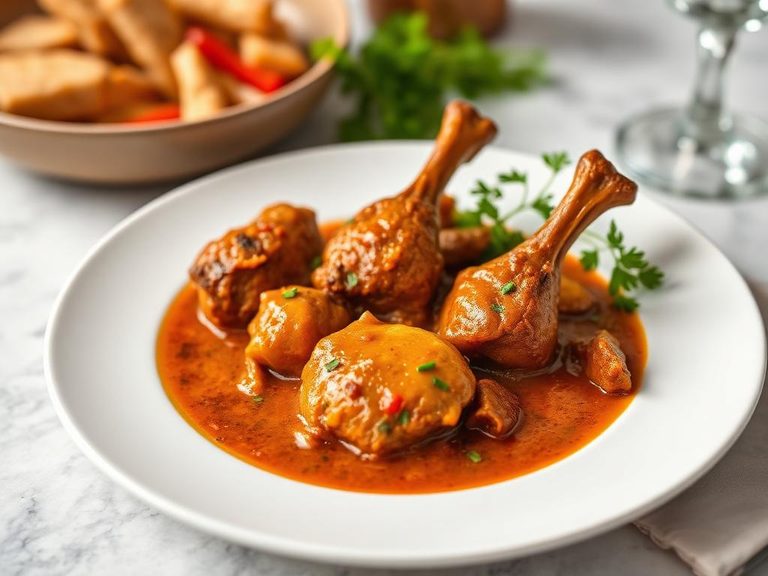
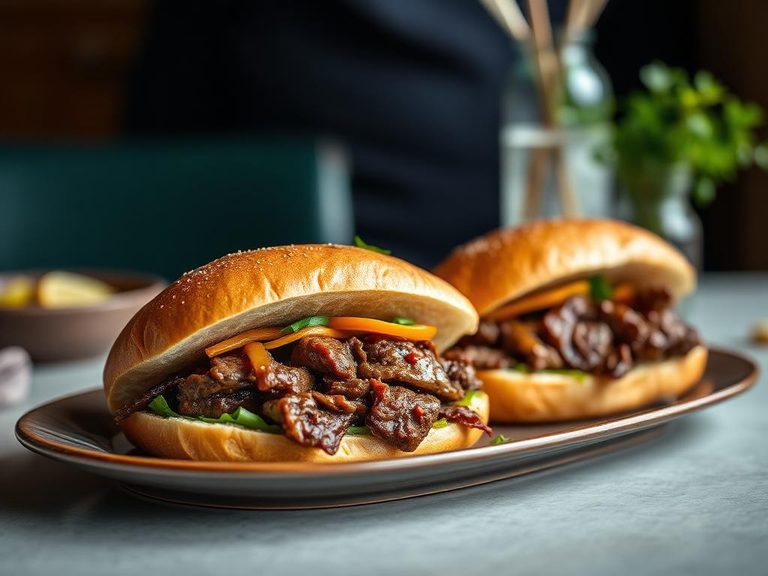
People love it for its intense, savory lamb flavor and luxuriously tender texture that comes from slow cooking. Its versatility makes it a star in hearty stews, curries, and sandwiches across many cultures.
⚠️ Watch-outs & how to enjoy it better
Its high fat content makes it a calorie-dense choice, which may not suit low-fat diets. To balance, pair it with large portions of non-starchy vegetables like roasted broccoli or a fresh salad to add volume and fiber without significant calories.
Key benefits
- Excellent source of complete protein for muscle maintenance.
- Provides heme iron, which is highly absorbable.
- Rich in zinc, essential for immune function.
- Contains B vitamins like B12 and niacin for energy metabolism.
🍽️ Popular dishes
🌍 Where it's eaten
💡 Did you know?
New Zealand lamb is often grass-fed, which can give it a slightly more complex, herbaceous flavor profile compared to grain-fed lamb.
Full nutrition (USDA data · scales with serving)
| Water | 47.8 g |
| Energy | 376 kcal |
| Energy | 1574 kj |
| Protein | 20.5 g |
| Total lipid (fat) | 32.6 g |
| Ash | 0.52 g |
| Carbohydrate, by difference | 0.14 g |
| Fiber, total dietary | 0.00 g |
| Total Sugars | 0.00 g |
| Calcium, Ca | 8.0 mg |
| Iron, Fe | 1.1 mg |
| Magnesium, Mg | 15.0 mg |
| Phosphorus, P | 122 mg |
| Potassium, K | 182 mg |
| Sodium, Na | 51.0 mg |
| Zinc, Zn | 3.2 mg |
| Copper, Cu | 0.07 mg |
| Manganese, Mn | 0.00 mg |
| Selenium, Se | 5.9 ug |
| Vitamin C, total ascorbic acid | 0.00 mg |
| Thiamin | 0.05 mg |
| Riboflavin | 0.12 mg |
| Niacin | 2.7 mg |
| Pantothenic acid | 0.28 mg |
| Vitamin B-6 | 0.08 mg |
| Vitamin B-12 | 1.3 ug |
| Vitamin A, RAE | 24.0 ug |
| Retinol | 24.0 ug |
| Carotene, beta | 0.00 ug |
| Carotene, alpha | 0.00 ug |
| Cryptoxanthin, beta | 0.00 ug |
| Vitamin A, IU | 80.0 iu |
| Lycopene | 0.00 ug |
| Lutein + zeaxanthin | 0.00 ug |
| Vitamin E (alpha-tocopherol) | 0.57 mg |
| Vitamin D (D2 + D3), International Units | 3.0 iu |
| Vitamin D (D2 + D3) | 0.10 ug |
| Vitamin D3 (cholecalciferol) | 0.10 ug |
| Alcohol, ethyl | 0.00 g |
| Caffeine | 0.00 mg |
| Theobromine | 0.00 mg |
Fat & fatty acid profile (per 100g)
| Fatty acids, total saturated | 13.5 g |
| SFA 4:0 | 0.00 g |
| SFA 6:0 | 0.00 g |
| SFA 8:0 | 0.01 g |
| SFA 10:0 | 0.04 g |
| SFA 12:0 | 0.03 g |
| SFA 14:0 | 0.61 g |
| SFA 16:0 | 5.0 g |
| SFA 17:0 | 0.59 g |
| SFA 18:0 | 7.2 g |
| SFA 20:0 | 0.03 g |
| SFA 22:0 | 0.05 g |
| SFA 24:0 | 0.00 g |
| Fatty acids, total monounsaturated | 8.8 g |
| MUFA 14:1 | 0.01 g |
| MUFA 15:1 | 0.00 g |
| MUFA 16:1 | 0.27 g |
| MUFA 16:1 c | 0.23 g |
| MUFA 17:1 | 0.00 g |
| MUFA 18:1 | 8.5 g |
| MUFA 18:1 c | 6.9 g |
| MUFA 20:1 | 0.01 g |
| MUFA 22:1 | 0.00 g |
| MUFA 22:1 c | 0.00 g |
| MUFA 24:1 c | 0.00 g |
| Fatty acids, total polyunsaturated | 1.2 g |
| PUFA 18:2 | 0.76 g |
| PUFA 18:2 n-6 c,c | 0.30 g |
| PUFA 18:2 CLAs | 0.45 g |
| PUFA 18:3 | 0.32 g |
| PUFA 18:3 n-3 c,c,c (ALA) | 0.32 g |
| PUFA 18:3 n-6 c,c,c | 0.00 g |
| PUFA 18:4 | 0.00 g |
| PUFA 20:2 n-6 c,c | 0.00 g |
| PUFA 20:3 | 0.00 g |
| PUFA 20:3 n-3 | 0.00 g |
| PUFA 20:3 n-6 | 0.00 g |
| PUFA 20:4 | 0.03 g |
| PUFA 20:4 n-6 | 0.03 g |
| PUFA 20:5 n-3 (EPA) | 0.04 g |
| PUFA 22:5 n-3 (DPA) | 0.03 g |
| PUFA 22:6 n-3 (DHA) | 0.00 g |
| Fatty acids, total trans | 1.7 g |
| Fatty acids, total trans-monoenoic | 1.7 g |
| TFA 16:1 t | 0.04 g |
| TFA 18:1 t | 1.6 g |
| TFA 18:2 t,t | 0.01 g |
| Fatty acids, total trans-polyenoic | 0.01 g |
| Cholesterol | 76.0 mg |
Amino acid profile (per 100g)
| Tryptophan | 0.23 g |
| Threonine | 0.98 g |
| Isoleucine | 0.92 g |
| Leucine | 1.6 g |
| Lysine | 1.8 g |
| Methionine | 0.67 g |
| Cystine | 0.27 g |
| Phenylalanine | 0.81 g |
| Tyrosine | 0.71 g |
| Valine | 1.0 g |
| Arginine | 1.4 g |
| Histidine | 0.43 g |
| Alanine | 1.0 g |
| Glutamic acid | 2.9 g |
| Glycine | 0.88 g |
| Proline | 0.66 g |
| Serine | 0.70 g |
FAQ
Is this a tough cut of meat?
It can be if cooked quickly. The 'braised' designation means it has been slow-cooked in liquid, which breaks down connective tissue and makes it tender.
How does the fat content compare to other lamb cuts?
The flap is one of the fattier cuts. Per 100g, it has about 32.6g of fat, significantly more than a lean leg roast.
What's a good way to reheat leftovers without drying them out?
Gently reheat in a covered pan with a splash of broth or water, or in the microwave at 50% power to preserve moisture.
Nutrient density (calculated · NRF9.3)
Nutrient Rich Foods index: beneficial nutrients (protein, fiber, vitamins, minerals) minus saturated fat, added sugar & sodium, per 100 kcal.
NRF9.3 index — Fulgoni, Keast & Drewnowski, 2009. Computed from USDA nutrients.
Weight-loss friendliness (composite index)
Energy density 3.76 kcal/g · 22% calories from protein · 0.0 g fiber · 0.0 g sugar per 100 g.
Composite of energy density (Rolls et al., 1999), protein & fiber satiety, minus sugar. A calculated heuristic — ranks satiety-per-calorie, not a clinical measure.
Dietary load (calculated from USDA values)
Potential renal acid load. Positive = acid-forming, negative = alkaline-forming.
Sodium-to-potassium ratio: 0.28 (lower is better — aim for ≤ 1)
Sodium:potassium per WHO potassium guidance. Computed from USDA nutrients.