

Lamb, New Zealand, imported, breast, separable lean only, cooked, braised
Whole food · Lamb, Veal, and Game Products

Photo: Wikipedia
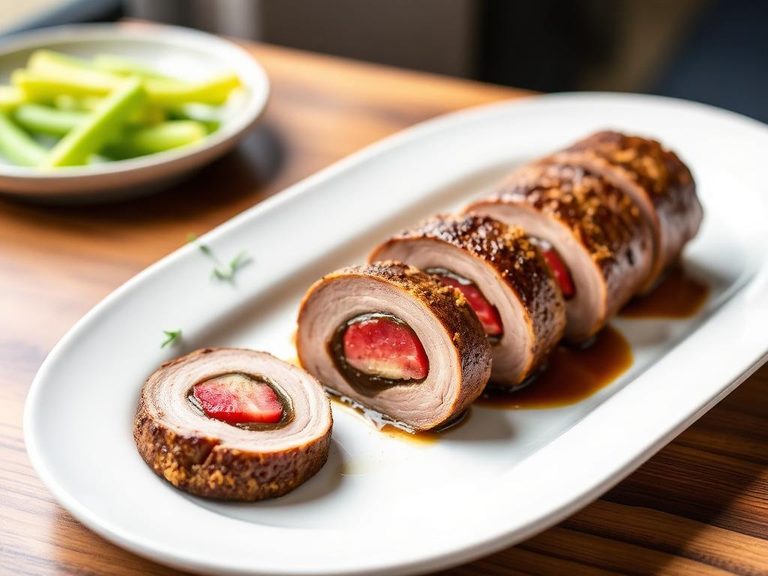
This is the lean, braised breast of New Zealand lamb, a cut prized for its deep, savory flavor and tender, almost flaky texture when slow-cooked. With virtually no carbohydrates and a robust 28 grams of protein per 100g, it's a powerhouse of pure, lean nutrition. The braising process transforms this economical cut into a succulent, richly flavored meat.
Calorie split: 42% protein · 0% carbs · 58% fat
↓ Full nutrition💚 Why it's loved
People adore it for its deep, meaty flavor that stands up to bold herbs and spices, and for its versatility in hearty, comforting dishes. It's also an economical cut that rewards patient cooking with incredible tenderness, making it a staple in home kitchens and traditional cuisines.
⚠️ Watch-outs & how to enjoy it better
As a red meat, it is higher in saturated fat than poultry or fish, so those managing heart health should practice portion control. It can also be tough if not braised properly. To counteract, pair it with fiber-rich vegetables like roasted carrots or a leafy salad to balance the meal, and ensure a slow, moist cooking method to break down connective tissue.
Key benefits
- Excellent source of high-quality, complete protein.
- Very low in carbohydrates and sugars, making it keto-friendly.
- Rich in bioavailable iron and zinc for energy and immunity.
- Provides B vitamins like B12 for nerve function.
- Naturally gluten-free and dairy-free.
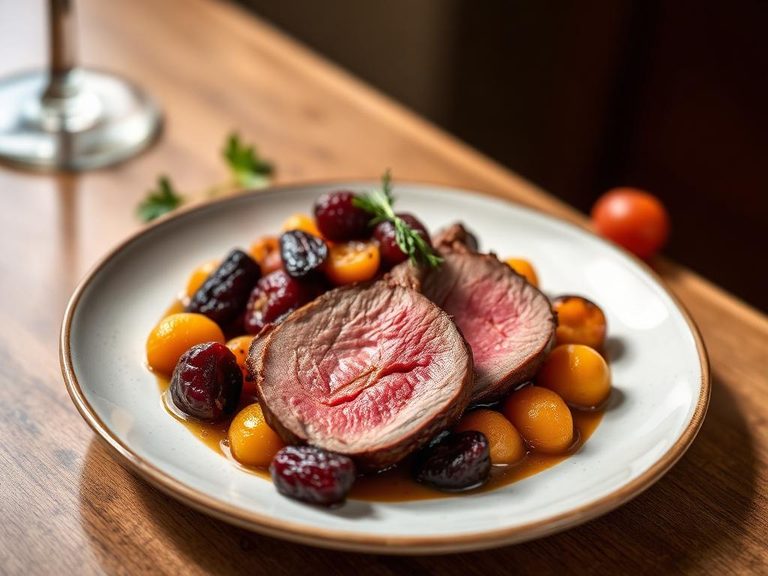
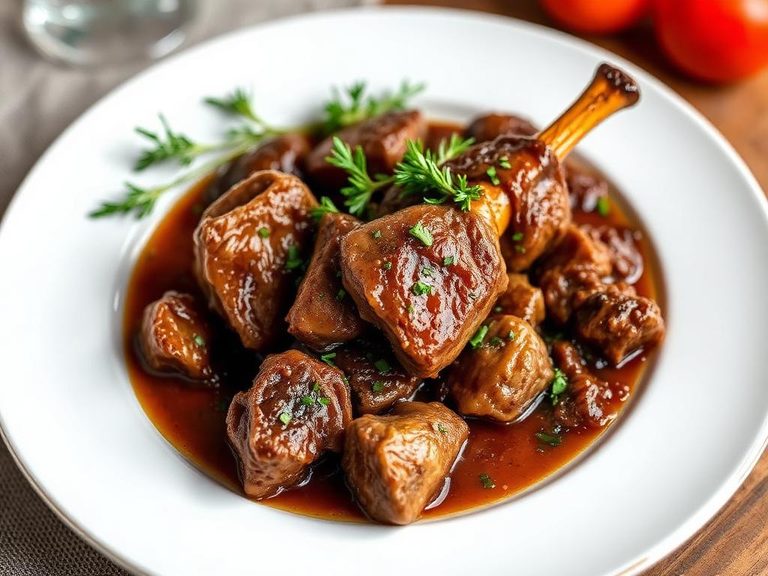
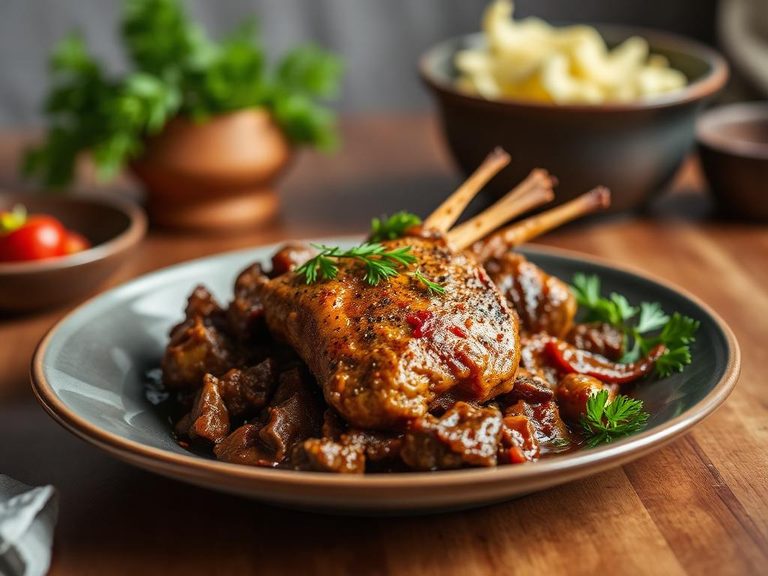
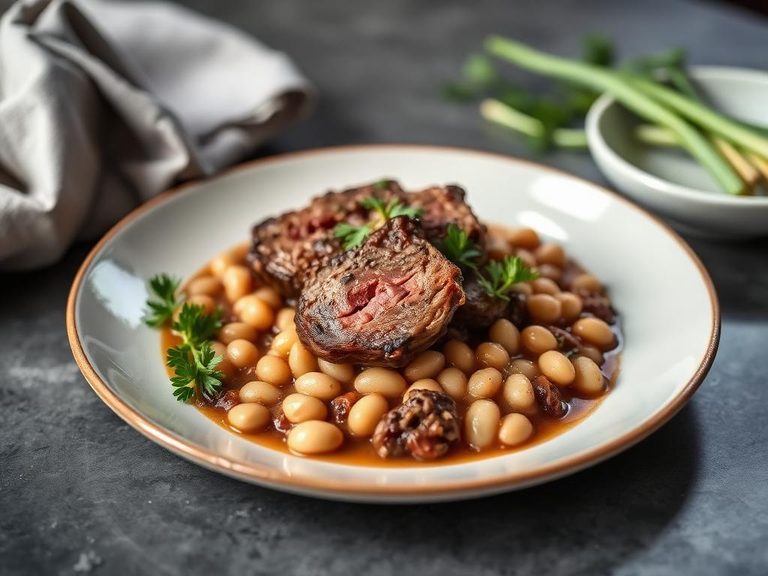
🍽️ Popular dishes
🌍 Where it's eaten
💡 Did you know?
Lamb breast is sometimes called the 'spare ribs of the lamb' due to its similar layered structure of meat, fat, and bone, making it ideal for slow roasting or braising until the fat renders and bastes the meat.
Full nutrition (USDA data · scales with serving)
| Water | 54.8 g |
| Energy | 270 kcal |
| Energy | 1131 kj |
| Protein | 28.2 g |
| Total lipid (fat) | 17.5 g |
| Ash | 0.75 g |
| Carbohydrate, by difference | 0.00 g |
| Fiber, total dietary | 0.00 g |
| Total Sugars | 0.00 g |
| Calcium, Ca | 25.0 mg |
| Iron, Fe | 1.9 mg |
| Magnesium, Mg | 20.0 mg |
| Phosphorus, P | 152 mg |
| Potassium, K | 183 mg |
| Sodium, Na | 86.0 mg |
| Zinc, Zn | 4.8 mg |
| Copper, Cu | 0.14 mg |
| Manganese, Mn | 0.00 mg |
| Selenium, Se | 6.4 ug |
| Vitamin C, total ascorbic acid | 0.00 mg |
| Thiamin | 0.03 mg |
| Riboflavin | 0.13 mg |
| Niacin | 3.7 mg |
| Pantothenic acid | 0.41 mg |
| Vitamin B-6 | 0.09 mg |
| Vitamin B-12 | 1.4 ug |
| Vitamin A, RAE | 5.0 ug |
| Retinol | 5.0 ug |
| Carotene, beta | 0.00 ug |
| Carotene, alpha | 0.00 ug |
| Cryptoxanthin, beta | 0.00 ug |
| Vitamin A, IU | 16.0 iu |
| Lycopene | 0.00 ug |
| Lutein + zeaxanthin | 0.00 ug |
| Vitamin E (alpha-tocopherol) | 0.39 mg |
| Vitamin D (D2 + D3), International Units | 1.0 iu |
| Vitamin D (D2 + D3) | 0.00 ug |
| Vitamin D3 (cholecalciferol) | 0.00 ug |
| Alcohol, ethyl | 0.00 g |
| Caffeine | 0.00 mg |
| Theobromine | 0.00 mg |
Fat & fatty acid profile (per 100g)
| Fatty acids, total saturated | 6.0 g |
| SFA 4:0 | 0.00 g |
| SFA 6:0 | 0.00 g |
| SFA 8:0 | 0.00 g |
| SFA 10:0 | 0.03 g |
| SFA 12:0 | 0.03 g |
| SFA 14:0 | 0.39 g |
| SFA 16:0 | 2.6 g |
| SFA 17:0 | 0.25 g |
| SFA 18:0 | 2.6 g |
| SFA 20:0 | 0.02 g |
| SFA 22:0 | 0.03 g |
| SFA 24:0 | 0.00 g |
| Fatty acids, total monounsaturated | 4.3 g |
| MUFA 14:1 | 0.02 g |
| MUFA 15:1 | 0.00 g |
| MUFA 16:1 | 0.19 g |
| MUFA 16:1 c | 0.17 g |
| MUFA 17:1 | 0.00 g |
| MUFA 18:1 | 4.1 g |
| MUFA 18:1 c | 3.7 g |
| MUFA 20:1 | 0.00 g |
| MUFA 22:1 | 0.00 g |
| MUFA 22:1 c | 0.00 g |
| MUFA 24:1 c | 0.00 g |
| Fatty acids, total polyunsaturated | 0.78 g |
| PUFA 18:2 | 0.48 g |
| PUFA 18:2 n-6 c,c | 0.20 g |
| PUFA 18:2 CLAs | 0.28 g |
| PUFA 18:3 | 0.19 g |
| PUFA 18:3 n-3 c,c,c (ALA) | 0.19 g |
| PUFA 18:3 n-6 c,c,c | 0.00 g |
| PUFA 18:4 | 0.00 g |
| PUFA 20:2 n-6 c,c | 0.00 g |
| PUFA 20:3 | 0.00 g |
| PUFA 20:3 n-3 | 0.00 g |
| PUFA 20:3 n-6 | 0.00 g |
| PUFA 20:4 | 0.04 g |
| PUFA 20:4 n-6 | 0.04 g |
| PUFA 20:5 n-3 (EPA) | 0.03 g |
| PUFA 22:5 n-3 (DPA) | 0.04 g |
| PUFA 22:6 n-3 (DHA) | 0.00 g |
| Fatty acids, total trans | 0.47 g |
| Fatty acids, total trans-monoenoic | 0.47 g |
| TFA 16:1 t | 0.02 g |
| TFA 18:1 t | 0.46 g |
| TFA 18:2 t,t | 0.00 g |
| Fatty acids, total trans-polyenoic | 0.00 g |
| Cholesterol | 102 mg |
Amino acid profile (per 100g)
| Tryptophan | 0.31 g |
| Threonine | 1.3 g |
| Isoleucine | 1.3 g |
| Leucine | 2.2 g |
| Lysine | 2.5 g |
| Methionine | 0.92 g |
| Cystine | 0.37 g |
| Phenylalanine | 1.1 g |
| Tyrosine | 0.98 g |
| Valine | 1.4 g |
| Arginine | 1.9 g |
| Histidine | 0.60 g |
| Alanine | 1.4 g |
| Glutamic acid | 3.9 g |
| Glycine | 1.2 g |
| Proline | 0.90 g |
| Serine | 0.96 g |
FAQ
What is the best cooking method for lamb breast?
Braising or slow-roasting is ideal. These moist-heat methods break down the connective tissue, rendering the fat and resulting in a tender, flavorful dish.
Is lamb breast a fatty cut?
It has a significant fat cap, but the 'separable lean only' specification refers to the lean meat after trimming. When braised, much of the fat renders out, leaving succulent meat.
How does New Zealand lamb differ?
New Zealand lamb is typically grass-fed, which can give it a distinct, slightly gamier flavor and a leaner profile compared to grain-fed lamb from other regions.
Nutrient density (calculated · NRF9.3)
Nutrient Rich Foods index: beneficial nutrients (protein, fiber, vitamins, minerals) minus saturated fat, added sugar & sodium, per 100 kcal.
NRF9.3 index — Fulgoni, Keast & Drewnowski, 2009. Computed from USDA nutrients.
Weight-loss friendliness (composite index)
Energy density 2.70 kcal/g · 42% calories from protein · 0.0 g fiber · 0.0 g sugar per 100 g.
Composite of energy density (Rolls et al., 1999), protein & fiber satiety, minus sugar. A calculated heuristic — ranks satiety-per-calorie, not a clinical measure.
Dietary load (calculated from USDA values)
Potential renal acid load. Positive = acid-forming, negative = alkaline-forming.
Sodium-to-potassium ratio: 0.47 (lower is better — aim for ≤ 1)
Sodium:potassium per WHO potassium guidance. Computed from USDA nutrients.