Cheese, parmesan, grated
Whole food · Dairy and Egg Products
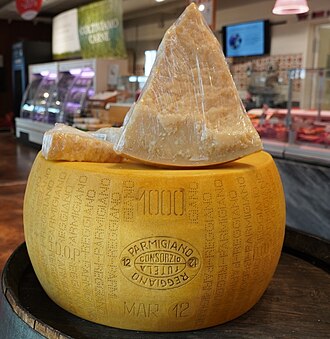
Photo: Wikipedia
Grated Parmesan is the dry, granular form of the iconic Italian hard cheese, known for its intense, salty, and deeply savory umami flavor with a crystalline, slightly gritty texture. Nutritionally, it's a protein powerhouse, delivering nearly 30 grams of protein per 100 grams, with a significant portion of its calories coming from fat.
💚 Why it's loved
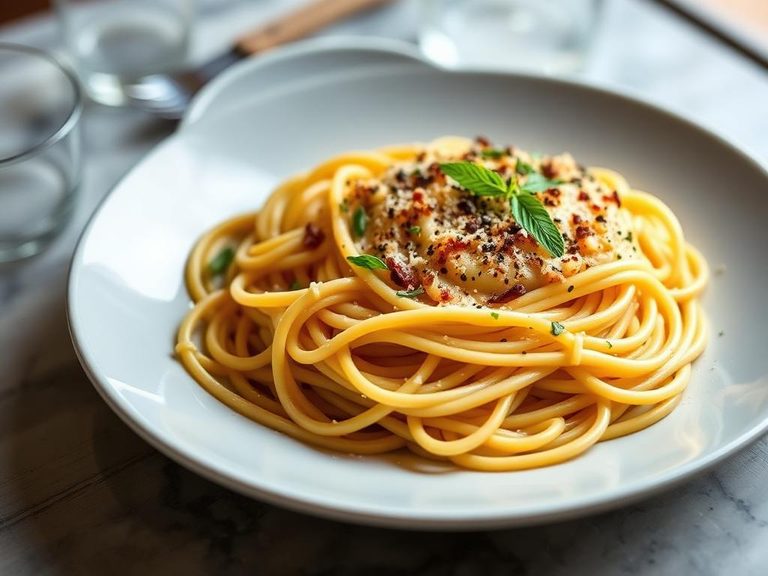
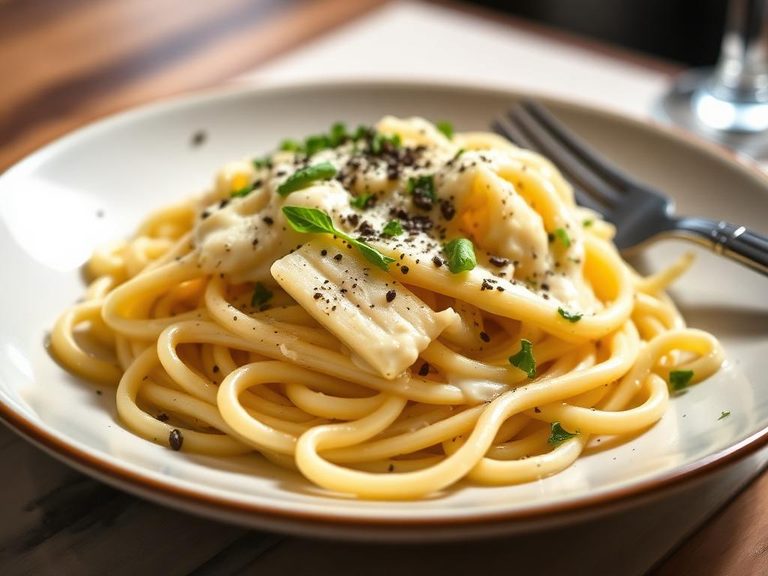
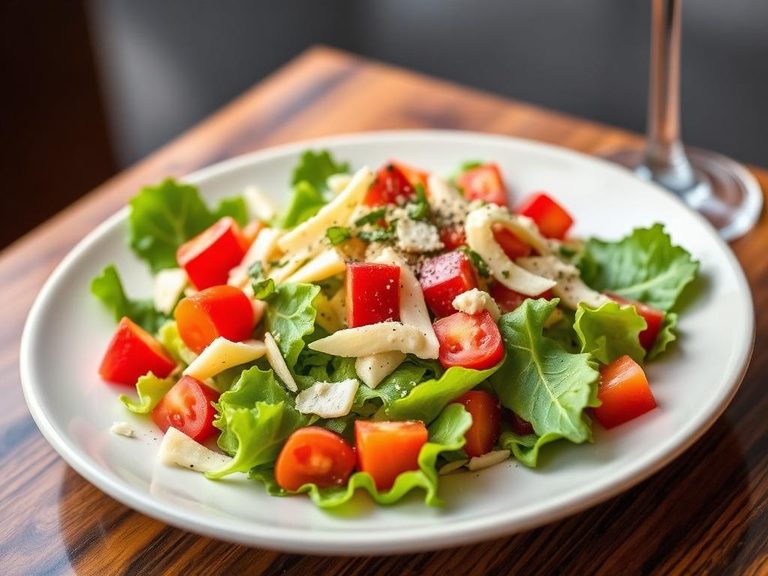
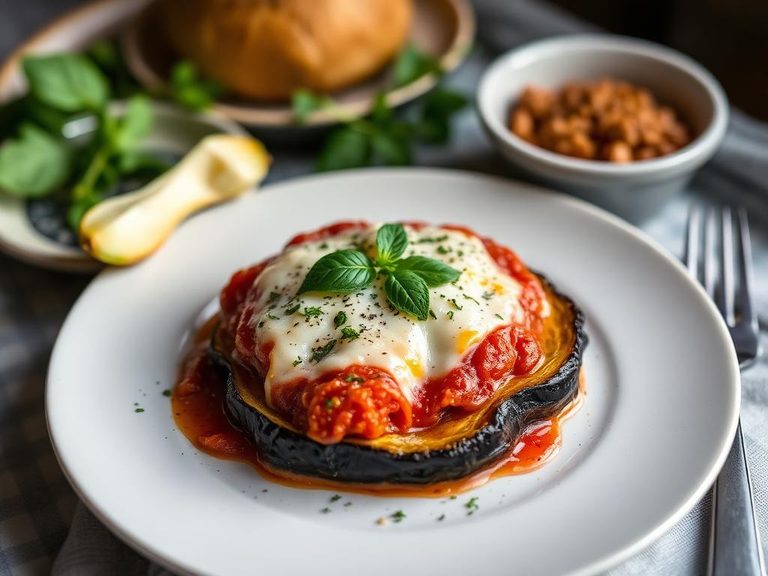
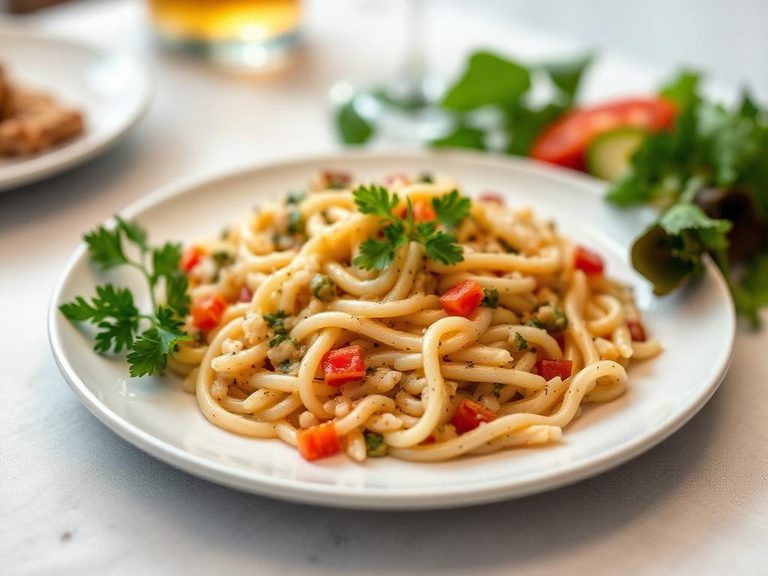
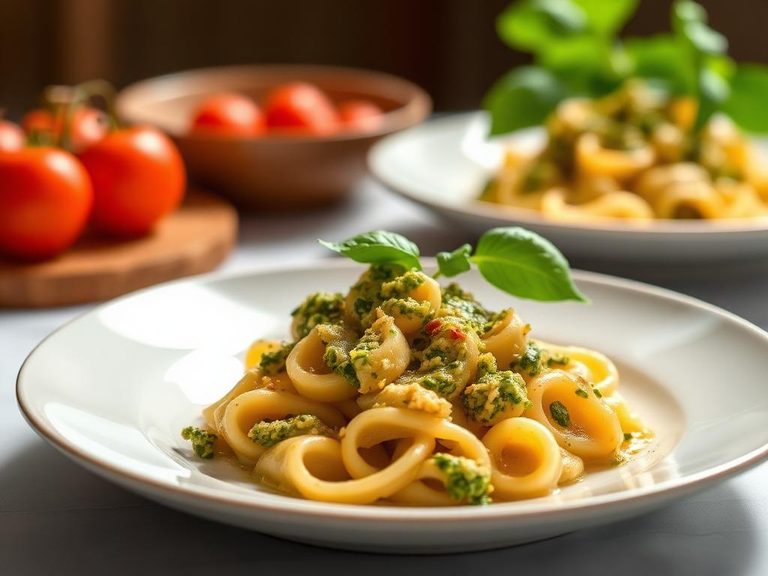
People adore it for its transformative power—a sprinkle instantly adds a complex, salty depth to pasta, soups, and salads. It's a cornerstone of Italian culinary tradition, embodying the concept of 'finishing' a dish with a burst of flavor.
⚠️ Watch-outs & how to enjoy it better
Its high sodium content can be a concern for those monitoring blood pressure, and its calorie density requires portion awareness. Those with dairy allergies or severe lactose intolerance should avoid it. To mitigate sodium intake, use it as a flavor accent rather than a main ingredient, and pair it with potassium-rich foods like leafy greens or tomatoes.
Key benefits
- Exceptionally high in protein for muscle maintenance.
- Rich source of calcium for bone health.
- Contains vitamin K2, important for calcium metabolism.
- Provides a concentrated dose of umami flavor, reducing need for added salt.
- Low in lactose due to the aging process.
🍽️ Popular dishes
🌍 Where it's eaten
💡 Did you know?
True Parmigiano-Reggiano is legally protected by a DOP (Protected Designation of Origin) and must be produced only in specific provinces of Italy, using a traditional method that has remained largely unchanged for over 800 years.
Full nutrition (scales with serving)
| Water | 22.8 g |
| Energy (Atwater General Factors) | 420 kcal |
| Energy (Atwater Specific Factors) | 420 kcal |
| Energy | 421 kcal |
| Energy | 1760 kj |
| Nitrogen | 4.6 g |
| Protein | 29.6 g |
| Total lipid (fat) | 28.0 g |
| Total fat (NLEA) | 24.0 g |
| Ash | 7.2 g |
| Carbohydrate, by difference | 12.4 g |
| Sugars, Total | 0.07 g |
| Sucrose | 0.00 g |
| Glucose | 0.00 g |
| Fructose | 0.00 g |
| Lactose | 0.00 g |
| Maltose | 0.00 g |
| Galactose | 0.07 g |
| Calcium, Ca | 884 mg |
| Iron, Fe | 0.45 mg |
| Magnesium, Mg | 34.9 mg |
| Phosphorus, P | 634 mg |
| Potassium, K | 184 mg |
| Sodium, Na | 1750 mg |
| Zinc, Zn | 4.3 mg |
| Copper, Cu | 0.04 mg |
| Manganese, Mn | 0.07 mg |
| Selenium, Se | 35.0 ug |
| Thiamin | 0.03 mg |
| Riboflavin | 0.34 mg |
| Niacin | 0.08 mg |
| Pantothenic acid | 0.46 mg |
| Vitamin B-6 | 0.08 mg |
| Folate, total | 6.0 ug |
| Choline, total | 14.1 mg |
| Choline, free | 1.7 mg |
| Choline, from phosphocholine | 0.00 mg |
| Choline, from phosphotidyl choline | 4.9 mg |
| Choline, from glycerophosphocholine | 3.1 mg |
| Choline, from sphingomyelin | 4.4 mg |
| Betaine | 0.20 mg |
| Vitamin B-12 | 1.4 ug |
| Vitamin A, RAE | 228 ug |
| Retinol | 228 ug |
| Vitamin E (alpha-tocopherol) | 0.51 mg |
| Tocopherol, beta | 0.00 mg |
| Tocopherol, gamma | 0.01 mg |
| Tocopherol, delta | 0.00 mg |
| Tocotrienol, alpha | 0.00 mg |
| Tocotrienol, beta | 0.00 mg |
| Tocotrienol, gamma | 0.00 mg |
| Tocotrienol, delta | 0.00 mg |
| Vitamin K (phylloquinone) | 1.7 ug |
| Vitamin K (Dihydrophylloquinone) | 0.00 ug |
| Vitamin K (Menaquinone-4) | 7.1 ug |
| Fatty acids, total saturated | 15.5 g |
| SFA 4:0 | 0.51 g |
| SFA 6:0 | 0.43 g |
| SFA 8:0 | 0.27 g |
| SFA 10:0 | 0.65 g |
| SFA 11:0 | 0.00 g |
| SFA 12:0 | 0.74 g |
| SFA 14:0 | 2.4 g |
| SFA 15:0 | 0.24 g |
| SFA 16:0 | 7.4 g |
| SFA 17:0 | 0.15 g |
| SFA 18:0 | 2.7 g |
| SFA 20:0 | 0.05 g |
| SFA 22:0 | 0.01 g |
| SFA 24:0 | 0.01 g |
| Fatty acids, total monounsaturated | 6.4 g |
| MUFA 14:1 c | 0.23 g |
| MUFA 15:1 | 0.00 g |
| MUFA 16:1 c | 0.29 g |
| MUFA 17:1 | 0.04 g |
| MUFA 17:1 c | 0.04 g |
| MUFA 18:1 c | 5.8 g |
| MUFA 20:1 | 0.05 g |
| MUFA 20:1 c | 0.05 g |
| MUFA 22:1 c | 0.00 g |
| MUFA 24:1 c | 0.00 g |
| Fatty acids, total polyunsaturated | 1.2 g |
| PUFA 18:2 c | 1.00 g |
| PUFA 18:2 n-6 c,c | 0.86 g |
| PUFA 18:2 CLAs | 0.14 g |
| PUFA 18:3 c | 0.10 g |
| PUFA 18:3 n-3 c,c,c (ALA) | 0.10 g |
| PUFA 18:3 n-6 c,c,c | 0.00 g |
| PUFA 18:3i | 0.00 g |
| PUFA 18:4 | 0.00 g |
| PUFA 20:2 c | 0.01 g |
| PUFA 20:2 n-6 c,c | 0.01 g |
| PUFA 20:3 c | 0.03 g |
| PUFA 20:3 n-3 | 0.00 g |
| PUFA 20:3 n-6 | 0.03 g |
| PUFA 20:3 n-9 | 0.00 g |
| PUFA 20:4 | 0.04 g |
| PUFA 20:4c | 0.04 g |
| PUFA 20:5c | 0.01 g |
| PUFA 20:5 n-3 (EPA) | 0.01 g |
| PUFA 22:2 | 0.00 g |
| PUFA 22:5 c | 0.01 g |
| PUFA 22:4 | 0.01 g |
| PUFA 22:5 n-3 (DPA) | 0.01 g |
| PUFA 22:6 c | 0.00 g |
| PUFA 22:6 n-3 (DHA) | 0.00 g |
| Fatty acids, total trans | 0.90 g |
| Fatty acids, total trans-monoenoic | 0.72 g |
| TFA 16:1 t | 0.08 g |
| TFA 18:1 t | 0.65 g |
| TFA 22:1 t | 0.00 g |
| Fatty acids, total trans-dienoic | 0.17 g |
| TFA 18:2 t not further defined | 0.17 g |
| Cholesterol | 87.0 mg |
FAQ
Is grated Parmesan the same as Parmigiano-Reggiano?
Not always. 'Parmesan' is a generic term, while 'Parmigiano-Reggiano' is the protected Italian original. Pre-grated shakers often contain anti-caking agents and may be a blend of cheeses.
Why does grated Parmesan sometimes clump in the container?
This is natural. The cheese's natural oils and moisture can cause the fine particles to stick together, especially if exposed to temperature changes. It's still safe to eat.
Can I use grated Parmesan in baking?
Yes, it's excellent in savory baking like cheese straws, breadsticks, or sprinkled on focaccia dough before baking for a crispy, flavorful crust.