

Candies, TOBLERONE, milk chocolate with honey and almond nougat
Whole food · Sweets

Photo: Wikipedia
Toblerone is an iconic Swiss chocolate bar famous for its distinctive triangular prism shape and honey-almond nougat crunch. The milk chocolate is creamy and sweet, with a satisfying snap and a chewy, nutty texture from the nougat pieces. Per 100g, it's a calorie-dense treat at 489 kcal, with over half its weight coming from carbohydrates, primarily from 55.74g of sugar.
Calorie split: 4% protein · 47% carbs · 49% fat
↓ Full nutrition💚 Why it's loved
People love Toblerone for its unique, recognizable shape and the delightful combination of smooth milk chocolate with the crunchy, chewy honey-almond nougat. It's often associated with travel, gifting, and nostalgia, making it a culturally iconic confection.
⚠️ Watch-outs & how to enjoy it better
Its high sugar (55.74g/100g) and fat (28.57g/100g) content can contribute to blood-sugar spikes and is a consideration for those monitoring calorie or sugar intake. It contains common allergens like milk, almonds, and may have traces of other nuts. To enjoy it more mindfully, practice portion control by breaking off a single triangle, and pair it with a source of protein or fat (like a handful of nuts or a piece of cheese) to help slow sugar absorption.
Key benefits
- Provides a quick source of energy from carbohydrates
- Contains some protein (5.71g/100g) from milk and almonds
- Offers a small amount of dietary fiber (2.5g/100g)
- Can be a mood booster or reward food in moderation
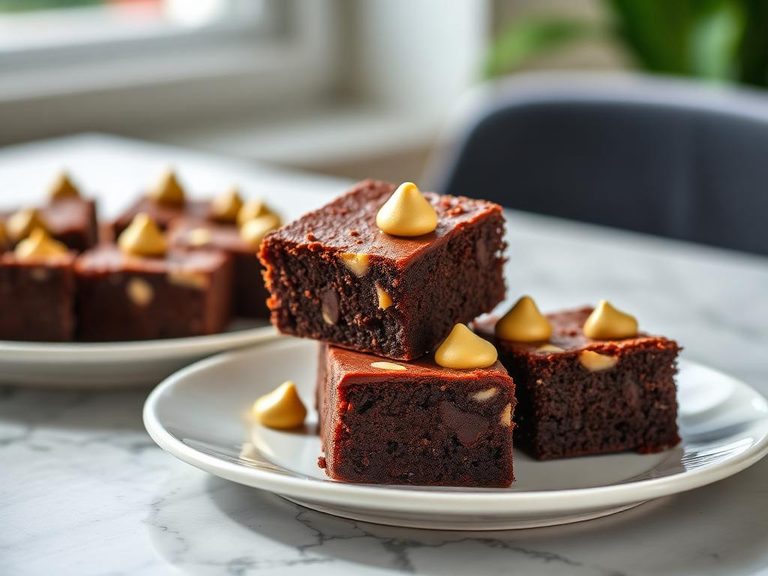
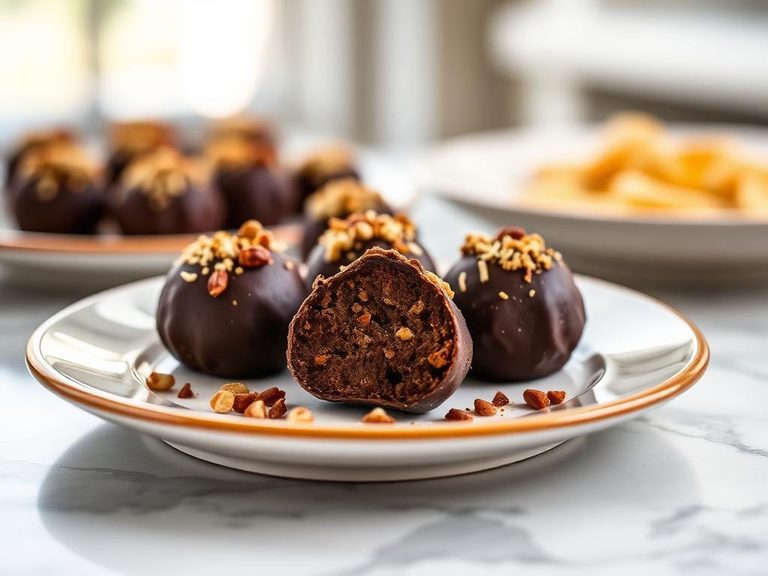
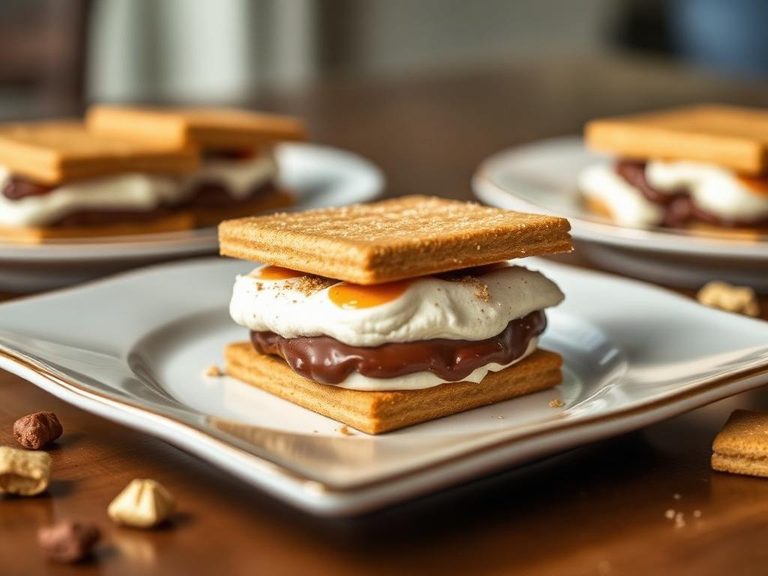
🍽️ Popular dishes


🌍 Where it's eaten
💡 Did you know?
The triangular shape of the Toblerone bar was reportedly inspired by the Matterhorn mountain in the Swiss Alps.
Full nutrition (USDA data · scales with serving)
| Water | 3.3 g |
| Energy | 489 kcal |
| Energy | 2045 kj |
| Protein | 5.7 g |
| Total lipid (fat) | 28.6 g |
| Ash | 1.2 g |
| Carbohydrate, by difference | 61.2 g |
| Fiber, total dietary | 2.5 g |
| Total Sugars | 55.7 g |
| Starch | 0.02 g |
| Calcium, Ca | 126 mg |
| Iron, Fe | 1.6 mg |
| Magnesium, Mg | 47.0 mg |
| Phosphorus, P | 145 mg |
| Potassium, K | 260 mg |
| Sodium, Na | 54.0 mg |
| Zinc, Zn | 1.5 mg |
| Copper, Cu | 0.34 mg |
| Manganese, Mn | 0.36 mg |
| Selenium, Se | 3.6 ug |
| Fluoride, F | 3.3 ug |
| Vitamin C, total ascorbic acid | 0.00 mg |
| Thiamin | 0.08 mg |
| Riboflavin | 0.24 mg |
| Niacin | 0.35 mg |
| Pantothenic acid | 0.32 mg |
| Vitamin B-6 | 0.03 mg |
| Folate, total | 9.0 ug |
| Folic acid | 0.00 ug |
| Folate, food | 9.0 ug |
| Folate, DFE | 9.0 ug |
| Choline, total | 60.5 mg |
| Betaine | 1.7 mg |
| Vitamin B-12 | 0.47 ug |
| Vitamin B-12, added | 0.00 ug |
| Vitamin A, RAE | 37.0 ug |
| Retinol | 37.0 ug |
| Carotene, beta | 0.00 ug |
| Carotene, alpha | 0.00 ug |
| Cryptoxanthin, beta | 0.00 ug |
| Vitamin A, IU | 122 iu |
| Lycopene | 0.00 ug |
| Lutein + zeaxanthin | 4.0 ug |
| Vitamin E (alpha-tocopherol) | 1.8 mg |
| Vitamin E, added | 0.00 mg |
| Tocopherol, beta | 0.01 mg |
| Tocopherol, gamma | 0.59 mg |
| Tocopherol, delta | 0.00 mg |
| Vitamin D (D2 + D3), International Units | 0.00 iu |
| Vitamin D (D2 + D3) | 0.00 ug |
| Vitamin K (phylloquinone) | 19.4 ug |
| Vitamin K (Dihydrophylloquinone) | 0.00 ug |
| Alcohol, ethyl | 0.00 g |
| Caffeine | 12.0 mg |
| Theobromine | 128 mg |
Fat & fatty acid profile (per 100g)
| Fatty acids, total saturated | 17.1 g |
| SFA 4:0 | 0.29 g |
| SFA 6:0 | 0.08 g |
| SFA 8:0 | 0.09 g |
| SFA 10:0 | 0.20 g |
| SFA 12:0 | 0.21 g |
| SFA 13:0 | 0.00 g |
| SFA 14:0 | 0.99 g |
| SFA 15:0 | 0.00 g |
| SFA 16:0 | 8.4 g |
| SFA 17:0 | 0.01 g |
| SFA 18:0 | 6.8 g |
| SFA 20:0 | 0.06 g |
| SFA 22:0 | 0.01 g |
| SFA 24:0 | 0.00 g |
| Fatty acids, total monounsaturated | 3.7 g |
| MUFA 14:1 | 0.00 g |
| MUFA 15:1 | 0.00 g |
| MUFA 16:1 | 0.19 g |
| MUFA 17:1 | 0.00 g |
| MUFA 18:1 | 3.6 g |
| MUFA 20:1 | 0.00 g |
| MUFA 22:1 | 0.00 g |
| MUFA 24:1 c | 0.00 g |
| Fatty acids, total polyunsaturated | 3.2 g |
| PUFA 18:2 | 2.9 g |
| PUFA 18:3 | 0.33 g |
| PUFA 18:4 | 0.00 g |
| PUFA 20:2 n-6 c,c | 0.00 g |
| PUFA 20:3 | 0.00 g |
| PUFA 20:4 | 0.00 g |
| PUFA 20:5 n-3 (EPA) | 0.00 g |
| PUFA 22:5 n-3 (DPA) | 0.00 g |
| PUFA 22:6 n-3 (DHA) | 0.00 g |
| Fatty acids, total trans | 0.00 g |
| Cholesterol | 14.0 mg |
| Stigmasterol | 10.0 mg |
| Campesterol | 4.0 mg |
| Beta-sitosterol | 27.0 mg |
Amino acid profile (per 100g)
Estimated from Candies, honey-combed, with peanut butter — USDA does not publish this profile for Candies.
| Tryptophan | 0.09 g |
| Threonine | 0.21 g |
| Isoleucine | 0.24 g |
| Leucine | 0.61 g |
| Lysine | 0.27 g |
| Methionine | 0.10 g |
| Cystine | 0.09 g |
| Phenylalanine | 0.47 g |
| Tyrosine | 0.33 g |
| Valine | 0.31 g |
| Arginine | 1.1 g |
| Histidine | 0.22 g |
| Alanine | 0.36 g |
| Aspartic acid | 1.2 g |
| Glutamic acid | 2.0 g |
| Glycine | 0.56 g |
| Proline | 0.55 g |
| Serine | 0.58 g |
FAQ
What does Toblerone taste like?
It has a sweet, creamy milk chocolate flavor with a distinctive honey sweetness and a crunchy, chewy texture from the almond nougat pieces.
Is Toblerone gluten-free?
While the core ingredients are gluten-free, Toblerone is produced in facilities that handle wheat, so there is a risk of cross-contamination. Always check the packaging for the most current allergen information.
Why is Toblerone so expensive?
Its price reflects its premium positioning, Swiss heritage, unique packaging, and the use of ingredients like real honey and almonds. It's often sold in travel retail locations, which can also affect pricing.
Nutrient density (calculated · NRF9.3)
Nutrient Rich Foods index: beneficial nutrients (protein, fiber, vitamins, minerals) minus saturated fat, added sugar & sodium, per 100 kcal.
NRF9.3 index — Fulgoni, Keast & Drewnowski, 2009. Computed from USDA nutrients.
Weight-loss friendliness (composite index)
Energy density 4.89 kcal/g · 5% calories from protein · 2.5 g fiber · 55.7 g sugar per 100 g.
Composite of energy density (Rolls et al., 1999), protein & fiber satiety, minus sugar. A calculated heuristic — ranks satiety-per-calorie, not a clinical measure.
Dietary load (calculated from USDA values)
Potential renal acid load. Positive = acid-forming, negative = alkaline-forming.
Sodium-to-potassium ratio: 0.21 (lower is better — aim for ≤ 1)
Sodium:potassium per WHO potassium guidance. Computed from USDA nutrients.