

Beef, shoulder steak, boneless, separable lean and fat, trimmed to 0" fat, all grades, cooked, grilled
Whole food · Beef Products

Photo: Wikipedia
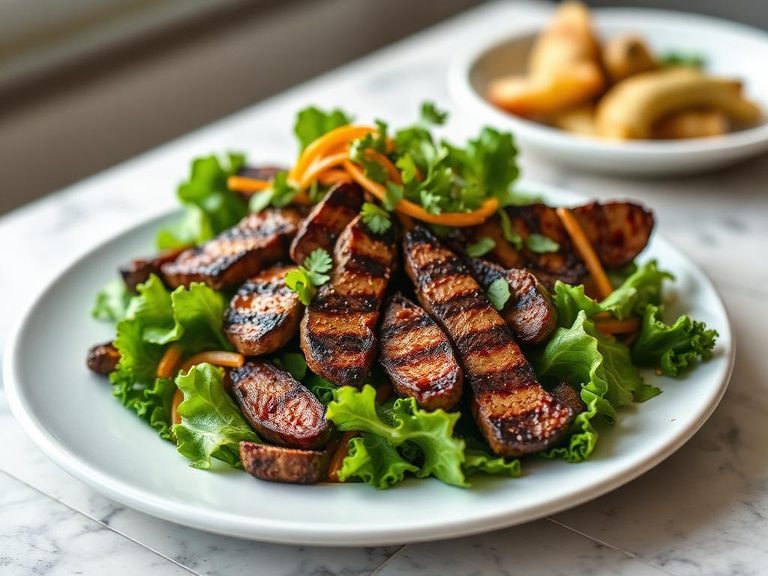
This is a lean, boneless cut from the beef shoulder, grilled to a smoky, savory finish. Its texture is firm yet tender when sliced against the grain, offering a robust beefy flavor with minimal marbling. Nutritionally, it's a protein powerhouse with virtually no carbohydrates or sugar.
Calorie split: 65% protein · 0% carbs · 35% fat
↓ Full nutrition💚 Why it's loved
People love it for its deep, meaty flavor that stands up well to grilling, searing, and marinating. It's a versatile, budget-friendly cut that delivers steakhouse satisfaction without excessive fat.
⚠️ Watch-outs & how to enjoy it better
As a lean cut, it can become tough and dry if overcooked. To counteract this, marinate it for at least 30 minutes to tenderize, cook to medium-rare or medium (135-145°F internal temp), and always let it rest for 5-10 minutes before slicing thinly against the grain.
Key benefits
- Excellent source of complete protein for muscle maintenance and satiety.
- Very low in fat, especially saturated fat, compared to many other beef cuts.
- Zero carbohydrates and sugar, making it ideal for low-carb and ketogenic diets.
- Rich in essential minerals like iron, zinc, and B vitamins (especially B12).
- Provides a highly bioavailable form of heme iron, more easily absorbed than plant-based iron.
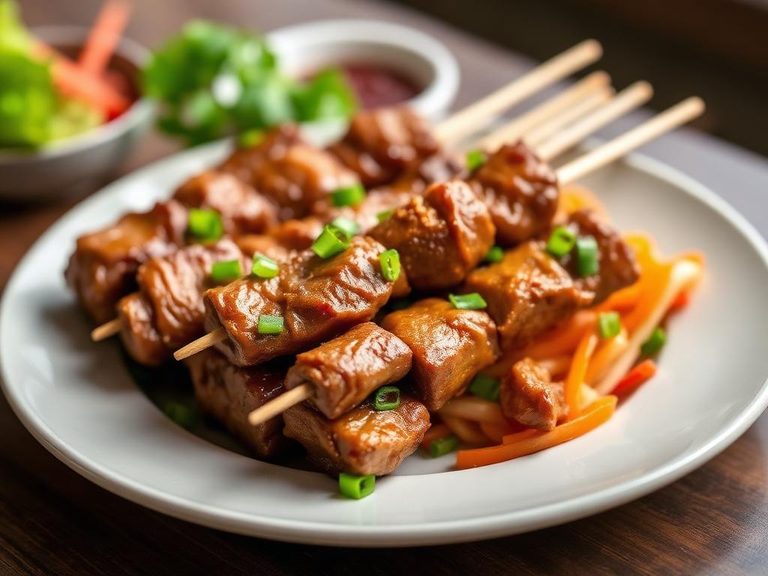
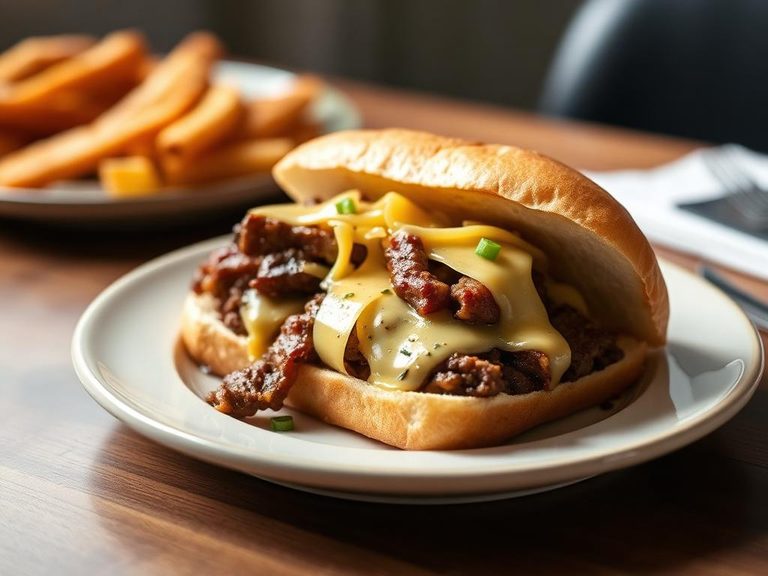
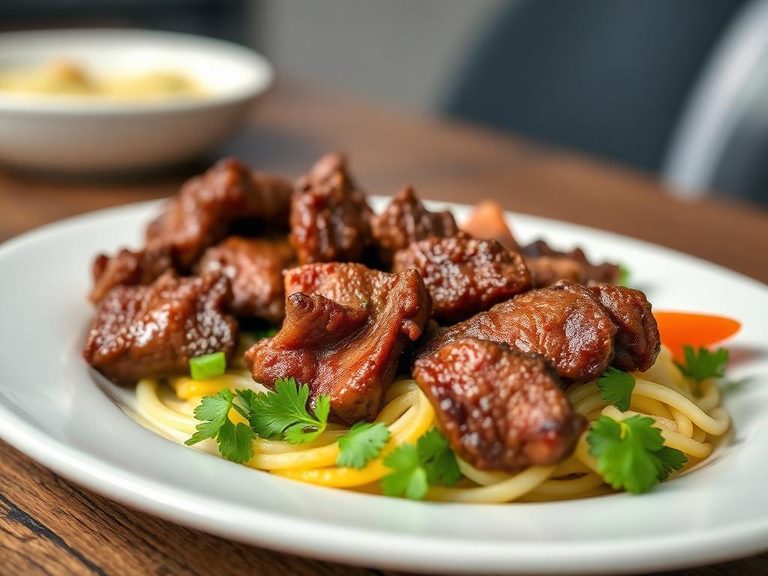
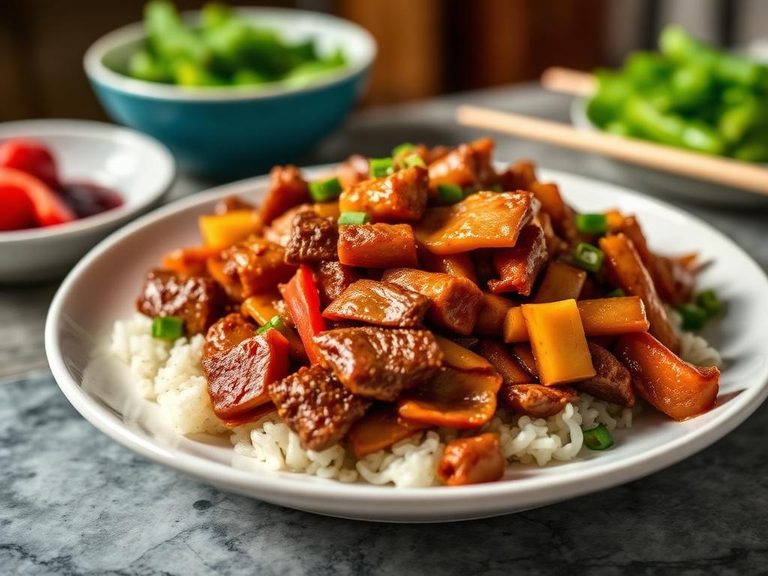
🍽️ Popular dishes
🌍 Where it's eaten
💡 Did you know?
The shoulder steak is sometimes called a 'poor man's ribeye' because it can develop a similar rich flavor when cooked properly, despite being from a completely different part of the animal.
Full nutrition (USDA data · scales with serving)
| Water | 64.0 g |
| Energy | 182 kcal |
| Energy | 762 kj |
| Protein | 28.3 g |
| Total lipid (fat) | 6.8 g |
| Ash | 1.2 g |
| Carbohydrate, by difference | 0.00 g |
| Fiber, total dietary | 0.00 g |
| Total Sugars | 0.00 g |
| Calcium, Ca | 12.0 mg |
| Iron, Fe | 2.9 mg |
| Magnesium, Mg | 25.0 mg |
| Phosphorus, P | 245 mg |
| Potassium, K | 366 mg |
| Sodium, Na | 67.0 mg |
| Zinc, Zn | 8.0 mg |
| Copper, Cu | 0.10 mg |
| Manganese, Mn | 0.01 mg |
| Selenium, Se | 31.7 ug |
| Vitamin C, total ascorbic acid | 0.00 mg |
| Thiamin | 0.09 mg |
| Riboflavin | 0.22 mg |
| Niacin | 5.5 mg |
| Pantothenic acid | 0.78 mg |
| Vitamin B-6 | 0.67 mg |
| Folate, total | 7.0 ug |
| Folic acid | 0.00 ug |
| Folate, food | 7.0 ug |
| Folate, DFE | 7.0 ug |
| Choline, total | 87.5 mg |
| Betaine | 14.1 mg |
| Vitamin B-12 | 3.4 ug |
| Vitamin B-12, added | 0.00 ug |
| Vitamin A, RAE | 6.0 ug |
| Retinol | 6.0 ug |
| Carotene, beta | 0.00 ug |
| Carotene, alpha | 0.00 ug |
| Cryptoxanthin, beta | 0.00 ug |
| Vitamin A, IU | 20.0 iu |
| Lycopene | 0.00 ug |
| Lutein + zeaxanthin | 0.00 ug |
| Vitamin E (alpha-tocopherol) | 0.10 mg |
| Vitamin E, added | 0.00 mg |
| Vitamin D (D2 + D3), International Units | 4.0 iu |
| Vitamin D (D2 + D3) | 0.10 ug |
| Vitamin D3 (cholecalciferol) | 0.10 ug |
| Vitamin K (phylloquinone) | 1.6 ug |
| Alcohol, ethyl | 0.00 g |
| Caffeine | 0.00 mg |
| Theobromine | 0.00 mg |
Fat & fatty acid profile (per 100g)
| Fatty acids, total saturated | 2.9 g |
| SFA 4:0 | 0.00 g |
| SFA 6:0 | 0.00 g |
| SFA 8:0 | 0.00 g |
| SFA 10:0 | 0.00 g |
| SFA 12:0 | 0.00 g |
| SFA 14:0 | 0.19 g |
| SFA 16:0 | 1.6 g |
| SFA 17:0 | 0.08 g |
| SFA 18:0 | 1.0 g |
| SFA 20:0 | 0.00 g |
| SFA 24:0 | 0.01 g |
| Fatty acids, total monounsaturated | 3.5 g |
| MUFA 14:1 | 0.04 g |
| MUFA 16:1 | 0.23 g |
| MUFA 16:1 c | 0.23 g |
| MUFA 17:1 | 0.06 g |
| MUFA 18:1 | 3.2 g |
| MUFA 18:1 c | 2.8 g |
| MUFA 18:1-11 t (18:1t n-7) | 0.22 g |
| MUFA 20:1 | 0.01 g |
| MUFA 22:1 | 0.00 g |
| Fatty acids, total polyunsaturated | 0.41 g |
| PUFA 18:2 | 0.34 g |
| PUFA 18:2 n-6 c,c | 0.31 g |
| PUFA 18:2 CLAs | 0.03 g |
| PUFA 18:3 | 0.01 g |
| PUFA 18:3 n-3 c,c,c (ALA) | 0.01 g |
| PUFA 18:4 | 0.00 g |
| PUFA 20:2 n-6 c,c | 0.00 g |
| PUFA 20:4 | 0.05 g |
| PUFA 20:5 n-3 (EPA) | 0.00 g |
| PUFA 22:5 n-3 (DPA) | 0.00 g |
| PUFA 22:6 n-3 (DHA) | 0.00 g |
| Fatty acids, total trans | 0.39 g |
| Fatty acids, total trans-monoenoic | 0.39 g |
| TFA 18:1 t | 0.39 g |
| Cholesterol | 81.0 mg |
Amino acid profile (per 100g)
| Tryptophan | 0.32 g |
| Threonine | 1.2 g |
| Isoleucine | 1.2 g |
| Leucine | 2.3 g |
| Lysine | 2.5 g |
| Methionine | 0.80 g |
| Cystine | 0.30 g |
| Phenylalanine | 1.1 g |
| Tyrosine | 0.98 g |
| Valine | 1.3 g |
| Arginine | 1.9 g |
| Histidine | 0.92 g |
| Alanine | 1.6 g |
| Aspartic acid | 2.5 g |
| Glutamic acid | 4.5 g |
| Glycine | 1.3 g |
| Proline | 1.2 g |
| Serine | 1.1 g |
| Hydroxyproline | 0.19 g |
FAQ
How do I prevent shoulder steak from being tough?
The key is preparation and cooking method. Marinate it in an acidic mixture (like citrus juice or vinegar) or a enzymatic tenderizer (like pineapple juice) for 30 minutes to 2 hours. Cook it quickly over high heat (grill or cast-iron skillet) to medium-rare or medium, and always slice it thinly against the grain before serving.
Is this a healthy cut of beef?
Yes, it is considered one of the leaner and healthier cuts. With only 6.8g of fat per 100g and 28g of protein, it's low in calories and fat while being nutrient-dense, providing high-quality protein and essential minerals like iron and zinc.
What's the difference between shoulder steak and chuck steak?
They come from the same general area (the shoulder), but 'shoulder steak' typically refers to a boneless, leaner steak cut from the chuck roll or top blade. 'Chuck steak' is a broader term that often includes more connective tissue and may be bone-in, making it better suited for slow braising rather than quick grilling.
Nutrient density (calculated · NRF9.3)
Nutrient Rich Foods index: beneficial nutrients (protein, fiber, vitamins, minerals) minus saturated fat, added sugar & sodium, per 100 kcal.
NRF9.3 index — Fulgoni, Keast & Drewnowski, 2009. Computed from USDA nutrients.
Weight-loss friendliness (composite index)
Energy density 1.82 kcal/g · 62% calories from protein · 0.0 g fiber · 0.0 g sugar per 100 g.
Composite of energy density (Rolls et al., 1999), protein & fiber satiety, minus sugar. A calculated heuristic — ranks satiety-per-calorie, not a clinical measure.
Dietary load (calculated from USDA values)
Potential renal acid load. Positive = acid-forming, negative = alkaline-forming.
Sodium-to-potassium ratio: 0.18 (lower is better — aim for ≤ 1)
Sodium:potassium per WHO potassium guidance. Computed from USDA nutrients.