

Beef, rib, back ribs, bone-in, separable lean only, trimmed to 0" fat, choice, raw
Whole food · Beef Products
This is a lean cut of beef from the back ribs, meticulously trimmed to zero visible fat. It offers a robust, beefy flavor with a tender, yet slightly chewy texture that holds up well to slow cooking. Nutritionally, it's a powerhouse of protein with minimal carbohydrates and a moderate amount of fat.
Calorie split: 30% protein · 1% carbs · 69% fat
↓ Full nutrition💚 Why it's loved
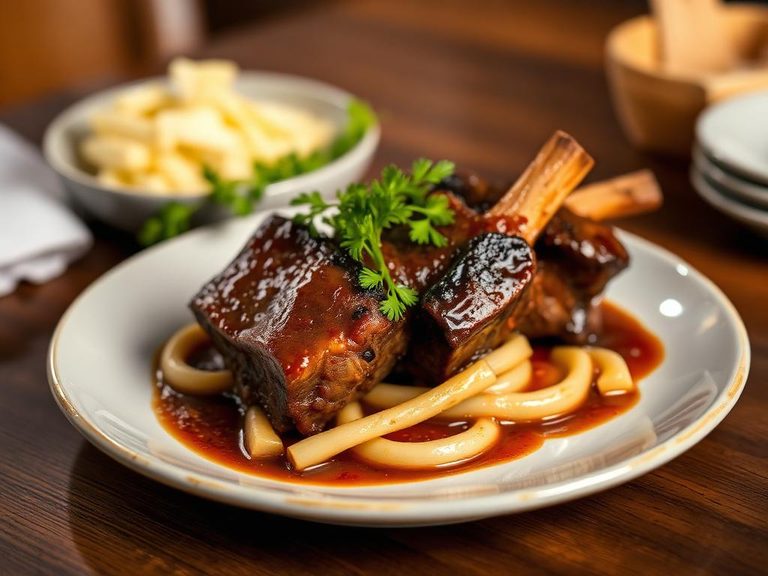
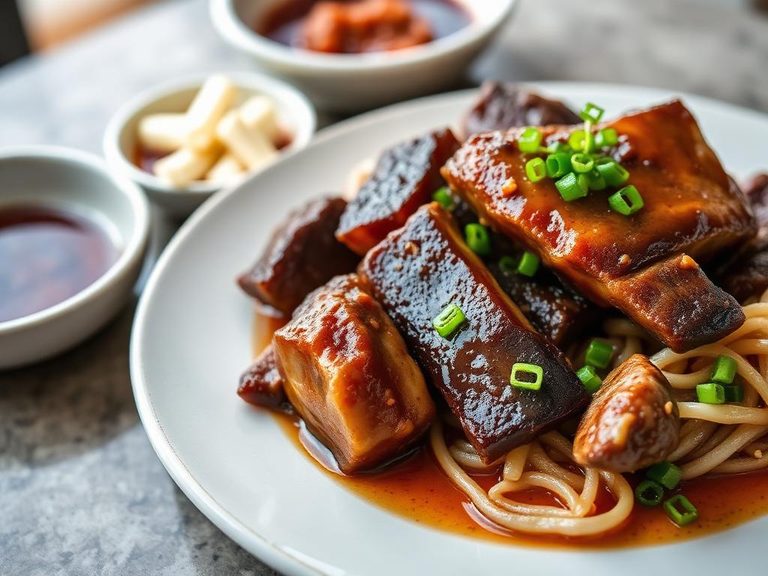
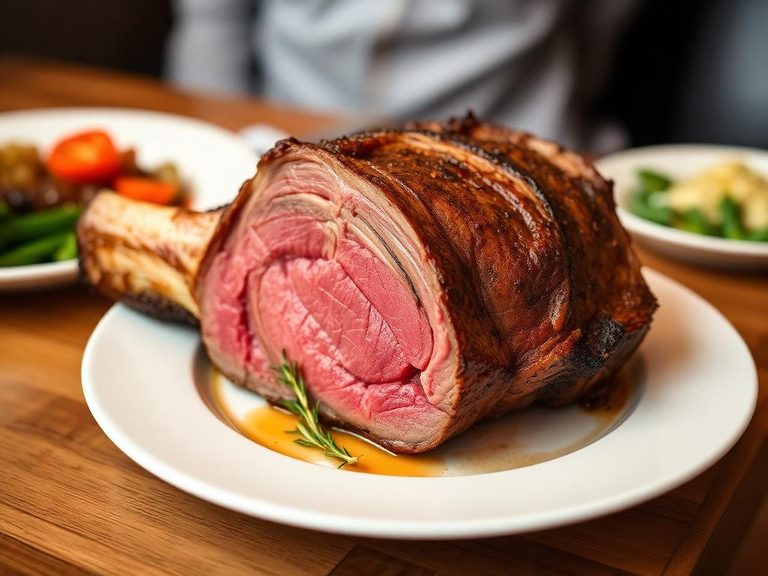
People love it for its deep, savory beef flavor and the satisfying texture that becomes incredibly tender when braised or roasted. It's a versatile centerpiece for both simple weeknight meals and festive gatherings across many cultures.
⚠️ Watch-outs & how to enjoy it better
The leanness can make it prone to drying out if overcooked, requiring careful preparation like braising or slow-rooking. Those monitoring saturated fat intake should still practice portion control, as even trimmed red meat contains some. Counteract this by pairing it with fiber-rich vegetables and using moist-heat cooking methods.
Key benefits
- Excellent source of complete, high-quality protein
- Very low in carbohydrates and sugars
- Provides essential minerals like zinc and iron
- Trimmed cut reduces overall saturated fat intake
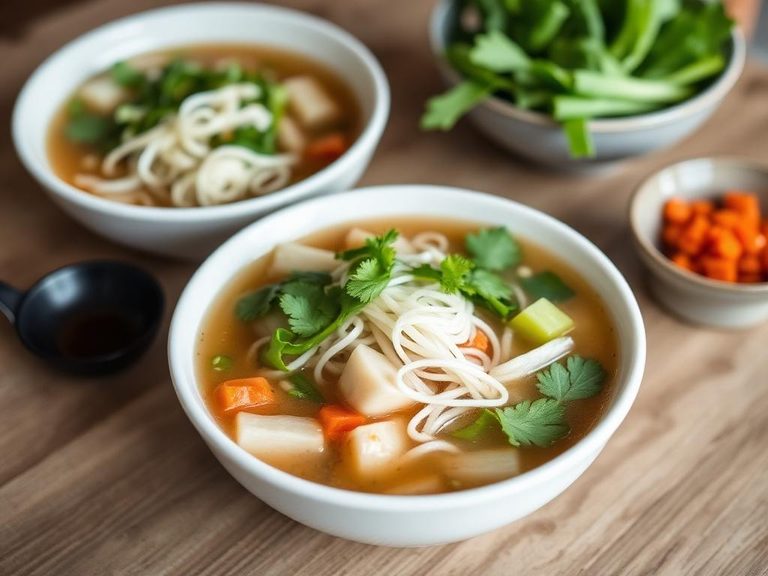
🍽️ Popular dishes
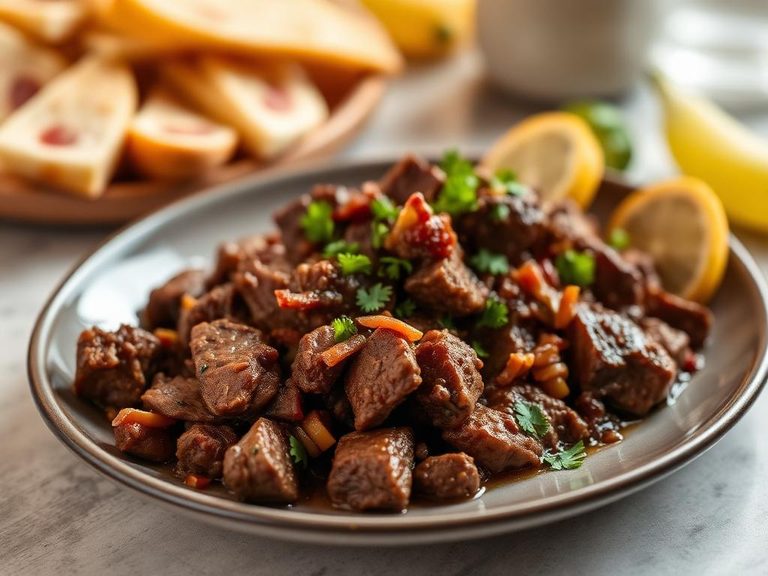
🌍 Where it's eaten
💡 Did you know?
The 'back ribs' come from the section of the cow between the 6th and 12th ribs, and because they're located under the backbone, they are actually a different cut from the more well-known 'short ribs' which come from the chuck and plate.
Full nutrition (USDA data · scales with serving)
| Water | 60.5 g |
| Energy | 252 kcal |
| Energy | 1053 kj |
| Protein | 18.7 g |
| Total lipid (fat) | 19.4 g |
| Ash | 0.80 g |
| Carbohydrate, by difference | 0.64 g |
| Fiber, total dietary | 0.00 g |
| Total Sugars | 0.00 g |
| Calcium, Ca | 8.0 mg |
| Iron, Fe | 1.8 mg |
| Magnesium, Mg | 20.0 mg |
| Phosphorus, P | 146 mg |
| Potassium, K | 254 mg |
| Sodium, Na | 61.0 mg |
| Zinc, Zn | 4.5 mg |
| Copper, Cu | 0.07 mg |
| Selenium, Se | 20.2 ug |
| Vitamin C, total ascorbic acid | 0.00 mg |
| Thiamin | 0.09 mg |
| Riboflavin | 0.25 mg |
| Niacin | 4.4 mg |
| Vitamin B-6 | 0.42 mg |
| Folate, total | 3.0 ug |
| Folic acid | 0.00 ug |
| Folate, food | 3.0 ug |
| Folate, DFE | 3.0 ug |
| Vitamin B-12 | 1.7 ug |
| Vitamin B-12, added | 0.00 ug |
| Vitamin A, RAE | 2.0 ug |
| Retinol | 2.0 ug |
| Carotene, beta | 0.00 ug |
| Carotene, alpha | 0.00 ug |
| Cryptoxanthin, beta | 0.00 ug |
| Vitamin A, IU | 8.0 iu |
| Lycopene | 0.00 ug |
| Lutein + zeaxanthin | 0.00 ug |
| Vitamin D (D2 + D3), International Units | 8.0 iu |
| Vitamin D (D2 + D3) | 0.20 ug |
| Vitamin D3 (cholecalciferol) | 0.20 ug |
| Vitamin K (phylloquinone) | 1.5 ug |
| Alcohol, ethyl | 0.00 g |
| Caffeine | 0.00 mg |
| Theobromine | 0.00 mg |
Fat & fatty acid profile (per 100g)
| Fatty acids, total saturated | 7.8 g |
| SFA 4:0 | 0.00 g |
| SFA 6:0 | 0.00 g |
| SFA 8:0 | 0.00 g |
| SFA 10:0 | 0.01 g |
| SFA 12:0 | 0.01 g |
| SFA 14:0 | 0.49 g |
| SFA 15:0 | 0.10 g |
| SFA 16:0 | 4.2 g |
| SFA 17:0 | 0.25 g |
| SFA 18:0 | 2.7 g |
| SFA 20:0 | 0.01 g |
| SFA 24:0 | 0.01 g |
| Fatty acids, total monounsaturated | 9.0 g |
| MUFA 14:1 | 0.10 g |
| MUFA 15:1 | 0.05 g |
| MUFA 16:1 | 0.57 g |
| MUFA 16:1 c | 0.55 g |
| MUFA 17:1 | 0.17 g |
| MUFA 18:1 | 8.0 g |
| MUFA 18:1 c | 7.0 g |
| MUFA 20:1 | 0.04 g |
| MUFA 22:1 | 0.00 g |
| Fatty acids, total polyunsaturated | 0.75 g |
| PUFA 18:2 | 0.64 g |
| PUFA 18:2 n-6 c,c | 0.56 g |
| PUFA 18:2 CLAs | 0.06 g |
| PUFA 18:3 | 0.03 g |
| PUFA 18:3 n-3 c,c,c (ALA) | 0.03 g |
| PUFA 18:4 | 0.00 g |
| PUFA 20:2 n-6 c,c | 0.00 g |
| PUFA 20:3 | 0.02 g |
| PUFA 20:3 n-6 | 0.02 g |
| PUFA 20:4 | 0.05 g |
| PUFA 20:5 n-3 (EPA) | 0.00 g |
| PUFA 22:5 n-3 (DPA) | 0.01 g |
| PUFA 22:6 n-3 (DHA) | 0.00 g |
| Fatty acids, total trans | 1.0 g |
| Fatty acids, total trans-monoenoic | 1.0 g |
| TFA 16:1 t | 0.03 g |
| TFA 18:1 t | 1.0 g |
| TFA 18:2 t not further defined | 0.02 g |
| Fatty acids, total trans-polyenoic | 0.02 g |
| Cholesterol | 72.0 mg |
Amino acid profile (per 100g)
| Tryptophan | 0.22 g |
| Threonine | 0.92 g |
| Isoleucine | 0.92 g |
| Leucine | 1.7 g |
| Lysine | 1.9 g |
| Methionine | 0.52 g |
| Cystine | 0.20 g |
| Phenylalanine | 0.78 g |
| Tyrosine | 0.73 g |
| Valine | 0.97 g |
| Arginine | 1.3 g |
| Histidine | 0.72 g |
| Alanine | 1.2 g |
| Aspartic acid | 1.9 g |
| Glutamic acid | 3.2 g |
| Glycine | 0.84 g |
| Proline | 0.82 g |
| Serine | 0.79 g |
| Hydroxyproline | 0.10 g |
FAQ
What's the best way to cook this lean rib cut to keep it tender?
Due to its low fat content, moist-heat methods like braising, stewing, or slow-roasting are ideal. These methods break down connective tissue and prevent the meat from becoming tough and dry.
How does this differ from regular beef short ribs?
Back ribs are trimmed to zero fat and come from a different part of the rib section. Traditional short ribs (from the chuck or plate) have much more marbling and connective tissue, making them fattier and often requiring longer cooking to render.
Is this a good cut for grilling?
It can be challenging on the grill due to its leanness. If grilling, use a marinade to add moisture and flavor, cook over medium heat, and avoid overcooking. It's more forgiving when braised or slow-cooked.
Nutrient density (calculated · NRF9.3)
Nutrient Rich Foods index: beneficial nutrients (protein, fiber, vitamins, minerals) minus saturated fat, added sugar & sodium, per 100 kcal.
NRF9.3 index — Fulgoni, Keast & Drewnowski, 2009. Computed from USDA nutrients.
Weight-loss friendliness (composite index)
Energy density 2.52 kcal/g · 30% calories from protein · 0.0 g fiber · 0.0 g sugar per 100 g.
Composite of energy density (Rolls et al., 1999), protein & fiber satiety, minus sugar. A calculated heuristic — ranks satiety-per-calorie, not a clinical measure.
Dietary load (calculated from USDA values)
Potential renal acid load. Positive = acid-forming, negative = alkaline-forming.
Sodium-to-potassium ratio: 0.24 (lower is better — aim for ≤ 1)
Sodium:potassium per WHO potassium guidance. Computed from USDA nutrients.