

Beef, New Zealand, imported, striploin, separable lean only, cooked, fast fried
Whole food · Beef Products

Photo: Wikipedia
This is a lean, fast-fried cut of New Zealand beef striploin, prized for its tender, succulent bite and clean, beefy flavor. With virtually no carbohydrates and a high protein density, it serves as a powerhouse for muscle maintenance and satiety. The quick sear locks in moisture while keeping the fat content relatively low for a red meat.
Calorie split: 53% protein · 0% carbs · 47% fat
↓ Full nutrition💚 Why it's loved
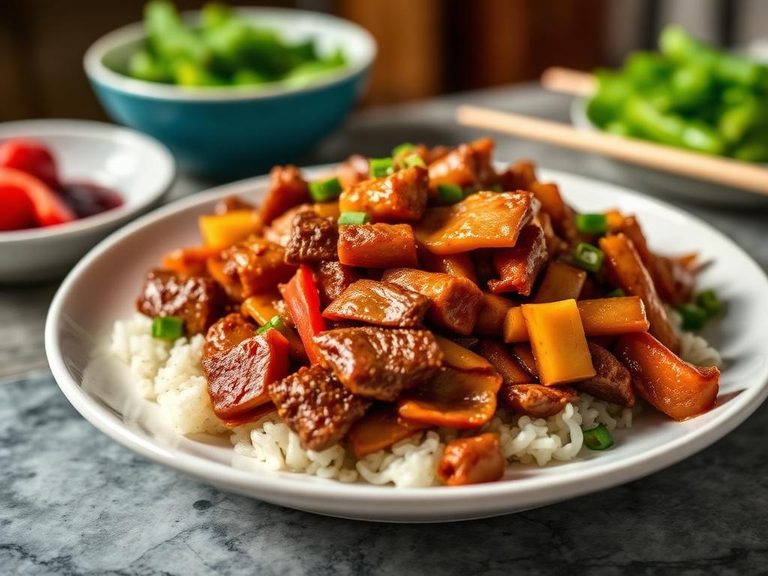
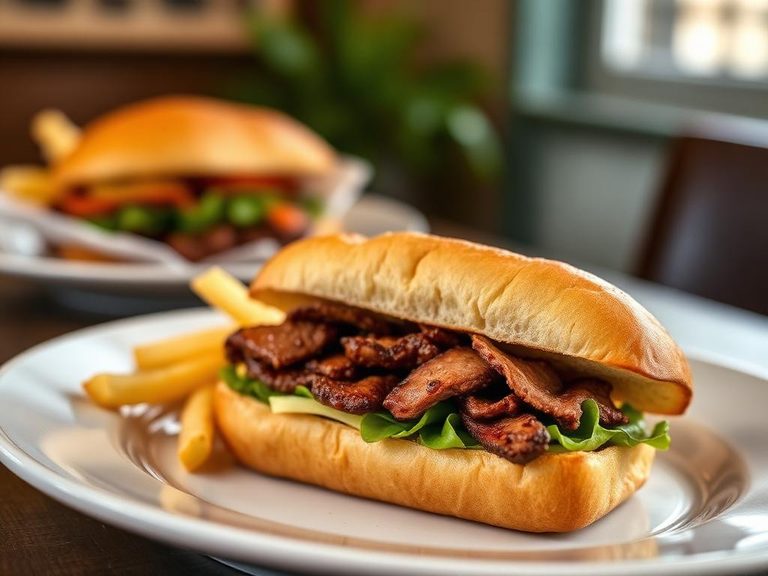
People love it for its buttery texture and intense umami that pairs perfectly with a quick sear, making it a weeknight favorite. It is incredibly versatile, working equally well in a simple stir-fry, a classic steak sandwich, or a refined salad.
⚠️ Watch-outs & how to enjoy it better
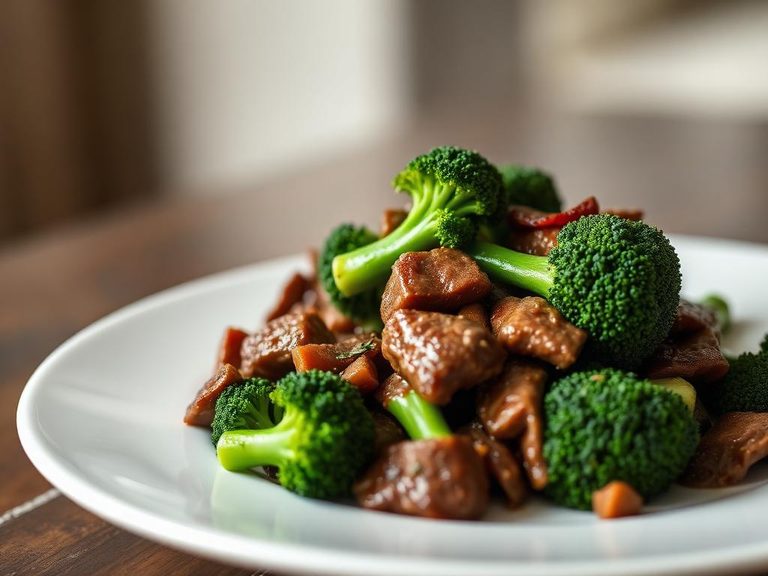
As a red meat, it can be high in purines and saturated fat, which may concern those with gout or cardiovascular issues. To mitigate this, pair it with fiber-rich vegetables like broccoli or asparagus and practice strict portion control, aiming for a palm-sized serving.
Key benefits
- High-quality complete protein source
- Zero carbohydrates and sugars
- Rich in B12 and iron
- Low saturated fat compared to fattier cuts
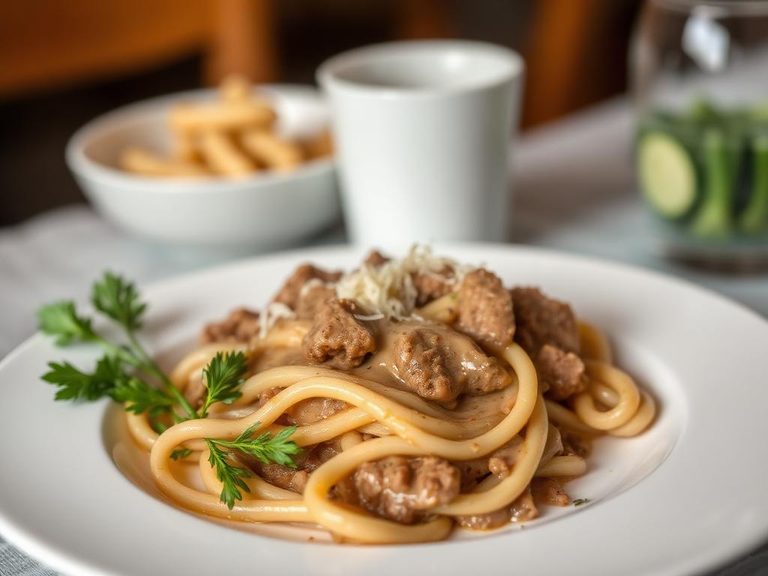
🍽️ Popular dishes

🌍 Where it's eaten
💡 Did you know?
New Zealand beef is often grass-fed, which typically results in a higher concentration of Omega-3 fatty acids and antioxidants like Vitamin E compared to grain-fed counterparts.
Full nutrition (USDA data · scales with serving)
| Water | 59.6 g |
| Energy | 217 kcal |
| Energy | 907 kj |
| Protein | 28.5 g |
| Total lipid (fat) | 11.4 g |
| Ash | 1.1 g |
| Carbohydrate, by difference | 0.00 g |
| Fiber, total dietary | 0.00 g |
| Total Sugars | 0.00 g |
| Calcium, Ca | 6.0 mg |
| Iron, Fe | 2.0 mg |
| Magnesium, Mg | 24.0 mg |
| Phosphorus, P | 217 mg |
| Potassium, K | 364 mg |
| Sodium, Na | 55.0 mg |
| Zinc, Zn | 3.4 mg |
| Copper, Cu | 0.08 mg |
| Manganese, Mn | 0.00 mg |
| Selenium, Se | 4.0 ug |
| Vitamin C, total ascorbic acid | 0.00 mg |
| Thiamin | 0.05 mg |
| Riboflavin | 0.09 mg |
| Niacin | 4.8 mg |
| Pantothenic acid | 0.41 mg |
| Vitamin B-6 | 0.32 mg |
| Vitamin B-12 | 0.94 ug |
| Vitamin B-12, added | 0.00 ug |
| Vitamin A, RAE | 19.0 ug |
| Retinol | 19.0 ug |
| Carotene, beta | 0.00 ug |
| Carotene, alpha | 0.00 ug |
| Cryptoxanthin, beta | 0.00 ug |
| Vitamin A, IU | 63.0 iu |
| Lycopene | 0.00 ug |
| Lutein + zeaxanthin | 0.00 ug |
| Vitamin E (alpha-tocopherol) | 0.53 mg |
| Vitamin E, added | 0.00 mg |
| Vitamin D (D2 + D3), International Units | 13.0 iu |
| Vitamin D (D2 + D3) | 0.30 ug |
| Vitamin D3 (cholecalciferol) | 0.30 ug |
| Alcohol, ethyl | 0.00 g |
| Caffeine | 0.00 mg |
| Theobromine | 0.00 mg |
Fat & fatty acid profile (per 100g)
| Fatty acids, total saturated | 3.9 g |
| SFA 4:0 | 0.00 g |
| SFA 6:0 | 0.00 g |
| SFA 8:0 | 0.00 g |
| SFA 10:0 | 0.01 g |
| SFA 12:0 | 0.01 g |
| SFA 14:0 | 0.27 g |
| SFA 16:0 | 2.3 g |
| SFA 17:0 | 0.13 g |
| SFA 18:0 | 1.2 g |
| SFA 20:0 | 0.01 g |
| SFA 22:0 | 0.00 g |
| SFA 24:0 | 0.00 g |
| Fatty acids, total monounsaturated | 4.7 g |
| MUFA 14:1 | 0.11 g |
| MUFA 15:1 | 0.00 g |
| MUFA 16:1 | 0.47 g |
| MUFA 16:1 c | 0.42 g |
| MUFA 17:1 | 0.00 g |
| MUFA 18:1 | 4.1 g |
| MUFA 18:1 c | 3.9 g |
| MUFA 20:1 | 0.02 g |
| MUFA 22:1 | 0.00 g |
| MUFA 22:1 c | 0.00 g |
| MUFA 24:1 c | 0.00 g |
| Fatty acids, total polyunsaturated | 0.34 g |
| PUFA 18:2 | 0.16 g |
| PUFA 18:2 n-6 c,c | 0.09 g |
| PUFA 18:2 CLAs | 0.07 g |
| PUFA 18:3 | 0.08 g |
| PUFA 18:3 n-3 c,c,c (ALA) | 0.07 g |
| PUFA 18:3 n-6 c,c,c | 0.00 g |
| PUFA 18:4 | 0.00 g |
| PUFA 20:2 n-6 c,c | 0.00 g |
| PUFA 20:3 | 0.01 g |
| PUFA 20:3 n-3 | 0.00 g |
| PUFA 20:3 n-6 | 0.01 g |
| PUFA 20:4 | 0.03 g |
| PUFA 20:4 n-6 | 0.03 g |
| PUFA 20:5 n-3 (EPA) | 0.02 g |
| PUFA 22:5 n-3 (DPA) | 0.02 g |
| PUFA 22:6 n-3 (DHA) | 0.00 g |
| Fatty acids, total trans | 0.20 g |
| Fatty acids, total trans-monoenoic | 0.20 g |
| TFA 16:1 t | 0.04 g |
| TFA 18:1 t | 0.16 g |
| TFA 18:2 t,t | 0.00 g |
| Fatty acids, total trans-polyenoic | 0.00 g |
| Cholesterol | 70.0 mg |
Amino acid profile (per 100g)
| Tryptophan | 0.30 g |
| Threonine | 1.0 g |
| Isoleucine | 1.2 g |
| Leucine | 2.2 g |
| Lysine | 2.3 g |
| Methionine | 0.94 g |
| Phenylalanine | 1.1 g |
| Tyrosine | 0.96 g |
| Valine | 1.3 g |
| Arginine | 1.9 g |
| Histidine | 1.0 g |
| Alanine | 1.5 g |
| Glutamic acid | 4.0 g |
| Glycine | 1.6 g |
| Proline | 0.92 g |
| Serine | 1.0 g |
FAQ
How does New Zealand beef differ from US beef?
New Zealand beef is predominantly grass-fed, leading to a leaner profile and a more distinct, earthy flavor compared to the marbled, grain-fed beef common in the United States.
Is striploin the same as sirloin?
In many regions, striploin is the same muscle as the New York strip or the top part of the sirloin, known for its balance of tenderness and flavor.
What is the best way to cook this cut quickly?
Fast frying or searing in a hot pan with a small amount of oil is ideal; it cooks in minutes, so avoid overcooking to maintain its tenderness and juiciness.
Can I eat this if I am on a low-fat diet?
Yes, as it is 'separable lean only,' it is one of the leaner red meat options, though it still contains some fat; trim any visible edges for an even leaner meal.
Nutrient density (calculated · NRF9.3)
Nutrient Rich Foods index: beneficial nutrients (protein, fiber, vitamins, minerals) minus saturated fat, added sugar & sodium, per 100 kcal.
NRF9.3 index — Fulgoni, Keast & Drewnowski, 2009. Computed from USDA nutrients.
Weight-loss friendliness (composite index)
Energy density 2.17 kcal/g · 53% calories from protein · 0.0 g fiber · 0.0 g sugar per 100 g.
Composite of energy density (Rolls et al., 1999), protein & fiber satiety, minus sugar. A calculated heuristic — ranks satiety-per-calorie, not a clinical measure.
Dietary load (calculated from USDA values)
Potential renal acid load. Positive = acid-forming, negative = alkaline-forming.
Sodium-to-potassium ratio: 0.15 (lower is better — aim for ≤ 1)
Sodium:potassium per WHO potassium guidance. Computed from USDA nutrients.