

Beef, New Zealand, imported, flat, separable lean and fat, raw
Whole food · Beef Products

Photo: Wikipedia
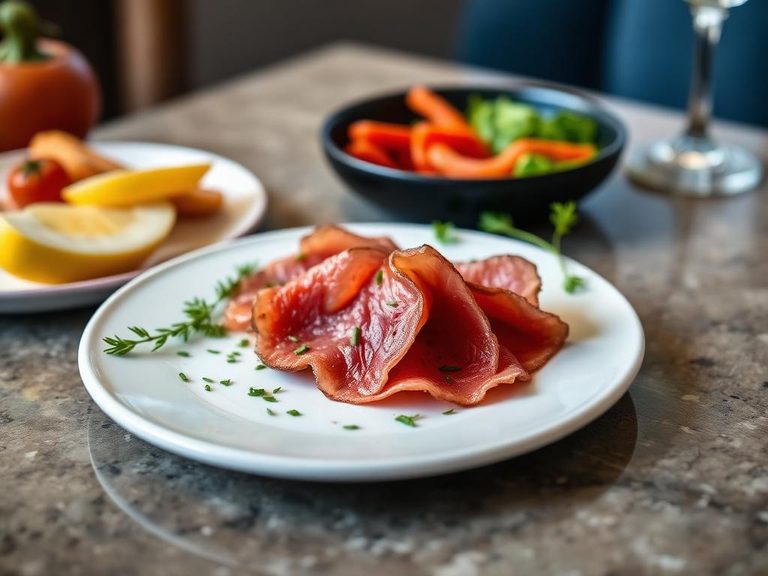
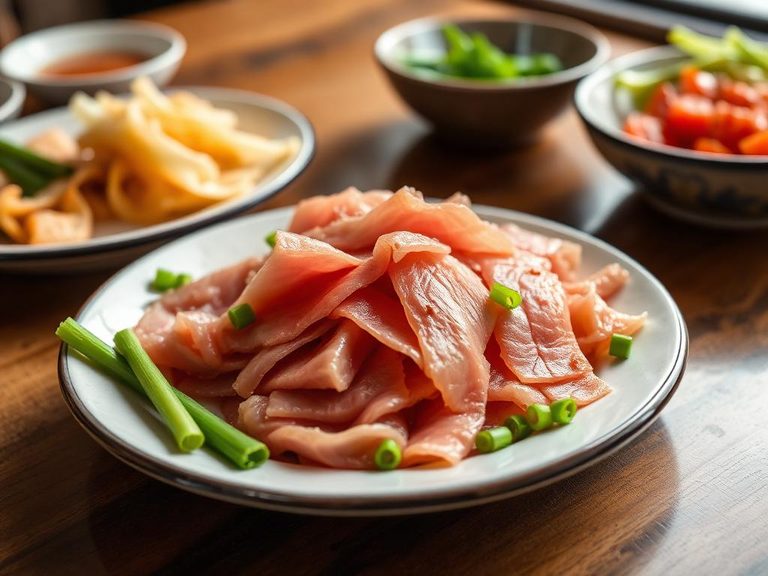
This is a lean, flat cut of raw New Zealand beef, typically from the round or sirloin, prized for its fine grain and deep red color. It offers a clean, mildly gamey flavor with a firm, dense texture that holds up beautifully to high-heat searing or slow braising. Nutritionally, it's a powerhouse of high-quality protein with a modest fat content, making it a staple for lean muscle building.
Calorie split: 46% protein · 0% carbs · 54% fat
↓ Full nutrition💚 Why it's loved
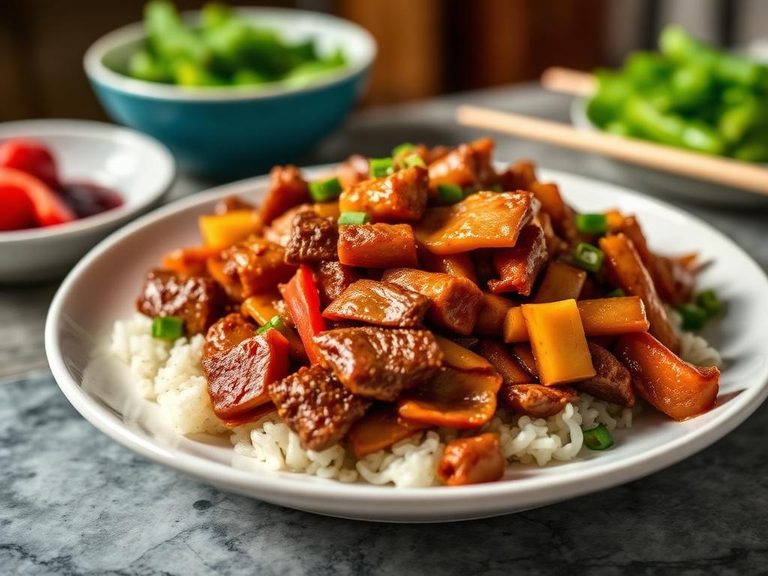
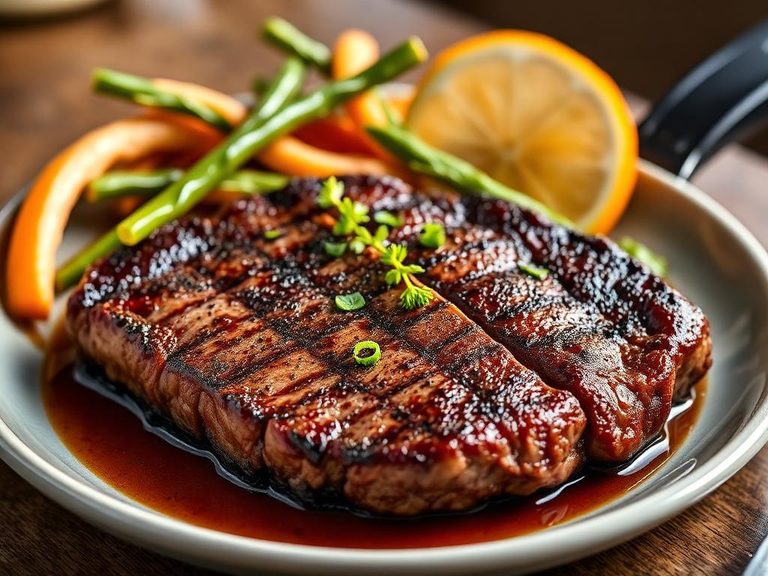
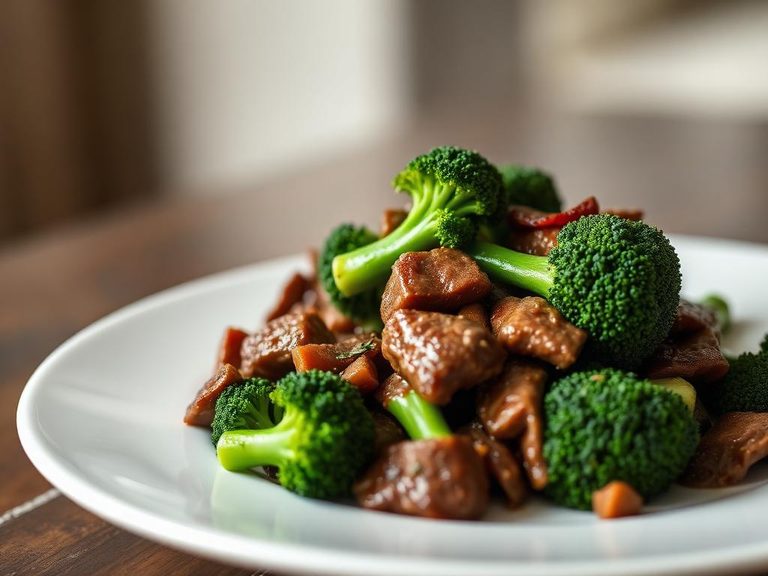
People love it for its robust, beefy flavor that isn't overly fatty, allowing the natural taste of the meat to shine. Its versatility makes it ideal for everything from a quick weeknight stir-fry to an elegant, pan-seared steak dinner.
⚠️ Watch-outs & how to enjoy it better
As a lean cut, it can become tough and chewy if overcooked or prepared with the wrong method. To counteract this, use quick, high-heat methods like grilling or stir-frying, or employ low-and-slow moist cooking like braising. Always slice against the grain to maximize tenderness.
Key benefits
- Excellent source of complete protein (20.57g per 100g).
- Rich in heme iron, which is highly bioavailable for preventing anemia.
- Provides essential B vitamins, particularly B12 for nerve function.
- Naturally zero in carbohydrates and sugars.
- Lean cut with controlled fat content for calorie-conscious diets.
🍽️ Popular dishes
🌍 Where it's eaten
💡 Did you know?
The 'flat' in its name often refers to cuts like the flat iron steak, which was once considered a lesser cut until the USDA's Beef Quality Audit in 2002 identified it as the second most tender muscle in the entire carcass.
Full nutrition (USDA data · scales with serving)
| Water | 68.7 g |
| Energy | 177 kcal |
| Energy | 741 kj |
| Protein | 20.6 g |
| Total lipid (fat) | 10.6 g |
| Ash | 0.89 g |
| Carbohydrate, by difference | 0.00 g |
| Fiber, total dietary | 0.00 g |
| Total Sugars | 0.00 g |
| Calcium, Ca | 5.0 mg |
| Iron, Fe | 1.8 mg |
| Magnesium, Mg | 19.0 mg |
| Phosphorus, P | 170 mg |
| Potassium, K | 283 mg |
| Sodium, Na | 49.0 mg |
| Zinc, Zn | 5.2 mg |
| Copper, Cu | 0.12 mg |
| Manganese, Mn | 0.01 mg |
| Selenium, Se | 1.1 ug |
| Vitamin C, total ascorbic acid | 0.00 mg |
| Thiamin | 0.05 mg |
| Riboflavin | 0.14 mg |
| Niacin | 3.2 mg |
| Pantothenic acid | 0.31 mg |
| Vitamin B-6 | 0.27 mg |
| Vitamin B-12 | 2.7 ug |
| Vitamin B-12, added | 0.00 ug |
| Vitamin A, RAE | 10.0 ug |
| Retinol | 10.0 ug |
| Carotene, beta | 0.00 ug |
| Carotene, alpha | 0.00 ug |
| Cryptoxanthin, beta | 0.00 ug |
| Vitamin A, IU | 34.0 iu |
| Lycopene | 0.00 ug |
| Lutein + zeaxanthin | 0.00 ug |
| Vitamin E (alpha-tocopherol) | 0.49 mg |
| Vitamin E, added | 0.00 mg |
| Vitamin D (D2 + D3), International Units | 1.0 iu |
| Vitamin D (D2 + D3) | 0.00 ug |
| Vitamin D3 (cholecalciferol) | 0.00 ug |
| Alcohol, ethyl | 0.00 g |
| Caffeine | 0.00 mg |
| Theobromine | 0.00 mg |
Fat & fatty acid profile (per 100g)
| Fatty acids, total saturated | 3.8 g |
| SFA 4:0 | 0.00 g |
| SFA 6:0 | 0.00 g |
| SFA 8:0 | 0.00 g |
| SFA 10:0 | 0.00 g |
| SFA 12:0 | 0.01 g |
| SFA 14:0 | 0.21 g |
| SFA 16:0 | 2.0 g |
| SFA 17:0 | 0.14 g |
| SFA 18:0 | 1.5 g |
| SFA 20:0 | 0.01 g |
| SFA 22:0 | 0.01 g |
| SFA 24:0 | 0.00 g |
| Fatty acids, total monounsaturated | 3.9 g |
| MUFA 14:1 | 0.06 g |
| MUFA 15:1 | 0.00 g |
| MUFA 16:1 | 0.34 g |
| MUFA 16:1 c | 0.32 g |
| MUFA 17:1 | 0.00 g |
| MUFA 18:1 | 3.5 g |
| MUFA 18:1 c | 3.3 g |
| MUFA 20:1 | 0.01 g |
| MUFA 22:1 | 0.00 g |
| MUFA 22:1 c | 0.00 g |
| MUFA 24:1 c | 0.00 g |
| Fatty acids, total polyunsaturated | 0.38 g |
| PUFA 18:2 | 0.19 g |
| PUFA 18:2 n-6 c,c | 0.12 g |
| PUFA 18:2 CLAs | 0.07 g |
| PUFA 18:3 | 0.09 g |
| PUFA 18:3 n-3 c,c,c (ALA) | 0.09 g |
| PUFA 18:3 n-6 c,c,c | 0.00 g |
| PUFA 18:4 | 0.00 g |
| PUFA 20:2 n-6 c,c | 0.00 g |
| PUFA 20:3 | 0.01 g |
| PUFA 20:3 n-3 | 0.00 g |
| PUFA 20:3 n-6 | 0.01 g |
| PUFA 20:4 | 0.03 g |
| PUFA 20:4 n-6 | 0.03 g |
| PUFA 20:5 n-3 (EPA) | 0.02 g |
| PUFA 22:5 n-3 (DPA) | 0.03 g |
| PUFA 22:6 n-3 (DHA) | 0.00 g |
| Fatty acids, total trans | 0.25 g |
| Fatty acids, total trans-monoenoic | 0.25 g |
| TFA 16:1 t | 0.03 g |
| TFA 18:1 t | 0.22 g |
| TFA 18:2 t,t | 0.00 g |
| Fatty acids, total trans-polyenoic | 0.00 g |
| Cholesterol | 58.0 mg |
Amino acid profile (per 100g)
| Tryptophan | 0.22 g |
| Threonine | 0.74 g |
| Isoleucine | 0.85 g |
| Leucine | 1.6 g |
| Lysine | 1.6 g |
| Methionine | 0.68 g |
| Phenylalanine | 0.80 g |
| Tyrosine | 0.69 g |
| Valine | 0.91 g |
| Arginine | 1.4 g |
| Histidine | 0.74 g |
| Alanine | 1.1 g |
| Glutamic acid | 2.9 g |
| Glycine | 1.1 g |
| Proline | 0.66 g |
| Serine | 0.72 g |
FAQ
What's the best way to cook this lean cut without it drying out?
For quick cooking, use high heat for a short time (searing, grilling) and let it rest after cooking. For tougher pieces, use slow, moist methods like braising in liquid. Always use a meat thermometer to avoid overcooking.
Is New Zealand beef grass-fed?
Yes, the vast majority of New Zealand beef is grass-fed and pasture-raised year-round, which contributes to its distinctive flavor and slightly leaner profile compared to grain-fed beef.
How should I store this raw beef?
Store it in the coldest part of your refrigerator (below 40°F/4°C) and use within 1-2 days of purchase. For longer storage, wrap tightly and freeze for up to 6-12 months.
Nutrient density (calculated · NRF9.3)
Nutrient Rich Foods index: beneficial nutrients (protein, fiber, vitamins, minerals) minus saturated fat, added sugar & sodium, per 100 kcal.
NRF9.3 index — Fulgoni, Keast & Drewnowski, 2009. Computed from USDA nutrients.
Weight-loss friendliness (composite index)
Energy density 1.77 kcal/g · 46% calories from protein · 0.0 g fiber · 0.0 g sugar per 100 g.
Composite of energy density (Rolls et al., 1999), protein & fiber satiety, minus sugar. A calculated heuristic — ranks satiety-per-calorie, not a clinical measure.
Dietary load (calculated from USDA values)
Potential renal acid load. Positive = acid-forming, negative = alkaline-forming.
Sodium-to-potassium ratio: 0.17 (lower is better — aim for ≤ 1)
Sodium:potassium per WHO potassium guidance. Computed from USDA nutrients.