

Beef, New Zealand, imported, brisket point end, separable lean only, cooked, braised
Whole food · Beef Products

Photo: Wikipedia
This is the rich, flavorful point end of a New Zealand beef brisket, cooked low and slow until the lean meat is incredibly tender and succulent. With a robust, beefy taste and a melt-in-your-mouth texture, it's a powerhouse of protein, packing over 34 grams per 100g with virtually no carbohydrates or sugar. The braising process renders the meat deeply savory, making it a staple for hearty, satisfying meals.
Calorie split: 69% protein · 0% carbs · 31% fat
↓ Full nutrition💚 Why it's loved
People love it for its deep, savory beef flavor and the satisfying tenderness that comes from slow braising, which breaks down the connective tissue into a luscious texture. Its versatility allows it to be the star of classic comfort dishes, from sandwiches to stews, making it a beloved choice for hearty, home-cooked meals.
⚠️ Watch-outs & how to enjoy it better
While nutritionally lean, the braising process can sometimes involve added sodium or fats in the cooking liquid, which may be a concern for those monitoring salt intake. To counteract this, you can rinse the meat after cooking, use low-sodium broth, or pair it with plenty of vegetables to balance the meal. Additionally, the high protein content might be a consideration for individuals with specific kidney conditions, so portion control is advisable.
Key benefits
- Excellent source of complete protein for muscle maintenance
- Very low in carbohydrates, suitable for low-carb diets
- Contains essential minerals like iron and zinc from beef
- Naturally free of sugar and fiber
- Provides a high satiety factor due to protein content
🍽️ Popular dishes

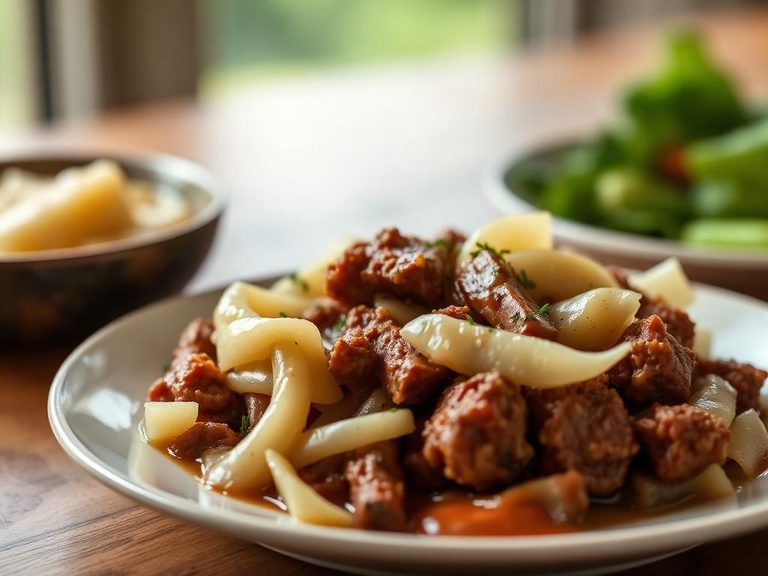

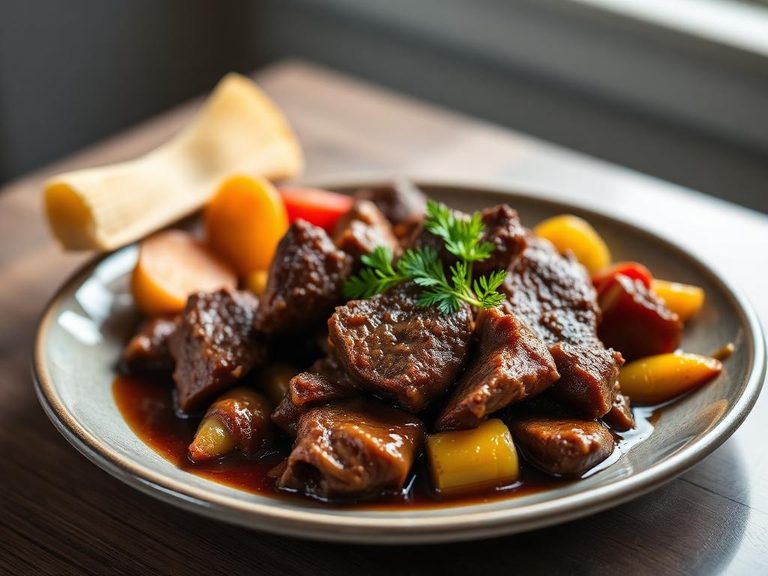
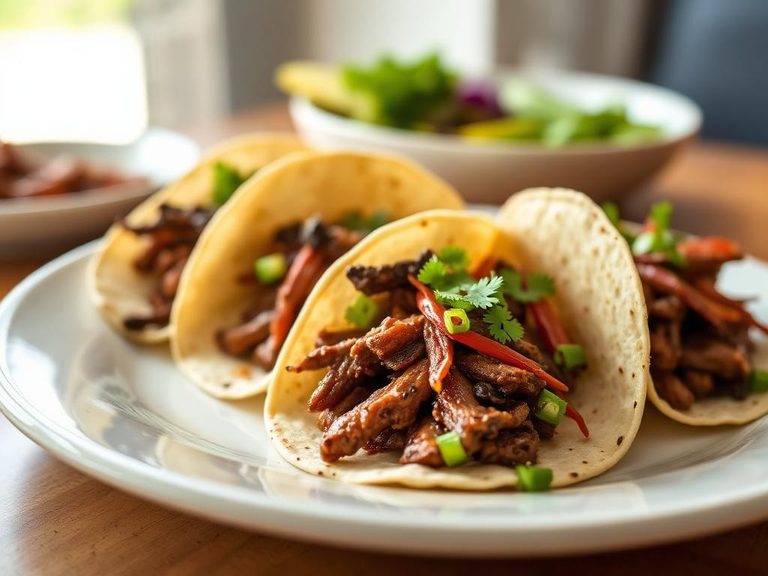
🌍 Where it's eaten
💡 Did you know?
The brisket comes from the lower chest of the cow, a muscle group that is heavily exercised, which is why it requires long, slow cooking to become tender and flavorful.
Full nutrition (USDA data · scales with serving)
| Water | 58.6 g |
| Energy | 202 kcal |
| Energy | 843 kj |
| Protein | 34.5 g |
| Total lipid (fat) | 7.0 g |
| Ash | 0.83 g |
| Carbohydrate, by difference | 0.00 g |
| Fiber, total dietary | 0.00 g |
| Total Sugars | 0.00 g |
| Calcium, Ca | 6.0 mg |
| Iron, Fe | 2.8 mg |
| Magnesium, Mg | 20.0 mg |
| Phosphorus, P | 167 mg |
| Potassium, K | 178 mg |
| Sodium, Na | 30.0 mg |
| Zinc, Zn | 5.2 mg |
| Copper, Cu | 0.11 mg |
| Manganese, Mn | 0.01 mg |
| Selenium, Se | 5.3 ug |
| Vitamin C, total ascorbic acid | 0.00 mg |
| Thiamin | 0.01 mg |
| Riboflavin | 0.12 mg |
| Niacin | 3.5 mg |
| Pantothenic acid | 0.00 mg |
| Vitamin B-6 | 0.20 mg |
| Vitamin B-12 | 1.2 ug |
| Vitamin B-12, added | 0.00 ug |
| Vitamin A, RAE | 12.0 ug |
| Retinol | 12.0 ug |
| Carotene, beta | 0.00 ug |
| Carotene, alpha | 0.00 ug |
| Cryptoxanthin, beta | 0.00 ug |
| Vitamin A, IU | 41.0 iu |
| Lycopene | 0.00 ug |
| Lutein + zeaxanthin | 0.00 ug |
| Vitamin E (alpha-tocopherol) | 0.85 mg |
| Vitamin E, added | 0.00 mg |
| Vitamin D (D2 + D3), International Units | 7.0 iu |
| Vitamin D (D2 + D3) | 0.20 ug |
| Vitamin D3 (cholecalciferol) | 0.20 ug |
| Alcohol, ethyl | 0.00 g |
| Caffeine | 0.00 mg |
| Theobromine | 0.00 mg |
Fat & fatty acid profile (per 100g)
| Fatty acids, total saturated | 2.2 g |
| SFA 4:0 | 0.00 g |
| SFA 6:0 | 0.00 g |
| SFA 8:0 | 0.00 g |
| SFA 10:0 | 0.00 g |
| SFA 12:0 | 0.00 g |
| SFA 14:0 | 0.14 g |
| SFA 16:0 | 1.3 g |
| SFA 17:0 | 0.08 g |
| SFA 18:0 | 0.65 g |
| SFA 20:0 | 0.01 g |
| SFA 22:0 | 0.00 g |
| SFA 24:0 | 0.00 g |
| Fatty acids, total monounsaturated | 3.0 g |
| MUFA 14:1 | 0.06 g |
| MUFA 15:1 | 0.01 g |
| MUFA 16:1 | 0.33 g |
| MUFA 16:1 c | 0.31 g |
| MUFA 17:1 | 0.00 g |
| MUFA 18:1 | 2.6 g |
| MUFA 18:1 c | 2.5 g |
| MUFA 20:1 | 0.01 g |
| MUFA 22:1 | 0.00 g |
| MUFA 22:1 c | 0.00 g |
| MUFA 24:1 c | 0.00 g |
| Fatty acids, total polyunsaturated | 0.43 g |
| PUFA 18:2 | 0.19 g |
| PUFA 18:2 n-6 c,c | 0.14 g |
| PUFA 18:2 CLAs | 0.05 g |
| PUFA 18:3 | 0.08 g |
| PUFA 18:3 n-3 c,c,c (ALA) | 0.07 g |
| PUFA 18:3 n-6 c,c,c | 0.00 g |
| PUFA 18:4 | 0.00 g |
| PUFA 20:2 n-6 c,c | 0.00 g |
| PUFA 20:3 | 0.02 g |
| PUFA 20:3 n-3 | 0.00 g |
| PUFA 20:3 n-6 | 0.01 g |
| PUFA 20:4 | 0.06 g |
| PUFA 20:4 n-6 | 0.06 g |
| PUFA 20:5 n-3 (EPA) | 0.03 g |
| PUFA 22:5 n-3 (DPA) | 0.05 g |
| PUFA 22:6 n-3 (DHA) | 0.00 g |
| Fatty acids, total trans | 0.10 g |
| Fatty acids, total trans-monoenoic | 0.10 g |
| TFA 16:1 t | 0.02 g |
| TFA 18:1 t | 0.08 g |
| TFA 18:2 t,t | 0.00 g |
| Fatty acids, total trans-polyenoic | 0.00 g |
| Cholesterol | 95.0 mg |
Amino acid profile (per 100g)
| Tryptophan | 0.36 g |
| Threonine | 1.3 g |
| Isoleucine | 1.4 g |
| Leucine | 2.6 g |
| Lysine | 2.7 g |
| Methionine | 1.1 g |
| Phenylalanine | 1.3 g |
| Tyrosine | 1.2 g |
| Valine | 1.5 g |
| Arginine | 2.3 g |
| Histidine | 1.2 g |
| Alanine | 1.8 g |
| Glutamic acid | 4.8 g |
| Glycine | 1.9 g |
| Proline | 1.1 g |
| Serine | 1.2 g |
FAQ
What is the difference between the point end and the flat cut of brisket?
The point end (also called the deckle) is fattier and more marbled, making it ideal for slow cooking and braising, while the flat cut is leaner and more uniform, often used for slicing.
How should I store cooked brisket?
Store cooked brisket in an airtight container in the refrigerator for up to 3-4 days, or freeze it for up to 3 months. Reheat gently in the oven or microwave with a bit of broth to retain moisture.
Is this cut suitable for a low-fat diet?
Yes, as it is specified as 'separable lean only' with 7.05g fat per 100g, it is relatively lean compared to other cuts, but it still contains some fat for flavor and texture.
Nutrient density (calculated · NRF9.3)
Nutrient Rich Foods index: beneficial nutrients (protein, fiber, vitamins, minerals) minus saturated fat, added sugar & sodium, per 100 kcal.
NRF9.3 index — Fulgoni, Keast & Drewnowski, 2009. Computed from USDA nutrients.
Weight-loss friendliness (composite index)
Energy density 2.02 kcal/g · 68% calories from protein · 0.0 g fiber · 0.0 g sugar per 100 g.
Composite of energy density (Rolls et al., 1999), protein & fiber satiety, minus sugar. A calculated heuristic — ranks satiety-per-calorie, not a clinical measure.
Dietary load (calculated from USDA values)
Potential renal acid load. Positive = acid-forming, negative = alkaline-forming.
Sodium-to-potassium ratio: 0.17 (lower is better — aim for ≤ 1)
Sodium:potassium per WHO potassium guidance. Computed from USDA nutrients.