

Beef, New Zealand, imported, brisket navel end, separable lean only, cooked, braised
Whole food · Beef Products

Photo: Wikipedia
This cut is the lean, cooked brisket from New Zealand beef, prized for its deep, beefy flavor and tender, yet satisfyingly firm texture after braising. Nutritionally, it's a protein powerhouse, delivering over 29 grams per 100g with virtually no carbohydrates, making it a staple for high-protein, low-carb diets.
Calorie split: 44% protein · 0% carbs · 56% fat
↓ Full nutrition💚 Why it's loved
People love it for its robust, savory flavor that forms the backbone of comforting braised dishes, and its ability to absorb sauces and spices beautifully while remaining lean.
⚠️ Watch-outs & how to enjoy it better
As a lean cut, it can become tough if not cooked properly with moist heat (braising). Those monitoring saturated fat intake should be mindful, as even lean beef contains some. To counteract toughness, ensure low-and-slow cooking with sufficient liquid; to manage fat, trim any visible silverskin and consider pairing with fiber-rich vegetables.
Key benefits
- Excellent source of complete protein for muscle maintenance.
- Zero carbohydrates, suitable for ketogenic and diabetic-friendly diets.
- Rich in bioavailable iron and B vitamins like B12.
- Lean cut provides satiety with moderate calories.
🍽️ Popular dishes
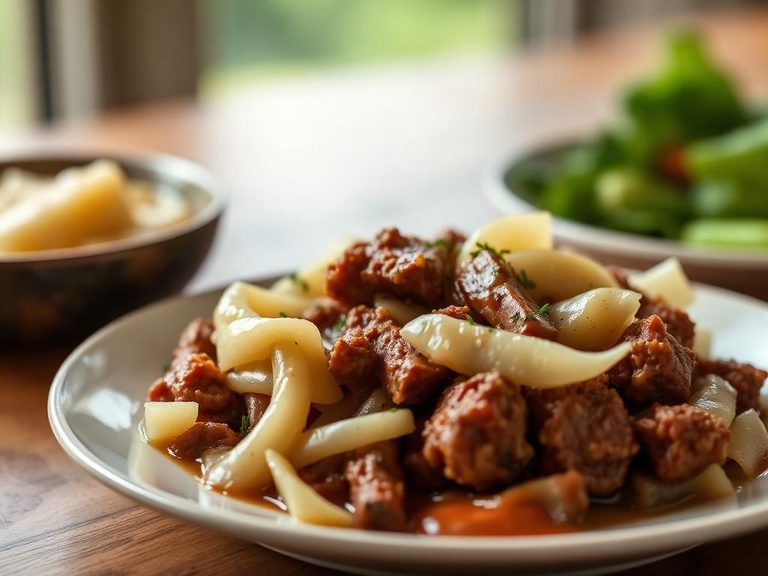
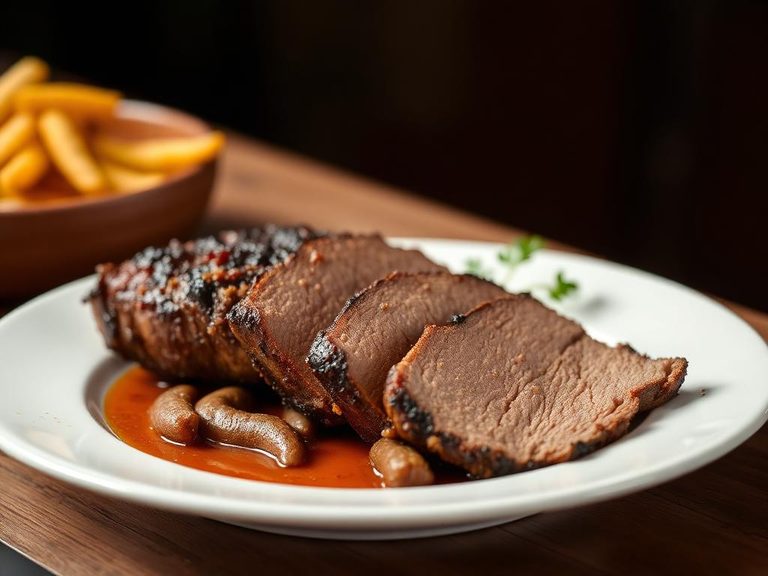
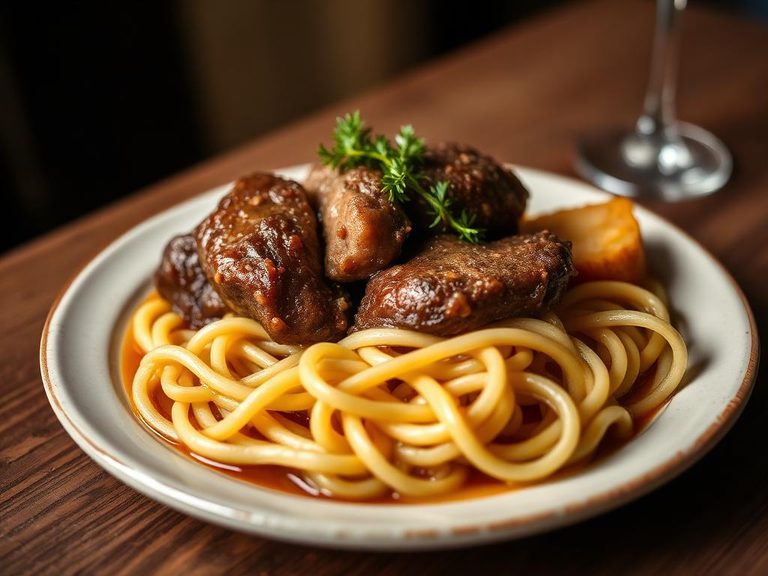
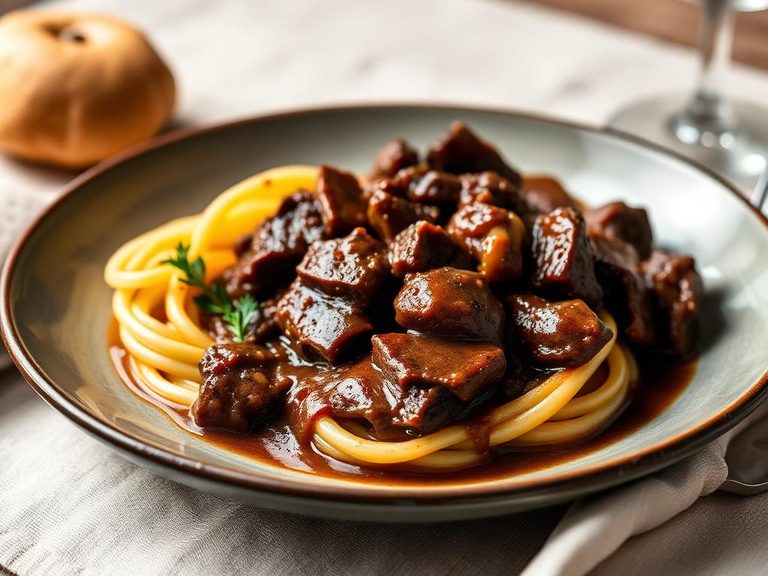
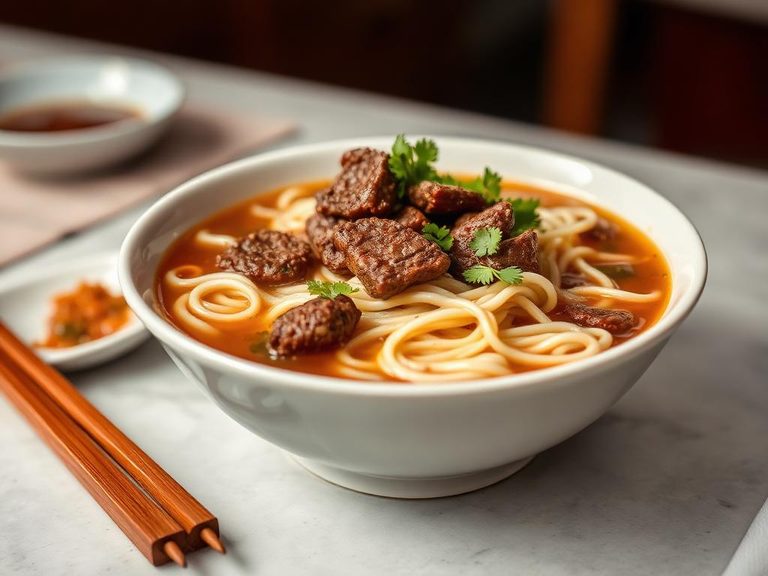
🌍 Where it's eaten
💡 Did you know?
The 'navel end' of the brisket is the lower, fattier portion closer to the plate, but when specified as 'separable lean only,' it refers to the lean meat meticulously trimmed from this section, resulting in a product with a remarkably consistent 0g of carbohydrates.
Full nutrition (USDA data · scales with serving)
| Water | 54.9 g |
| Energy | 265 kcal |
| Energy | 1108 kj |
| Protein | 29.4 g |
| Total lipid (fat) | 16.4 g |
| Ash | 0.93 g |
| Carbohydrate, by difference | 0.00 g |
| Fiber, total dietary | 0.00 g |
| Total Sugars | 0.00 g |
| Calcium, Ca | 7.0 mg |
| Iron, Fe | 1.8 mg |
| Magnesium, Mg | 14.0 mg |
| Phosphorus, P | 113 mg |
| Potassium, K | 142 mg |
| Sodium, Na | 39.0 mg |
| Zinc, Zn | 5.8 mg |
| Copper, Cu | 0.07 mg |
| Manganese, Mn | 0.00 mg |
| Selenium, Se | 3.6 ug |
| Vitamin C, total ascorbic acid | 0.00 mg |
| Thiamin | 0.02 mg |
| Riboflavin | 0.09 mg |
| Niacin | 2.5 mg |
| Pantothenic acid | 0.00 mg |
| Vitamin B-6 | 0.10 mg |
| Vitamin B-12 | 1.3 ug |
| Vitamin B-12, added | 0.00 ug |
| Vitamin A, RAE | 16.0 ug |
| Retinol | 16.0 ug |
| Carotene, beta | 0.00 ug |
| Carotene, alpha | 0.00 ug |
| Cryptoxanthin, beta | 0.00 ug |
| Vitamin A, IU | 53.0 iu |
| Lycopene | 0.00 ug |
| Lutein + zeaxanthin | 0.00 ug |
| Vitamin E (alpha-tocopherol) | 0.71 mg |
| Vitamin E, added | 0.00 mg |
| Vitamin D (D2 + D3), International Units | 9.0 iu |
| Vitamin D (D2 + D3) | 0.20 ug |
| Vitamin D3 (cholecalciferol) | 0.20 ug |
| Alcohol, ethyl | 0.00 g |
| Caffeine | 0.00 mg |
| Theobromine | 0.00 mg |
Fat & fatty acid profile (per 100g)
| Fatty acids, total saturated | 5.5 g |
| SFA 4:0 | 0.00 g |
| SFA 6:0 | 0.00 g |
| SFA 8:0 | 0.00 g |
| SFA 10:0 | 0.01 g |
| SFA 12:0 | 0.02 g |
| SFA 14:0 | 0.40 g |
| SFA 16:0 | 3.3 g |
| SFA 17:0 | 0.20 g |
| SFA 18:0 | 1.6 g |
| SFA 20:0 | 0.01 g |
| SFA 22:0 | 0.00 g |
| SFA 24:0 | 0.00 g |
| Fatty acids, total monounsaturated | 7.0 g |
| MUFA 14:1 | 0.18 g |
| MUFA 15:1 | 0.00 g |
| MUFA 16:1 | 0.78 g |
| MUFA 16:1 c | 0.71 g |
| MUFA 17:1 | 0.00 g |
| MUFA 18:1 | 6.0 g |
| MUFA 18:1 c | 5.8 g |
| MUFA 20:1 | 0.02 g |
| MUFA 22:1 | 0.00 g |
| MUFA 22:1 c | 0.00 g |
| MUFA 24:1 c | 0.00 g |
| Fatty acids, total polyunsaturated | 0.51 g |
| PUFA 18:2 | 0.30 g |
| PUFA 18:2 n-6 c,c | 0.16 g |
| PUFA 18:2 CLAs | 0.14 g |
| PUFA 18:3 | 0.10 g |
| PUFA 18:3 n-3 c,c,c (ALA) | 0.10 g |
| PUFA 18:3 n-6 c,c,c | 0.00 g |
| PUFA 18:4 | 0.00 g |
| PUFA 20:2 n-6 c,c | 0.00 g |
| PUFA 20:3 | 0.01 g |
| PUFA 20:3 n-3 | 0.00 g |
| PUFA 20:3 n-6 | 0.01 g |
| PUFA 20:4 | 0.03 g |
| PUFA 20:4 n-6 | 0.03 g |
| PUFA 20:5 n-3 (EPA) | 0.02 g |
| PUFA 22:5 n-3 (DPA) | 0.04 g |
| PUFA 22:6 n-3 (DHA) | 0.00 g |
| Fatty acids, total trans | 0.28 g |
| Fatty acids, total trans-monoenoic | 0.28 g |
| TFA 16:1 t | 0.06 g |
| TFA 18:1 t | 0.22 g |
| TFA 18:2 t,t | 0.00 g |
| Fatty acids, total trans-polyenoic | 0.00 g |
| Cholesterol | 79.0 mg |
Amino acid profile (per 100g)
| Tryptophan | 0.31 g |
| Threonine | 1.1 g |
| Isoleucine | 1.2 g |
| Leucine | 2.2 g |
| Lysine | 2.3 g |
| Methionine | 0.96 g |
| Phenylalanine | 1.1 g |
| Tyrosine | 0.99 g |
| Valine | 1.3 g |
| Arginine | 1.9 g |
| Histidine | 1.1 g |
| Alanine | 1.5 g |
| Glutamic acid | 4.1 g |
| Glycine | 1.6 g |
| Proline | 0.94 g |
| Serine | 1.0 g |
FAQ
Is this the same as regular beef brisket?
It is a specific preparation: imported New Zealand beef, from the brisket's navel end, with all separable fat and connective tissue removed before cooking. This results in a leaner final product than a whole brisket point or flat.
Why does it have 0g carbs and sugar?
Pure, unprocessed muscle meat contains negligible carbohydrates. The 0g value indicates it is a single-ingredient meat product with no added sugars, sauces, or marinades in its prepared state.
What's the best way to cook this cut to keep it tender?
Braising (slow cooking in liquid) is ideal. The low, moist heat breaks down the lean muscle fibers without drying them out. Think pot roast, stew, or simmering in broth.
Nutrient density (calculated · NRF9.3)
Nutrient Rich Foods index: beneficial nutrients (protein, fiber, vitamins, minerals) minus saturated fat, added sugar & sodium, per 100 kcal.
NRF9.3 index — Fulgoni, Keast & Drewnowski, 2009. Computed from USDA nutrients.
Weight-loss friendliness (composite index)
Energy density 2.65 kcal/g · 44% calories from protein · 0.0 g fiber · 0.0 g sugar per 100 g.
Composite of energy density (Rolls et al., 1999), protein & fiber satiety, minus sugar. A calculated heuristic — ranks satiety-per-calorie, not a clinical measure.
Dietary load (calculated from USDA values)
Potential renal acid load. Positive = acid-forming, negative = alkaline-forming.
Sodium-to-potassium ratio: 0.27 (lower is better — aim for ≤ 1)
Sodium:potassium per WHO potassium guidance. Computed from USDA nutrients.