

Beef, chuck, under blade pot roast or steak, boneless, separable lean and fat, trimmed to 0" fat, choice, raw
Whole food · Beef Products

Photo: Wikipedia
This cut comes from the shoulder area, offering a robust, beefy flavor with a texture that transforms from firm to melt-in-your-mouth tender with proper slow cooking. It's a nutritionally dense powerhouse, delivering a substantial 19.15 grams of high-quality protein per 100 grams with zero carbohydrates. The marbled fat within the lean tissue is key to its succulence, contributing to its rich mouthfeel.
Calorie split: 38% protein · 0% carbs · 62% fat
↓ Full nutrition💚 Why it's loved
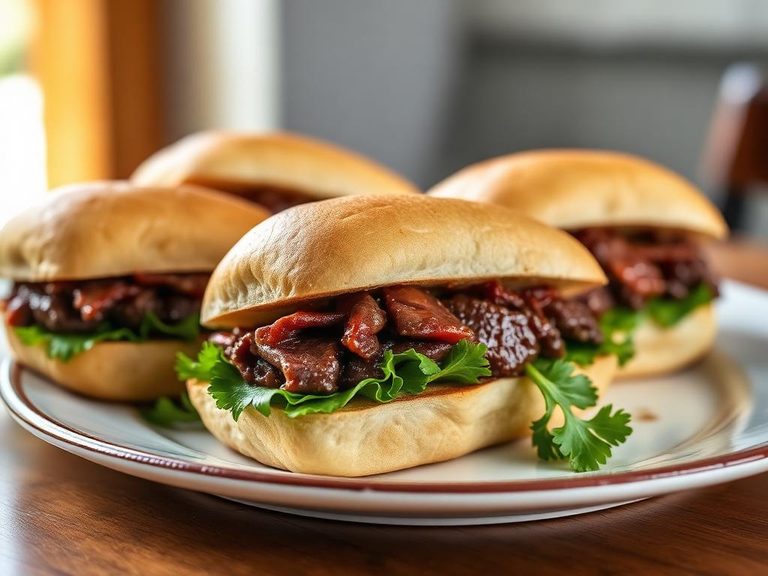
People adore it for its deep, savory flavor that becomes incredibly tender and flavorful when braised or slow-cooked. It's a versatile workhorse cut, perfect for everything from hearty stews to shredded sandwiches, making it a staple in comfort food traditions worldwide.
⚠️ Watch-outs & how to enjoy it better
If cooked quickly with high heat, it can be tough and chewy due to its connective tissue. It's also a fatty cut, so those monitoring saturated fat intake should practice portion control. To counteract toughness, always use moist-heat methods like braising or stewing, and trim external fat before cooking if desired.
Key benefits
- Excellent source of complete protein for muscle maintenance
- Rich in essential minerals like zinc, iron, and selenium
- Provides B vitamins, particularly B12, crucial for nerve function
- Naturally low in carbohydrates, suitable for keto and carnivore diets
- The intramuscular fat enhances satiety and flavor absorption
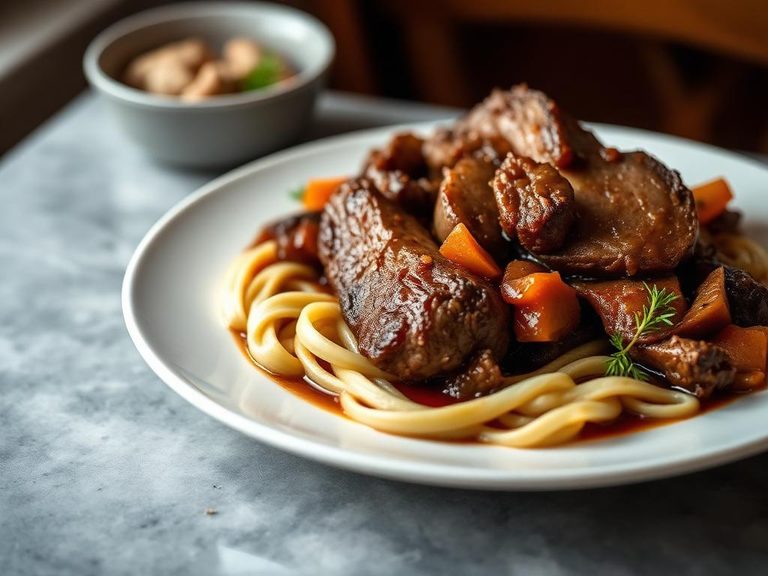
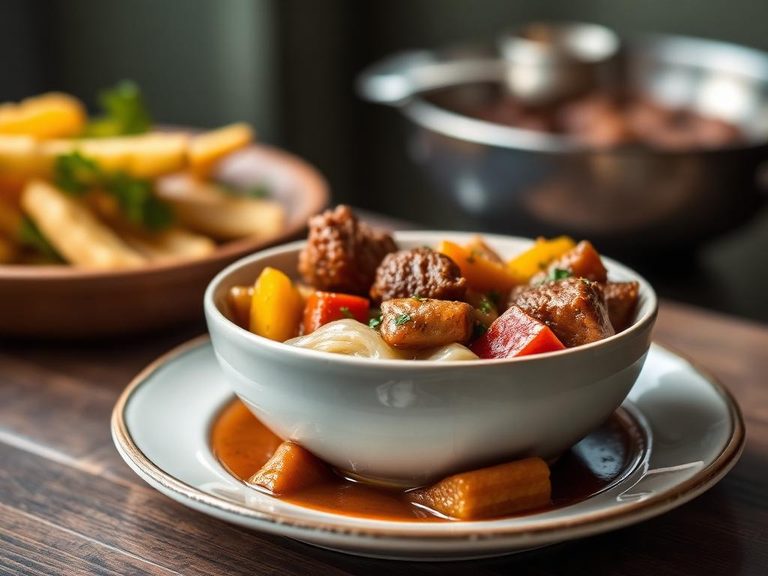
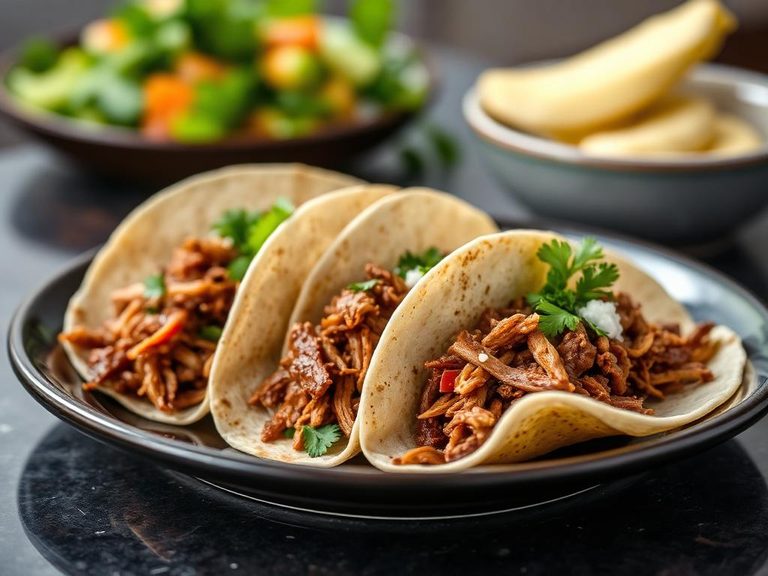
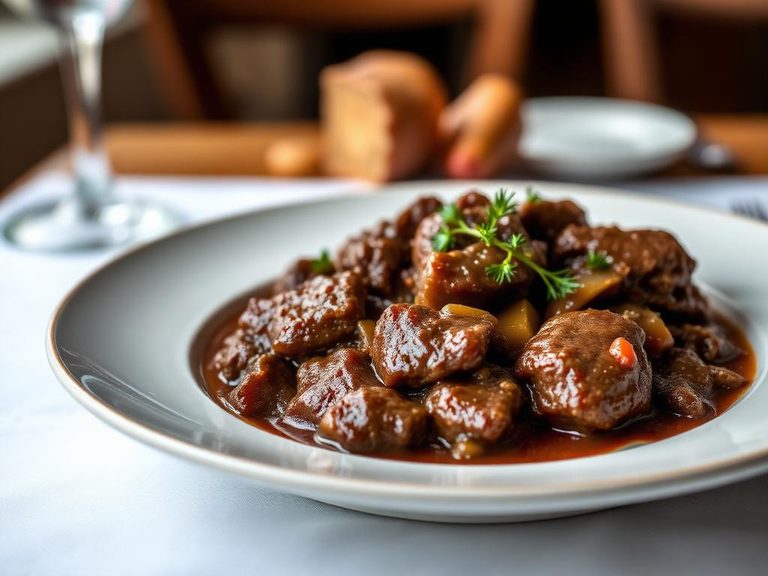
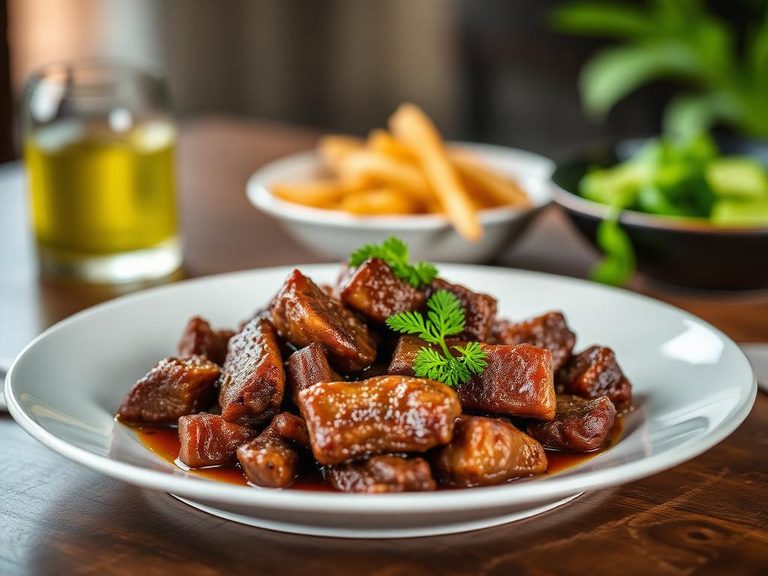
🍽️ Popular dishes
🌍 Where it's eaten
💡 Did you know?
The 'under blade' location means this cut comes from the area just below the shoulder blade (scapula), and the muscle's use in locomotion gives it the rich flavor and collagen that make it ideal for slow cooking.
Full nutrition (USDA data · scales with serving)
| Water | 66.0 g |
| Energy | 202 kcal |
| Energy | 845 kj |
| Protein | 19.1 g |
| Total lipid (fat) | 13.9 g |
| Ash | 0.98 g |
| Carbohydrate, by difference | 0.00 g |
| Fiber, total dietary | 0.00 g |
| Total Sugars | 0.00 g |
| Calcium, Ca | 12.0 mg |
| Iron, Fe | 2.1 mg |
| Magnesium, Mg | 19.0 mg |
| Phosphorus, P | 181 mg |
| Potassium, K | 329 mg |
| Sodium, Na | 76.0 mg |
| Zinc, Zn | 7.0 mg |
| Copper, Cu | 0.07 mg |
| Manganese, Mn | 0.01 mg |
| Selenium, Se | 21.7 ug |
| Vitamin C, total ascorbic acid | 0.00 mg |
| Thiamin | 0.08 mg |
| Riboflavin | 0.17 mg |
| Niacin | 4.0 mg |
| Pantothenic acid | 0.63 mg |
| Vitamin B-6 | 0.38 mg |
| Folate, total | 3.0 ug |
| Folic acid | 0.00 ug |
| Folate, food | 3.0 ug |
| Folate, DFE | 3.0 ug |
| Choline, total | 64.5 mg |
| Betaine | 17.1 mg |
| Vitamin B-12 | 2.9 ug |
| Vitamin B-12, added | 0.00 ug |
| Vitamin A, RAE | 4.0 ug |
| Retinol | 4.0 ug |
| Carotene, beta | 0.00 ug |
| Carotene, alpha | 0.00 ug |
| Cryptoxanthin, beta | 0.00 ug |
| Vitamin A, IU | 13.0 iu |
| Lycopene | 0.00 ug |
| Lutein + zeaxanthin | 0.00 ug |
| Vitamin E (alpha-tocopherol) | 0.16 mg |
| Vitamin E, added | 0.00 mg |
| Vitamin D (D2 + D3), International Units | 5.0 iu |
| Vitamin D (D2 + D3) | 0.10 ug |
| Vitamin D3 (cholecalciferol) | 0.10 ug |
| Vitamin K (phylloquinone) | 1.5 ug |
| Alcohol, ethyl | 0.00 g |
| Caffeine | 0.00 mg |
| Theobromine | 0.00 mg |
Fat & fatty acid profile (per 100g)
| Fatty acids, total saturated | 5.9 g |
| SFA 4:0 | 0.00 g |
| SFA 6:0 | 0.00 g |
| SFA 8:0 | 0.00 g |
| SFA 10:0 | 0.00 g |
| SFA 12:0 | 0.00 g |
| SFA 14:0 | 0.42 g |
| SFA 16:0 | 3.2 g |
| SFA 17:0 | 0.17 g |
| SFA 18:0 | 2.1 g |
| SFA 20:0 | 0.01 g |
| SFA 24:0 | 0.01 g |
| Fatty acids, total monounsaturated | 6.8 g |
| MUFA 14:1 | 0.09 g |
| MUFA 16:1 | 0.45 g |
| MUFA 16:1 c | 0.45 g |
| MUFA 17:1 | 0.12 g |
| MUFA 18:1 | 6.1 g |
| MUFA 18:1 c | 5.3 g |
| MUFA 18:1-11 t (18:1t n-7) | 0.28 g |
| MUFA 20:1 | 0.03 g |
| MUFA 22:1 | 0.00 g |
| Fatty acids, total polyunsaturated | 0.59 g |
| PUFA 18:2 | 0.52 g |
| PUFA 18:2 n-6 c,c | 0.45 g |
| PUFA 18:2 CLAs | 0.06 g |
| PUFA 18:3 | 0.02 g |
| PUFA 18:3 n-3 c,c,c (ALA) | 0.02 g |
| PUFA 18:4 | 0.00 g |
| PUFA 20:2 n-6 c,c | 0.00 g |
| PUFA 20:4 | 0.04 g |
| PUFA 20:5 n-3 (EPA) | 0.00 g |
| PUFA 22:5 n-3 (DPA) | 0.00 g |
| PUFA 22:6 n-3 (DHA) | 0.00 g |
| Fatty acids, total trans | 0.85 g |
| Fatty acids, total trans-monoenoic | 0.85 g |
| TFA 18:1 t | 0.85 g |
| Cholesterol | 66.0 mg |
Amino acid profile (per 100g)
| Tryptophan | 0.22 g |
| Threonine | 0.84 g |
| Isoleucine | 0.81 g |
| Leucine | 1.5 g |
| Lysine | 1.7 g |
| Methionine | 0.54 g |
| Cystine | 0.20 g |
| Phenylalanine | 0.73 g |
| Tyrosine | 0.66 g |
| Valine | 0.87 g |
| Arginine | 1.3 g |
| Histidine | 0.62 g |
| Alanine | 1.1 g |
| Aspartic acid | 1.7 g |
| Glutamic acid | 3.0 g |
| Glycine | 0.87 g |
| Proline | 0.79 g |
| Serine | 0.74 g |
| Hydroxyproline | 0.13 g |
FAQ
What's the best way to cook this cut to make it tender?
Low and slow is the mantra. Braise it in liquid (like broth or wine) in a covered pot at a low oven temperature (around 300-325°F / 150-165°C) for 2-3 hours, or until the connective tissue has fully broken down.
Is this the same as a chuck roast?
It is a specific part of the chuck primal. 'Chuck' is the broader shoulder section, while 'under blade' pinpoints the muscle group below the scapula bone. They are often sold and used interchangeably in recipes.
Can I grill this cut like a steak?
It's not ideal for grilling. The high connective tissue content means it will be tough if cooked quickly. It's best reserved for moist-heat cooking methods that break down collagen into gelatin.
Nutrient density (calculated · NRF9.3)
Nutrient Rich Foods index: beneficial nutrients (protein, fiber, vitamins, minerals) minus saturated fat, added sugar & sodium, per 100 kcal.
NRF9.3 index — Fulgoni, Keast & Drewnowski, 2009. Computed from USDA nutrients.
Weight-loss friendliness (composite index)
Energy density 2.02 kcal/g · 38% calories from protein · 0.0 g fiber · 0.0 g sugar per 100 g.
Composite of energy density (Rolls et al., 1999), protein & fiber satiety, minus sugar. A calculated heuristic — ranks satiety-per-calorie, not a clinical measure.
Dietary load (calculated from USDA values)
Potential renal acid load. Positive = acid-forming, negative = alkaline-forming.
Sodium-to-potassium ratio: 0.23 (lower is better — aim for ≤ 1)
Sodium:potassium per WHO potassium guidance. Computed from USDA nutrients.