

Beef, chuck, under blade center steak, boneless, Denver Cut, separable lean only, trimmed to 0" fat, select, raw
Whole food · Beef Products

Photo: Wikipedia
The Denver cut is a tender, well-marbled steak from the chuck section, prized for its beefy flavor and juicy texture. It's a leaner, boneless option that offers a rich protein boost with minimal fat. This cut is a favorite for those seeking a flavorful yet relatively lean red meat.
Calorie split: 50% protein · 1% carbs · 49% fat
↓ Full nutrition💚 Why it's loved
People love the Denver cut for its perfect balance of deep, beefy flavor and tender texture, making it a versatile star for both quick grilling and slow braising. It's a more accessible, flavorful alternative to pricier steaks, often celebrated in American steakhouse culture.
⚠️ Watch-outs & how to enjoy it better
While leaner than other chuck cuts, it can still be high in saturated fat, which some may need to moderate. To counteract this, pair it with fiber-rich vegetables like roasted broccoli or a large salad, and practice portion control by sticking to a standard serving size.
Key benefits
- Excellent source of high-quality protein (19.71g per 100g)
- Very low in carbohydrates (0.21g per 100g)
- Contains essential nutrients like iron and B vitamins
- Leaner than many other chuck cuts when trimmed to 0" fat
- Provides a satisfying, savory flavor without excessive calories
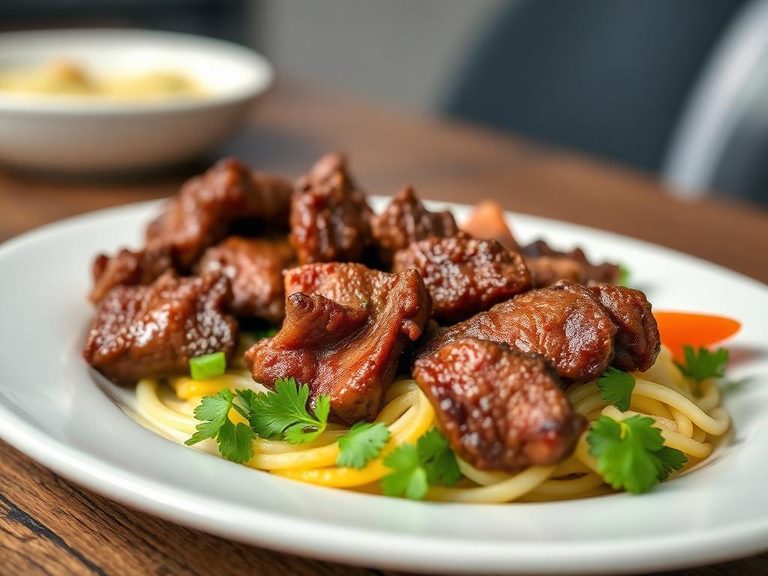
🍽️ Popular dishes
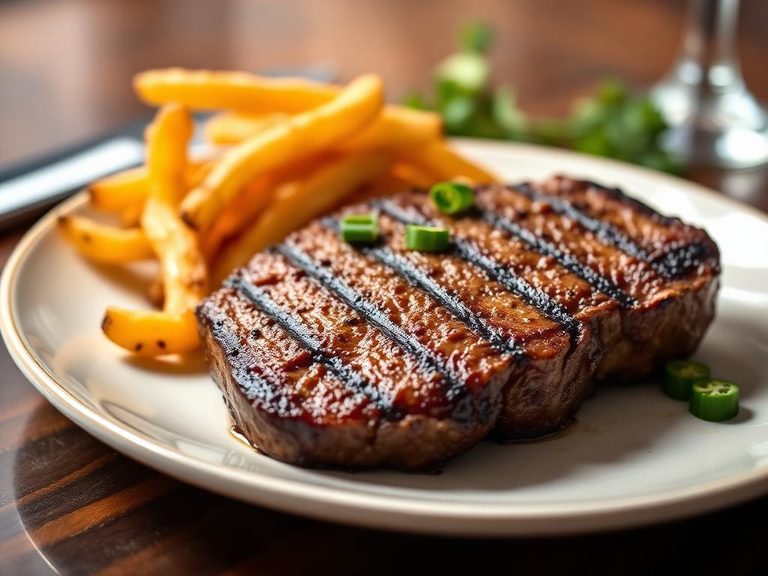
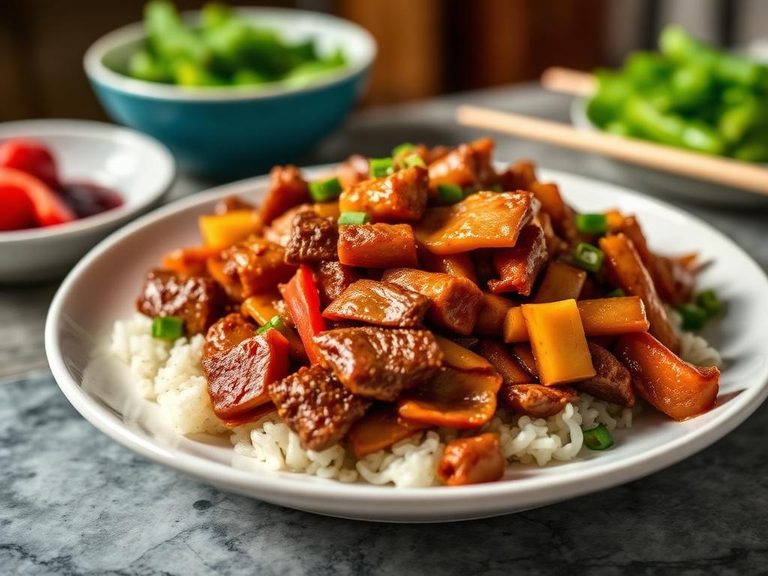
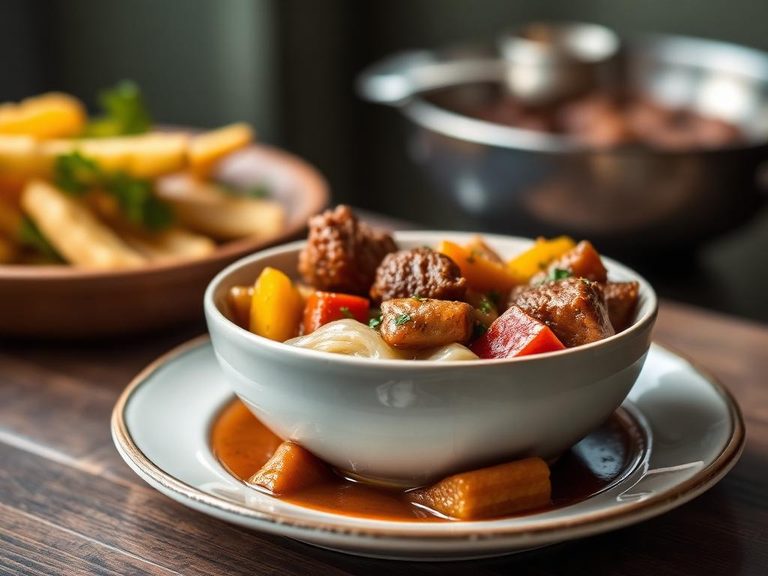
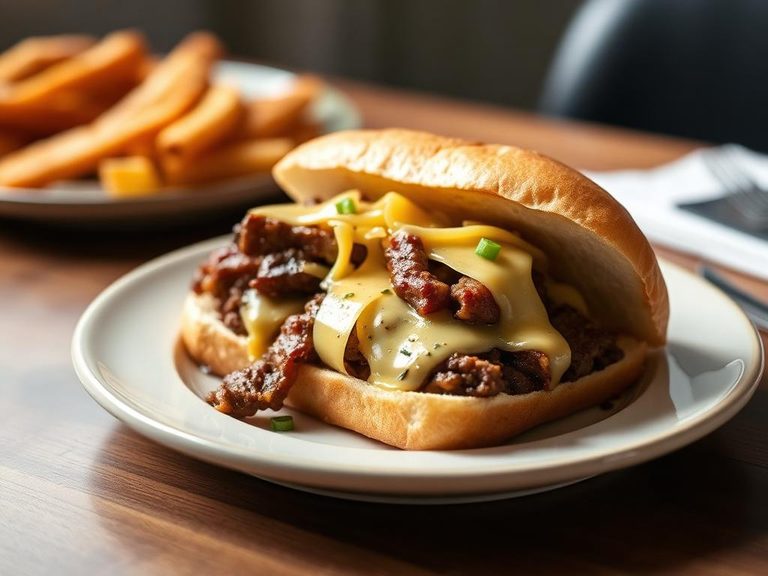
🌍 Where it's eaten
💡 Did you know?
The Denver cut is a relatively modern steak name, popularized in the early 2000s by the National Cattlemen's Beef Association to market a specific, flavorful muscle from the chuck.
Full nutrition (USDA data · scales with serving)
| Water | 70.6 g |
| Energy | 157 kcal |
| Energy | 655 kj |
| Protein | 19.7 g |
| Total lipid (fat) | 8.5 g |
| Ash | 0.92 g |
| Carbohydrate, by difference | 0.21 g |
| Fiber, total dietary | 0.00 g |
| Total Sugars | 0.00 g |
| Calcium, Ca | 11.0 mg |
| Iron, Fe | 2.4 mg |
| Magnesium, Mg | 20.0 mg |
| Phosphorus, P | 186 mg |
| Potassium, K | 329 mg |
| Sodium, Na | 77.0 mg |
| Zinc, Zn | 7.8 mg |
| Copper, Cu | 0.08 mg |
| Manganese, Mn | 0.01 mg |
| Selenium, Se | 21.5 ug |
| Vitamin C, total ascorbic acid | 0.00 mg |
| Thiamin | 0.08 mg |
| Riboflavin | 0.19 mg |
| Niacin | 3.3 mg |
| Pantothenic acid | 0.74 mg |
| Vitamin B-6 | 0.43 mg |
| Folate, total | 3.0 ug |
| Folic acid | 0.00 ug |
| Folate, food | 3.0 ug |
| Folate, DFE | 3.0 ug |
| Choline, total | 72.8 mg |
| Betaine | 23.7 mg |
| Vitamin B-12 | 3.3 ug |
| Vitamin B-12, added | 0.00 ug |
| Vitamin A, RAE | 2.0 ug |
| Retinol | 2.0 ug |
| Carotene, beta | 0.00 ug |
| Carotene, alpha | 0.00 ug |
| Cryptoxanthin, beta | 0.00 ug |
| Vitamin A, IU | 8.0 iu |
| Lycopene | 0.00 ug |
| Lutein + zeaxanthin | 0.00 ug |
| Vitamin E (alpha-tocopherol) | 0.12 mg |
| Vitamin E, added | 0.00 mg |
| Vitamin D (D2 + D3), International Units | 4.0 iu |
| Vitamin D (D2 + D3) | 0.10 ug |
| Vitamin D3 (cholecalciferol) | 0.10 ug |
| Vitamin K (phylloquinone) | 1.5 ug |
| Alcohol, ethyl | 0.00 g |
| Caffeine | 0.00 mg |
| Theobromine | 0.00 mg |
Fat & fatty acid profile (per 100g)
| Fatty acids, total saturated | 3.4 g |
| SFA 4:0 | 0.00 g |
| SFA 6:0 | 0.00 g |
| SFA 8:0 | 0.00 g |
| SFA 10:0 | 0.00 g |
| SFA 12:0 | 0.00 g |
| SFA 14:0 | 0.22 g |
| SFA 16:0 | 1.9 g |
| SFA 17:0 | 0.11 g |
| SFA 18:0 | 1.2 g |
| SFA 20:0 | 0.00 g |
| SFA 24:0 | 0.01 g |
| Fatty acids, total monounsaturated | 4.0 g |
| MUFA 14:1 | 0.05 g |
| MUFA 16:1 | 0.26 g |
| MUFA 17:1 | 0.08 g |
| MUFA 18:1 | 3.7 g |
| MUFA 18:1 c | 3.1 g |
| MUFA 18:1-11 t (18:1t n-7) | 0.37 g |
| MUFA 20:1 | 0.01 g |
| MUFA 22:1 | 0.00 g |
| Fatty acids, total polyunsaturated | 0.45 g |
| PUFA 18:2 | 0.39 g |
| PUFA 18:2 n-6 c,c | 0.36 g |
| PUFA 18:2 CLAs | 0.03 g |
| PUFA 18:3 | 0.01 g |
| PUFA 18:3 n-3 c,c,c (ALA) | 0.01 g |
| PUFA 18:4 | 0.00 g |
| PUFA 20:2 n-6 c,c | 0.00 g |
| PUFA 20:4 | 0.05 g |
| PUFA 20:5 n-3 (EPA) | 0.00 g |
| PUFA 22:5 n-3 (DPA) | 0.00 g |
| PUFA 22:6 n-3 (DHA) | 0.00 g |
| Fatty acids, total trans | 0.51 g |
| Fatty acids, total trans-monoenoic | 0.51 g |
| TFA 18:1 t | 0.51 g |
| Cholesterol | 68.0 mg |
Amino acid profile (per 100g)
| Tryptophan | 0.23 g |
| Threonine | 0.89 g |
| Isoleucine | 0.86 g |
| Leucine | 1.6 g |
| Lysine | 1.8 g |
| Methionine | 0.57 g |
| Cystine | 0.21 g |
| Phenylalanine | 0.77 g |
| Tyrosine | 0.70 g |
| Valine | 0.91 g |
| Arginine | 1.3 g |
| Histidine | 0.65 g |
| Alanine | 1.1 g |
| Aspartic acid | 1.8 g |
| Glutamic acid | 3.2 g |
| Glycine | 0.88 g |
| Proline | 0.81 g |
| Serine | 0.77 g |
| Hydroxyproline | 0.10 g |
FAQ
What is the difference between a Denver cut and a chuck eye steak?
The Denver cut comes from the serratus ventralis muscle, while the chuck eye steak comes from the spinalis dorsi. The Denver is generally leaner and more consistently tender, while the chuck eye is often more marbled and considered the 'poor man's ribeye'.
What's the best way to cook a Denver cut?
For maximum tenderness, cook it to medium-rare (130-135°F internal temperature) using high-heat methods like grilling, pan-searing, or broiling. It also works well when sliced thin for stir-fries or slow-cooked in braises.
Is the Denver cut a good choice for a low-fat diet?
When trimmed to 0" fat as specified, it is one of the leaner chuck options, with about 8.54g of fat per 100g. However, it's still a red meat, so it should be consumed in moderation as part of a balanced diet.
Nutrient density (calculated · NRF9.3)
Nutrient Rich Foods index: beneficial nutrients (protein, fiber, vitamins, minerals) minus saturated fat, added sugar & sodium, per 100 kcal.
NRF9.3 index — Fulgoni, Keast & Drewnowski, 2009. Computed from USDA nutrients.
Weight-loss friendliness (composite index)
Energy density 1.57 kcal/g · 50% calories from protein · 0.0 g fiber · 0.0 g sugar per 100 g.
Composite of energy density (Rolls et al., 1999), protein & fiber satiety, minus sugar. A calculated heuristic — ranks satiety-per-calorie, not a clinical measure.
Dietary load (calculated from USDA values)
Potential renal acid load. Positive = acid-forming, negative = alkaline-forming.
Sodium-to-potassium ratio: 0.23 (lower is better — aim for ≤ 1)
Sodium:potassium per WHO potassium guidance. Computed from USDA nutrients.