

Beef, chuck, under blade center steak, boneless, Denver Cut, separable lean only, trimmed to 0" fat, select, cooked, grilled
Whole food · Beef Products

Photo: Wikipedia
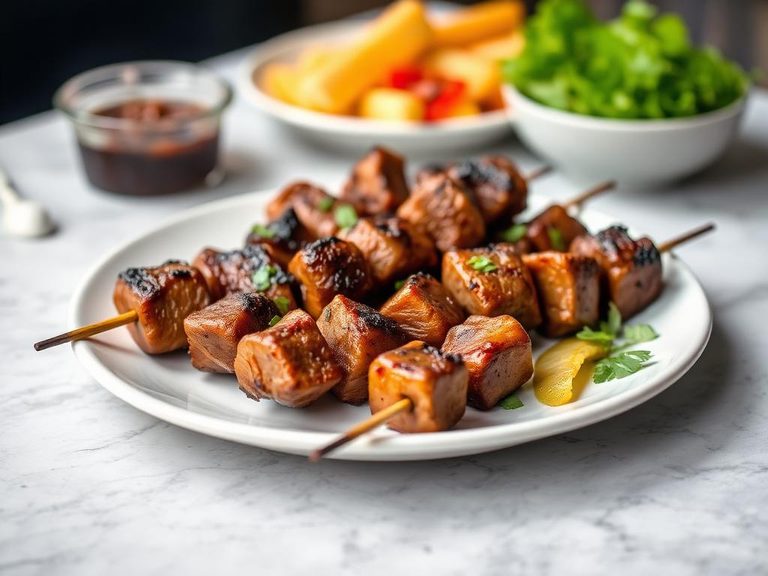
The Denver cut is a tender, marbled steak from the chuck shoulder, prized for its rich beefy flavor and juicy, melt-in-your-mouth texture when grilled. With over 26 grams of protein per 100g and virtually no carbs, it's a powerful, nutrient-dense protein source. Its fine marbling renders beautifully during cooking, creating a succulent bite that rivals more expensive cuts.
Calorie split: 51% protein · 0% carbs · 49% fat
↓ Full nutrition💚 Why it's loved
People adore the Denver cut for its perfect balance of robust, beefy flavor and exceptional tenderness, often calling it a 'butcher's secret.' Its versatility shines on the grill, where the marbling bastes the meat from within, making it a crowd-pleaser for both casual cookouts and special dinners.
⚠️ Watch-outs & how to enjoy it better
As a fatty cut, it is calorie-dense, which may require portion awareness for those managing energy intake. The marbling also means it can be tough if overcooked or if the connective tissue isn't properly rendered. To counteract this, use a meat thermometer to avoid overcooking, and consider pairing it with a fiber-rich vegetable side like grilled asparagus or a fresh salad to balance the meal.
Key benefits
- Excellent source of complete protein for muscle maintenance
- Rich in bioavailable iron and zinc
- Contains B vitamins, especially B12 and niacin
- Provides conjugated linoleic acid (CLA), a natural fatty acid
- High satiety factor, aiding in appetite control
🍽️ Popular dishes
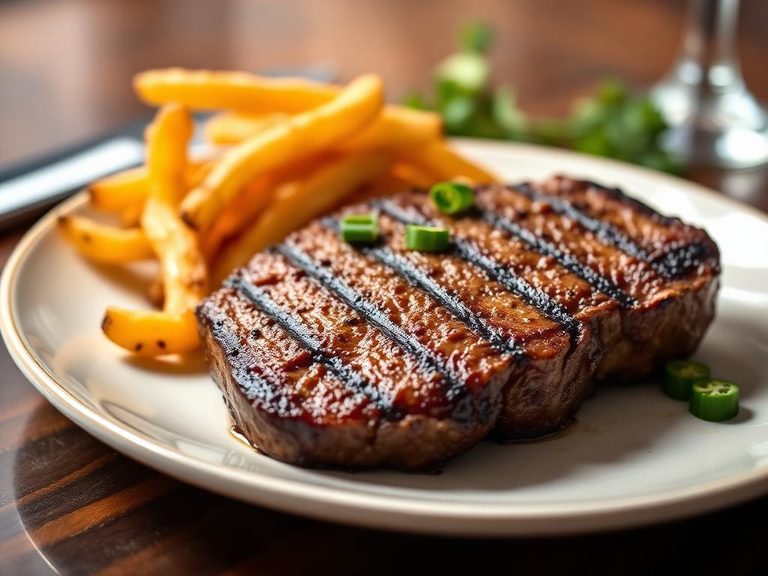
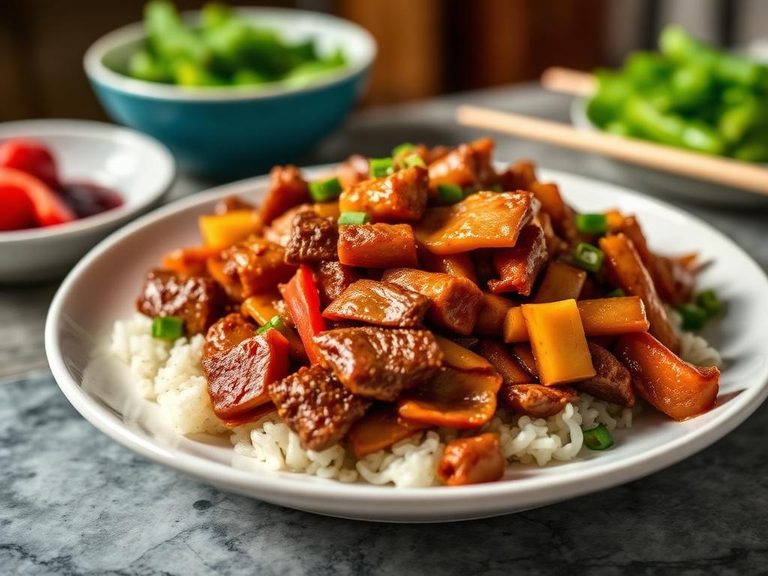
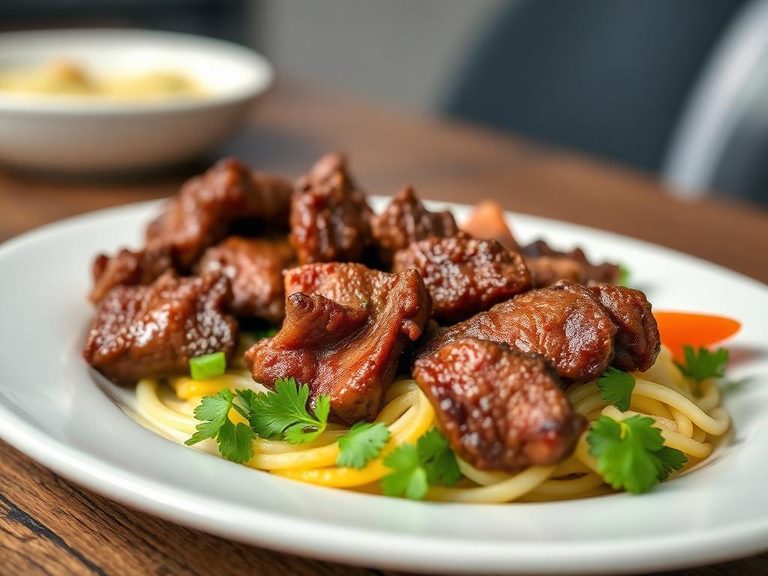
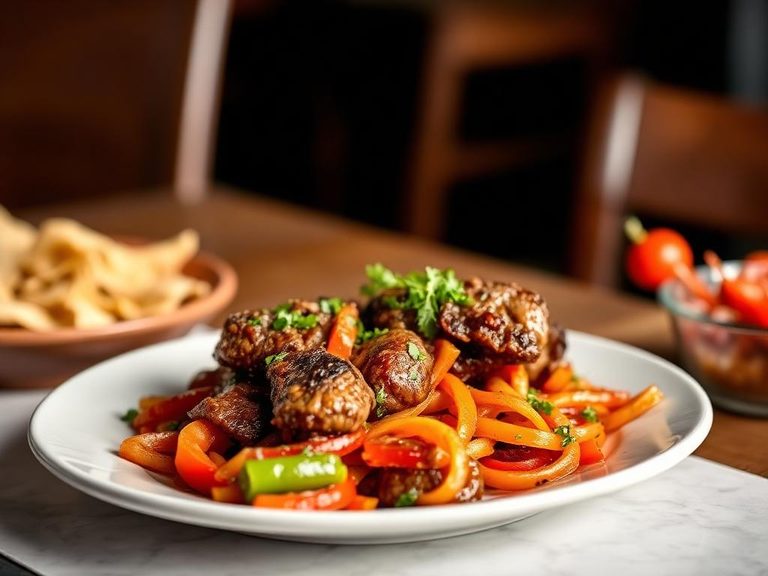
🌍 Where it's eaten
💡 Did you know?
The Denver cut was only popularized in the early 2000s after the USDA identified it as a distinct, high-quality subprimal cut from the chuck, transforming a previously overlooked portion of the cow into a steakhouse favorite.
Full nutrition (USDA data · scales with serving)
| Water | 61.1 g |
| Energy | 209 kcal |
| Energy | 875 kj |
| Protein | 26.5 g |
| Total lipid (fat) | 11.5 g |
| Ash | 1.0 g |
| Carbohydrate, by difference | 0.00 g |
| Fiber, total dietary | 0.00 g |
| Total Sugars | 0.00 g |
| Calcium, Ca | 16.0 mg |
| Iron, Fe | 3.4 mg |
| Magnesium, Mg | 23.0 mg |
| Phosphorus, P | 202 mg |
| Potassium, K | 306 mg |
| Sodium, Na | 74.0 mg |
| Zinc, Zn | 10.4 mg |
| Copper, Cu | 0.10 mg |
| Manganese, Mn | 0.02 mg |
| Selenium, Se | 28.0 ug |
| Vitamin C, total ascorbic acid | 0.00 mg |
| Thiamin | 0.09 mg |
| Riboflavin | 0.25 mg |
| Niacin | 3.7 mg |
| Pantothenic acid | 0.97 mg |
| Vitamin B-6 | 0.46 mg |
| Folate, total | 6.0 ug |
| Folic acid | 0.00 ug |
| Folate, food | 6.0 ug |
| Folate, DFE | 6.0 ug |
| Choline, total | 92.1 mg |
| Betaine | 20.1 mg |
| Vitamin B-12 | 4.3 ug |
| Vitamin B-12, added | 0.00 ug |
| Vitamin A, RAE | 2.0 ug |
| Retinol | 2.0 ug |
| Carotene, beta | 0.00 ug |
| Carotene, alpha | 0.00 ug |
| Cryptoxanthin, beta | 0.00 ug |
| Vitamin A, IU | 7.0 iu |
| Lycopene | 0.00 ug |
| Lutein + zeaxanthin | 0.00 ug |
| Vitamin E (alpha-tocopherol) | 0.07 mg |
| Vitamin E, added | 0.00 mg |
| Vitamin D (D2 + D3), International Units | 4.0 iu |
| Vitamin D (D2 + D3) | 0.10 ug |
| Vitamin D3 (cholecalciferol) | 0.10 ug |
| Vitamin K (phylloquinone) | 1.6 ug |
| Alcohol, ethyl | 0.00 g |
| Caffeine | 0.00 mg |
| Theobromine | 0.00 mg |
Fat & fatty acid profile (per 100g)
| Fatty acids, total saturated | 4.7 g |
| SFA 4:0 | 0.00 g |
| SFA 6:0 | 0.00 g |
| SFA 8:0 | 0.00 g |
| SFA 10:0 | 0.00 g |
| SFA 12:0 | 0.00 g |
| SFA 14:0 | 0.31 g |
| SFA 16:0 | 2.6 g |
| SFA 17:0 | 0.15 g |
| SFA 18:0 | 1.6 g |
| SFA 20:0 | 0.00 g |
| SFA 24:0 | 0.01 g |
| Fatty acids, total monounsaturated | 4.7 g |
| MUFA 14:1 | 0.06 g |
| MUFA 16:1 | 0.40 g |
| MUFA 17:1 | 0.12 g |
| MUFA 18:1 | 5.3 g |
| MUFA 18:1 c | 4.5 g |
| MUFA 18:1-11 t (18:1t n-7) | 0.56 g |
| MUFA 20:1 | 0.02 g |
| MUFA 22:1 | 0.00 g |
| Fatty acids, total polyunsaturated | 0.71 g |
| PUFA 18:2 | 0.60 g |
| PUFA 18:2 n-6 c,c | 0.56 g |
| PUFA 18:2 CLAs | 0.05 g |
| PUFA 18:3 | 0.03 g |
| PUFA 18:3 n-3 c,c,c (ALA) | 0.03 g |
| PUFA 18:4 | 0.00 g |
| PUFA 20:2 n-6 c,c | 0.00 g |
| PUFA 20:4 | 0.08 g |
| PUFA 20:5 n-3 (EPA) | 0.00 g |
| PUFA 22:5 n-3 (DPA) | 0.00 g |
| PUFA 22:6 n-3 (DHA) | 0.00 g |
| Fatty acids, total trans | 0.76 g |
| Fatty acids, total trans-monoenoic | 0.76 g |
| TFA 18:1 t | 0.76 g |
| Cholesterol | 98.0 mg |
Amino acid profile (per 100g)
| Tryptophan | 0.30 g |
| Threonine | 1.2 g |
| Isoleucine | 1.2 g |
| Leucine | 2.2 g |
| Lysine | 2.4 g |
| Methionine | 0.77 g |
| Cystine | 0.28 g |
| Phenylalanine | 1.0 g |
| Tyrosine | 0.94 g |
| Valine | 1.2 g |
| Arginine | 1.8 g |
| Histidine | 0.88 g |
| Alanine | 1.5 g |
| Aspartic acid | 2.4 g |
| Glutamic acid | 4.3 g |
| Glycine | 1.2 g |
| Proline | 1.1 g |
| Serine | 1.0 g |
| Hydroxyproline | 0.13 g |
FAQ
What is the difference between a Denver cut and a ribeye?
Both are well-marbled steaks, but the Denver cut comes from the chuck (shoulder) while the ribeye comes from the rib section. The Denver is often slightly leaner and has a tighter grain, offering a similar richness at a typically lower price point.
How should I cook a Denver cut for the best results?
High-heat methods like grilling, pan-searing, or broiling are ideal. Cook to medium-rare or medium (130-145°F internal temperature) to preserve tenderness, and always let it rest for 5-10 minutes before slicing against the grain.
Is the Denver cut a tough cut of meat?
When cooked properly, it is remarkably tender due to its marbling. However, because it comes from the working shoulder muscle, it can become chewy if overcooked or if not sliced against the grain.
Nutrient density (calculated · NRF9.3)
Nutrient Rich Foods index: beneficial nutrients (protein, fiber, vitamins, minerals) minus saturated fat, added sugar & sodium, per 100 kcal.
NRF9.3 index — Fulgoni, Keast & Drewnowski, 2009. Computed from USDA nutrients.
Weight-loss friendliness (composite index)
Energy density 2.09 kcal/g · 51% calories from protein · 0.0 g fiber · 0.0 g sugar per 100 g.
Composite of energy density (Rolls et al., 1999), protein & fiber satiety, minus sugar. A calculated heuristic — ranks satiety-per-calorie, not a clinical measure.
Dietary load (calculated from USDA values)
Potential renal acid load. Positive = acid-forming, negative = alkaline-forming.
Sodium-to-potassium ratio: 0.24 (lower is better — aim for ≤ 1)
Sodium:potassium per WHO potassium guidance. Computed from USDA nutrients.