

Beef, chuck, short ribs, boneless, separable lean and fat, trimmed to 0" fat, select, raw
Whole food · Beef Products

Photo: Wikipedia
This is a premium cut of beef from the shoulder, prized for its deep, beefy flavor and a perfect balance of marbled fat and tender lean meat. When raw, it's a rich, ruby-red with intricate white fat veins that promise a melt-in-your-mouth texture after proper cooking. It's a calorie-dense, high-protein powerhouse with zero carbs, making it a staple for high-fat, low-carb diets.
Calorie split: 31% protein · 0% carbs · 69% fat
↓ Full nutrition💚 Why it's loved
People love it for its profound, savory umami and the luxurious, buttery texture it develops when slow-cooked, as the collagen and fat break down into a silky richness. It's a versatile star in both rustic home cooking and high-end restaurant dishes, offering deep flavor with minimal seasoning.
⚠️ Watch-outs & how to enjoy it better
As a fatty cut, it is high in saturated fat and calories, which may be a concern for those monitoring heart health or calorie intake. The primary tip is to practice portion control and pair it with large portions of non-starchy vegetables (like roasted broccoli or a fresh salad) to balance the meal and increase fiber intake. Always trim any external fat before cooking to reduce overall fat content.
Key benefits
- Excellent source of complete protein for muscle maintenance.
- Rich in bioavailable iron and zinc.
- Provides B vitamins, especially B12, for energy metabolism.
- High in monounsaturated fats from the marbling.
- Naturally carb-free, suitable for ketogenic diets.
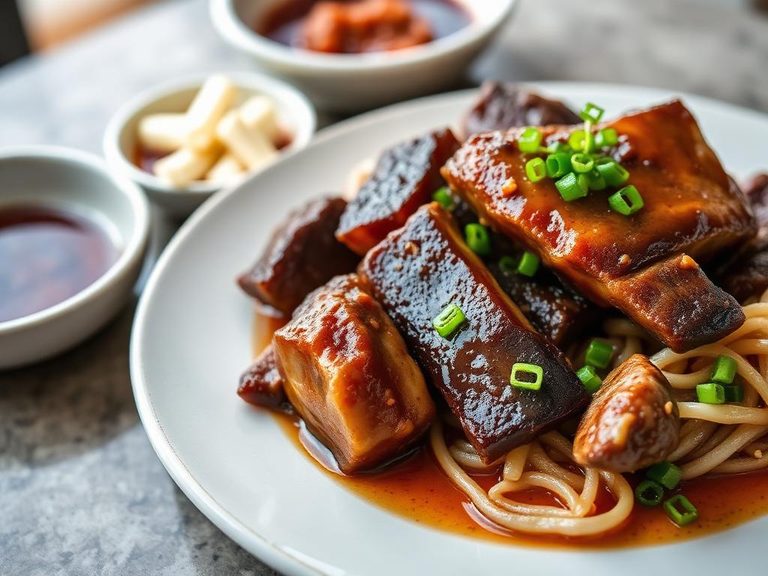
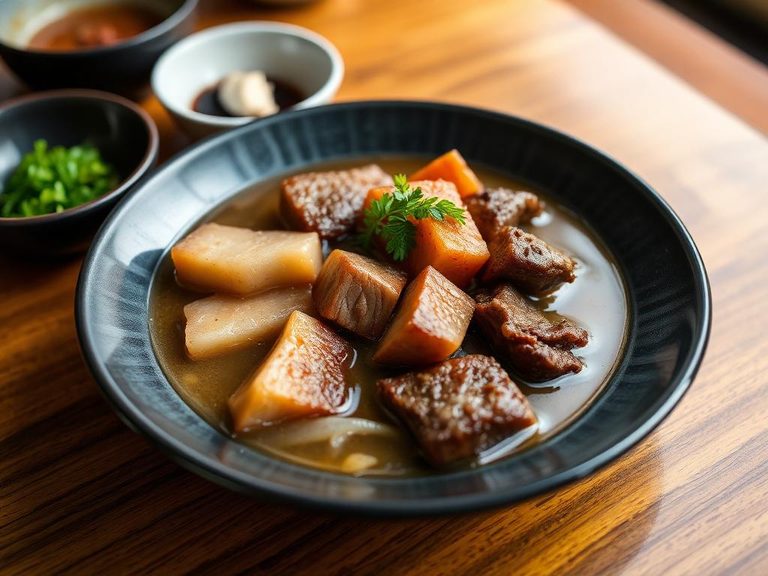
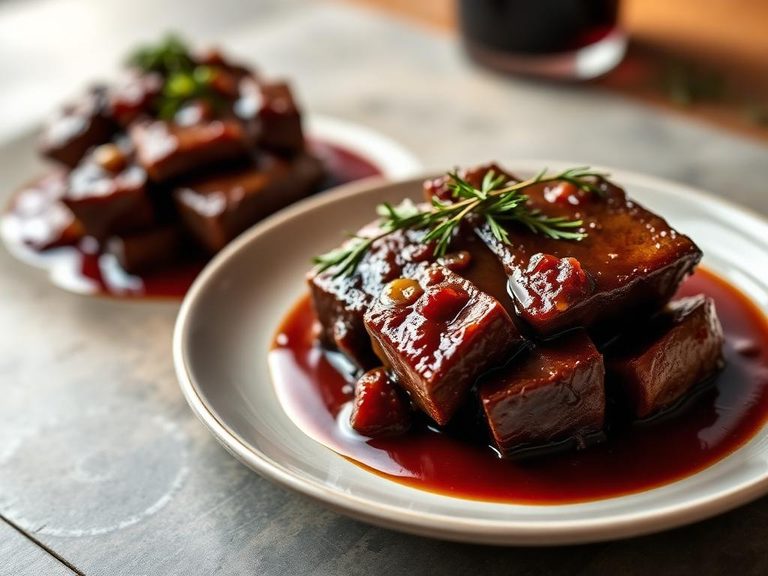
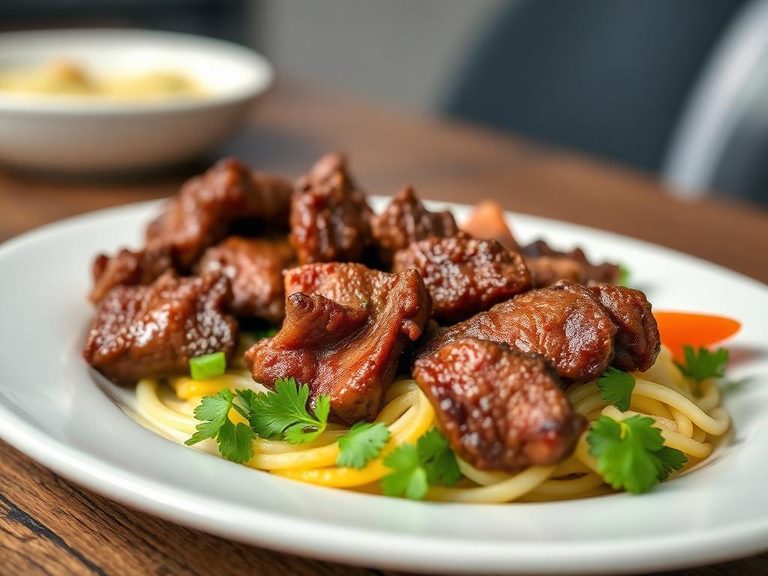
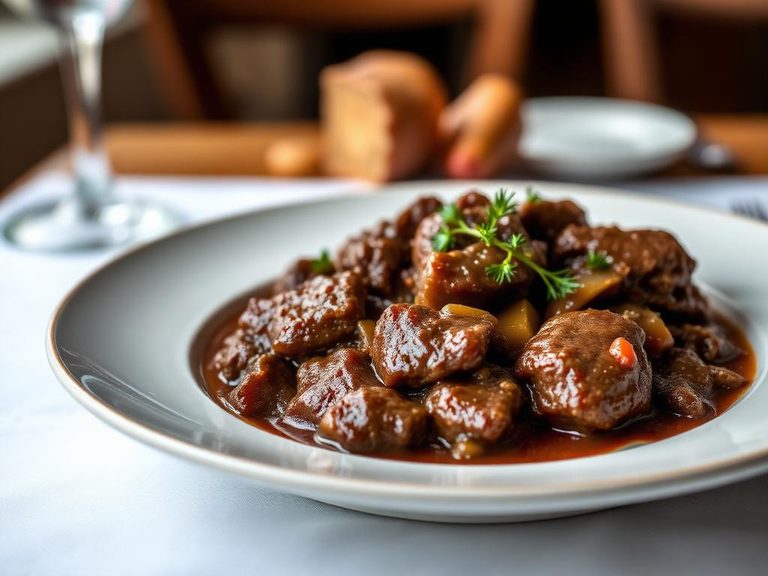
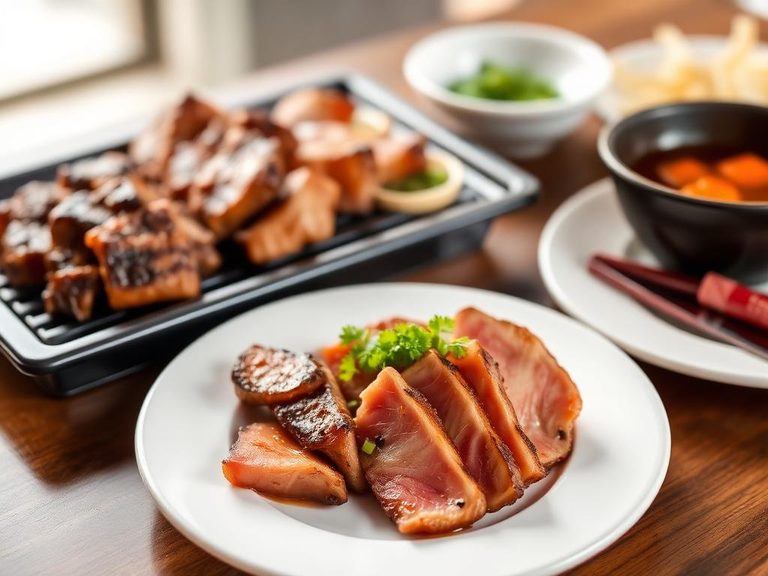
🍽️ Popular dishes
🌍 Where it's eaten
💡 Did you know?
The term 'short' in short ribs doesn't refer to the size of the meat, but to the fact that the ribs themselves are cut 'short' across the bone, unlike the long bones in a rack of ribs.
Full nutrition (USDA data · scales with serving)
| Water | 64.8 g |
| Energy | 227 kcal |
| Energy | 950 kj |
| Protein | 17.9 g |
| Total lipid (fat) | 17.3 g |
| Ash | 0.86 g |
| Carbohydrate, by difference | 0.00 g |
| Fiber, total dietary | 0.00 g |
| Total Sugars | 0.00 g |
| Calcium, Ca | 12.0 mg |
| Iron, Fe | 2.1 mg |
| Magnesium, Mg | 17.0 mg |
| Phosphorus, P | 162 mg |
| Potassium, K | 273 mg |
| Sodium, Na | 85.0 mg |
| Zinc, Zn | 7.0 mg |
| Copper, Cu | 0.07 mg |
| Manganese, Mn | 0.01 mg |
| Selenium, Se | 18.6 ug |
| Vitamin C, total ascorbic acid | 0.00 mg |
| Thiamin | 0.08 mg |
| Riboflavin | 0.17 mg |
| Niacin | 3.3 mg |
| Pantothenic acid | 0.64 mg |
| Vitamin B-6 | 0.31 mg |
| Folate, total | 3.0 ug |
| Folic acid | 0.00 ug |
| Folate, food | 3.0 ug |
| Folate, DFE | 3.0 ug |
| Choline, total | 61.3 mg |
| Betaine | 19.8 mg |
| Vitamin B-12 | 3.1 ug |
| Vitamin B-12, added | 0.00 ug |
| Vitamin A, RAE | 5.0 ug |
| Retinol | 5.0 ug |
| Carotene, beta | 0.00 ug |
| Carotene, alpha | 0.00 ug |
| Cryptoxanthin, beta | 0.00 ug |
| Vitamin A, IU | 15.0 iu |
| Lycopene | 0.00 ug |
| Lutein + zeaxanthin | 0.00 ug |
| Vitamin E (alpha-tocopherol) | 0.14 mg |
| Vitamin E, added | 0.00 mg |
| Vitamin D (D2 + D3), International Units | 4.0 iu |
| Vitamin D (D2 + D3) | 0.10 ug |
| Vitamin D3 (cholecalciferol) | 0.10 ug |
| Vitamin K (phylloquinone) | 1.5 ug |
| Alcohol, ethyl | 0.00 g |
| Caffeine | 0.00 mg |
| Theobromine | 0.00 mg |
Fat & fatty acid profile (per 100g)
| Fatty acids, total saturated | 7.7 g |
| SFA 4:0 | 0.00 g |
| SFA 6:0 | 0.00 g |
| SFA 8:0 | 0.00 g |
| SFA 10:0 | 0.00 g |
| SFA 12:0 | 0.00 g |
| SFA 14:0 | 0.54 g |
| SFA 16:0 | 4.1 g |
| SFA 17:0 | 0.25 g |
| SFA 18:0 | 2.8 g |
| SFA 20:0 | 0.01 g |
| SFA 24:0 | 0.01 g |
| Fatty acids, total monounsaturated | 8.7 g |
| MUFA 14:1 | 0.10 g |
| MUFA 16:1 | 0.52 g |
| MUFA 16:1 c | 0.52 g |
| MUFA 17:1 | 0.16 g |
| MUFA 18:1 | 7.9 g |
| MUFA 18:1 c | 6.6 g |
| MUFA 18:1-11 t (18:1t n-7) | 0.57 g |
| MUFA 20:1 | 0.03 g |
| MUFA 22:1 | 0.00 g |
| Fatty acids, total polyunsaturated | 0.73 g |
| PUFA 18:2 | 0.65 g |
| PUFA 18:2 n-6 c,c | 0.57 g |
| PUFA 18:2 CLAs | 0.08 g |
| PUFA 18:3 | 0.03 g |
| PUFA 18:3 n-3 c,c,c (ALA) | 0.03 g |
| PUFA 18:4 | 0.00 g |
| PUFA 20:2 n-6 c,c | 0.00 g |
| PUFA 20:4 | 0.04 g |
| PUFA 20:5 n-3 (EPA) | 0.00 g |
| PUFA 22:5 n-3 (DPA) | 0.00 g |
| PUFA 22:6 n-3 (DHA) | 0.00 g |
| Fatty acids, total trans | 1.3 g |
| Fatty acids, total trans-monoenoic | 1.3 g |
| TFA 18:1 t | 1.3 g |
| Cholesterol | 78.0 mg |
Amino acid profile (per 100g)
| Tryptophan | 0.20 g |
| Threonine | 0.79 g |
| Isoleucine | 0.76 g |
| Leucine | 1.4 g |
| Lysine | 1.6 g |
| Methionine | 0.51 g |
| Cystine | 0.19 g |
| Phenylalanine | 0.68 g |
| Tyrosine | 0.62 g |
| Valine | 0.81 g |
| Arginine | 1.2 g |
| Histidine | 0.58 g |
| Alanine | 1.0 g |
| Aspartic acid | 1.6 g |
| Glutamic acid | 2.8 g |
| Glycine | 0.81 g |
| Proline | 0.73 g |
| Serine | 0.69 g |
| Hydroxyproline | 0.12 g |
FAQ
What's the difference between boneless and bone-in short ribs?
Bone-in short ribs have a piece of rib bone attached, which adds flavor during cooking and helps with even heat distribution. Boneless short ribs are the same meat, simply deboned for easier handling and slicing.
Why are they called 'separable lean and fat, trimmed to 0'?
This is a USDA grading term. It means the cut consists of both lean muscle and fat that can be easily separated, and for this specific nutritional data, all external, visible fat has been trimmed away, leaving only the intramuscular marbling.
What's the best cooking method for this cut?
Low-and-slow methods like braising, stewing, or slow-roasting are ideal. These techniques break down the tough connective tissue (collagen) into gelatin, resulting in incredibly tender, juicy meat. High-heat grilling is also possible if sliced thinly.
Nutrient density (calculated · NRF9.3)
Nutrient Rich Foods index: beneficial nutrients (protein, fiber, vitamins, minerals) minus saturated fat, added sugar & sodium, per 100 kcal.
NRF9.3 index — Fulgoni, Keast & Drewnowski, 2009. Computed from USDA nutrients.
Weight-loss friendliness (composite index)
Energy density 2.27 kcal/g · 31% calories from protein · 0.0 g fiber · 0.0 g sugar per 100 g.
Composite of energy density (Rolls et al., 1999), protein & fiber satiety, minus sugar. A calculated heuristic — ranks satiety-per-calorie, not a clinical measure.
Dietary load (calculated from USDA values)
Potential renal acid load. Positive = acid-forming, negative = alkaline-forming.
Sodium-to-potassium ratio: 0.31 (lower is better — aim for ≤ 1)
Sodium:potassium per WHO potassium guidance. Computed from USDA nutrients.