

Beef, chuck, short ribs, boneless, separable lean and fat, trimmed to 0" fat, all grades, raw
Whole food · Beef Products

Photo: Wikipedia
This is the boneless, trimmed-to-zero-fat cut of beef chuck short ribs, a dense, marbled muscle from the shoulder that becomes incredibly tender and rich when slow-cooked. Its raw state is deep red with fine intramuscular fat, but no external fat layer, offering a pure beef flavor. Nutritionally, it's a powerhouse of protein and provides a significant amount of energy from its fat content.
Calorie split: 30% protein · 0% carbs · 70% fat
↓ Full nutrition💚 Why it's loved
People adore this cut for its deep, beefy flavor and the way it transforms into melt-in-your-mouth tenderness when braised or slow-roasted. It's a favorite for hearty, comforting meals and is prized in many cuisines for its ability to absorb sauces and seasonings beautifully.
⚠️ Watch-outs & how to enjoy it better
Being a chuck cut, it can be tough if cooked quickly (e.g., grilled or pan-seared). Its high fat content, while flavorful, means it is calorie-dense. For those monitoring saturated fat intake, portion control is key. To counteract toughness, always use low-and-slow moist-heat cooking methods like braising, stewing, or sous-vide.
Key benefits
- Excellent source of high-quality protein for muscle maintenance.
- Rich in iron and zinc, essential minerals for immune function.
- Provides B vitamins like B12 and niacin for energy metabolism.
- The intramuscular fat ensures flavor and moisture during cooking.
🍽️ Popular dishes
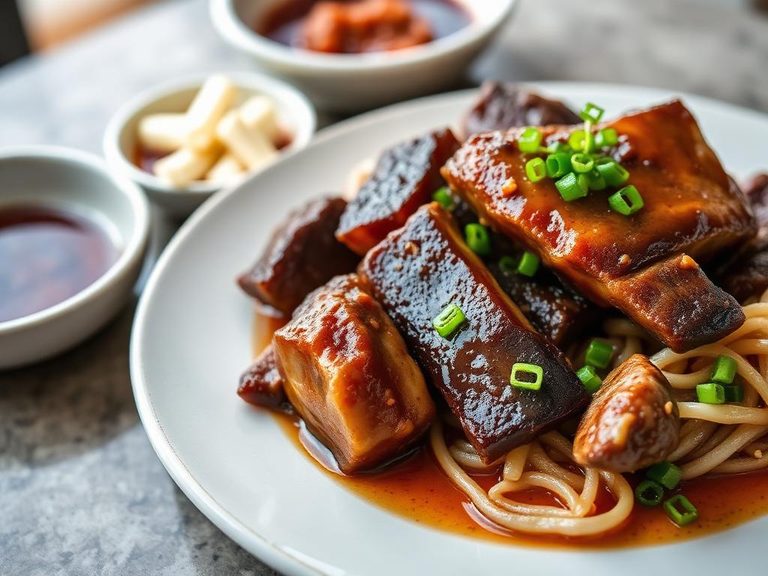
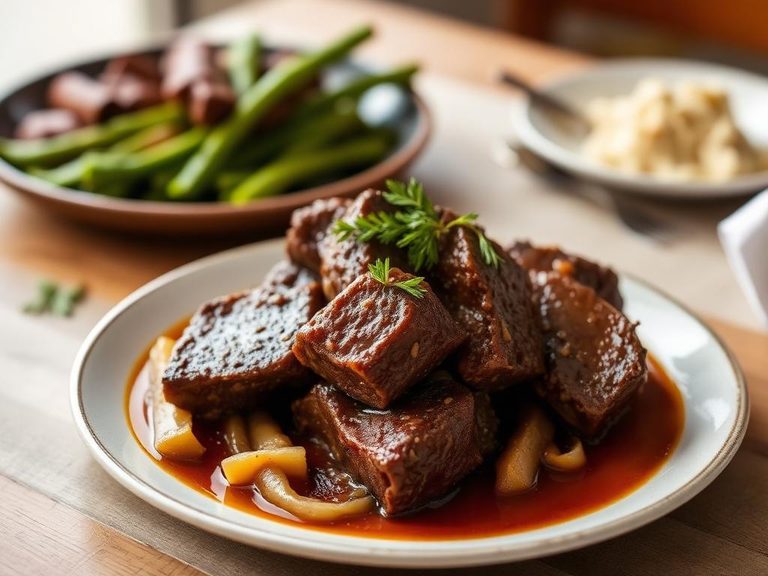
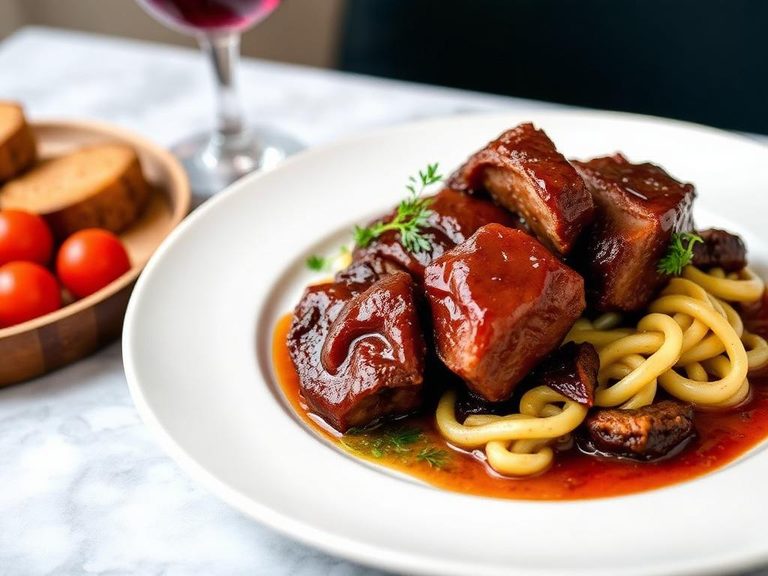
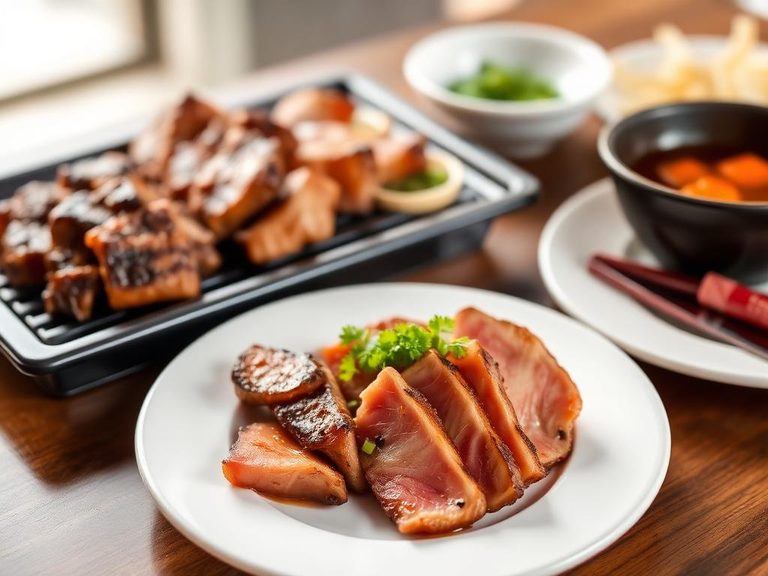
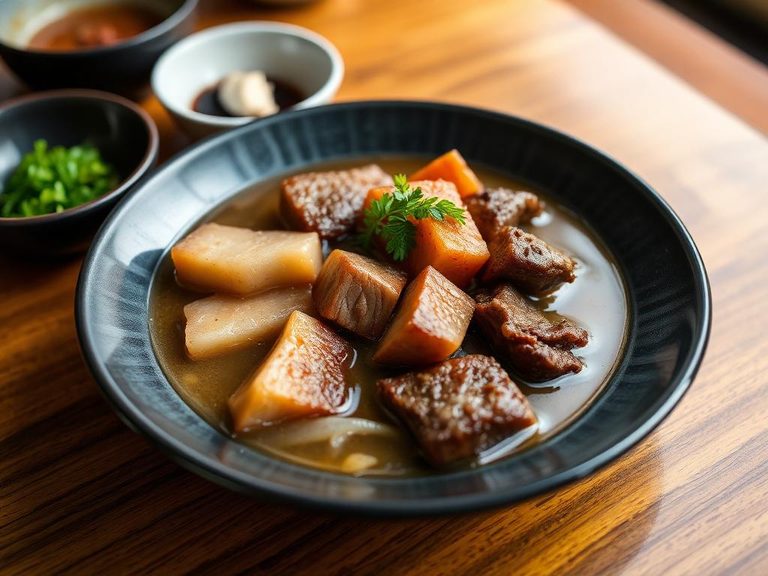
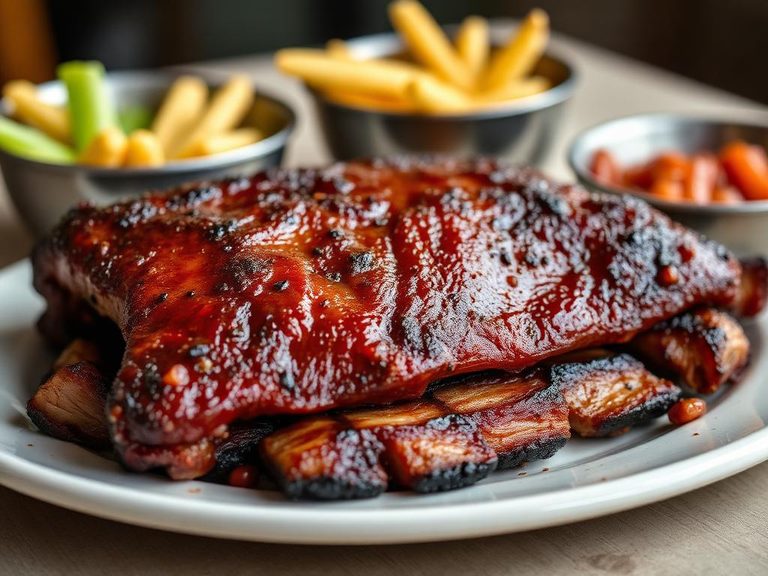
🌍 Where it's eaten
💡 Did you know?
The 'short' in short ribs doesn't refer to the length of the bone, but to the fact that the cut comes from the 'short plate' section of the cow, which is adjacent to the belly.
Full nutrition (USDA data · scales with serving)
| Water | 63.8 g |
| Energy | 235 kcal |
| Energy | 983 kj |
| Protein | 17.5 g |
| Total lipid (fat) | 18.3 g |
| Ash | 0.84 g |
| Carbohydrate, by difference | 0.00 g |
| Fiber, total dietary | 0.00 g |
| Total Sugars | 0.00 g |
| Calcium, Ca | 12.0 mg |
| Iron, Fe | 2.2 mg |
| Magnesium, Mg | 18.0 mg |
| Phosphorus, P | 165 mg |
| Potassium, K | 277 mg |
| Sodium, Na | 78.0 mg |
| Zinc, Zn | 7.1 mg |
| Copper, Cu | 0.07 mg |
| Manganese, Mn | 0.01 mg |
| Selenium, Se | 18.7 ug |
| Vitamin C, total ascorbic acid | 0.00 mg |
| Thiamin | 0.08 mg |
| Riboflavin | 0.17 mg |
| Niacin | 3.3 mg |
| Pantothenic acid | 0.65 mg |
| Vitamin B-6 | 0.30 mg |
| Folate, total | 3.0 ug |
| Folic acid | 0.00 ug |
| Folate, food | 3.0 ug |
| Folate, DFE | 3.0 ug |
| Choline, total | 62.8 mg |
| Betaine | 20.1 mg |
| Vitamin B-12 | 3.0 ug |
| Vitamin B-12, added | 0.00 ug |
| Vitamin A, RAE | 4.0 ug |
| Retinol | 4.0 ug |
| Carotene, beta | 0.00 ug |
| Carotene, alpha | 0.00 ug |
| Cryptoxanthin, beta | 0.00 ug |
| Vitamin A, IU | 15.0 iu |
| Lycopene | 0.00 ug |
| Lutein + zeaxanthin | 0.00 ug |
| Vitamin E (alpha-tocopherol) | 0.15 mg |
| Vitamin E, added | 0.00 mg |
| Vitamin D (D2 + D3), International Units | 5.0 iu |
| Vitamin D (D2 + D3) | 0.10 ug |
| Vitamin D3 (cholecalciferol) | 0.10 ug |
| Vitamin K (phylloquinone) | 1.5 ug |
| Alcohol, ethyl | 0.00 g |
| Caffeine | 0.00 mg |
| Theobromine | 0.00 mg |
Fat & fatty acid profile (per 100g)
| Fatty acids, total saturated | 8.0 g |
| SFA 4:0 | 0.00 g |
| SFA 6:0 | 0.00 g |
| SFA 8:0 | 0.00 g |
| SFA 10:0 | 0.00 g |
| SFA 12:0 | 0.00 g |
| SFA 14:0 | 0.56 g |
| SFA 16:0 | 4.3 g |
| SFA 17:0 | 0.24 g |
| SFA 18:0 | 2.9 g |
| SFA 20:0 | 0.01 g |
| SFA 24:0 | 0.01 g |
| Fatty acids, total monounsaturated | 9.2 g |
| MUFA 14:1 | 0.11 g |
| MUFA 16:1 | 0.56 g |
| MUFA 16:1 c | 0.56 g |
| MUFA 17:1 | 0.16 g |
| MUFA 18:1 | 8.3 g |
| MUFA 18:1 c | 7.1 g |
| MUFA 18:1-11 t (18:1t n-7) | 0.46 g |
| MUFA 20:1 | 0.04 g |
| MUFA 22:1 | 0.00 g |
| Fatty acids, total polyunsaturated | 0.73 g |
| PUFA 18:2 | 0.64 g |
| PUFA 18:2 n-6 c,c | 0.56 g |
| PUFA 18:2 CLAs | 0.08 g |
| PUFA 18:3 | 0.04 g |
| PUFA 18:3 n-3 c,c,c (ALA) | 0.04 g |
| PUFA 18:4 | 0.00 g |
| PUFA 20:2 n-6 c,c | 0.00 g |
| PUFA 20:4 | 0.04 g |
| PUFA 20:5 n-3 (EPA) | 0.00 g |
| PUFA 22:5 n-3 (DPA) | 0.00 g |
| PUFA 22:6 n-3 (DHA) | 0.00 g |
| Fatty acids, total trans | 1.2 g |
| Fatty acids, total trans-monoenoic | 1.2 g |
| TFA 18:1 t | 1.2 g |
| Cholesterol | 75.0 mg |
Amino acid profile (per 100g)
| Tryptophan | 0.20 g |
| Threonine | 0.77 g |
| Isoleucine | 0.74 g |
| Leucine | 1.4 g |
| Lysine | 1.5 g |
| Methionine | 0.50 g |
| Cystine | 0.18 g |
| Phenylalanine | 0.67 g |
| Tyrosine | 0.60 g |
| Valine | 0.79 g |
| Arginine | 1.2 g |
| Histidine | 0.57 g |
| Alanine | 1.00 g |
| Aspartic acid | 1.6 g |
| Glutamic acid | 2.8 g |
| Glycine | 0.80 g |
| Proline | 0.72 g |
| Serine | 0.67 g |
| Hydroxyproline | 0.12 g |
FAQ
What's the difference between bone-in and boneless short ribs?
Bone-in short ribs have a piece of rib bone attached, which adds flavor during cooking and helps the meat hold its shape. Boneless short ribs are the meat cut away from the bone, offering more uniform pieces and easier slicing.
Why are they called 'separable lean and fat'?
This is a USDA grading term meaning the lean muscle and the fat can be separated by hand or with a knife. For this specific product, it's trimmed to 0" external fat, but the intramuscular fat (marbling) remains.
What's the best way to cook this cut?
Low-and-slow moist heat is ideal. Braising in liquid (like stock, wine, or tomatoes) at around 300-325°F (150-160°C) for 2-3 hours breaks down the tough connective tissue into gelatin, resulting in tender, juicy meat.
Nutrient density (calculated · NRF9.3)
Nutrient Rich Foods index: beneficial nutrients (protein, fiber, vitamins, minerals) minus saturated fat, added sugar & sodium, per 100 kcal.
NRF9.3 index — Fulgoni, Keast & Drewnowski, 2009. Computed from USDA nutrients.
Weight-loss friendliness (composite index)
Energy density 2.35 kcal/g · 30% calories from protein · 0.0 g fiber · 0.0 g sugar per 100 g.
Composite of energy density (Rolls et al., 1999), protein & fiber satiety, minus sugar. A calculated heuristic — ranks satiety-per-calorie, not a clinical measure.
Dietary load (calculated from USDA values)
Potential renal acid load. Positive = acid-forming, negative = alkaline-forming.
Sodium-to-potassium ratio: 0.28 (lower is better — aim for ≤ 1)
Sodium:potassium per WHO potassium guidance. Computed from USDA nutrients.