

Beef, chuck, short ribs, boneless, separable lean and fat, trimmed to 0" fat, all grades, cooked, braised
Whole food · Beef Products

Photo: Wikipedia
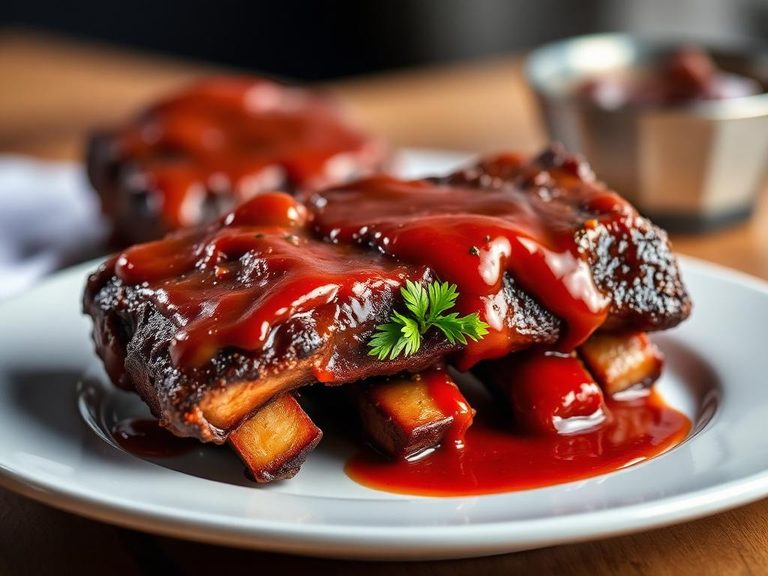
Boneless braised beef short ribs are the epitome of comfort food, transforming a tough cut into a meltingly tender, deeply savory experience. When slow-cooked, the intramuscular fat renders to create a rich, velvety texture that practically dissolves on the tongue. With over 22g of fat and 25g of protein per 100g, this is a nutrient-dense powerhouse designed for satiety and robust flavor.
Calorie split: 33% protein · 0% carbs · 67% fat
↓ Full nutrition💚 Why it's loved
People adore short ribs for their unparalleled richness and the way they absorb complex flavors during the slow braising process. They are a cultural staple in many cuisines, offering a luxurious yet rustic dining experience that feels like a special occasion.
⚠️ Watch-outs & how to enjoy it better
The high fat content (22.58g per 100g) and caloric density (305 kcal) can be a concern for those monitoring calorie intake or managing heart health. To counteract this, practice strict portion control (aim for 118g servings) and pair the ribs with high-fiber, non-starchy vegetables like roasted broccoli or a vinegar-based slaw to balance the meal and aid digestion.
Key benefits
- Excellent source of high-quality complete protein for muscle repair
- Rich in iron and zinc, essential for immune function and energy
- Provides B vitamins, particularly B12, crucial for nerve health
- Contains collagen which supports joint and skin health
- High satiety factor due to protein and fat content
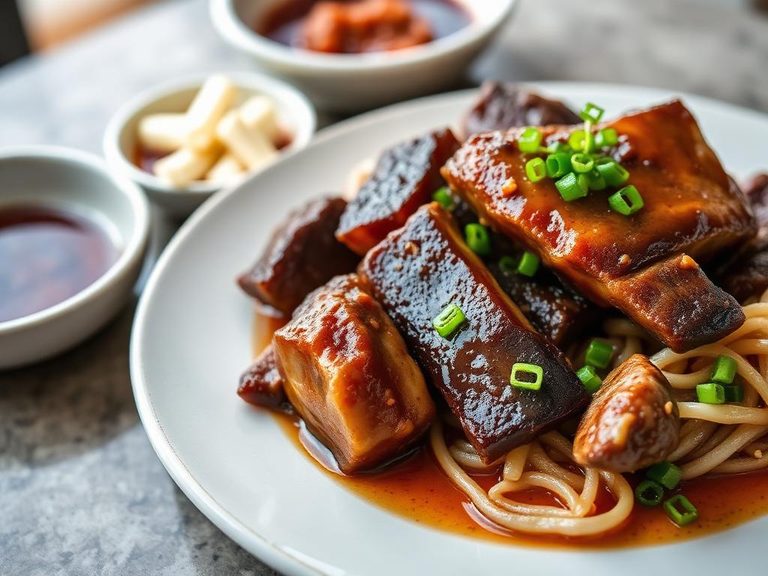
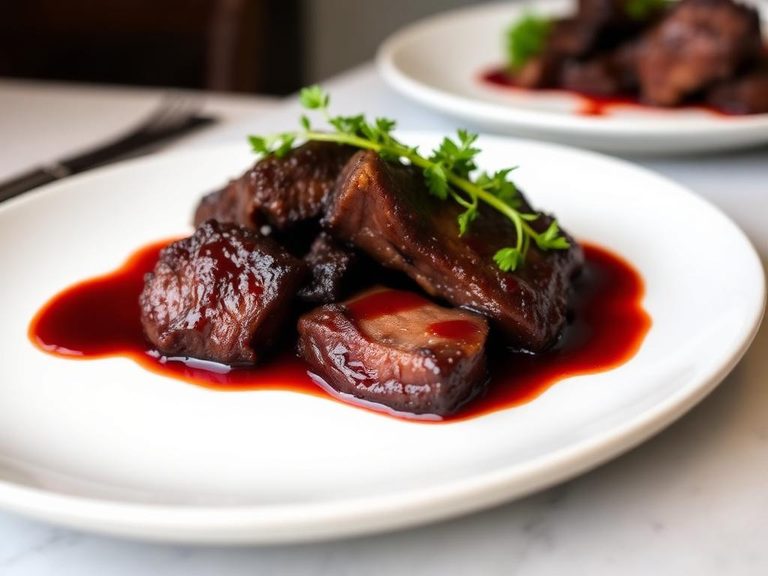
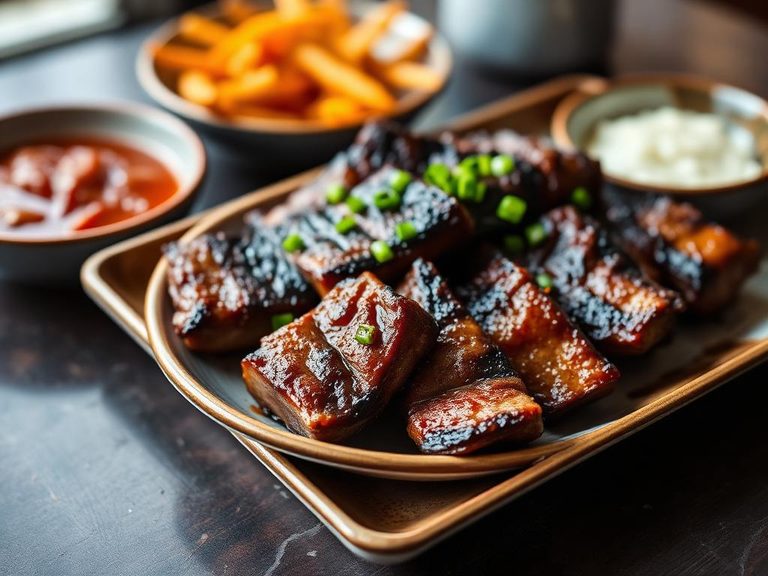
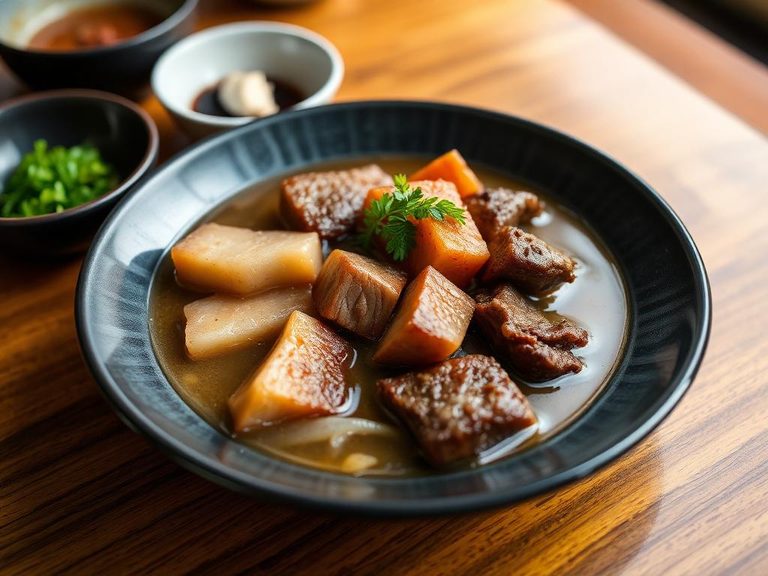
🍽️ Popular dishes
🌍 Where it's eaten
💡 Did you know?
The term 'short' in short ribs refers to the length of the rib bone, not the cooking time; these ribs are actually cut from the brisket or chuck area, which are among the toughest parts of the cow and require long, slow cooking to become tender.
Full nutrition (USDA data · scales with serving)
| Water | 52.0 g |
| Energy | 305 kcal |
| Energy | 1277 kj |
| Protein | 25.5 g |
| Total lipid (fat) | 22.6 g |
| Ash | 0.83 g |
| Carbohydrate, by difference | 0.00 g |
| Fiber, total dietary | 0.00 g |
| Total Sugars | 0.00 g |
| Calcium, Ca | 14.0 mg |
| Iron, Fe | 2.7 mg |
| Magnesium, Mg | 20.0 mg |
| Phosphorus, P | 170 mg |
| Potassium, K | 239 mg |
| Sodium, Na | 70.0 mg |
| Zinc, Zn | 9.7 mg |
| Copper, Cu | 0.10 mg |
| Manganese, Mn | 0.01 mg |
| Selenium, Se | 29.7 ug |
| Vitamin C, total ascorbic acid | 0.00 mg |
| Thiamin | 0.09 mg |
| Riboflavin | 0.23 mg |
| Niacin | 3.3 mg |
| Pantothenic acid | 0.75 mg |
| Vitamin B-6 | 0.29 mg |
| Folate, total | 6.0 ug |
| Folic acid | 0.00 ug |
| Folate, food | 6.0 ug |
| Folate, DFE | 6.0 ug |
| Choline, total | 87.4 mg |
| Betaine | 13.8 mg |
| Vitamin B-12 | 3.5 ug |
| Vitamin B-12, added | 0.00 ug |
| Vitamin A, RAE | 8.0 ug |
| Retinol | 8.0 ug |
| Carotene, beta | 0.00 ug |
| Carotene, alpha | 0.00 ug |
| Cryptoxanthin, beta | 0.00 ug |
| Vitamin A, IU | 27.0 iu |
| Lycopene | 0.00 ug |
| Lutein + zeaxanthin | 0.00 ug |
| Vitamin E (alpha-tocopherol) | 0.08 mg |
| Vitamin E, added | 0.00 mg |
| Vitamin D (D2 + D3), International Units | 6.0 iu |
| Vitamin D (D2 + D3) | 0.10 ug |
| Vitamin D3 (cholecalciferol) | 0.10 ug |
| Vitamin K (phylloquinone) | 1.6 ug |
| Alcohol, ethyl | 0.00 g |
| Caffeine | 0.00 mg |
| Theobromine | 0.00 mg |
Fat & fatty acid profile (per 100g)
| Fatty acids, total saturated | 10.0 g |
| SFA 4:0 | 0.00 g |
| SFA 6:0 | 0.00 g |
| SFA 8:0 | 0.00 g |
| SFA 10:0 | 0.00 g |
| SFA 12:0 | 0.00 g |
| SFA 14:0 | 0.68 g |
| SFA 16:0 | 5.4 g |
| SFA 17:0 | 0.31 g |
| SFA 18:0 | 3.6 g |
| SFA 20:0 | 0.02 g |
| SFA 24:0 | 0.01 g |
| Fatty acids, total monounsaturated | 11.4 g |
| MUFA 14:1 | 0.14 g |
| MUFA 16:1 | 0.70 g |
| MUFA 16:1 c | 0.70 g |
| MUFA 17:1 | 0.20 g |
| MUFA 18:1 | 10.3 g |
| MUFA 18:1 c | 8.9 g |
| MUFA 18:1-11 t (18:1t n-7) | 0.58 g |
| MUFA 20:1 | 0.06 g |
| MUFA 22:1 | 0.00 g |
| Fatty acids, total polyunsaturated | 0.97 g |
| PUFA 18:2 | 0.87 g |
| PUFA 18:2 n-6 c,c | 0.76 g |
| PUFA 18:2 CLAs | 0.11 g |
| PUFA 18:3 | 0.04 g |
| PUFA 18:3 n-3 c,c,c (ALA) | 0.04 g |
| PUFA 18:4 | 0.00 g |
| PUFA 20:2 n-6 c,c | 0.01 g |
| PUFA 20:4 | 0.05 g |
| PUFA 20:5 n-3 (EPA) | 0.00 g |
| PUFA 22:5 n-3 (DPA) | 0.00 g |
| PUFA 22:6 n-3 (DHA) | 0.00 g |
| Fatty acids, total trans | 1.4 g |
| Fatty acids, total trans-monoenoic | 1.4 g |
| TFA 18:1 t | 1.4 g |
| Cholesterol | 100 mg |
Amino acid profile (per 100g)
| Tryptophan | 0.29 g |
| Threonine | 1.1 g |
| Isoleucine | 1.1 g |
| Leucine | 2.0 g |
| Lysine | 2.2 g |
| Methionine | 0.72 g |
| Cystine | 0.27 g |
| Phenylalanine | 0.97 g |
| Tyrosine | 0.88 g |
| Valine | 1.2 g |
| Arginine | 1.7 g |
| Histidine | 0.83 g |
| Alanine | 1.5 g |
| Aspartic acid | 2.3 g |
| Glutamic acid | 4.0 g |
| Glycine | 1.2 g |
| Proline | 1.0 g |
| Serine | 0.98 g |
| Hydroxyproline | 0.17 g |
FAQ
What is the difference between boneless and bone-in short ribs?
Bone-in short ribs have a piece of rib bone attached, which adds flavor during cooking and helps hold the meat together. Boneless short ribs are easier to slice and eat but may have a slightly less intense beefy flavor.
How do I make boneless short ribs tender?
The key is low and slow cooking—braising in liquid at a low temperature (around 300°F/150°C) for 2-3 hours breaks down the tough connective tissue into gelatin, resulting in a melt-in-your-mouth texture.
Can I freeze cooked short ribs?
Yes, cooked short ribs freeze well. Let them cool completely, then store in an airtight container or freezer bag for up to 3 months. Reheat gently in the oven or on the stovetop with a bit of broth to prevent drying out.
Nutrient density (calculated · NRF9.3)
Nutrient Rich Foods index: beneficial nutrients (protein, fiber, vitamins, minerals) minus saturated fat, added sugar & sodium, per 100 kcal.
NRF9.3 index — Fulgoni, Keast & Drewnowski, 2009. Computed from USDA nutrients.
Weight-loss friendliness (composite index)
Energy density 3.05 kcal/g · 33% calories from protein · 0.0 g fiber · 0.0 g sugar per 100 g.
Composite of energy density (Rolls et al., 1999), protein & fiber satiety, minus sugar. A calculated heuristic — ranks satiety-per-calorie, not a clinical measure.
Dietary load (calculated from USDA values)
Potential renal acid load. Positive = acid-forming, negative = alkaline-forming.
Sodium-to-potassium ratio: 0.29 (lower is better — aim for ≤ 1)
Sodium:potassium per WHO potassium guidance. Computed from USDA nutrients.