

Beef, chuck, mock tender steak, boneless, separable lean and fat, trimmed to 0" fat, all grades, cooked, braised
Whole food · Beef Products

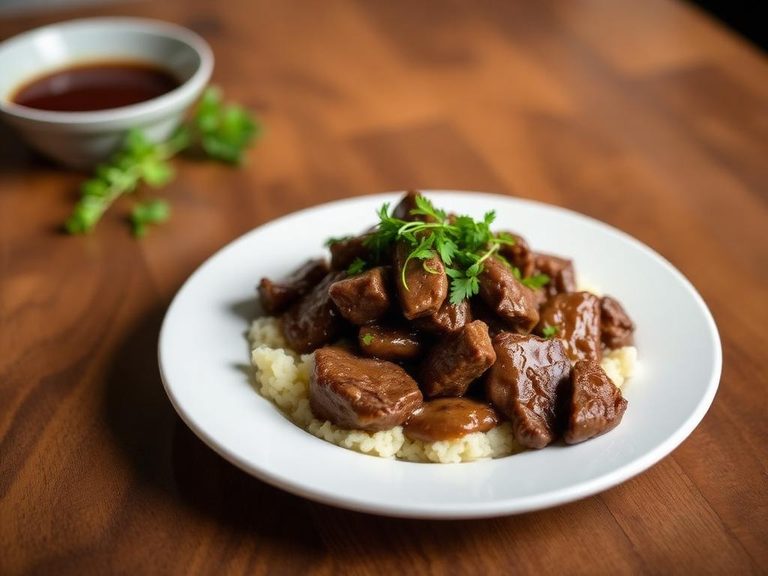
Photo: Wikipedia
This is a lean, boneless cut from the chuck shoulder, known for its rich beefy flavor that intensifies beautifully during slow braising. While it can be tough if cooked quickly, low-and-slow methods transform it into tender, succulent shreds or slices. Nutritionally, it's a powerhouse of protein with virtually no carbohydrates, making it ideal for high-protein, low-carb diets.
Calorie split: 58% protein · 0% carbs · 42% fat
↓ Full nutrition💚 Why it's loved
People love it for its deep, robust beef flavor that stands up to bold seasonings and long cooking times, making it the star of comforting, hearty meals. Its ability to become fork-tender and absorb sauces makes it incredibly versatile for everything from stews to sandwiches.
⚠️ Watch-outs & how to enjoy it better
If not cooked properly (i.e., too quickly), it can be tough and chewy, which may be disappointing for those expecting a tender steak. To counteract this, always use moist-heat methods like braising, stewing, or slow-cooking, and ensure the internal temperature reaches at least 145°F (63°C) for safety and tenderness.
Key benefits
- Excellent source of complete, high-quality protein
- Very low in carbohydrates and sugars
- Rich in iron and zinc, essential minerals
- Provides B vitamins like B12 for energy metabolism
- Lean cut when trimmed, supporting heart-healthy diets
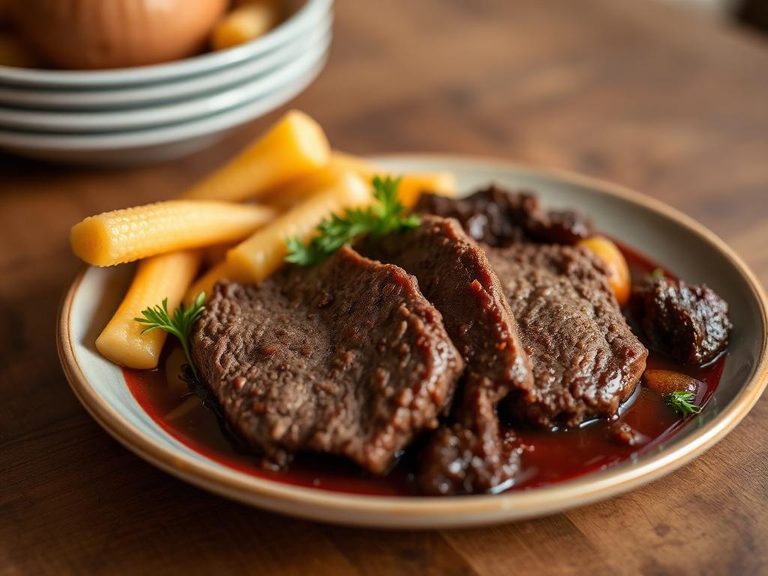
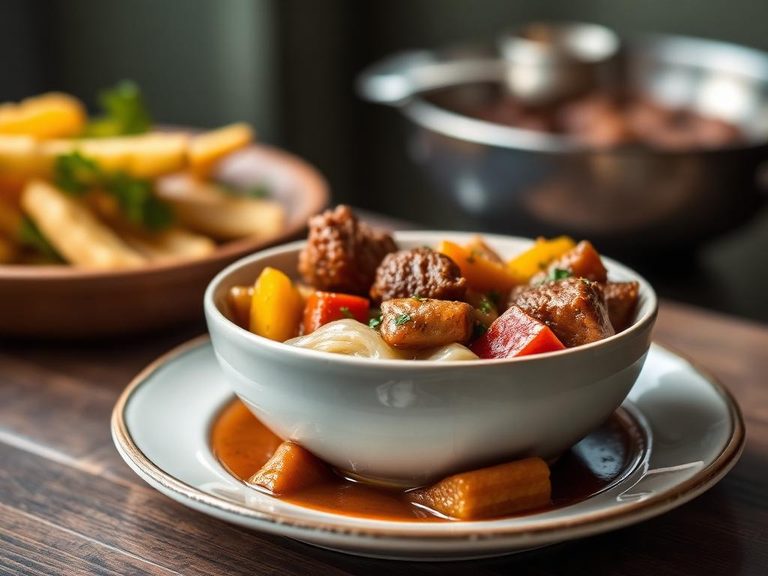
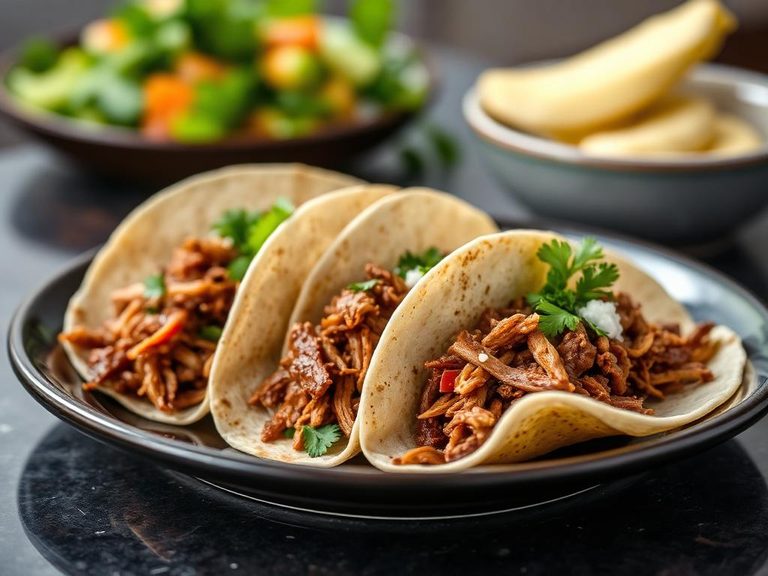
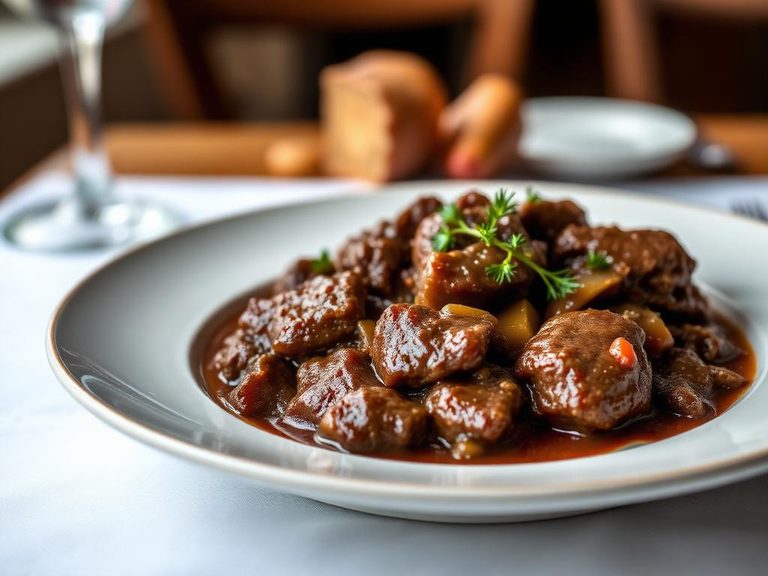
🍽️ Popular dishes
🌍 Where it's eaten
💡 Did you know?
The 'mock tender' gets its name because, when sliced against the grain and braised, it mimics the texture of the more expensive tenderloin cut at a fraction of the price.
Full nutrition (USDA data · scales with serving)
| Water | 57.3 g |
| Energy | 220 kcal |
| Energy | 920 kj |
| Protein | 32.1 g |
| Total lipid (fat) | 10.2 g |
| Ash | 1.6 g |
| Carbohydrate, by difference | 0.00 g |
| Fiber, total dietary | 0.00 g |
| Total Sugars | 0.00 g |
| Calcium, Ca | 14.0 mg |
| Iron, Fe | 3.3 mg |
| Magnesium, Mg | 22.0 mg |
| Phosphorus, P | 230 mg |
| Potassium, K | 298 mg |
| Sodium, Na | 67.0 mg |
| Zinc, Zn | 10.4 mg |
| Copper, Cu | 0.14 mg |
| Manganese, Mn | 0.03 mg |
| Selenium, Se | 37.5 ug |
| Vitamin C, total ascorbic acid | 0.00 mg |
| Thiamin | 0.08 mg |
| Riboflavin | 0.28 mg |
| Niacin | 3.8 mg |
| Pantothenic acid | 0.91 mg |
| Vitamin B-6 | 0.38 mg |
| Folate, total | 8.0 ug |
| Folic acid | 0.00 ug |
| Folate, food | 8.0 ug |
| Folate, DFE | 8.0 ug |
| Choline, total | 119 mg |
| Betaine | 17.4 mg |
| Vitamin B-12 | 4.3 ug |
| Vitamin B-12, added | 0.00 ug |
| Vitamin A, RAE | 7.0 ug |
| Retinol | 7.0 ug |
| Carotene, beta | 0.00 ug |
| Carotene, alpha | 0.00 ug |
| Cryptoxanthin, beta | 0.00 ug |
| Vitamin A, IU | 24.0 iu |
| Lycopene | 0.00 ug |
| Lutein + zeaxanthin | 0.00 ug |
| Vitamin E (alpha-tocopherol) | 0.11 mg |
| Vitamin E, added | 0.00 mg |
| Vitamin D (D2 + D3), International Units | 5.0 iu |
| Vitamin D (D2 + D3) | 0.10 ug |
| Vitamin D3 (cholecalciferol) | 0.10 ug |
| Vitamin K (phylloquinone) | 1.6 ug |
| Alcohol, ethyl | 0.00 g |
| Caffeine | 0.00 mg |
| Theobromine | 0.00 mg |
Fat & fatty acid profile (per 100g)
| Fatty acids, total saturated | 3.6 g |
| SFA 4:0 | 0.00 g |
| SFA 6:0 | 0.00 g |
| SFA 8:0 | 0.00 g |
| SFA 10:0 | 0.00 g |
| SFA 12:0 | 0.00 g |
| SFA 14:0 | 0.22 g |
| SFA 16:0 | 2.0 g |
| SFA 17:0 | 0.11 g |
| SFA 18:0 | 1.3 g |
| SFA 20:0 | 0.00 g |
| SFA 24:0 | 0.01 g |
| Fatty acids, total monounsaturated | 4.2 g |
| MUFA 14:1 | 0.04 g |
| MUFA 16:1 | 0.26 g |
| MUFA 16:1 c | 0.26 g |
| MUFA 17:1 | 0.08 g |
| MUFA 18:1 | 3.8 g |
| MUFA 18:1 c | 3.4 g |
| MUFA 18:1-11 t (18:1t n-7) | 0.22 g |
| MUFA 20:1 | 0.01 g |
| MUFA 22:1 | 0.00 g |
| Fatty acids, total polyunsaturated | 1.0 g |
| PUFA 18:2 | 0.94 g |
| PUFA 18:2 n-6 c,c | 0.45 g |
| PUFA 18:2 CLAs | 0.49 g |
| PUFA 18:3 | 0.02 g |
| PUFA 18:3 n-3 c,c,c (ALA) | 0.02 g |
| PUFA 18:4 | 0.00 g |
| PUFA 20:2 n-6 c,c | 0.00 g |
| PUFA 20:4 | 0.08 g |
| PUFA 20:5 n-3 (EPA) | 0.00 g |
| PUFA 22:5 n-3 (DPA) | 0.00 g |
| PUFA 22:6 n-3 (DHA) | 0.00 g |
| Fatty acids, total trans | 0.47 g |
| Fatty acids, total trans-monoenoic | 0.47 g |
| TFA 18:1 t | 0.47 g |
| Cholesterol | 113 mg |
Amino acid profile (per 100g)
| Tryptophan | 0.36 g |
| Threonine | 1.4 g |
| Isoleucine | 1.4 g |
| Leucine | 2.6 g |
| Lysine | 2.8 g |
| Methionine | 0.91 g |
| Cystine | 0.34 g |
| Phenylalanine | 1.2 g |
| Tyrosine | 1.1 g |
| Valine | 1.4 g |
| Arginine | 2.1 g |
| Histidine | 1.0 g |
| Alanine | 1.8 g |
| Aspartic acid | 2.9 g |
| Glutamic acid | 5.1 g |
| Glycine | 1.5 g |
| Proline | 1.3 g |
| Serine | 1.2 g |
| Hydroxyproline | 0.22 g |
FAQ
What's the best way to cook mock tender steak?
Moist-heat methods are best. Braise it slowly in liquid (like broth, wine, or tomatoes) at a low temperature (300-325°F / 150-160°C) for 2-3 hours, or until it's easily pierced with a fork.
Is this a lean cut of beef?
Yes, especially when trimmed to 0" fat as specified. With about 10g of fat per 100g cooked, it's considered a lean protein source.
Can I grill or pan-sear it like a regular steak?
It's not recommended. Because it comes from a well-worked muscle, grilling or quick searing will likely result in a tough, chewy texture. It needs time to break down connective tissue.
Nutrient density (calculated · NRF9.3)
Nutrient Rich Foods index: beneficial nutrients (protein, fiber, vitamins, minerals) minus saturated fat, added sugar & sodium, per 100 kcal.
NRF9.3 index — Fulgoni, Keast & Drewnowski, 2009. Computed from USDA nutrients.
Weight-loss friendliness (composite index)
Energy density 2.20 kcal/g · 58% calories from protein · 0.0 g fiber · 0.0 g sugar per 100 g.
Composite of energy density (Rolls et al., 1999), protein & fiber satiety, minus sugar. A calculated heuristic — ranks satiety-per-calorie, not a clinical measure.
Dietary load (calculated from USDA values)
Potential renal acid load. Positive = acid-forming, negative = alkaline-forming.
Sodium-to-potassium ratio: 0.22 (lower is better — aim for ≤ 1)
Sodium:potassium per WHO potassium guidance. Computed from USDA nutrients.