

Beef, chuck for stew, separable lean and fat, select, cooked, braised
Whole food · Beef Products

Photo: Wikipedia
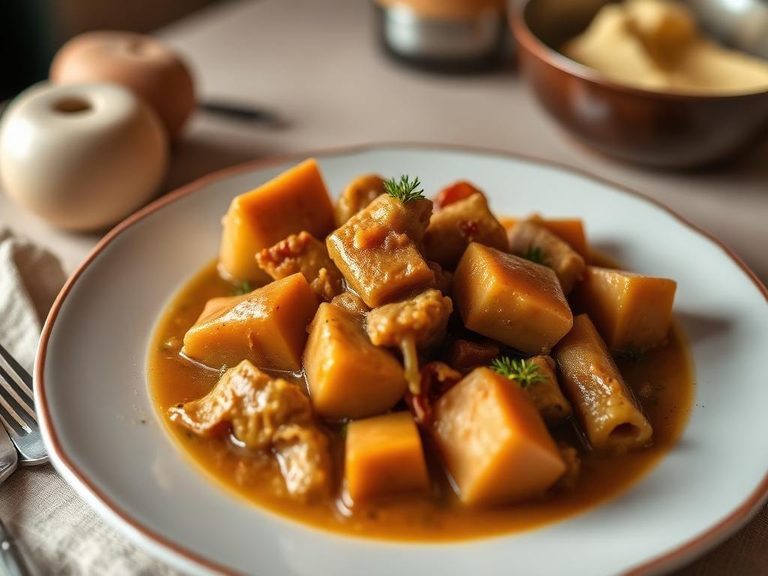
This is a hearty cut from the shoulder of the cow, slow-braised until the collagen melts into rich gelatin, yielding fork-tender, deeply savory meat. With virtually no carbs and a high protein-to-fat ratio, it's a powerhouse for muscle maintenance and satiety. The flavor is robust and beefy, with a satisfying, melt-in-your-mouth texture.
Calorie split: 69% protein · 0% carbs · 31% fat
↓ Full nutrition💚 Why it's loved
People adore it for its unparalleled comfort-food quality—the way it transforms tough tissue into succulent, flavor-packed morsels through slow cooking. It's the versatile star of countless one-pot meals, stews, and braises across global cuisines.
⚠️ Watch-outs & how to enjoy it better
As a select-grade cut, it can be leaner and less marbled, potentially leading to dryness if overcooked; proper braising technique is key. It's also a red meat, so those monitoring saturated fat intake or with specific health conditions may wish to consume it in moderation. Tip: Pair it with fiber-rich vegetables or legumes in the same dish to create a more balanced meal and enhance mineral absorption.
Key benefits
- Excellent source of complete protein (32g per 100g)
- Rich in bioavailable iron and zinc for immune function
- Contains collagen and gelatin, which may support joint and gut health
- Highly satiating, aiding in appetite control
- Provides B vitamins, especially B12, for energy metabolism
🍽️ Popular dishes
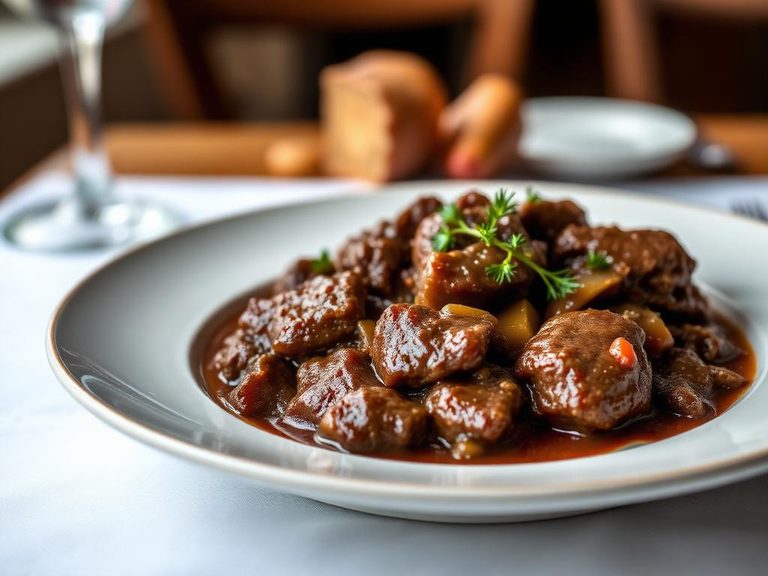

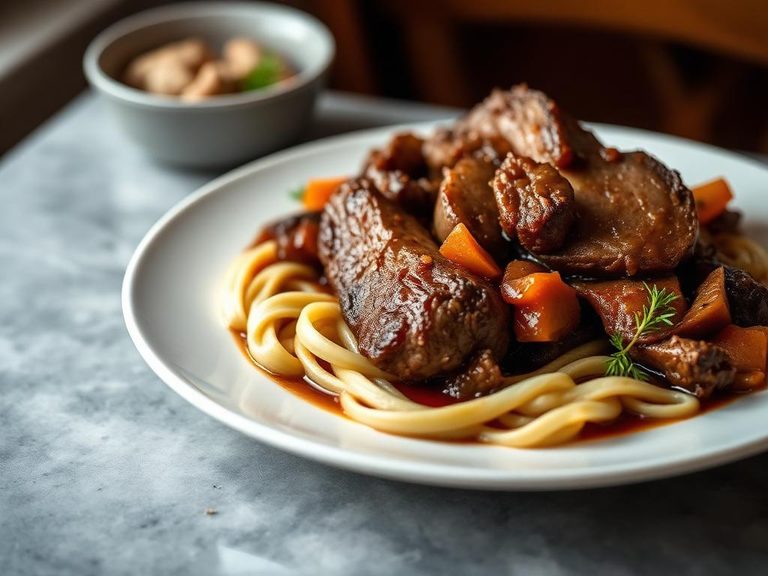
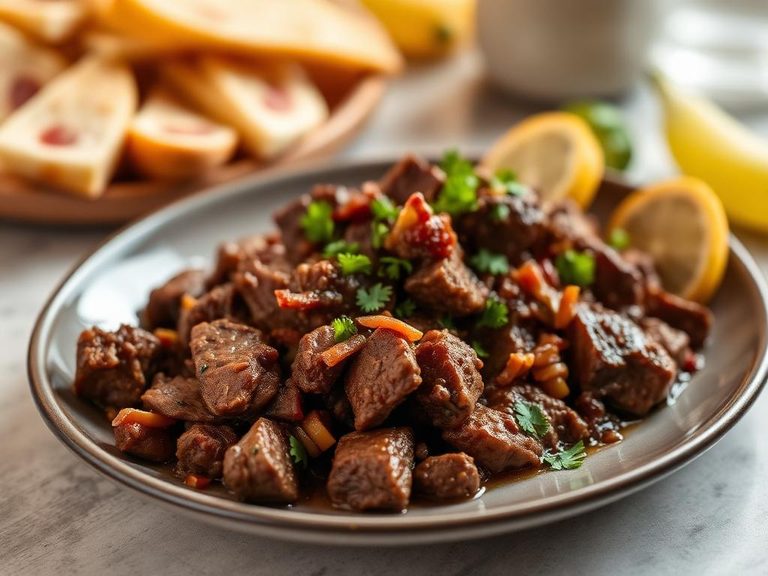
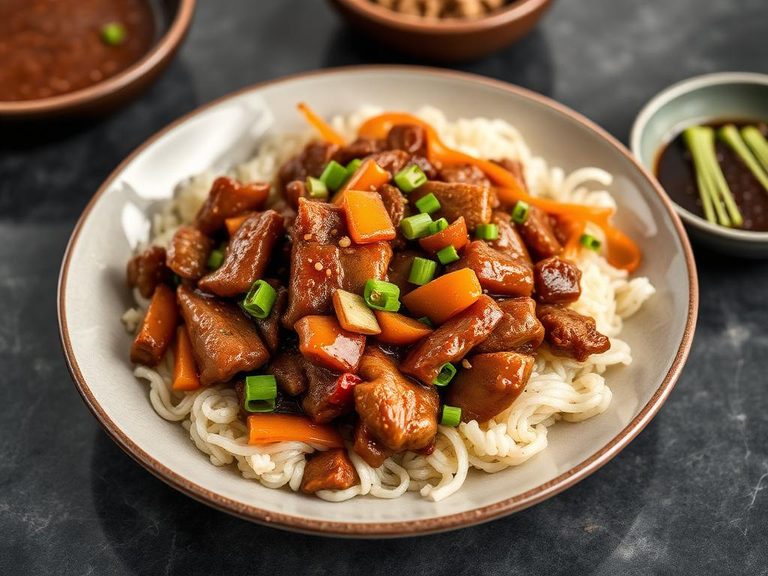
🌍 Where it's eaten
💡 Did you know?
The chuck is a heavily worked muscle group, meaning it's full of connective tissue (collagen) that only becomes tender and delicious after long, slow cooking in liquid—a perfect example of how a 'tough' cut can become a culinary prize.
Full nutrition (USDA data · scales with serving)
| Water | 61.0 g |
| Energy | 186 kcal |
| Energy | 779 kj |
| Protein | 32.3 g |
| Total lipid (fat) | 6.3 g |
| Ash | 1.2 g |
| Carbohydrate, by difference | 0.00 g |
| Fiber, total dietary | 0.00 g |
| Total Sugars | 0.00 g |
| Calcium, Ca | 15.0 mg |
| Iron, Fe | 2.8 mg |
| Magnesium, Mg | 23.0 mg |
| Phosphorus, P | 236 mg |
| Potassium, K | 320 mg |
| Sodium, Na | 68.0 mg |
| Zinc, Zn | 8.5 mg |
| Copper, Cu | 0.12 mg |
| Manganese, Mn | 0.02 mg |
| Selenium, Se | 32.2 ug |
| Vitamin C, total ascorbic acid | 0.00 mg |
| Thiamin | 0.08 mg |
| Riboflavin | 0.30 mg |
| Niacin | 4.8 mg |
| Pantothenic acid | 0.70 mg |
| Vitamin B-6 | 0.52 mg |
| Folate, total | 8.0 ug |
| Folic acid | 0.00 ug |
| Folate, food | 8.0 ug |
| Folate, DFE | 8.0 ug |
| Choline, total | 103 mg |
| Betaine | 13.9 mg |
| Vitamin B-12 | 2.5 ug |
| Vitamin B-12, added | 0.00 ug |
| Vitamin A, RAE | 2.0 ug |
| Retinol | 2.0 ug |
| Carotene, beta | 0.00 ug |
| Carotene, alpha | 0.00 ug |
| Cryptoxanthin, beta | 0.00 ug |
| Vitamin A, IU | 7.0 iu |
| Lycopene | 0.00 ug |
| Lutein + zeaxanthin | 0.00 ug |
| Vitamin E (alpha-tocopherol) | 0.07 mg |
| Vitamin E, added | 0.00 mg |
| Vitamin D (D2 + D3), International Units | 4.0 iu |
| Vitamin D (D2 + D3) | 0.10 ug |
| Vitamin D3 (cholecalciferol) | 0.10 ug |
| Vitamin K (phylloquinone) | 1.6 ug |
| Alcohol, ethyl | 0.00 g |
| Caffeine | 0.00 mg |
| Theobromine | 0.00 mg |
Fat & fatty acid profile (per 100g)
| Fatty acids, total saturated | 2.5 g |
| SFA 4:0 | 0.00 g |
| SFA 6:0 | 0.00 g |
| SFA 8:0 | 0.00 g |
| SFA 10:0 | 0.00 g |
| SFA 12:0 | 0.00 g |
| SFA 14:0 | 0.16 g |
| SFA 16:0 | 1.4 g |
| SFA 17:0 | 0.07 g |
| SFA 18:0 | 0.87 g |
| SFA 20:0 | 0.00 g |
| SFA 24:0 | 0.01 g |
| Fatty acids, total monounsaturated | 3.2 g |
| MUFA 14:1 | 0.04 g |
| MUFA 16:1 | 0.22 g |
| MUFA 17:1 | 0.06 g |
| MUFA 18:1 | 2.8 g |
| MUFA 18:1 c | 2.5 g |
| MUFA 18:1-11 t (18:1t n-7) | 0.24 g |
| MUFA 20:1 | 0.01 g |
| MUFA 22:1 | 0.00 g |
| Fatty acids, total polyunsaturated | 0.43 g |
| PUFA 18:2 | 0.35 g |
| PUFA 18:2 n-6 c,c | 0.33 g |
| PUFA 18:2 CLAs | 0.02 g |
| PUFA 18:3 | 0.01 g |
| PUFA 18:3 n-3 c,c,c (ALA) | 0.01 g |
| PUFA 18:4 | 0.00 g |
| PUFA 20:2 n-6 c,c | 0.00 g |
| PUFA 20:4 | 0.06 g |
| PUFA 20:5 n-3 (EPA) | 0.01 g |
| PUFA 22:5 n-3 (DPA) | 0.00 g |
| PUFA 22:6 n-3 (DHA) | 0.00 g |
| Fatty acids, total trans | 0.31 g |
| Fatty acids, total trans-monoenoic | 0.31 g |
| TFA 18:1 t | 0.31 g |
| Cholesterol | 102 mg |
Amino acid profile (per 100g)
| Tryptophan | 0.37 g |
| Threonine | 1.5 g |
| Isoleucine | 1.4 g |
| Leucine | 2.7 g |
| Lysine | 2.9 g |
| Methionine | 0.94 g |
| Cystine | 0.34 g |
| Phenylalanine | 1.3 g |
| Tyrosine | 1.1 g |
| Valine | 1.5 g |
| Arginine | 2.2 g |
| Histidine | 1.1 g |
| Alanine | 1.9 g |
| Aspartic acid | 3.0 g |
| Glutamic acid | 5.3 g |
| Glycine | 1.4 g |
| Proline | 1.3 g |
| Serine | 1.3 g |
| Hydroxyproline | 0.16 g |
FAQ
What's the difference between 'select' and 'choice' or 'prime' chuck?
'Select' grade has the least amount of marbling (intramuscular fat), making it leaner. It requires careful braising to stay moist, whereas higher grades have more fat for flavor and tenderness.
Can I cook this cut quickly, like in a stir-fry?
No. This specific cut (chuck for stew, braised) is defined by its high connective tissue content. It needs moist, low-heat cooking for hours to break down the collagen. For quick cooking, you'd need a more tender, leaner cut like sirloin or tenderloin.
Why is the fat listed as 0g in some nutrition data but 6.34g here?
This can vary by trimming and grade. The 'separable lean and fat' designation means some fat is included. Always check the specific product label, as 'lean only' versions would have less fat.
Nutrient density (calculated · NRF9.3)
Nutrient Rich Foods index: beneficial nutrients (protein, fiber, vitamins, minerals) minus saturated fat, added sugar & sodium, per 100 kcal.
NRF9.3 index — Fulgoni, Keast & Drewnowski, 2009. Computed from USDA nutrients.
Weight-loss friendliness (composite index)
Energy density 1.86 kcal/g · 69% calories from protein · 0.0 g fiber · 0.0 g sugar per 100 g.
Composite of energy density (Rolls et al., 1999), protein & fiber satiety, minus sugar. A calculated heuristic — ranks satiety-per-calorie, not a clinical measure.
Dietary load (calculated from USDA values)
Potential renal acid load. Positive = acid-forming, negative = alkaline-forming.
Sodium-to-potassium ratio: 0.21 (lower is better — aim for ≤ 1)
Sodium:potassium per WHO potassium guidance. Computed from USDA nutrients.