

Beef, chuck for stew, separable lean and fat, choice, cooked, braised
Whole food · Beef Products

Photo: Wikipedia
This is a hearty cut from the shoulder, slow-braised until fork-tender, with a deep, beefy flavor and a rich, gelatinous mouthfeel from its marbling. It's a protein powerhouse, delivering over 32 grams of high-quality protein per 100 grams with virtually no carbohydrates, making it a staple for low-carb and high-protein diets.
Calorie split: 67% protein · 0% carbs · 33% fat
↓ Full nutrition💚 Why it's loved
People adore it for its melt-in-your-mouth texture and profound, savory flavor that forms the backbone of comforting stews and braises across many cultures. Its versatility allows it to absorb the flavors of herbs, wine, and aromatics, transforming tough fibers into luxurious tenderness.
⚠️ Watch-outs & how to enjoy it better
The primary concern is its saturated fat content, which can be significant depending on the trim. To manage this, choose a well-trimmed cut, skim rendered fat from braising liquids before serving, and pair it with fiber-rich vegetables like carrots, celery, and leafy greens to balance the meal.
Key benefits
- Excellent source of complete protein for muscle maintenance.
- Rich in bioavailable iron and zinc.
- Provides B vitamins, especially B12, for energy metabolism.
- Zero carbohydrates, suitable for ketogenic diets.
- The braising process breaks down collagen into beneficial gelatin.
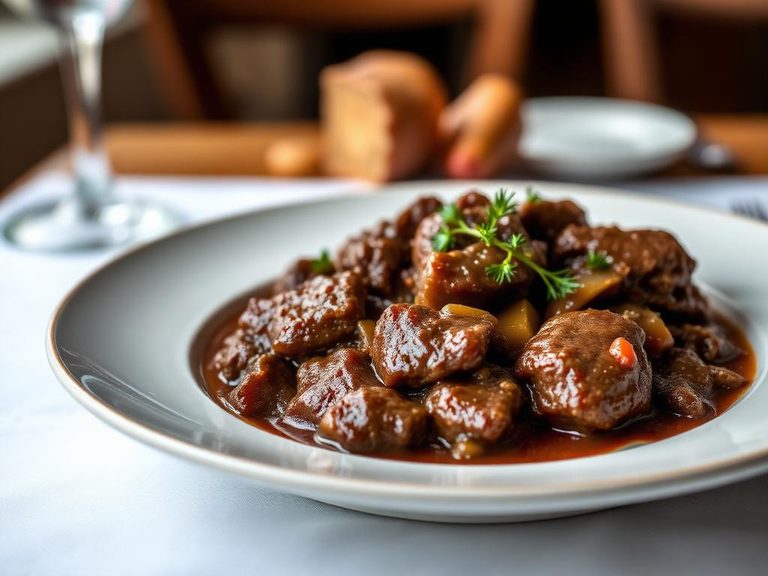
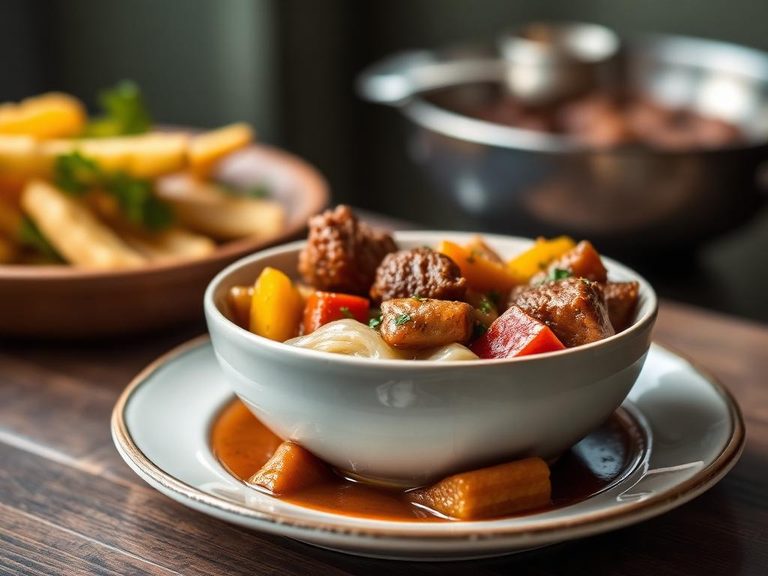
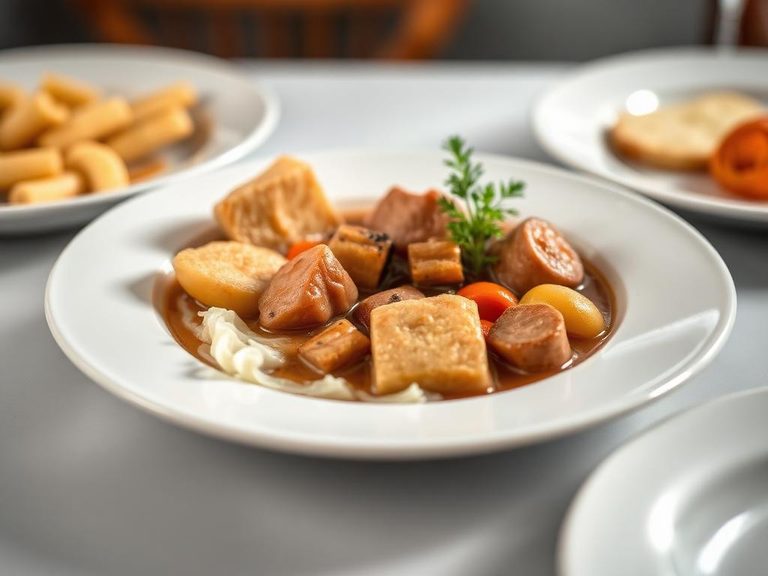
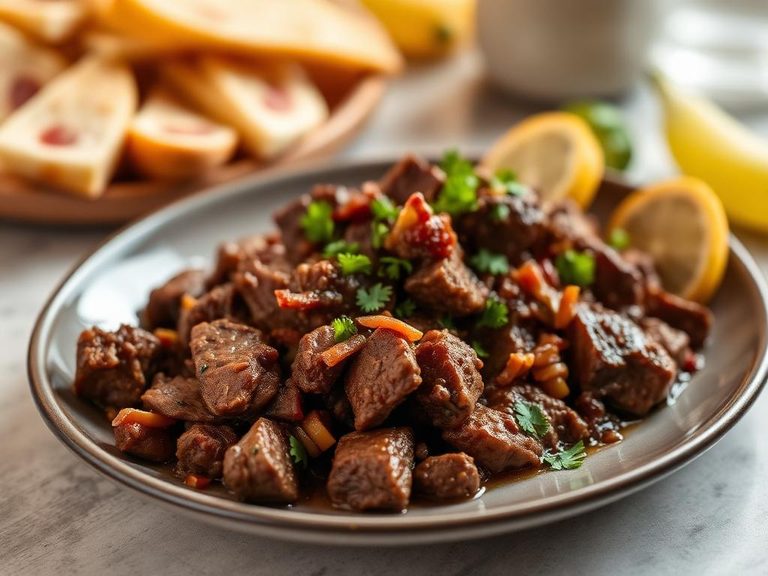
🍽️ Popular dishes

🌍 Where it's eaten
💡 Did you know?
The term 'chuck' comes from the shoulder blade area; when cooked slowly, the collagen in this heavily worked muscle converts to gelatin, which is what gives classic beef stews their signature silky, lip-smacking richness.
Full nutrition (USDA data · scales with serving)
| Water | 59.5 g |
| Energy | 194 kcal |
| Energy | 813 kj |
| Protein | 32.5 g |
| Total lipid (fat) | 7.1 g |
| Ash | 1.3 g |
| Carbohydrate, by difference | 0.00 g |
| Fiber, total dietary | 0.00 g |
| Total Sugars | 0.00 g |
| Calcium, Ca | 17.0 mg |
| Iron, Fe | 3.1 mg |
| Magnesium, Mg | 22.0 mg |
| Phosphorus, P | 223 mg |
| Potassium, K | 315 mg |
| Sodium, Na | 65.0 mg |
| Zinc, Zn | 8.3 mg |
| Copper, Cu | 0.13 mg |
| Manganese, Mn | 0.02 mg |
| Selenium, Se | 35.3 ug |
| Vitamin C, total ascorbic acid | 0.00 mg |
| Thiamin | 0.07 mg |
| Riboflavin | 0.23 mg |
| Niacin | 4.0 mg |
| Pantothenic acid | 0.72 mg |
| Vitamin B-6 | 0.51 mg |
| Folate, total | 8.0 ug |
| Folic acid | 0.00 ug |
| Folate, food | 8.0 ug |
| Folate, DFE | 8.0 ug |
| Choline, total | 103 mg |
| Betaine | 15.8 mg |
| Vitamin B-12 | 2.9 ug |
| Vitamin B-12, added | 0.00 ug |
| Vitamin A, RAE | 1.0 ug |
| Retinol | 1.0 ug |
| Carotene, beta | 0.00 ug |
| Carotene, alpha | 0.00 ug |
| Cryptoxanthin, beta | 0.00 ug |
| Vitamin A, IU | 5.0 iu |
| Lycopene | 0.00 ug |
| Lutein + zeaxanthin | 0.00 ug |
| Vitamin E (alpha-tocopherol) | 0.13 mg |
| Vitamin E, added | 0.00 mg |
| Vitamin D (D2 + D3), International Units | 6.0 iu |
| Vitamin D (D2 + D3) | 0.10 ug |
| Vitamin D3 (cholecalciferol) | 0.10 ug |
| Vitamin K (phylloquinone) | 1.6 ug |
| Alcohol, ethyl | 0.00 g |
| Caffeine | 0.00 mg |
| Theobromine | 0.00 mg |
Fat & fatty acid profile (per 100g)
| Fatty acids, total saturated | 2.9 g |
| SFA 4:0 | 0.00 g |
| SFA 6:0 | 0.00 g |
| SFA 8:0 | 0.00 g |
| SFA 10:0 | 0.00 g |
| SFA 12:0 | 0.00 g |
| SFA 14:0 | 0.18 g |
| SFA 16:0 | 1.6 g |
| SFA 17:0 | 0.08 g |
| SFA 18:0 | 1.0 g |
| SFA 20:0 | 0.00 g |
| SFA 24:0 | 0.01 g |
| Fatty acids, total monounsaturated | 3.6 g |
| MUFA 14:1 | 0.04 g |
| MUFA 16:1 | 0.24 g |
| MUFA 17:1 | 0.07 g |
| MUFA 18:1 | 3.1 g |
| MUFA 18:1 c | 3.2 g |
| MUFA 18:1-11 t (18:1t n-7) | 0.28 g |
| MUFA 20:1 | 0.01 g |
| MUFA 22:1 | 0.00 g |
| Fatty acids, total polyunsaturated | 0.41 g |
| PUFA 18:2 | 0.30 g |
| PUFA 18:2 n-6 c,c | 0.37 g |
| PUFA 18:2 CLAs | 0.03 g |
| PUFA 18:3 | 0.01 g |
| PUFA 18:3 n-3 c,c,c (ALA) | 0.01 g |
| PUFA 18:4 | 0.00 g |
| PUFA 20:2 n-6 c,c | 0.00 g |
| PUFA 20:4 | 0.06 g |
| PUFA 20:5 n-3 (EPA) | 0.00 g |
| PUFA 22:5 n-3 (DPA) | 0.00 g |
| PUFA 22:6 n-3 (DHA) | 0.00 g |
| Fatty acids, total trans | 0.41 g |
| Fatty acids, total trans-monoenoic | 0.41 g |
| TFA 18:1 t | 0.41 g |
| Cholesterol | 96.0 mg |
Amino acid profile (per 100g)
| Tryptophan | 0.37 g |
| Threonine | 1.5 g |
| Isoleucine | 1.4 g |
| Leucine | 2.7 g |
| Lysine | 2.9 g |
| Methionine | 0.95 g |
| Cystine | 0.35 g |
| Phenylalanine | 1.3 g |
| Tyrosine | 1.2 g |
| Valine | 1.5 g |
| Arginine | 2.2 g |
| Histidine | 1.1 g |
| Alanine | 1.9 g |
| Aspartic acid | 3.0 g |
| Glutamic acid | 5.3 g |
| Glycine | 1.4 g |
| Proline | 1.3 g |
| Serine | 1.3 g |
| Hydroxyproline | 0.16 g |
FAQ
Is this cut tough if not cooked properly?
Yes, chuck for stew is a hard-working muscle with lots of connective tissue. If cooked quickly (like grilling), it will be very tough. It requires long, slow, moist-heat cooking methods like braising or stewing to break down the collagen into tender gelatin.
How does 'choice' grade affect it?
The 'choice' grade indicates a good amount of marbling (intramuscular fat), which adds flavor and helps keep the meat moist during the long cooking process, resulting in a more tender and tasty final product compared to lower grades.
Can I substitute this in recipes?
Absolutely. It's the classic choice for stews, but you can substitute other braising cuts like beef shin (shank), short ribs, or bottom round. The cooking time may vary slightly depending on the specific cut's thickness and fat content.
Nutrient density (calculated · NRF9.3)
Nutrient Rich Foods index: beneficial nutrients (protein, fiber, vitamins, minerals) minus saturated fat, added sugar & sodium, per 100 kcal.
NRF9.3 index — Fulgoni, Keast & Drewnowski, 2009. Computed from USDA nutrients.
Weight-loss friendliness (composite index)
Energy density 1.94 kcal/g · 67% calories from protein · 0.0 g fiber · 0.0 g sugar per 100 g.
Composite of energy density (Rolls et al., 1999), protein & fiber satiety, minus sugar. A calculated heuristic — ranks satiety-per-calorie, not a clinical measure.
Dietary load (calculated from USDA values)
Potential renal acid load. Positive = acid-forming, negative = alkaline-forming.
Sodium-to-potassium ratio: 0.21 (lower is better — aim for ≤ 1)
Sodium:potassium per WHO potassium guidance. Computed from USDA nutrients.