

Beef, chuck for stew, separable lean and fat, all grades, raw
Whole food · Beef Products

Photo: Wikipedia
This is a robust, marbled cut from the cow's shoulder, prized for its deep beefy flavor and rich, gelatinous texture when slow-cooked. Raw, it presents a deep red color with visible white fat streaks. Nutritionally, it's a powerhouse of protein with a moderate fat content, offering a satisfying and nutrient-dense base for hearty meals.
Calorie split: 68% protein · 1% carbs · 32% fat
↓ Full nutrition💚 Why it's loved
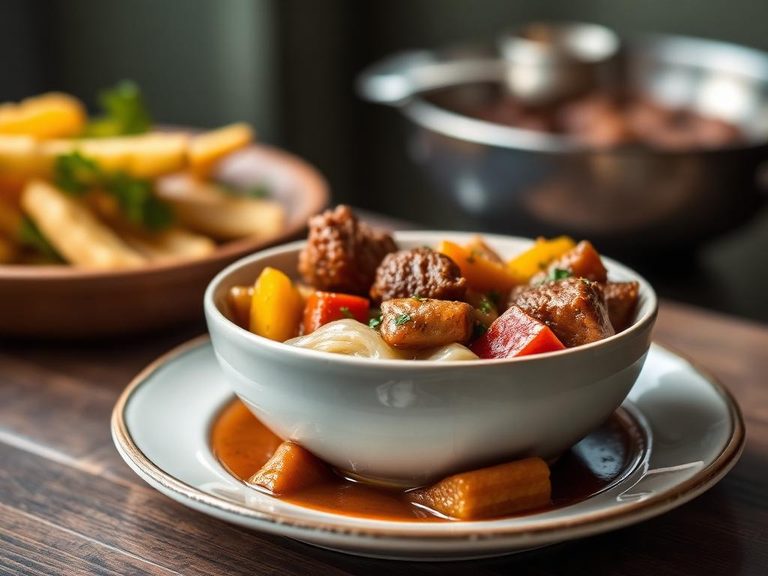
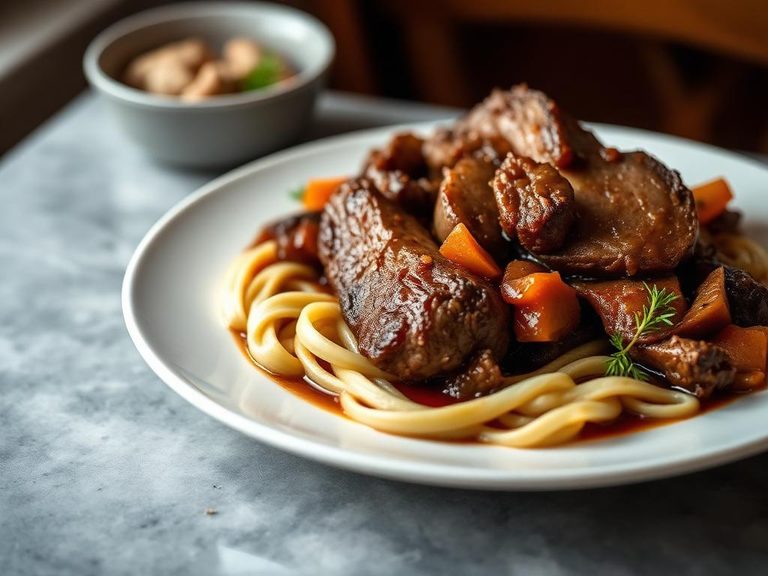
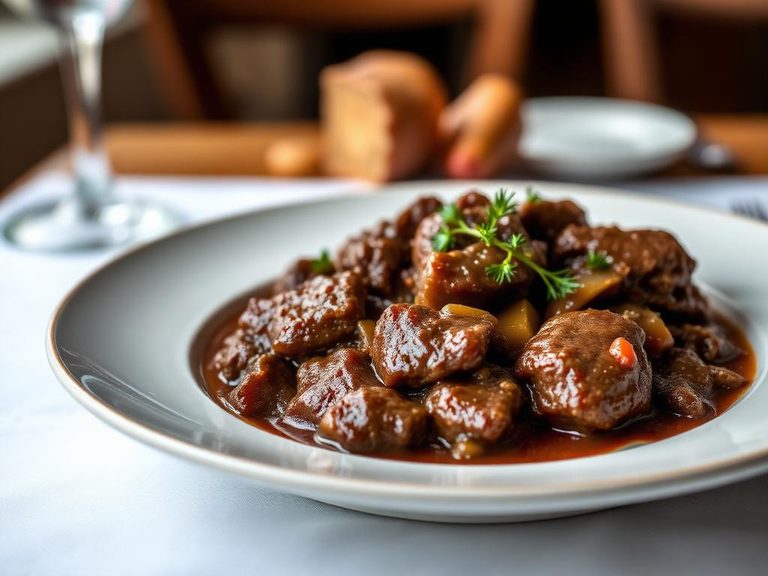
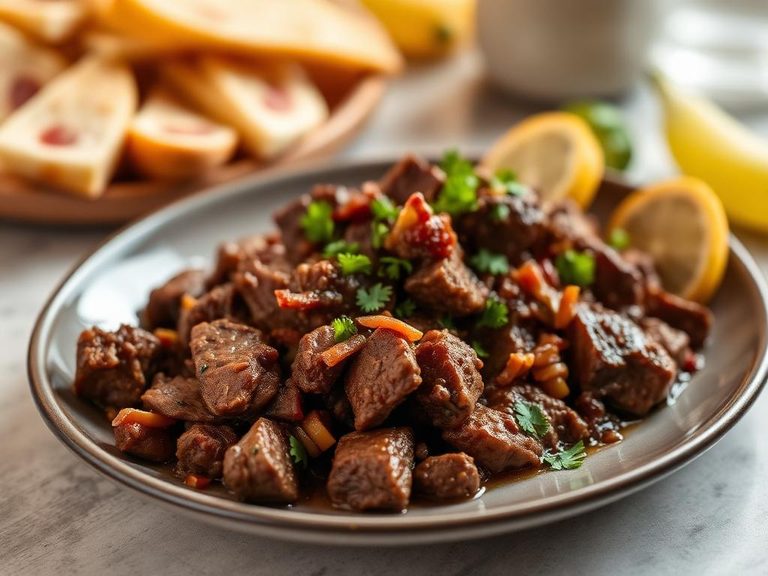
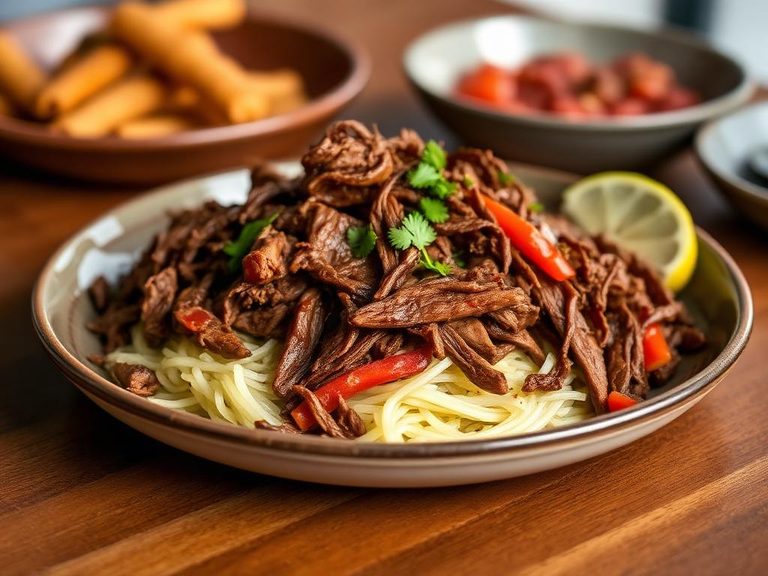
People adore chuck roast for its unparalleled ability to transform from a tough, chewy piece into meltingly tender, flavor-soaked morsels through slow cooking. It's the quintessential comfort food, forming the soul of classic stews and pot roasts across many cultures.
⚠️ Watch-outs & how to enjoy it better
If cooked too quickly, it can be tough and chewy. Its higher fat content means it's not suitable for very low-fat diets. To counteract toughness, always use low-and-slow moist-heat methods like braising or stewing. For fat management, trim excess visible fat before cooking and skim rendered fat from the cooking liquid.
Key benefits
- Excellent source of high-quality protein for muscle maintenance.
- Rich in iron, particularly heme iron, which is highly absorbable.
- Provides essential B vitamins, especially B12, for energy metabolism.
- Contains zinc, crucial for immune function and wound healing.
- The connective tissue (collagen) breaks down into gelatin, beneficial for gut health.
🍽️ Popular dishes

🌍 Where it's eaten
💡 Did you know?
The name 'chuck' comes from the shoulder cut's location near the 'chuck' (neck) of the animal, and it's often called the 'poor man's brisket' because it delivers similar rich, beefy results at a lower cost.
Full nutrition (USDA data · scales with serving)
| Water | 72.5 g |
| Energy | 128 kcal |
| Energy | 535 kj |
| Protein | 21.8 g |
| Total lipid (fat) | 4.5 g |
| Ash | 1.1 g |
| Carbohydrate, by difference | 0.16 g |
| Fiber, total dietary | 0.00 g |
| Total Sugars | 0.00 g |
| Calcium, Ca | 13.0 mg |
| Iron, Fe | 2.1 mg |
| Magnesium, Mg | 21.0 mg |
| Phosphorus, P | 213 mg |
| Potassium, K | 367 mg |
| Sodium, Na | 80.0 mg |
| Zinc, Zn | 5.4 mg |
| Copper, Cu | 0.09 mg |
| Manganese, Mn | 0.01 mg |
| Selenium, Se | 24.2 ug |
| Vitamin C, total ascorbic acid | 0.00 mg |
| Thiamin | 0.08 mg |
| Riboflavin | 0.17 mg |
| Niacin | 5.0 mg |
| Pantothenic acid | 0.67 mg |
| Vitamin B-6 | 0.57 mg |
| Folate, total | 3.0 ug |
| Folic acid | 0.00 ug |
| Folate, food | 3.0 ug |
| Folate, DFE | 3.0 ug |
| Choline, total | 71.8 mg |
| Betaine | 18.6 mg |
| Vitamin B-12 | 2.3 ug |
| Vitamin B-12, added | 0.00 ug |
| Vitamin A, RAE | 2.0 ug |
| Retinol | 2.0 ug |
| Carotene, beta | 0.00 ug |
| Carotene, alpha | 0.00 ug |
| Cryptoxanthin, beta | 0.00 ug |
| Vitamin A, IU | 6.0 iu |
| Lycopene | 0.00 ug |
| Lutein + zeaxanthin | 0.00 ug |
| Vitamin E (alpha-tocopherol) | 0.17 mg |
| Vitamin E, added | 0.00 mg |
| Vitamin D (D2 + D3), International Units | 4.0 iu |
| Vitamin D (D2 + D3) | 0.10 ug |
| Vitamin D3 (cholecalciferol) | 0.10 ug |
| Vitamin K (phylloquinone) | 1.5 ug |
| Alcohol, ethyl | 0.00 g |
| Caffeine | 0.00 mg |
| Theobromine | 0.00 mg |
Fat & fatty acid profile (per 100g)
| Fatty acids, total saturated | 1.9 g |
| SFA 4:0 | 0.00 g |
| SFA 6:0 | 0.00 g |
| SFA 8:0 | 0.00 g |
| SFA 10:0 | 0.00 g |
| SFA 12:0 | 0.00 g |
| SFA 14:0 | 0.11 g |
| SFA 16:0 | 1.0 g |
| SFA 17:0 | 0.05 g |
| SFA 18:0 | 0.67 g |
| SFA 20:0 | 0.00 g |
| SFA 24:0 | 0.01 g |
| Fatty acids, total monounsaturated | 2.3 g |
| MUFA 14:1 | 0.03 g |
| MUFA 16:1 | 0.16 g |
| MUFA 17:1 | 0.04 g |
| MUFA 18:1 | 2.1 g |
| MUFA 18:1 c | 1.9 g |
| MUFA 18:1-11 t (18:1t n-7) | 0.16 g |
| MUFA 20:1 | 0.00 g |
| MUFA 22:1 | 0.00 g |
| Fatty acids, total polyunsaturated | 0.30 g |
| PUFA 18:2 | 0.25 g |
| PUFA 18:2 n-6 c,c | 0.23 g |
| PUFA 18:2 CLAs | 0.01 g |
| PUFA 18:3 | 0.00 g |
| PUFA 18:3 n-3 c,c,c (ALA) | 0.00 g |
| PUFA 18:4 | 0.00 g |
| PUFA 20:2 n-6 c,c | 0.00 g |
| PUFA 20:4 | 0.05 g |
| PUFA 20:5 n-3 (EPA) | 0.00 g |
| PUFA 22:5 n-3 (DPA) | 0.00 g |
| PUFA 22:6 n-3 (DHA) | 0.00 g |
| Fatty acids, total trans | 0.23 g |
| Fatty acids, total trans-monoenoic | 0.23 g |
| TFA 18:1 t | 0.23 g |
| Cholesterol | 64.0 mg |
Amino acid profile (per 100g)
| Tryptophan | 0.25 g |
| Threonine | 0.98 g |
| Isoleucine | 0.95 g |
| Leucine | 1.8 g |
| Lysine | 2.0 g |
| Methionine | 0.63 g |
| Cystine | 0.23 g |
| Phenylalanine | 0.85 g |
| Tyrosine | 0.77 g |
| Valine | 1.0 g |
| Arginine | 1.5 g |
| Histidine | 0.72 g |
| Alanine | 1.3 g |
| Aspartic acid | 2.0 g |
| Glutamic acid | 3.5 g |
| Glycine | 0.97 g |
| Proline | 0.90 g |
| Serine | 0.85 g |
| Hydroxyproline | 0.11 g |
FAQ
What's the best way to cook chuck roast to make it tender?
Use low-and-slow moist heat. Methods like braising, stewing, or using a slow cooker are ideal. Cooking at a low temperature (around 300°F/150°C) for several hours breaks down the tough collagen into gelatin, resulting in fork-tender meat.
Is chuck roast a lean cut of beef?
No, chuck is a moderately fatty cut, which is precisely what gives it such rich flavor and moisture during long cooking. You can reduce the final fat content by trimming excess fat before cooking and chilling the cooking liquid to solidify and remove the fat layer.
Can I use chuck roast for grilling or quick cooking?
It's generally not recommended. The high amount of connective tissue requires long, slow cooking to become tender. Grilling or pan-searing it quickly will result in a very tough, chewy texture. It's best reserved for braises, stews, and slow roasts.
Nutrient density (calculated · NRF9.3)
Nutrient Rich Foods index: beneficial nutrients (protein, fiber, vitamins, minerals) minus saturated fat, added sugar & sodium, per 100 kcal.
NRF9.3 index — Fulgoni, Keast & Drewnowski, 2009. Computed from USDA nutrients.
Weight-loss friendliness (composite index)
Energy density 1.28 kcal/g · 68% calories from protein · 0.0 g fiber · 0.0 g sugar per 100 g.
Composite of energy density (Rolls et al., 1999), protein & fiber satiety, minus sugar. A calculated heuristic — ranks satiety-per-calorie, not a clinical measure.
Dietary load (calculated from USDA values)
Potential renal acid load. Positive = acid-forming, negative = alkaline-forming.
Sodium-to-potassium ratio: 0.22 (lower is better — aim for ≤ 1)
Sodium:potassium per WHO potassium guidance. Computed from USDA nutrients.