

Beef, brisket, flat half, boneless, separable lean and fat, trimmed to 0" fat, choice, raw
Whole food · Beef Products

Photo: Wikipedia
This is the lean, boneless flat half of a beef brisket, meticulously trimmed to remove all external fat. When raw, it presents a deep red color with fine marbling, promising a tender, beefy flavor once slow-cooked. It's a protein powerhouse with a modest calorie count, making it a staple for hearty, satisfying meals.
Calorie split: 48% protein · 0% carbs · 52% fat
↓ Full nutrition💚 Why it's loved
People adore it for its deep, savory beef flavor and its magical transformation from a tough cut to meltingly tender meat with proper slow cooking. It's the ultimate canvas for smoky, spicy, or savory seasonings in countless comfort food traditions.
⚠️ Watch-outs & how to enjoy it better
As a raw, lean cut, it can be tough and chewy if cooked quickly or improperly. To counteract this, always use low-and-slow methods like braising, smoking, or stewing to break down connective tissue. Those monitoring sodium intake should be mindful of marinades and rubs, opting for herbs and spices for flavor.
Key benefits
- Excellent source of complete protein (20g per 100g)
- Very low in carbohydrates and sugars
- Rich in iron, zinc, and B vitamins (especially B12)
- Provides collagen, which supports joint and skin health when cooked slowly
- A leaner cut within the brisket, suitable for portion-conscious cooking
🍽️ Popular dishes

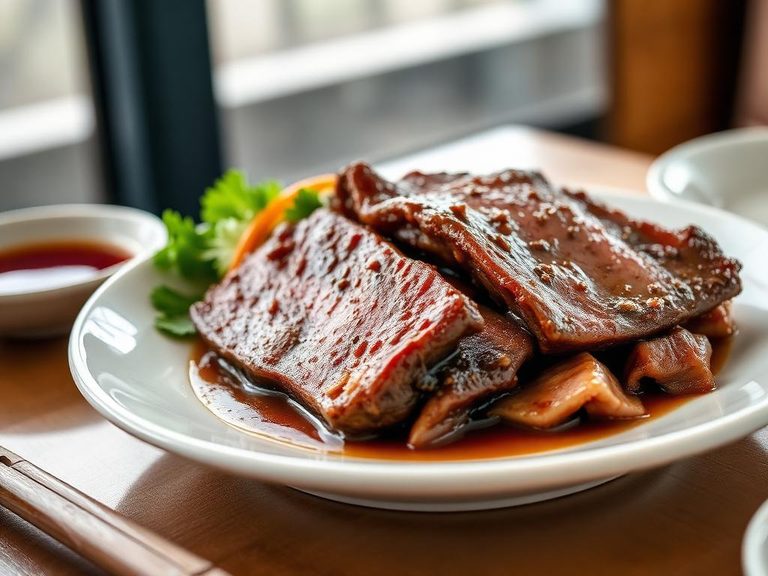

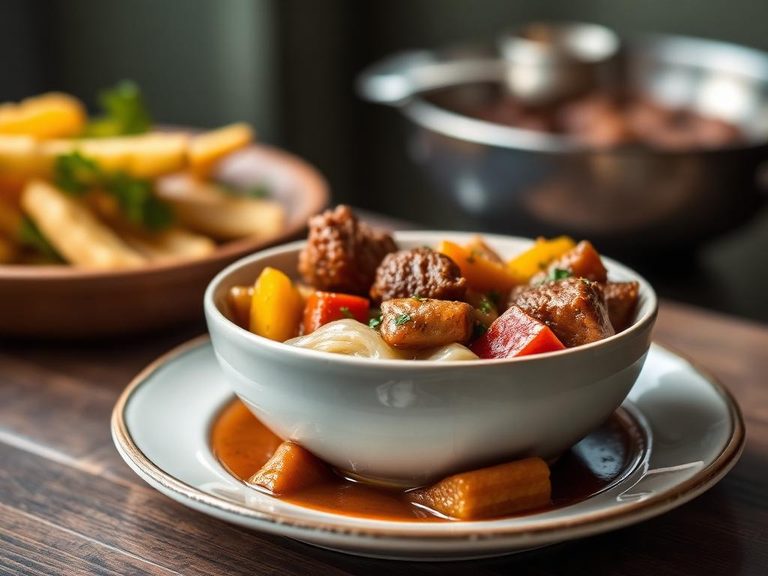
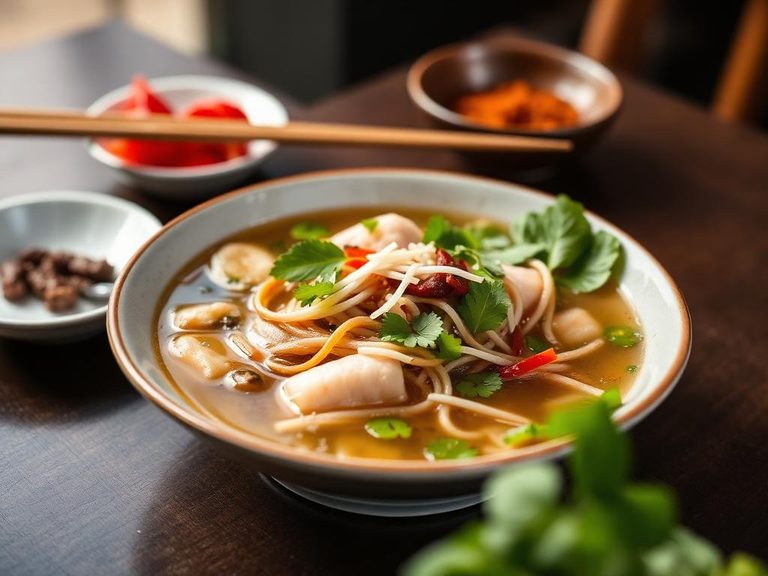
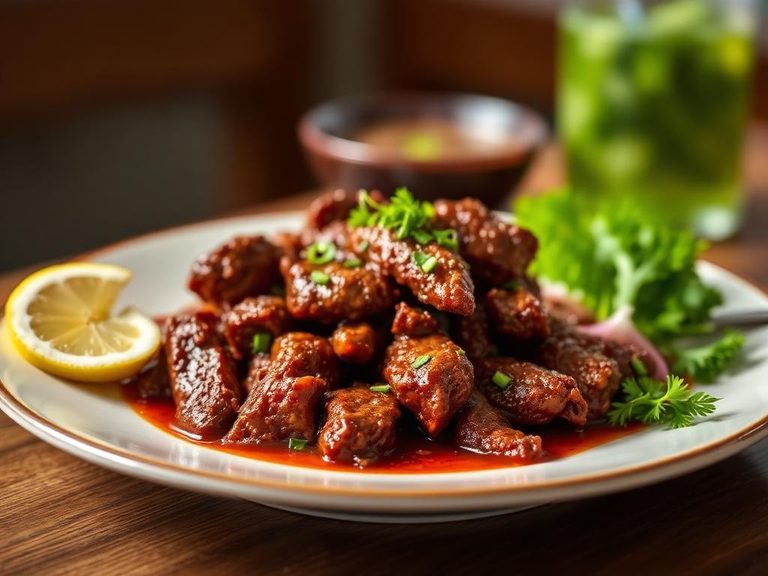
🌍 Where it's eaten
💡 Did you know?
The word 'brisket' comes from the Middle English 'brusket,' meaning the lower part of the breast, and it's the primary cut used in the iconic Jewish holiday dish for Rosh Hashanah, symbolizing a 'good year' or a 'sweet year' ahead.
Full nutrition (USDA data · scales with serving)
| Water | 69.5 g |
| Energy | 169 kcal |
| Energy | 708 kj |
| Protein | 20.1 g |
| Total lipid (fat) | 9.9 g |
| Ash | 0.96 g |
| Carbohydrate, by difference | 0.00 g |
| Fiber, total dietary | 0.00 g |
| Total Sugars | 0.00 g |
| Calcium, Ca | 13.0 mg |
| Iron, Fe | 2.0 mg |
| Magnesium, Mg | 22.0 mg |
| Phosphorus, P | 212 mg |
| Potassium, K | 349 mg |
| Sodium, Na | 79.0 mg |
| Zinc, Zn | 4.9 mg |
| Copper, Cu | 0.07 mg |
| Manganese, Mn | 0.00 mg |
| Selenium, Se | 21.6 ug |
| Vitamin C, total ascorbic acid | 0.00 mg |
| Thiamin | 0.07 mg |
| Riboflavin | 0.15 mg |
| Niacin | 6.1 mg |
| Pantothenic acid | 0.65 mg |
| Vitamin B-6 | 0.59 mg |
| Folate, total | 3.0 ug |
| Folic acid | 0.00 ug |
| Folate, food | 3.0 ug |
| Folate, DFE | 3.0 ug |
| Choline, total | 61.3 mg |
| Betaine | 13.4 mg |
| Vitamin B-12 | 1.7 ug |
| Vitamin B-12, added | 0.00 ug |
| Vitamin A, RAE | 4.0 ug |
| Retinol | 4.0 ug |
| Carotene, beta | 0.00 ug |
| Carotene, alpha | 0.00 ug |
| Cryptoxanthin, beta | 0.00 ug |
| Vitamin A, IU | 12.0 iu |
| Lycopene | 0.00 ug |
| Lutein + zeaxanthin | 0.00 ug |
| Vitamin E (alpha-tocopherol) | 0.16 mg |
| Vitamin E, added | 0.00 mg |
| Vitamin D (D2 + D3), International Units | 4.0 iu |
| Vitamin D (D2 + D3) | 0.10 ug |
| Vitamin D3 (cholecalciferol) | 0.10 ug |
| Vitamin K (phylloquinone) | 1.5 ug |
| Alcohol, ethyl | 0.00 g |
| Caffeine | 0.00 mg |
| Theobromine | 0.00 mg |
Fat & fatty acid profile (per 100g)
| Fatty acids, total saturated | 3.7 g |
| SFA 4:0 | 0.00 g |
| SFA 6:0 | 0.00 g |
| SFA 8:0 | 0.00 g |
| SFA 10:0 | 0.00 g |
| SFA 12:0 | 0.00 g |
| SFA 14:0 | 0.27 g |
| SFA 16:0 | 2.1 g |
| SFA 17:0 | 0.10 g |
| SFA 18:0 | 1.2 g |
| SFA 20:0 | 0.00 g |
| SFA 24:0 | 0.01 g |
| Fatty acids, total monounsaturated | 4.8 g |
| MUFA 14:1 | 0.07 g |
| MUFA 16:1 | 0.37 g |
| MUFA 16:1 c | 0.37 g |
| MUFA 17:1 | 0.09 g |
| MUFA 18:1 | 4.2 g |
| MUFA 18:1 c | 3.7 g |
| MUFA 18:1-11 t (18:1t n-7) | 0.18 g |
| MUFA 20:1 | 0.01 g |
| MUFA 22:1 | 0.00 g |
| Fatty acids, total polyunsaturated | 0.40 g |
| PUFA 18:2 | 0.34 g |
| PUFA 18:2 n-6 c,c | 0.30 g |
| PUFA 18:2 CLAs | 0.04 g |
| PUFA 18:3 | 0.01 g |
| PUFA 18:3 n-3 c,c,c (ALA) | 0.01 g |
| PUFA 18:4 | 0.00 g |
| PUFA 20:2 n-6 c,c | 0.00 g |
| PUFA 20:4 | 0.04 g |
| PUFA 20:5 n-3 (EPA) | 0.00 g |
| PUFA 22:5 n-3 (DPA) | 0.00 g |
| PUFA 22:6 n-3 (DHA) | 0.00 g |
| Fatty acids, total trans | 0.50 g |
| Fatty acids, total trans-monoenoic | 0.50 g |
| TFA 18:1 t | 0.50 g |
| Cholesterol | 67.0 mg |
Amino acid profile (per 100g)
| Tryptophan | 0.23 g |
| Threonine | 0.89 g |
| Isoleucine | 0.86 g |
| Leucine | 1.6 g |
| Lysine | 1.8 g |
| Methionine | 0.57 g |
| Cystine | 0.21 g |
| Phenylalanine | 0.77 g |
| Tyrosine | 0.69 g |
| Valine | 0.91 g |
| Arginine | 1.3 g |
| Histidine | 0.65 g |
| Alanine | 1.1 g |
| Aspartic acid | 1.8 g |
| Glutamic acid | 3.2 g |
| Glycine | 0.92 g |
| Proline | 0.83 g |
| Serine | 0.77 g |
| Hydroxyproline | 0.14 g |
FAQ
What's the best way to cook this lean brisket cut to make it tender?
The key is low-and-slow cooking. Methods like braising in liquid, slow-smoking, or using a slow cooker or pressure cooker will break down the collagen in the meat, resulting in a tender, fork-tender texture. Avoid high-heat, quick-cooking methods like grilling or pan-searing the whole cut.
Is this cut the same as corned beef?
No. Corned beef is typically made from brisket (often the point cut) that has been cured in a salt brine. This is a raw, un-cured brisket flat. You can use this cut to make your own corned beef by curing it yourself.
How does trimming to '0' fat affect the cooking and taste?
Trimming to zero external fat means the meat is very lean. It will have fewer calories and less saturated fat, but it also has less built-in basting. This makes proper cooking technique (like braising) even more critical to prevent dryness, and you may want to add a flavorful cooking liquid or sauce.
Nutrient density (calculated · NRF9.3)
Nutrient Rich Foods index: beneficial nutrients (protein, fiber, vitamins, minerals) minus saturated fat, added sugar & sodium, per 100 kcal.
NRF9.3 index — Fulgoni, Keast & Drewnowski, 2009. Computed from USDA nutrients.
Weight-loss friendliness (composite index)
Energy density 1.69 kcal/g · 48% calories from protein · 0.0 g fiber · 0.0 g sugar per 100 g.
Composite of energy density (Rolls et al., 1999), protein & fiber satiety, minus sugar. A calculated heuristic — ranks satiety-per-calorie, not a clinical measure.
Dietary load (calculated from USDA values)
Potential renal acid load. Positive = acid-forming, negative = alkaline-forming.
Sodium-to-potassium ratio: 0.23 (lower is better — aim for ≤ 1)
Sodium:potassium per WHO potassium guidance. Computed from USDA nutrients.