

Babyfood, meat, lamb, strained
Whole food · Baby Foods
This is a finely strained, smooth purée of lamb meat, designed as a first-stage protein for infants. It has a mild, savory flavor with a subtle, earthy sweetness from the lamb, and a texture as smooth as a thick, creamy paste. Nutritionally, it's a powerhouse of high-quality protein and iron, with minimal fat and no carbohydrates.
Calorie split: 62% protein · 4% carbs · 34% fat
↓ Full nutrition💚 Why it's loved
Parents love it for providing a nutrient-dense, allergen-friendly protein source that introduces savory flavors early. Its mild taste and smooth consistency make it an easy, non-messy way to support a baby's nutritional needs.
⚠️ Watch-outs & how to enjoy it better
Some babies may initially reject the distinct, gamey flavor of lamb compared to milder meats. As a single-ingredient purée, it can be bland on its own; mixing with a familiar vegetable purée can improve acceptance. Always introduce new proteins one at a time to monitor for allergies.
Key benefits
- Excellent source of complete protein for growth
- Rich in heme iron for cognitive development
- Naturally low in sugar and carbohydrates
- Provides essential zinc and B vitamins
- Smooth texture supports early feeding skills
🍽️ Popular dishes
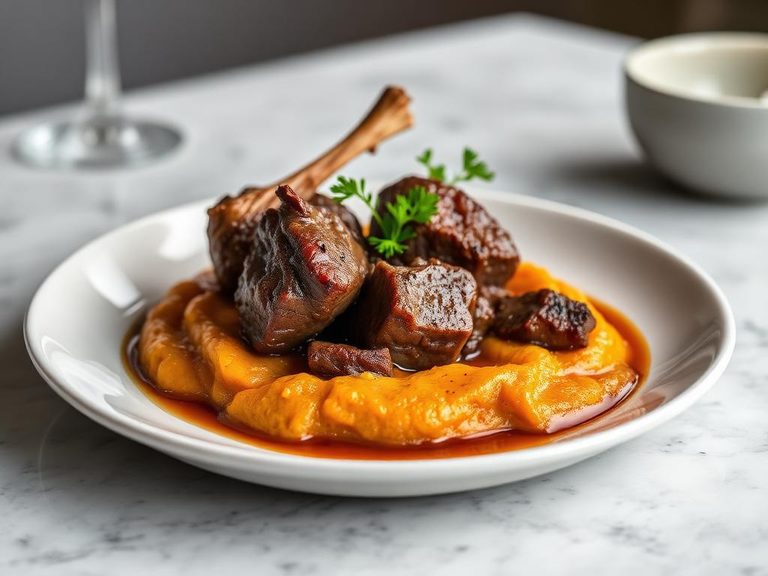
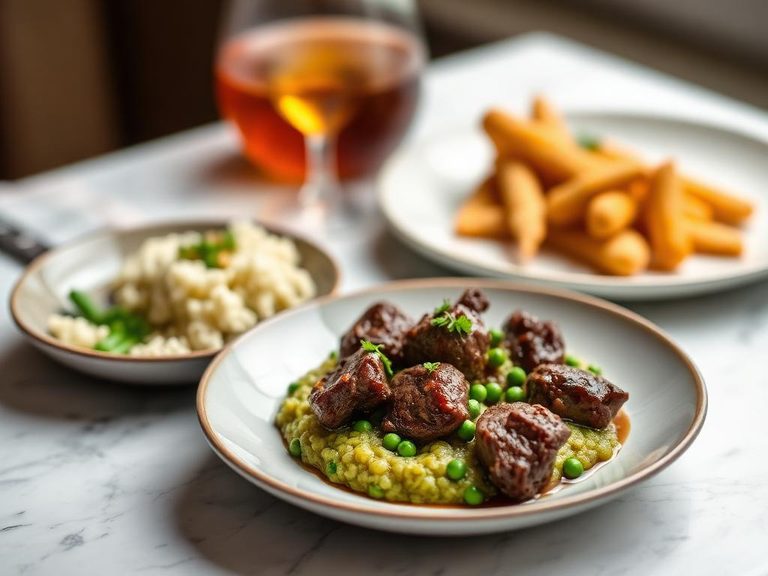
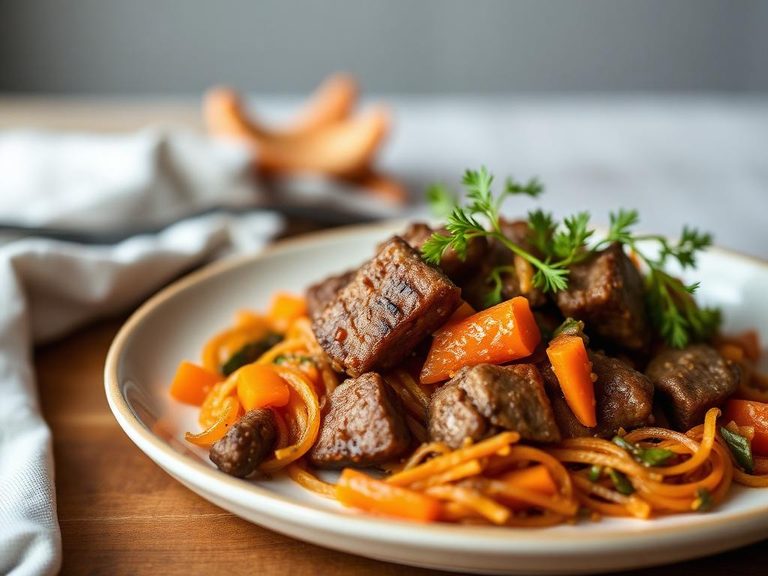
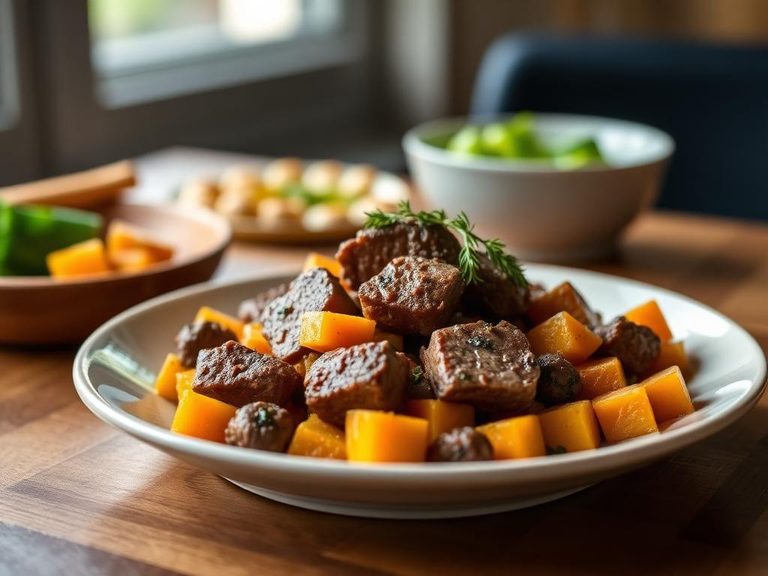
🌍 Where it's eaten
💡 Did you know?
Lamb is one of the most traditional 'first meats' for babies in many cultures, as it's often considered easier to digest than beef and has a higher fat content for brain development.
Full nutrition (USDA data · scales with serving)
| Water | 81.1 g |
| Energy | 94.0 kcal |
| Energy | 394 kj |
| Protein | 14.1 g |
| Total lipid (fat) | 3.4 g |
| Ash | 0.60 g |
| Carbohydrate, by difference | 0.85 g |
| Fiber, total dietary | 0.00 g |
| Total Sugars | 0.00 g |
| Calcium, Ca | 7.0 mg |
| Iron, Fe | 1.2 mg |
| Magnesium, Mg | 13.0 mg |
| Phosphorus, P | 104 mg |
| Potassium, K | 193 mg |
| Sodium, Na | 43.0 mg |
| Zinc, Zn | 2.4 mg |
| Copper, Cu | 0.15 mg |
| Manganese, Mn | 0.04 mg |
| Selenium, Se | 2.2 ug |
| Vitamin C, total ascorbic acid | 1.2 mg |
| Thiamin | 0.02 mg |
| Riboflavin | 0.17 mg |
| Niacin | 2.9 mg |
| Pantothenic acid | 0.11 mg |
| Vitamin B-6 | 0.04 mg |
| Folate, total | 0.00 ug |
| Folic acid | 0.00 ug |
| Folate, food | 0.00 ug |
| Folate, DFE | 0.00 ug |
| Choline, total | 54.7 mg |
| Betaine | 6.6 mg |
| Vitamin B-12 | 1.9 ug |
| Vitamin B-12, added | 0.00 ug |
| Vitamin A, RAE | 0.00 ug |
| Retinol | 0.00 ug |
| Carotene, beta | 0.00 ug |
| Carotene, alpha | 0.00 ug |
| Cryptoxanthin, beta | 0.00 ug |
| Vitamin A, IU | 0.00 iu |
| Lycopene | 0.00 ug |
| Lutein + zeaxanthin | 0.00 ug |
| Vitamin E (alpha-tocopherol) | 0.19 mg |
| Vitamin E, added | 0.00 mg |
| Tocopherol, beta | 0.00 mg |
| Tocopherol, gamma | 0.00 mg |
| Tocopherol, delta | 0.00 mg |
| Tocotrienol, alpha | 0.04 mg |
| Tocotrienol, beta | 0.00 mg |
| Tocotrienol, gamma | 0.00 mg |
| Tocotrienol, delta | 0.00 mg |
| Vitamin D (D2 + D3), International Units | 4.0 iu |
| Vitamin D (D2 + D3) | 0.10 ug |
| Vitamin K (phylloquinone) | 0.60 ug |
| Vitamin K (Dihydrophylloquinone) | 0.00 ug |
| Vitamin K (Menaquinone-4) | 5.3 ug |
| Alcohol, ethyl | 0.00 g |
| Caffeine | 0.00 mg |
| Theobromine | 0.00 mg |
Fat & fatty acid profile (per 100g)
| Fatty acids, total saturated | 1.6 g |
| SFA 4:0 | 0.00 g |
| SFA 6:0 | 0.00 g |
| SFA 8:0 | 0.00 g |
| SFA 10:0 | 0.00 g |
| SFA 12:0 | 0.01 g |
| SFA 14:0 | 0.15 g |
| SFA 15:0 | 0.02 g |
| SFA 16:0 | 0.72 g |
| SFA 17:0 | 0.05 g |
| SFA 18:0 | 0.68 g |
| SFA 20:0 | 0.02 g |
| SFA 22:0 | 0.00 g |
| SFA 24:0 | 0.00 g |
| Fatty acids, total monounsaturated | 1.3 g |
| MUFA 14:1 | 0.00 g |
| MUFA 15:1 | 0.00 g |
| MUFA 16:1 | 0.07 g |
| MUFA 17:1 | 0.03 g |
| MUFA 18:1 | 1.2 g |
| MUFA 20:1 | 0.00 g |
| MUFA 22:1 | 0.00 g |
| MUFA 24:1 c | 0.00 g |
| Fatty acids, total polyunsaturated | 0.31 g |
| PUFA 18:2 | 0.17 g |
| PUFA 18:3 | 0.08 g |
| PUFA 18:4 | 0.00 g |
| PUFA 20:2 n-6 c,c | 0.00 g |
| PUFA 20:3 | 0.00 g |
| PUFA 20:4 | 0.02 g |
| PUFA 20:5 n-3 (EPA) | 0.02 g |
| PUFA 21:5 | 0.00 g |
| PUFA 22:4 | 0.00 g |
| PUFA 22:5 n-3 (DPA) | 0.02 g |
| PUFA 22:6 n-3 (DHA) | 0.00 g |
| Cholesterol | 36.0 mg |
Amino acid profile (per 100g)
Estimated from Babyfood, grape juice, no sugar, canned — USDA does not publish this profile for Babyfood.
| Threonine | 0.02 g |
| Isoleucine | 0.01 g |
| Leucine | 0.02 g |
| Lysine | 0.02 g |
| Methionine | 0.03 g |
| Cystine | 0.01 g |
| Phenylalanine | 0.02 g |
| Tyrosine | 0.02 g |
| Valine | 0.02 g |
| Arginine | 0.06 g |
| Histidine | 0.03 g |
| Alanine | 0.04 g |
| Aspartic acid | 0.10 g |
| Glutamic acid | 0.18 g |
| Glycine | 0.03 g |
| Proline | 0.03 g |
| Serine | 0.04 g |
FAQ
At what age can I introduce lamb purée to my baby?
Most pediatricians recommend introducing single-ingredient meat purées like lamb between 6 and 8 months of age, after your baby has started on iron-fortified cereals and vegetable purées.
How is this different from regular ground lamb?
Baby food lamb is specially processed to be extremely smooth and free of sinew or gristle. It's also typically cooked without added salt, sugar, or seasonings, making it safer and more appropriate for an infant's developing kidneys and palate.
Can I make this at home?
Yes. You can simmer a lean lamb stew meat until very tender, then blend it with a small amount of unsalted broth, breast milk, or formula to achieve a smooth, spoonable consistency. Ensure it is completely free of chunks.
Nutrient density (calculated · NRF9.3)
Nutrient Rich Foods index: beneficial nutrients (protein, fiber, vitamins, minerals) minus saturated fat, added sugar & sodium, per 100 kcal.
NRF9.3 index — Fulgoni, Keast & Drewnowski, 2009. Computed from USDA nutrients.
Weight-loss friendliness (composite index)
Energy density 0.94 kcal/g · 60% calories from protein · 0.0 g fiber · 0.0 g sugar per 100 g.
Composite of energy density (Rolls et al., 1999), protein & fiber satiety, minus sugar. A calculated heuristic — ranks satiety-per-calorie, not a clinical measure.
Dietary load (calculated from USDA values)
Potential renal acid load. Positive = acid-forming, negative = alkaline-forming.
Sodium-to-potassium ratio: 0.22 (lower is better — aim for ≤ 1)
Sodium:potassium per WHO potassium guidance. Computed from USDA nutrients.