

Apricots, dried, sulfured, uncooked
Whole food · Fruits and Fruit Juices

Photo: Wikipedia
These are whole apricots, halved and pitted, preserved with sulfur dioxide to maintain their vibrant orange color and prevent spoilage. They have a tender, chewy texture and a concentrated, sweet-tart flavor reminiscent of honey and apricot nectar. Nutritionally, they are a powerhouse of natural sugars and dietary fiber, providing quick energy and digestive support.
Calorie split: 5% protein · 93% carbs · 2% fat
↓ Full nutrition💚 Why it's loved
People love them for their intense, sun-kissed sweetness and satisfying chew, which makes them a perfect standalone snack or a versatile baking ingredient. Their cultural significance in Mediterranean and Middle Eastern cuisines, where they symbolize hospitality and warmth, adds to their enduring appeal.
⚠️ Watch-outs & how to enjoy it better
Their high sugar content can cause rapid blood-sugar spikes, making portion control crucial for those managing diabetes. The sulfuring process, while preserving color, can trigger reactions in sensitive individuals with asthma or sulfite allergies. To mitigate sugar impact, pair a small handful with a source of protein or fat like nuts or yogurt.
Key benefits
- Excellent source of dietary fiber for digestive health.
- Rich in antioxidants like beta-carotene, which the body converts to vitamin A.
- Provides a quick, natural energy boost from concentrated fruit sugars.
- Contains essential minerals like potassium and iron.
- A convenient, shelf-stable fruit for snacking or cooking.
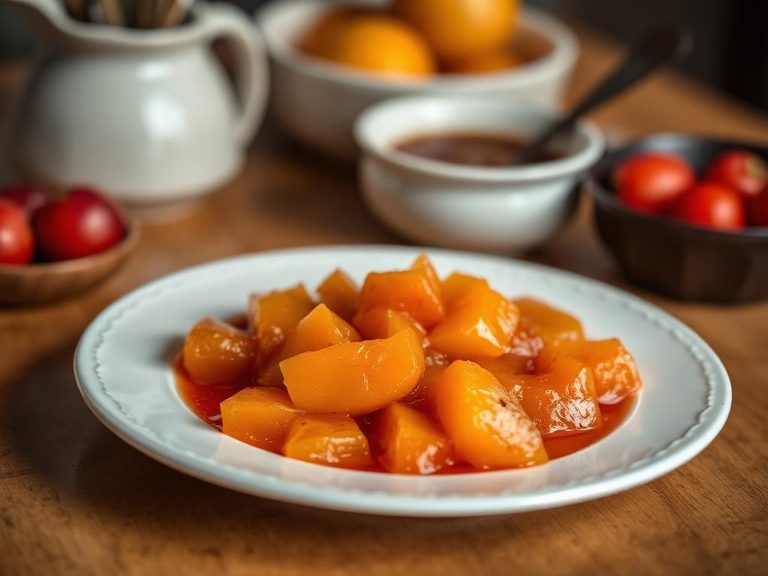
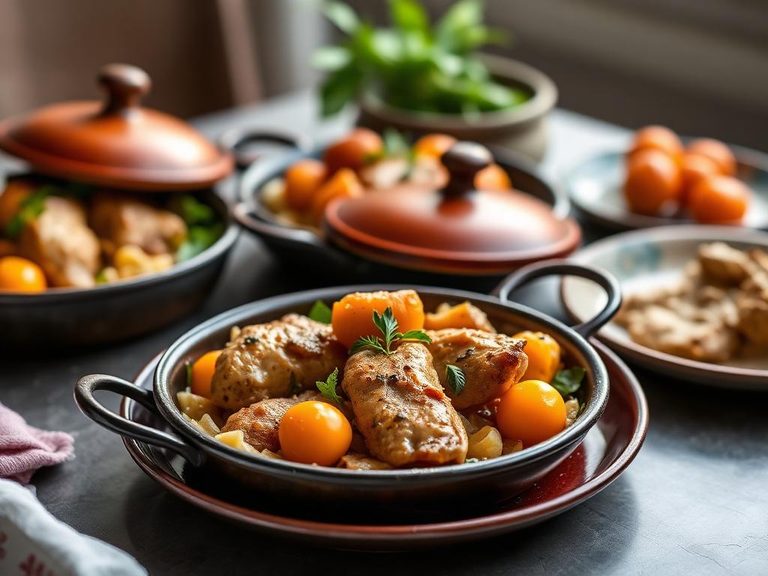
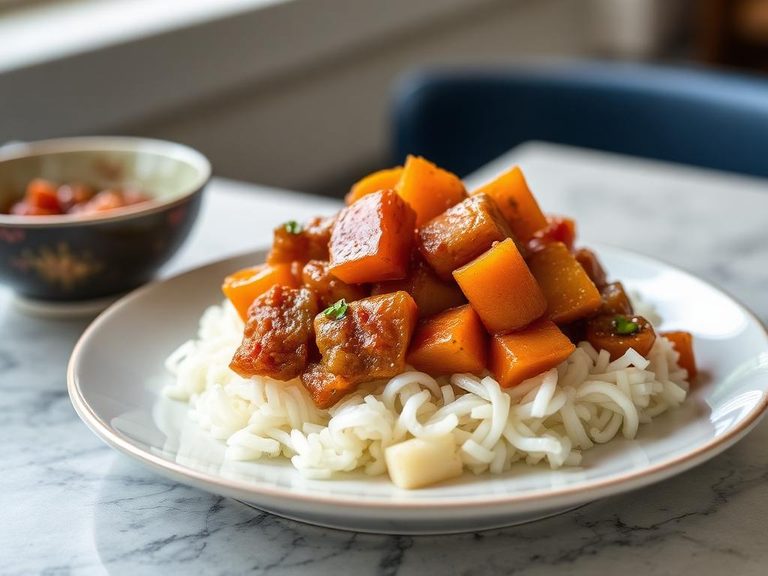
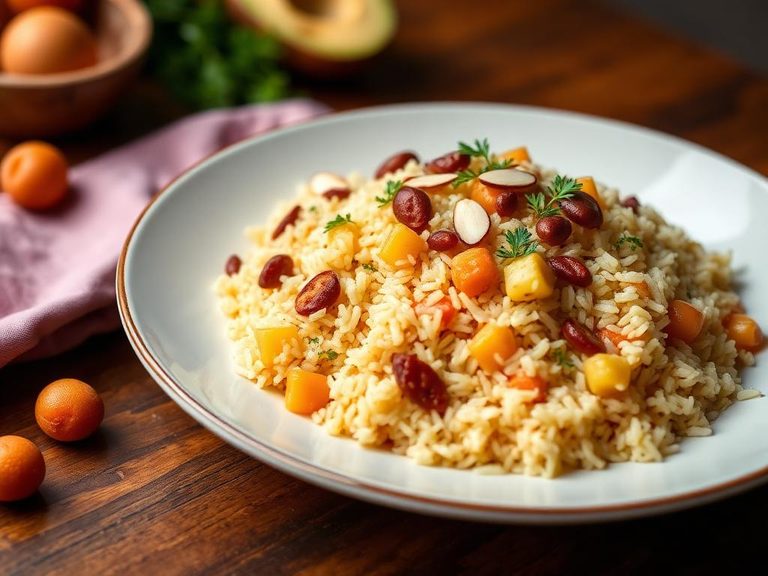
🍽️ Popular dishes

🌍 Where it's eaten
💡 Did you know?
The sulfur dioxide used in processing not only preserves color but also inhibits the Maillard reaction, which is why these dried apricots stay bright orange instead of turning the deep brown of their unsulfured counterparts.
Full nutrition (USDA data · scales with serving)
| Water | 30.9 g |
| Energy | 241 kcal |
| Energy | 1009 kj |
| Protein | 3.4 g |
| Total lipid (fat) | 0.51 g |
| Ash | 2.6 g |
| Carbohydrate, by difference | 62.6 g |
| Fiber, total dietary | 7.3 g |
| Total Sugars | 53.4 g |
| Sucrose | 7.9 g |
| Glucose | 33.1 g |
| Fructose | 12.5 g |
| Lactose | 0.00 g |
| Maltose | 0.00 g |
| Galactose | 0.00 g |
| Starch | 0.35 g |
| Calcium, Ca | 55.0 mg |
| Iron, Fe | 2.7 mg |
| Magnesium, Mg | 32.0 mg |
| Phosphorus, P | 71.0 mg |
| Potassium, K | 1162 mg |
| Sodium, Na | 10.0 mg |
| Zinc, Zn | 0.39 mg |
| Copper, Cu | 0.34 mg |
| Manganese, Mn | 0.23 mg |
| Selenium, Se | 2.2 ug |
| Vitamin C, total ascorbic acid | 1.0 mg |
| Thiamin | 0.01 mg |
| Riboflavin | 0.07 mg |
| Niacin | 2.6 mg |
| Pantothenic acid | 0.52 mg |
| Vitamin B-6 | 0.14 mg |
| Folate, total | 10.0 ug |
| Folic acid | 0.00 ug |
| Folate, food | 10.0 ug |
| Folate, DFE | 10.0 ug |
| Choline, total | 13.9 mg |
| Betaine | 0.30 mg |
| Vitamin B-12 | 0.00 ug |
| Vitamin B-12, added | 0.00 ug |
| Vitamin A, RAE | 180 ug |
| Retinol | 0.00 ug |
| Carotene, beta | 2163 ug |
| Carotene, alpha | 0.00 ug |
| Cryptoxanthin, beta | 0.00 ug |
| Vitamin A, IU | 3604 iu |
| Lycopene | 0.00 ug |
| Lutein + zeaxanthin | 0.00 ug |
| Vitamin E (alpha-tocopherol) | 4.3 mg |
| Vitamin E, added | 0.00 mg |
| Tocopherol, beta | 0.05 mg |
| Tocopherol, gamma | 0.08 mg |
| Tocopherol, delta | 0.01 mg |
| Tocotrienol, alpha | 0.00 mg |
| Tocotrienol, beta | 0.00 mg |
| Tocotrienol, gamma | 0.00 mg |
| Tocotrienol, delta | 0.00 mg |
| Vitamin D (D2 + D3), International Units | 0.00 iu |
| Vitamin D (D2 + D3) | 0.00 ug |
| Vitamin K (phylloquinone) | 3.1 ug |
| Vitamin K (Dihydrophylloquinone) | 0.00 ug |
| Alcohol, ethyl | 0.00 g |
| Caffeine | 0.00 mg |
| Theobromine | 0.00 mg |
Fat & fatty acid profile (per 100g)
| Fatty acids, total saturated | 0.02 g |
| SFA 4:0 | 0.00 g |
| SFA 6:0 | 0.00 g |
| SFA 8:0 | 0.00 g |
| SFA 10:0 | 0.00 g |
| SFA 12:0 | 0.00 g |
| SFA 14:0 | 0.00 g |
| SFA 15:0 | 0.00 g |
| SFA 16:0 | 0.02 g |
| SFA 17:0 | 0.00 g |
| SFA 18:0 | 0.00 g |
| SFA 20:0 | 0.00 g |
| SFA 22:0 | 0.00 g |
| SFA 24:0 | 0.00 g |
| Fatty acids, total monounsaturated | 0.07 g |
| MUFA 14:1 | 0.00 g |
| MUFA 16:1 | 0.00 g |
| MUFA 18:1 | 0.07 g |
| MUFA 20:1 | 0.00 g |
| MUFA 22:1 | 0.00 g |
| Fatty acids, total polyunsaturated | 0.07 g |
| PUFA 18:2 | 0.07 g |
| PUFA 18:3 | 0.00 g |
| PUFA 18:4 | 0.00 g |
| PUFA 20:4 | 0.00 g |
| PUFA 20:5 n-3 (EPA) | 0.00 g |
| PUFA 22:5 n-3 (DPA) | 0.00 g |
| PUFA 22:6 n-3 (DHA) | 0.00 g |
| Cholesterol | 0.00 mg |
Amino acid profile (per 100g)
| Tryptophan | 0.02 g |
| Threonine | 0.07 g |
| Isoleucine | 0.06 g |
| Leucine | 0.10 g |
| Lysine | 0.08 g |
| Methionine | 0.01 g |
| Cystine | 0.02 g |
| Phenylalanine | 0.06 g |
| Tyrosine | 0.04 g |
| Valine | 0.08 g |
| Arginine | 0.07 g |
| Histidine | 0.05 g |
| Alanine | 0.11 g |
| Aspartic acid | 0.94 g |
| Glutamic acid | 0.19 g |
| Glycine | 0.07 g |
| Proline | 0.82 g |
| Serine | 0.09 g |
FAQ
Why are some dried apricots bright orange and others dark brown?
The bright orange ones are treated with sulfur dioxide, a preservative that prevents oxidation and browning. The dark brown ones are unsulfured and dried naturally, resulting in a deeper color and a more intense, sometimes tangy flavor.
Are dried apricots a good source of vitamins?
Yes, they are particularly rich in beta-carotene, which your body converts to vitamin A, essential for vision and immune function. They also contain notable amounts of vitamin E and some B vitamins.
How should I store them to keep them fresh?
For short-term use, keep them in an airtight container in a cool, dark pantry. For longer storage (up to a year), refrigerate them. To prevent sticking, you can lightly dust them with flour or separate layers with parchment paper.
Nutrient density (calculated · NRF9.3)
Nutrient Rich Foods index: beneficial nutrients (protein, fiber, vitamins, minerals) minus saturated fat, added sugar & sodium, per 100 kcal.
NRF9.3 index — Fulgoni, Keast & Drewnowski, 2009. Computed from USDA nutrients.
Weight-loss friendliness (composite index)
Energy density 2.41 kcal/g · 6% calories from protein · 7.3 g fiber · 53.4 g sugar per 100 g.
Composite of energy density (Rolls et al., 1999), protein & fiber satiety, minus sugar. A calculated heuristic — ranks satiety-per-calorie, not a clinical measure.
Dietary load (calculated from USDA values)
Potential renal acid load. Positive = acid-forming, negative = alkaline-forming.
Sodium-to-potassium ratio: 0.01 (lower is better — aim for ≤ 1)
Sodium:potassium per WHO potassium guidance. Computed from USDA nutrients.