

Acorn stew (Apache)
Whole food · American Indian/Alaska Native Foods

Photo: Wikipedia
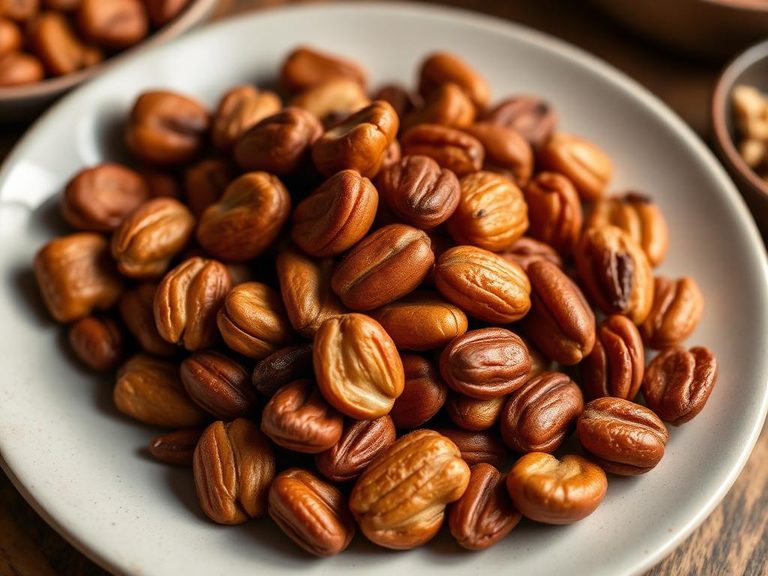
Acorn stew is a hearty, traditional Apache dish made from the starchy nuts of oak trees, which are leached of tannins and cooked into a thick, comforting porridge or stew. Its taste is mildly nutty and earthy, with a smooth, slightly gelatinous texture from the natural starches. Nutritionally, it's a notable plant-based protein source for its calorie count.
Calorie split: 29% protein · 39% carbs · 33% fat
↓ Full nutrition💚 Why it's loved
People love it for its deep connection to Apache heritage and its satisfying, savory comfort-food quality. It's also valued as a versatile, foraged staple that can be seasoned in various ways.
⚠️ Watch-outs & how to enjoy it better
The primary caution is that acorns contain tannins, which can be bitter and mildly toxic if not properly leached with multiple water changes before cooking. Those with oak pollen allergies should also exercise caution.
Key benefits
- Good source of plant-based protein (6.8g per 100g)
- Contains healthy fats and complex carbohydrates
- Rich in minerals like potassium and magnesium
- Provides sustained energy from complex carbs
- Traditional, whole-food ingredient
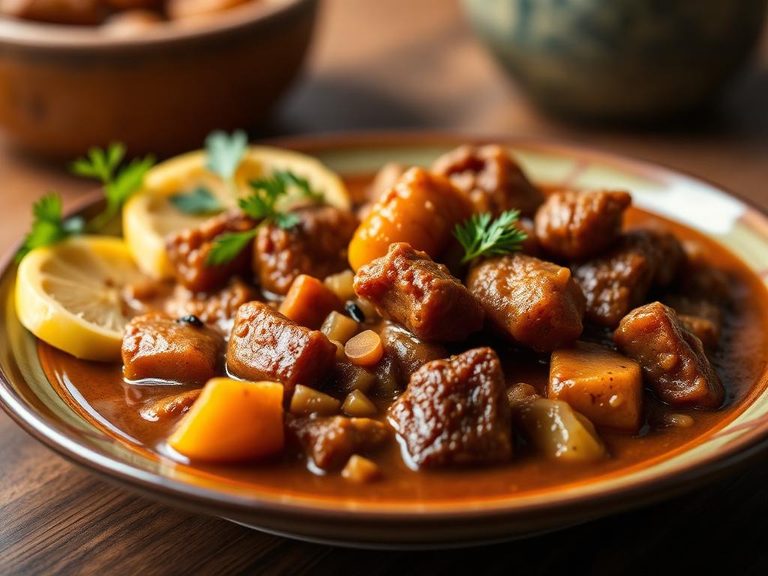
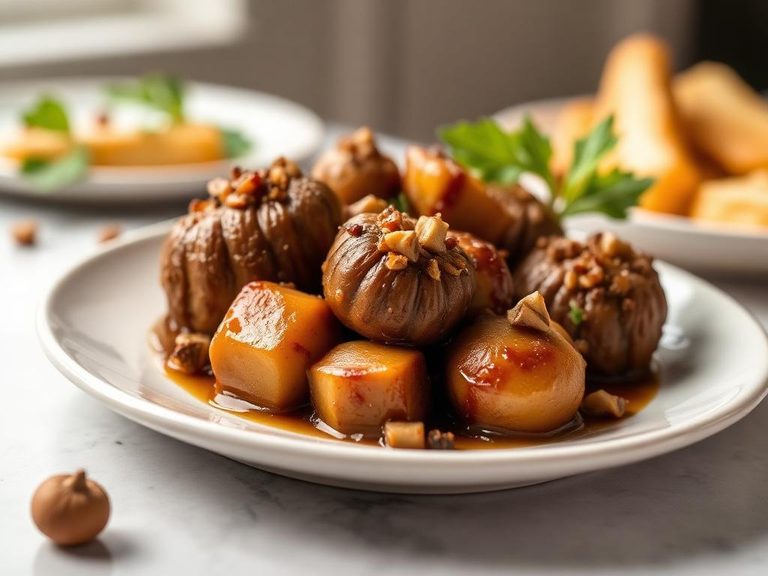
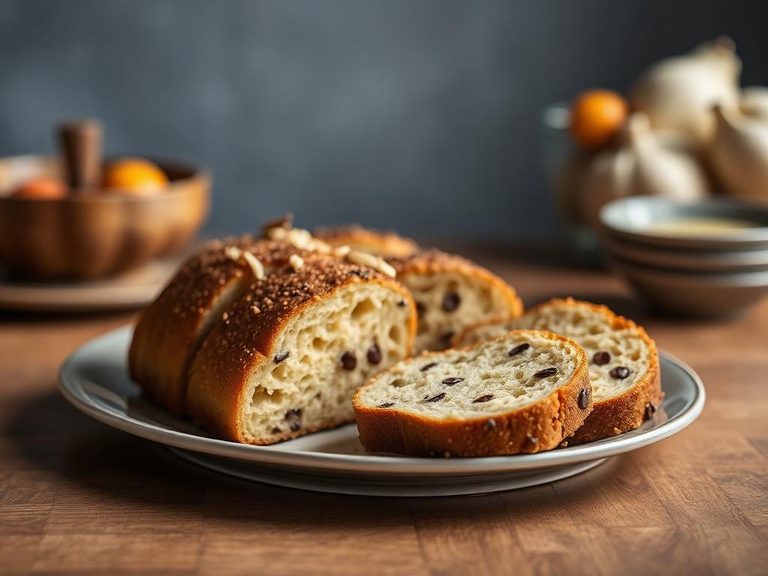
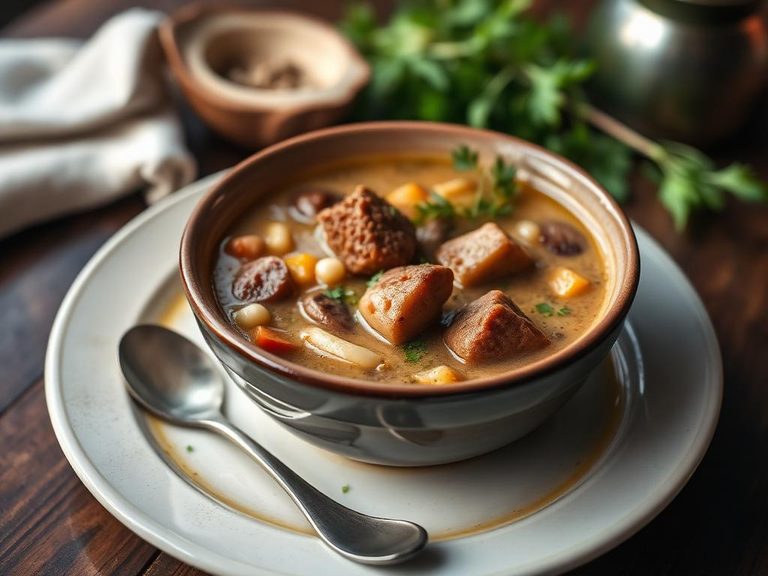
🍽️ Popular dishes
🌍 Where it's eaten
💡 Did you know?
The process of leaching tannins from acorns to make them edible is a skill passed down through generations, and the specific method can vary between different Native American tribes.
Full nutrition (USDA data · scales with serving)
| Water | 79.8 g |
| Energy | 95.0 kcal |
| Energy | 399 kj |
| Protein | 6.8 g |
| Total lipid (fat) | 3.5 g |
| Ash | 0.72 g |
| Carbohydrate, by difference | 9.2 g |
| Fiber, total dietary | 0.70 g |
| Total Sugars | 0.34 g |
| Sucrose | 0.16 g |
| Glucose | 0.00 g |
| Fructose | 0.00 g |
| Lactose | 0.00 g |
| Maltose | 0.19 g |
| Galactose | 0.00 g |
| Starch | 6.6 g |
| Calcium, Ca | 14.0 mg |
| Iron, Fe | 1.0 mg |
| Magnesium, Mg | 12.0 mg |
| Phosphorus, P | 62.0 mg |
| Potassium, K | 110 mg |
| Sodium, Na | 130 mg |
| Zinc, Zn | 1.6 mg |
| Copper, Cu | 0.03 mg |
| Manganese, Mn | 0.14 mg |
| Selenium, Se | 8.3 ug |
| Vitamin C, total ascorbic acid | 0.00 mg |
| Thiamin | 0.17 mg |
| Riboflavin | 0.13 mg |
| Niacin | 2.1 mg |
| Pantothenic acid | 0.21 mg |
| Vitamin B-6 | 0.06 mg |
| Folate, total | 33.0 ug |
| Folic acid | 15.0 ug |
| Folate, food | 18.0 ug |
| Folate, DFE | 44.0 ug |
| Vitamin B-12 | 0.68 ug |
| Vitamin B-12, added | 0.00 ug |
| Vitamin A, RAE | 0.00 ug |
| Retinol | 0.00 ug |
| Vitamin A, IU | 0.00 iu |
| Vitamin E (alpha-tocopherol) | 0.30 mg |
| Vitamin E, added | 0.00 mg |
| Tocopherol, beta | 0.12 mg |
| Tocopherol, gamma | 0.23 mg |
| Tocopherol, delta | 0.05 mg |
| Tocotrienol, alpha | 0.02 mg |
| Tocotrienol, beta | 0.00 mg |
| Tocotrienol, gamma | 0.00 mg |
| Tocotrienol, delta | 0.00 mg |
| Vitamin K (phylloquinone) | 0.00 ug |
| Vitamin K (Dihydrophylloquinone) | 0.00 ug |
| Vitamin K (Menaquinone-4) | 0.90 ug |
Fat & fatty acid profile (per 100g)
| Fatty acids, total saturated | 1.3 g |
| SFA 8:0 | 0.00 g |
| SFA 10:0 | 0.00 g |
| SFA 12:0 | 0.00 g |
| SFA 14:0 | 0.09 g |
| SFA 15:0 | 0.01 g |
| SFA 16:0 | 0.75 g |
| SFA 17:0 | 0.04 g |
| SFA 18:0 | 0.39 g |
| SFA 20:0 | 0.00 g |
| SFA 22:0 | 0.00 g |
| SFA 24:0 | 0.00 g |
| Fatty acids, total monounsaturated | 1.7 g |
| MUFA 14:1 | 0.02 g |
| MUFA 15:1 | 0.00 g |
| MUFA 16:1 | 0.11 g |
| MUFA 17:1 | 0.03 g |
| MUFA 18:1 | 1.5 g |
| MUFA 20:1 | 0.01 g |
| MUFA 22:1 | 0.00 g |
| MUFA 24:1 c | 0.00 g |
| Fatty acids, total polyunsaturated | 0.30 g |
| PUFA 18:2 | 0.26 g |
| PUFA 18:3 | 0.01 g |
| PUFA 18:4 | 0.02 g |
| PUFA 20:2 n-6 c,c | 0.01 g |
| PUFA 20:3 | 0.00 g |
| PUFA 20:4 | 0.00 g |
| PUFA 20:5 n-3 (EPA) | 0.00 g |
| PUFA 21:5 | 0.00 g |
| PUFA 22:4 | 0.00 g |
| PUFA 22:5 n-3 (DPA) | 0.00 g |
| PUFA 22:6 n-3 (DHA) | 0.00 g |
| Cholesterol | 20.0 mg |
Amino acid profile (per 100g)
| Tryptophan | 0.04 g |
| Threonine | 0.36 g |
| Isoleucine | 0.35 g |
| Leucine | 0.62 g |
| Lysine | 0.58 g |
| Methionine | 0.16 g |
| Cystine | 0.09 g |
| Phenylalanine | 0.33 g |
| Tyrosine | 0.25 g |
| Valine | 0.39 g |
| Arginine | 0.47 g |
| Histidine | 0.23 g |
| Alanine | 0.45 g |
| Aspartic acid | 0.83 g |
| Glutamic acid | 1.5 g |
| Glycine | 0.42 g |
| Proline | 0.46 g |
| Serine | 0.33 g |
FAQ
What does acorn stew taste like?
It has a mild, nutty, and earthy flavor, similar to a cross between a chestnut and a mild grain. The texture is typically thick and hearty, like a dense porridge.
Is it safe to eat acorns from my yard?
Only if you properly leach them first. Raw acorns contain high levels of tannins, which are bitter and can cause digestive issues. The traditional method involves cracking, grinding, and soaking the acorn meal in multiple changes of water until the water runs clear.
Is acorn stew gluten-free?
Yes, pure acorn stew made from acorns and other whole ingredients is naturally gluten-free. However, always check if any added ingredients or thickeners contain gluten.
Nutrient density (calculated · NRF9.3)
Nutrient Rich Foods index: beneficial nutrients (protein, fiber, vitamins, minerals) minus saturated fat, added sugar & sodium, per 100 kcal.
NRF9.3 index — Fulgoni, Keast & Drewnowski, 2009. Computed from USDA nutrients.
Weight-loss friendliness (composite index)
Energy density 0.95 kcal/g · 29% calories from protein · 0.7 g fiber · 0.3 g sugar per 100 g.
Composite of energy density (Rolls et al., 1999), protein & fiber satiety, minus sugar. A calculated heuristic — ranks satiety-per-calorie, not a clinical measure.
Dietary load (calculated from USDA values)
Potential renal acid load. Positive = acid-forming, negative = alkaline-forming.
Sodium-to-potassium ratio: 1.18 (lower is better — aim for ≤ 1)
Sodium:potassium per WHO potassium guidance. Computed from USDA nutrients.