

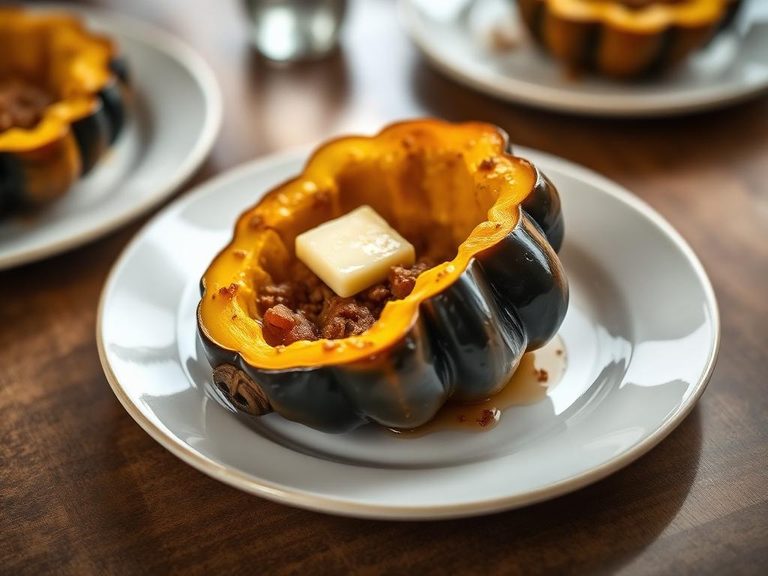
Roasted Acorn Nuts
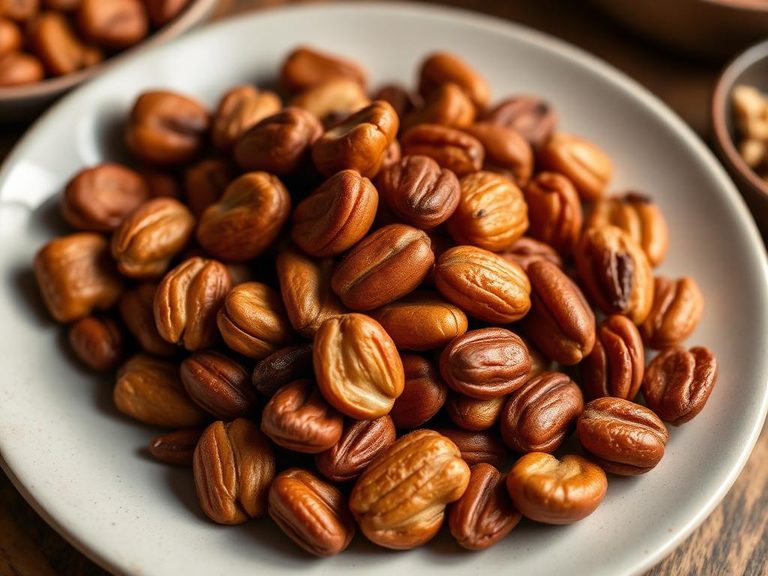
Roasted acorns are a traditional food made from the nuts of oak trees, typically prepared by leaching and then roasting to bring out a nutty, earthy flavor. The process involves removing the bitter tannins through soaking or boiling before roasting, often with a touch of oil or salt. This dish has roots in various indigenous cultures across North America, Europe, and Asia, where acorns were a vital survival food.
🍽️ Nutrition at a glance
Roasted acorns are a nutrient-dense food, providing a balanced mix of healthy fats, complex carbohydrates, and plant-based protein. They are particularly rich in fiber, potassium, and manganese, offering roughly 150-200 calories per 100-gram serving.
Nutrition breakdown
| Calories | 180 kcal |
| Protein | 3.5 g |
| Carbs | 25 g |
| Fat | 9 g |
| Fiber | 5 g |
| Sugar | 2 g |
| Sodium | 5 mg |
| Manganese | 1.2 mg |
| Potassium | 350 mg |
| Magnesium | 40 mg |
| Phosphorus | 80 mg |
| Iron | 1.0 mg |
| Vitamin B6 | 0.1 mg |
| Copper | 0.3 mg |
| Thiamine (B1) | 0.1 mg |
Per 1 cup (100 g) · estimated, varies by recipe
💡 What's interesting
Culturally, acorns represent one of the oldest human food sources, with evidence of their consumption dating back thousands of years. Nutritionally, they are unique for being a wild, foraged nut that requires specific preparation to become edible, highlighting traditional food knowledge.
🍽️ Related dishes




AI estimate may be inaccurate · Terms