

Acorn Mush
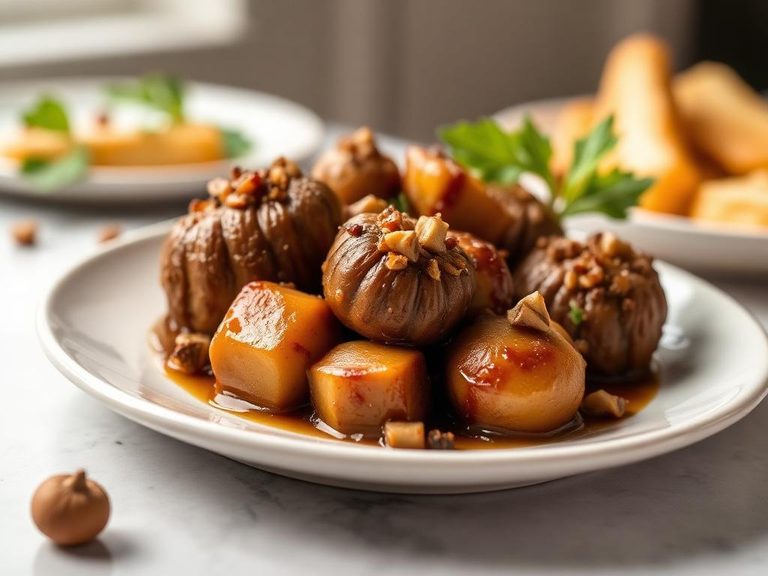
Acorn Mush, known as 'Dotori-muk' in Korean, is a savory, gelatinous dish made from acorn flour. It is typically prepared with water and a starch like potato or arrowroot, then chilled until set and served with a soy-based sauce. This dish is a traditional Korean staple, particularly valued in mountainous regions where acorns are abundant.
🍽️ Nutrition at a glance
Acorn Mush is primarily a source of complex carbohydrates and dietary fiber, with a low fat and moderate protein content. A typical serving provides essential minerals like potassium and manganese, and generally ranges between 150-200 calories.
Nutrition breakdown
| Calories | 170 kcal |
| Protein | 3.5 g |
| Carbs | 38 g |
| Fat | 1.5 g |
| Fiber | 5 g |
| Sugar | 1 g |
| Sodium | 480 mg |
| Potassium | 320 mg |
| Manganese | 1.2 mg |
| Iron | 1.8 mg |
| Magnesium | 45 mg |
| Phosphorus | 65 mg |
| Vitamin B6 | 0.15 mg |
| Copper | 0.2 mg |
| Selenium | 3 µg |
Per 1 cup (240 g) · estimated, varies by recipe
💡 What's interesting
Culturally, Dotori-muk is a cherished example of Korean foraging culture and 'mountain food' (Sansik). Nutritionally, acorns are a unique, sustainable wild food source rich in antioxidants and tannins, which are traditionally leached out during preparation.
🍽️ Related dishes



AI estimate may be inaccurate · Terms