

Muffins, English, raisin-cinnamon (includes apple-cinnamon)
Whole food · Baked Products

Photo: Wikipedia
A soft, tender English muffin, split and toasted, then generously studded with sweet raisins and warm cinnamon, often with a hint of apple. The texture is delightfully chewy with a slightly crisp exterior, offering a comforting, not-too-sweet breakfast or snack. Nutritionally, it's a moderate-energy, carbohydrate-focused food with a notable sugar content.
Calorie split: 13% protein · 80% carbs · 7% fat
↓ Full nutrition💚 Why it's loved
People adore the comforting, nostalgic blend of sweet raisins and warm cinnamon spices, which transforms a simple bread into a treat. Its versatility allows it to be enjoyed plain, toasted with butter, or as a base for both sweet and savory toppings.
⚠️ Watch-outs & how to enjoy it better
The relatively high sugar content can lead to rapid blood-sugar spikes, especially if eaten alone. To counteract this, pair it with a source of protein (like Greek yogurt or eggs) or healthy fat (like nut butter or avocado) to slow digestion and stabilize energy. Those monitoring sugar intake should practice portion control.
Key benefits
- Provides quick energy from carbohydrates
- Contains dietary fiber for digestive health
- Offers a modest amount of plant-based protein
- Convenient, portable, and shelf-stable
- Can be part of a balanced breakfast
🍽️ Popular dishes
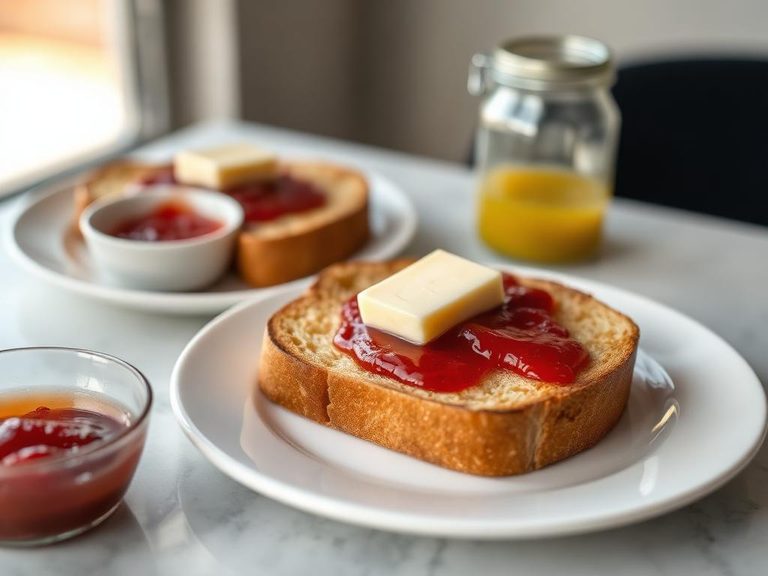
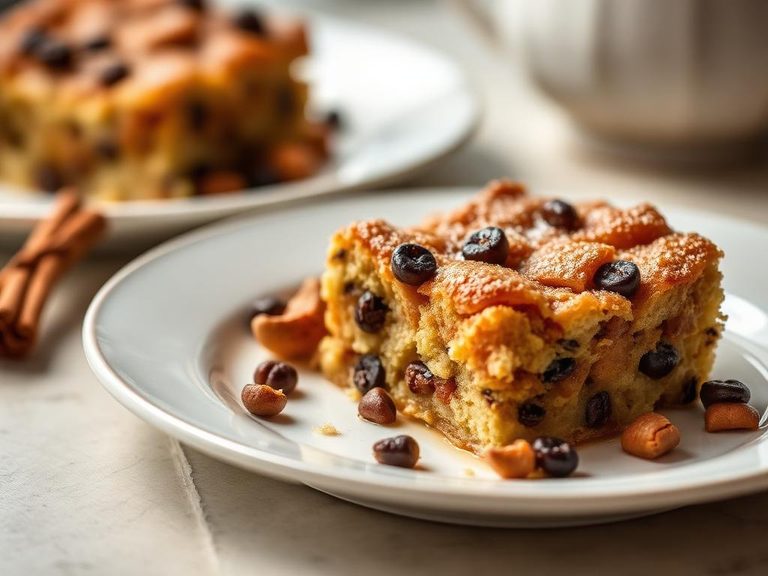

🌍 Where it's eaten
💡 Did you know?
Traditional English muffins are cooked on a griddle, not baked in an oven, which gives them their signature flat top and bottom and unique nooks-and-crannies interior.
Full nutrition (USDA data · scales with serving)
| Water | 40.6 g |
| Energy | 240 kcal |
| Energy | 1005 kj |
| Protein | 7.9 g |
| Total lipid (fat) | 1.8 g |
| Ash | 1.6 g |
| Carbohydrate, by difference | 48.1 g |
| Fiber, total dietary | 2.6 g |
| Total Sugars | 14.8 g |
| Sucrose | 0.00 g |
| Starch | 31.4 g |
| Calcium, Ca | 114 mg |
| Iron, Fe | 4.5 mg |
| Magnesium, Mg | 23.0 mg |
| Phosphorus, P | 91.0 mg |
| Potassium, K | 173 mg |
| Sodium, Na | 299 mg |
| Zinc, Zn | 0.97 mg |
| Copper, Cu | 0.16 mg |
| Manganese, Mn | 0.57 mg |
| Selenium, Se | 21.6 ug |
| Vitamin C, total ascorbic acid | 1.3 mg |
| Thiamin | 0.41 mg |
| Riboflavin | 0.21 mg |
| Niacin | 3.7 mg |
| Pantothenic acid | 0.21 mg |
| Vitamin B-6 | 0.07 mg |
| Folate, total | 74.0 ug |
| Folic acid | 54.0 ug |
| Folate, food | 20.0 ug |
| Folate, DFE | 112 ug |
| Choline, total | 16.0 mg |
| Vitamin B-12 | 0.00 ug |
| Vitamin B-12, added | 0.00 ug |
| Vitamin A, RAE | 0.00 ug |
| Retinol | 0.00 ug |
| Carotene, beta | 0.00 ug |
| Carotene, alpha | 0.00 ug |
| Cryptoxanthin, beta | 0.00 ug |
| Vitamin A, IU | 0.00 iu |
| Lycopene | 0.00 ug |
| Lutein + zeaxanthin | 25.0 ug |
| Vitamin E (alpha-tocopherol) | 0.31 mg |
| Vitamin E, added | 0.00 mg |
| Vitamin D (D2 + D3), International Units | 0.00 iu |
| Vitamin D (D2 + D3) | 0.00 ug |
| Vitamin K (phylloquinone) | 2.5 ug |
| Vitamin K (Dihydrophylloquinone) | 0.50 ug |
| Alcohol, ethyl | 0.00 g |
| Caffeine | 0.00 mg |
| Theobromine | 0.00 mg |
Fat & fatty acid profile (per 100g)
| Fatty acids, total saturated | 0.54 g |
| SFA 4:0 | 0.00 g |
| SFA 6:0 | 0.00 g |
| SFA 8:0 | 0.00 g |
| SFA 10:0 | 0.00 g |
| SFA 12:0 | 0.01 g |
| SFA 13:0 | 0.00 g |
| SFA 14:0 | 0.01 g |
| SFA 15:0 | 0.00 g |
| SFA 16:0 | 0.27 g |
| SFA 17:0 | 0.00 g |
| SFA 18:0 | 0.24 g |
| SFA 20:0 | 0.01 g |
| SFA 22:0 | 0.00 g |
| SFA 24:0 | 0.00 g |
| Fatty acids, total monounsaturated | 0.85 g |
| MUFA 14:1 | 0.00 g |
| MUFA 15:1 | 0.00 g |
| MUFA 16:1 | 0.01 g |
| MUFA 17:1 | 0.00 g |
| MUFA 18:1 | 0.84 g |
| MUFA 18:1 c | 0.84 g |
| MUFA 20:1 | 0.00 g |
| MUFA 22:1 | 0.00 g |
| MUFA 24:1 c | 0.00 g |
| Fatty acids, total polyunsaturated | 0.34 g |
| PUFA 18:2 | 0.31 g |
| PUFA 18:3 | 0.03 g |
| PUFA 18:3 n-3 c,c,c (ALA) | 0.03 g |
| PUFA 18:3 n-6 c,c,c | 0.00 g |
| PUFA 18:4 | 0.00 g |
| PUFA 20:2 n-6 c,c | 0.00 g |
| PUFA 20:3 | 0.00 g |
| PUFA 20:4 | 0.00 g |
| PUFA 20:5 n-3 (EPA) | 0.00 g |
| PUFA 22:5 n-3 (DPA) | 0.00 g |
| PUFA 22:6 n-3 (DHA) | 0.00 g |
| Fatty acids, total trans | 0.00 g |
| Fatty acids, total trans-monoenoic | 0.00 g |
| TFA 18:1 t | 0.00 g |
| Cholesterol | 0.00 mg |
| Phytosterols | 2.0 mg |
Amino acid profile (per 100g)
| Tryptophan | 0.09 g |
| Threonine | 0.27 g |
| Isoleucine | 0.32 g |
| Leucine | 0.52 g |
| Lysine | 0.35 g |
| Methionine | 0.12 g |
| Cystine | 0.14 g |
| Phenylalanine | 0.34 g |
| Tyrosine | 0.19 g |
| Valine | 0.36 g |
| Arginine | 0.36 g |
| Histidine | 0.17 g |
| Alanine | 0.33 g |
| Aspartic acid | 0.47 g |
| Glutamic acid | 1.8 g |
| Glycine | 0.29 g |
| Proline | 0.60 g |
| Serine | 0.33 g |
| Hydroxyproline | 0.00 g |
FAQ
What's the difference between this and regular cinnamon raisin bread?
The key difference is the texture and cooking method. English muffins are griddle-baked, resulting in a chewier, denser crumb with a crisp exterior, while cinnamon raisin bread is oven-baked, yielding a softer, more cake-like loaf.
Is this a healthy breakfast option?
It can be part of a healthy breakfast, but it's important to consider what you pair it with. Its high carbohydrate and sugar content is best balanced with protein and healthy fats to create a more nutritionally complete and satisfying meal.
How should I store them to keep them fresh?
Store them in their original packaging or an airtight container at room temperature for a few days. For longer storage, freeze them in a single layer, then transfer to a freezer bag. Toast directly from frozen for a quick treat.
Nutrient density (calculated · NRF9.3)
Nutrient Rich Foods index: beneficial nutrients (protein, fiber, vitamins, minerals) minus saturated fat, added sugar & sodium, per 100 kcal.
NRF9.3 index — Fulgoni, Keast & Drewnowski, 2009. Computed from USDA nutrients.
Weight-loss friendliness (composite index)
Energy density 2.40 kcal/g · 13% calories from protein · 2.6 g fiber · 14.8 g sugar per 100 g.
Composite of energy density (Rolls et al., 1999), protein & fiber satiety, minus sugar. A calculated heuristic — ranks satiety-per-calorie, not a clinical measure.
Dietary load (calculated from USDA values)
Potential renal acid load. Positive = acid-forming, negative = alkaline-forming.
Sodium-to-potassium ratio: 1.73 (lower is better — aim for ≤ 1)
Sodium:potassium per WHO potassium guidance. Computed from USDA nutrients.