T.G.I. FRIDAY'S, classic sirloin steak (10 oz)
Whole food · Restaurant Foods

Photo: Wikipedia
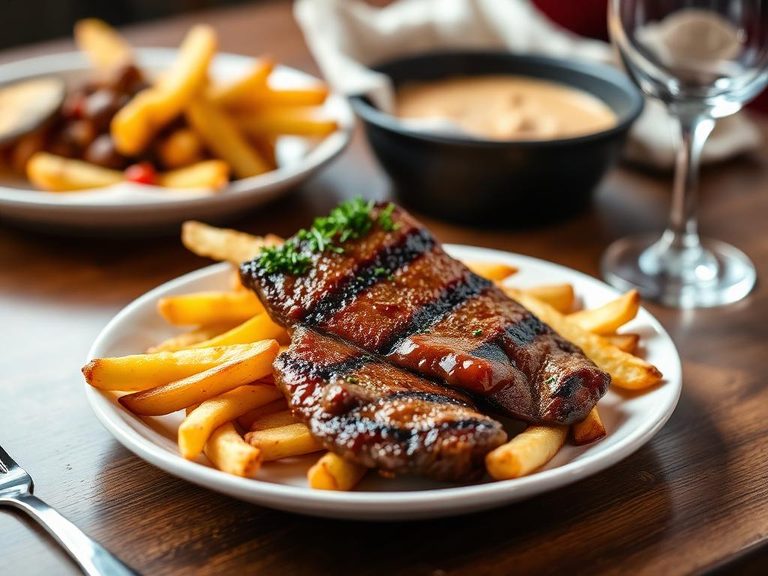
A T.G.I. Friday's classic sirloin is a lean, 10-ounce cut of beef prized for its firm, satisfying chew and robust, savory flavor. Nutritionally, it is a powerhouse of high-quality protein with virtually no carbohydrates, making it a staple for low-carb and keto-friendly diets. The steak is typically seared or grilled, offering a rich, meaty taste that is both hearty and straightforward.
💚 Why it's loved
People love it for its classic, uncomplicated beefy flavor and the satisfying, substantial texture of a well-cooked sirloin. It's a versatile centerpiece that pairs well with a wide array of sides, from baked potatoes to grilled vegetables, embodying a comforting, American steakhouse experience.
⚠️ Watch-outs & how to enjoy it better
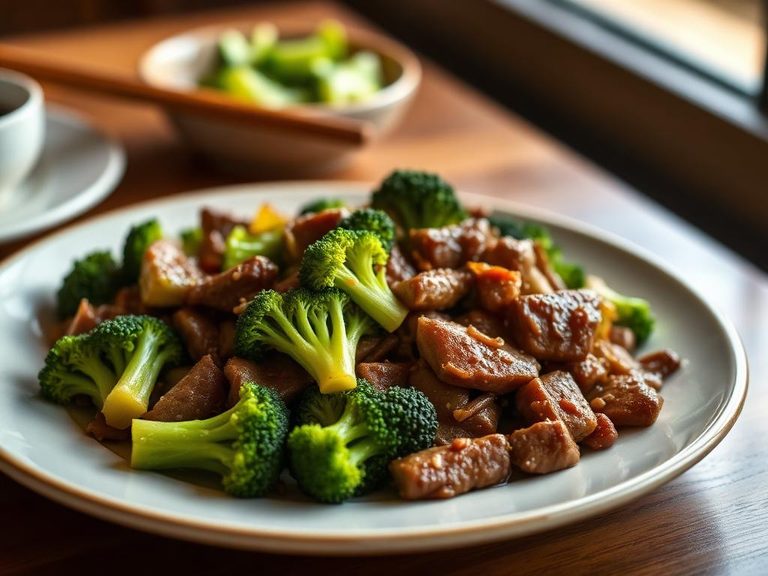
The steak can be high in saturated fat and sodium, which may be a concern for those managing heart health or blood pressure. To counteract this, opt for leaner cuts like sirloin, control portion sizes, and pair it with fiber-rich vegetables like steamed broccoli or a side salad to aid digestion and balance the meal.
Key benefits
- Exceptionally high in protein for muscle maintenance and satiety
- Virtually zero carbohydrates, ideal for low-carb or ketogenic diets
- Provides essential minerals like iron and zinc
- Low in sugar, supporting stable blood glucose levels
🍽️ Popular dishes
🌍 Where it's eaten
💡 Did you know?
The sirloin cut gets its name from a legendary (though likely apocryphal) story that King Henry VIII of England was so pleased with a cut of beef that he 'knighted' it, dubbing it 'Sir Loin.'
Full nutrition (scales with serving)
| Water | 59.2 g |
| Energy | 196 kcal |
| Energy | 822 kj |
| Protein | 31.0 g |
| Total lipid (fat) | 7.8 g |
| Ash | 1.4 g |
| Carbohydrate, by difference | 0.47 g |
| Total Sugars | 0.46 g |
| Sucrose | 0.00 g |
| Glucose | 0.46 g |
| Fructose | 0.00 g |
| Lactose | 0.00 g |
| Maltose | 0.00 g |
| Galactose | 0.00 g |
| Calcium, Ca | 7.0 mg |
| Iron, Fe | 2.9 mg |
| Magnesium, Mg | 28.0 mg |
| Phosphorus, P | 240 mg |
| Potassium, K | 379 mg |
| Sodium, Na | 232 mg |
| Zinc, Zn | 5.5 mg |
| Copper, Cu | 0.11 mg |
| Manganese, Mn | 0.03 mg |
| Selenium, Se | 30.6 ug |
| Thiamin | 0.09 mg |
| Riboflavin | 0.40 mg |
| Niacin | 5.7 mg |
| Pantothenic acid | 0.66 mg |
| Vitamin B-6 | 0.74 mg |
| Vitamin B-12 | 2.6 ug |
| Vitamin A, RAE | 11.0 ug |
| Retinol | 11.0 ug |
| Vitamin A, IU | 37.0 iu |
| Vitamin E (alpha-tocopherol) | 0.77 mg |
| Tocopherol, beta | 0.00 mg |
| Tocopherol, gamma | 0.19 mg |
| Tocopherol, delta | 0.09 mg |
| Tocotrienol, alpha | 0.00 mg |
| Tocotrienol, beta | 0.31 mg |
| Tocotrienol, gamma | 0.04 mg |
| Tocotrienol, delta | 0.00 mg |
Fat & fatty acid profile (per 100g)
| Fatty acids, total saturated | 2.5 g |
| SFA 4:0 | 0.00 g |
| SFA 6:0 | 0.00 g |
| SFA 8:0 | 0.00 g |
| SFA 10:0 | 0.01 g |
| SFA 12:0 | 0.01 g |
| SFA 14:0 | 0.14 g |
| SFA 15:0 | 0.02 g |
| SFA 16:0 | 1.4 g |
| SFA 17:0 | 0.07 g |
| SFA 18:0 | 0.84 g |
| SFA 20:0 | 0.01 g |
| SFA 22:0 | 0.01 g |
| SFA 24:0 | 0.01 g |
| Fatty acids, total monounsaturated | 2.6 g |
| MUFA 14:1 | 0.03 g |
| MUFA 15:1 | 0.00 g |
| MUFA 16:1 | 0.15 g |
| MUFA 16:1 c | 0.14 g |
| MUFA 17:1 | 0.04 g |
| MUFA 18:1 | 2.4 g |
| MUFA 18:1 c | 2.2 g |
| MUFA 20:1 | 0.02 g |
| MUFA 22:1 | 0.00 g |
| MUFA 22:1 c | 0.00 g |
| MUFA 24:1 c | 0.00 g |
| Fatty acids, total polyunsaturated | 0.68 g |
| PUFA 18:2 | 0.50 g |
| PUFA 18:2 n-6 c,c | 0.44 g |
| PUFA 18:2 CLAs | 0.02 g |
| PUFA 18:3 | 0.03 g |
| PUFA 18:3 n-3 c,c,c (ALA) | 0.03 g |
| PUFA 18:3 n-6 c,c,c | 0.00 g |
| PUFA 18:3i | 0.00 g |
| PUFA 18:4 | 0.00 g |
| PUFA 20:2 n-6 c,c | 0.00 g |
| PUFA 20:3 | 0.03 g |
| PUFA 20:3 n-3 | 0.00 g |
| PUFA 20:3 n-6 | 0.03 g |
| PUFA 20:4 | 0.08 g |
| PUFA 20:5 n-3 (EPA) | 0.01 g |
| PUFA 22:4 | 0.01 g |
| PUFA 22:5 n-3 (DPA) | 0.02 g |
| PUFA 22:6 n-3 (DHA) | 0.00 g |
| Fatty acids, total trans | 0.28 g |
| Fatty acids, total trans-monoenoic | 0.25 g |
| TFA 16:1 t | 0.02 g |
| TFA 18:1 t | 0.23 g |
| TFA 22:1 t | 0.00 g |
| TFA 18:2 t not further defined | 0.03 g |
| Fatty acids, total trans-polyenoic | 0.03 g |
| Cholesterol | 95.0 mg |
Amino acid profile (per 100g)
| Tryptophan | 0.41 g |
| Threonine | 1.5 g |
| Isoleucine | 1.5 g |
| Leucine | 2.6 g |
| Lysine | 2.7 g |
| Methionine | 0.83 g |
| Cystine | 0.33 g |
| Phenylalanine | 1.3 g |
| Tyrosine | 1.1 g |
| Valine | 1.6 g |
| Arginine | 2.2 g |
| Histidine | 1.2 g |
| Alanine | 1.9 g |
| Aspartic acid | 3.0 g |
| Glutamic acid | 4.9 g |
| Glycine | 1.5 g |
| Proline | 1.3 g |
| Serine | 1.2 g |
FAQ
How does the sirloin steak compare nutritionally to other steak cuts?
Sirloin is generally leaner than cuts like ribeye or T-bone, offering a good balance of protein and fat. It has fewer calories and less fat per ounce than fattier cuts, making it a popular choice for those seeking a protein-rich meal without excessive fat.
Is sirloin steak suitable for a low-carb diet?
Yes, sirloin steak is an excellent choice for low-carb diets. It contains virtually no carbohydrates (0.47g per 100g) and is high in protein and fat, which helps maintain satiety and stable blood sugar levels.
What are the best cooking methods for sirloin steak?
Grilling, pan-searing, and broiling are ideal for sirloin, as they develop a flavorful crust while keeping the interior tender. Avoid overcooking, as sirloin is leaner than some cuts and can become tough if cooked beyond medium.