

Veal, variety meats and by-products, thymus, cooked, braised
Whole food · Lamb, Veal, and Game Products

Photo: Wikipedia
Braised veal thymus, or sweetbreads, are a delicacy prized for their exceptionally creamy, custard-like texture and a mild, subtly sweet flavor that absorbs sauces beautifully. Nutritionally, they are a powerhouse of lean protein, offering over 22 grams per 100g with virtually no carbohydrates or sugar. This preparation transforms a glandular organ into a tender, melt-in-the-mouth culinary experience.
Calorie split: 76% protein · 0% carbs · 24% fat
↓ Full nutrition💚 Why it's loved
People love sweetbreads for their unique, luxurious texture that is neither tough nor chewy, offering a rich, buttery mouthfeel. Their mild flavor makes them a versatile canvas for bold sauces, from classic Marsala to tangy piccata, and they are a centerpiece in many traditional European and South American cuisines.
⚠️ Watch-outs & how to enjoy it better
The primary downside is the need for meticulous preparation, as improper cleaning can result in a grainy texture or off-flavors. Those with specific dietary restrictions should be cautious, as sweetbreads are high in purines, which can be problematic for individuals with gout or certain kidney conditions. To counteract this, ensure thorough soaking and blanching before cooking, and consume in moderation as part of a balanced diet.
Key benefits
- Extremely high in complete protein for muscle repair and satiety.
- Very low in carbohydrates and sugars, suitable for ketogenic diets.
- Good source of essential minerals like zinc and selenium.
- Low in fat compared to many other organ meats.
- Provides B vitamins, including B12, crucial for nerve function.
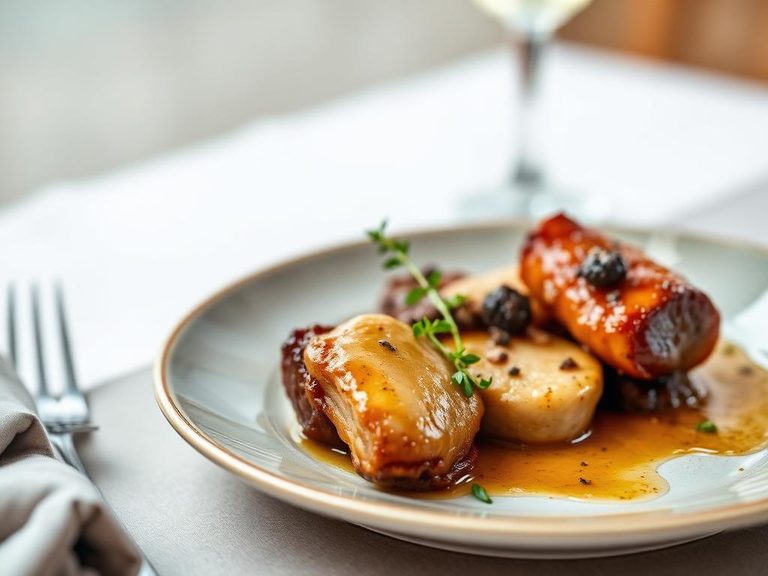
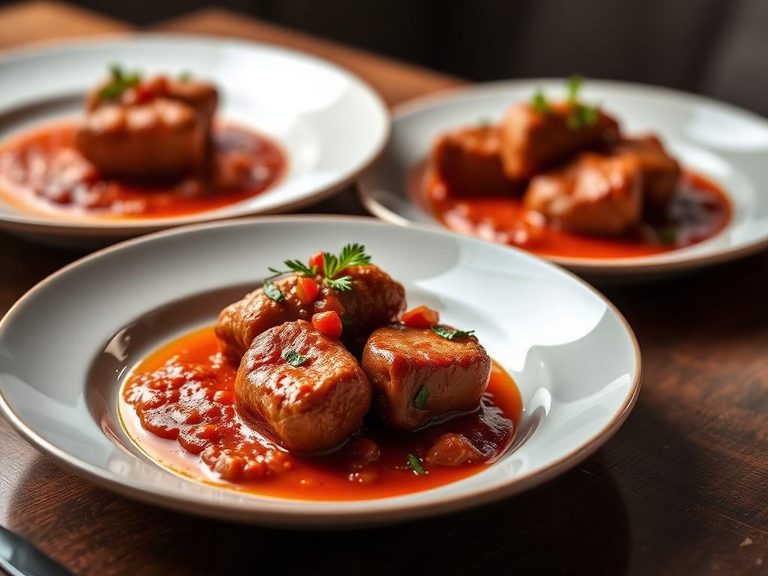
🍽️ Popular dishes


🌍 Where it's eaten
💡 Did you know?
Despite their name, sweetbreads are not sweet, nor are they bread; the term likely derives from the Old English 'brǣd,' meaning flesh or meat, and 'swēte,' referring to their rich, savory taste.
Full nutrition (USDA data · scales with serving)
| Water | 73.6 g |
| Energy | 125 kcal |
| Energy | 522 kj |
| Protein | 22.7 g |
| Total lipid (fat) | 3.1 g |
| Ash | 2.9 g |
| Carbohydrate, by difference | 0.00 g |
| Fiber, total dietary | 0.00 g |
| Total Sugars | 0.00 g |
| Calcium, Ca | 4.0 mg |
| Iron, Fe | 1.2 mg |
| Magnesium, Mg | 24.0 mg |
| Phosphorus, P | 627 mg |
| Potassium, K | 435 mg |
| Sodium, Na | 59.0 mg |
| Zinc, Zn | 2.1 mg |
| Copper, Cu | 0.07 mg |
| Manganese, Mn | 0.02 mg |
| Selenium, Se | 21.5 ug |
| Vitamin C, total ascorbic acid | 39.4 mg |
| Thiamin | 0.05 mg |
| Riboflavin | 0.10 mg |
| Niacin | 3.4 mg |
| Pantothenic acid | 1.1 mg |
| Vitamin B-6 | 0.03 mg |
| Folate, total | 20.0 ug |
| Folic acid | 0.00 ug |
| Folate, food | 20.0 ug |
| Folate, DFE | 20.0 ug |
| Choline, total | 209 mg |
| Vitamin B-12 | 2.9 ug |
| Vitamin B-12, added | 0.00 ug |
| Vitamin A, RAE | 0.00 ug |
| Retinol | 0.00 ug |
| Carotene, beta | 0.00 ug |
| Carotene, alpha | 0.00 ug |
| Cryptoxanthin, beta | 0.00 ug |
| Vitamin A, IU | 0.00 iu |
| Lycopene | 0.00 ug |
| Lutein + zeaxanthin | 0.00 ug |
| Vitamin E (alpha-tocopherol) | 0.09 mg |
| Vitamin E, added | 0.00 mg |
| Tocopherol, beta | 0.00 mg |
| Tocopherol, gamma | 0.02 mg |
| Tocopherol, delta | 0.00 mg |
| Tocotrienol, alpha | 0.03 mg |
| Tocotrienol, beta | 0.00 mg |
| Tocotrienol, gamma | 0.00 mg |
| Tocotrienol, delta | 0.00 mg |
| Vitamin D (D2 + D3), International Units | 0.00 iu |
| Vitamin D (D2 + D3) | 0.00 ug |
| Vitamin D3 (cholecalciferol) | 0.00 ug |
| Vitamin K (phylloquinone) | 0.00 ug |
| Alcohol, ethyl | 0.00 g |
| Caffeine | 0.00 mg |
| Theobromine | 0.00 mg |
Fat & fatty acid profile (per 100g)
| Fatty acids, total saturated | 0.94 g |
| SFA 4:0 | 0.00 g |
| SFA 6:0 | 0.00 g |
| SFA 8:0 | 0.00 g |
| SFA 10:0 | 0.00 g |
| SFA 12:0 | 0.00 g |
| SFA 14:0 | 0.04 g |
| SFA 15:0 | 0.01 g |
| SFA 16:0 | 0.52 g |
| SFA 17:0 | 0.02 g |
| SFA 18:0 | 0.34 g |
| SFA 20:0 | 0.00 g |
| SFA 22:0 | 0.01 g |
| Fatty acids, total monounsaturated | 0.90 g |
| MUFA 14:1 | 0.01 g |
| MUFA 15:1 | 0.00 g |
| MUFA 16:1 | 0.06 g |
| MUFA 18:1 | 0.82 g |
| MUFA 20:1 | 0.02 g |
| MUFA 22:1 | 0.00 g |
| Fatty acids, total polyunsaturated | 0.32 g |
| PUFA 18:2 | 0.19 g |
| PUFA 18:3 | 0.00 g |
| PUFA 18:3 n-3 c,c,c (ALA) | 0.00 g |
| PUFA 18:3 n-6 c,c,c | 0.00 g |
| PUFA 18:4 | 0.00 g |
| PUFA 20:2 n-6 c,c | 0.02 g |
| PUFA 20:3 | 0.00 g |
| PUFA 20:4 | 0.11 g |
| PUFA 20:5 n-3 (EPA) | 0.00 g |
| PUFA 22:5 n-3 (DPA) | 0.00 g |
| PUFA 22:6 n-3 (DHA) | 0.00 g |
| Fatty acids, total trans | 0.20 g |
| Cholesterol | 350 mg |
Amino acid profile (per 100g)
Estimated from Veal, Australian, rib, rib roast, separable lean only, raw — USDA does not publish this profile for Veal.
| Tryptophan | 0.22 g |
| Threonine | 0.95 g |
| Isoleucine | 1.1 g |
| Leucine | 1.7 g |
| Lysine | 1.8 g |
| Methionine | 0.51 g |
| Cystine | 0.24 g |
| Phenylalanine | 0.88 g |
| Tyrosine | 0.69 g |
| Valine | 1.2 g |
| Arginine | 1.3 g |
| Histidine | 0.79 g |
| Alanine | 1.3 g |
| Aspartic acid | 1.9 g |
| Glutamic acid | 3.4 g |
| Glycine | 1.1 g |
| Proline | 0.91 g |
| Serine | 0.81 g |
| Hydroxyproline | 0.11 g |
FAQ
What exactly are sweetbreads?
Sweetbreads are the thymus gland (from the neck) or pancreas (from the belly) of a young calf, lamb, or pig. The thymus is more common and prized for its finer texture.
How do I prepare them to avoid a grainy texture?
Soak them in cold water or milk for several hours to draw out impurities, then blanch them in simmering water for a few minutes. After cooling, peel off any membranes or fat before cooking.
Are sweetbreads high in cholesterol?
Yes, like many organ meats, sweetbreads are relatively high in cholesterol. However, they are low in saturated fat, and dietary cholesterol has a less significant impact on blood cholesterol for most people than previously thought.
Nutrient density (calculated · NRF9.3)
Nutrient Rich Foods index: beneficial nutrients (protein, fiber, vitamins, minerals) minus saturated fat, added sugar & sodium, per 100 kcal.
NRF9.3 index — Fulgoni, Keast & Drewnowski, 2009. Computed from USDA nutrients.
Weight-loss friendliness (composite index)
Energy density 1.25 kcal/g · 73% calories from protein · 0.0 g fiber · 0.0 g sugar per 100 g.
Composite of energy density (Rolls et al., 1999), protein & fiber satiety, minus sugar. A calculated heuristic — ranks satiety-per-calorie, not a clinical measure.
Dietary load (calculated from USDA values)
Potential renal acid load. Positive = acid-forming, negative = alkaline-forming.
Sodium-to-potassium ratio: 0.14 (lower is better — aim for ≤ 1)
Sodium:potassium per WHO potassium guidance. Computed from USDA nutrients.