

Veal, shoulder, blade chop, separable lean only, raw
Whole food · Lamb, Veal, and Game Products

Photo: Wikipedia
This is a lean, raw cut from the shoulder blade of a young cow, prized for its tender, mild flavor and fine-grained texture when cooked properly. With an exceptionally high protein-to-fat ratio, it's a powerhouse for muscle-building diets, offering nearly 20 grams of protein per 100 grams with minimal fat. Its neutral taste makes it a versatile canvas for bold marinades and quick-cooking methods.
Calorie split: 75% protein · 0% carbs · 25% fat
↓ Full nutrition💚 Why it's loved
People love it for its delicate, non-gamey flavor that absorbs seasonings beautifully, making it ideal for both simple pan-sears and complex stews. Its tenderness when not overcooked offers a refined eating experience compared to tougher shoulder cuts.
⚠️ Watch-outs & how to enjoy it better
As a very lean cut, it can become tough and dry if overcooked, which is a common pitfall. To counteract this, use quick, high-heat methods like sautéing or pounding thin for schnitzel, and always let it rest after cooking to retain juices. Pair with a flavorful sauce or fat (like butter or olive oil) to enhance moisture and satisfaction.
Key benefits
- Excellent source of high-quality, complete protein
- Very low in fat and carbohydrates
- Rich in B vitamins, especially B12 and niacin
- Good source of minerals like zinc and selenium
- Lean cut suitable for calorie-conscious meal plans
🍽️ Popular dishes
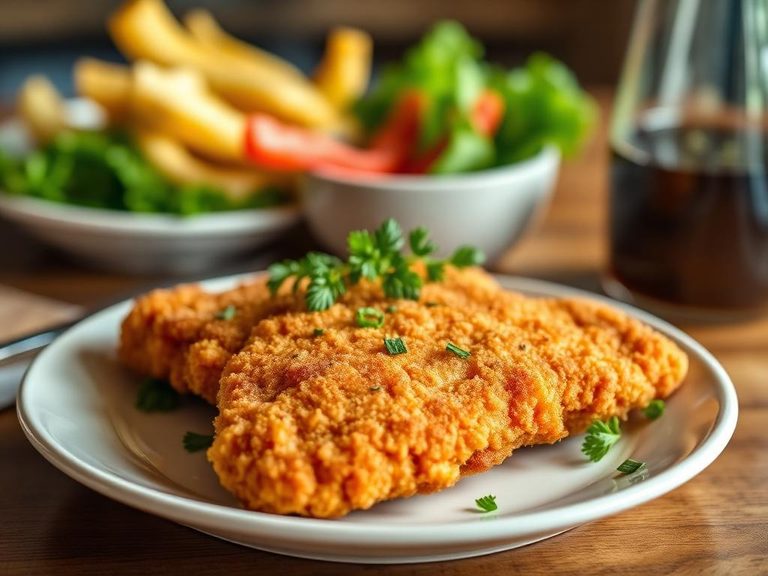
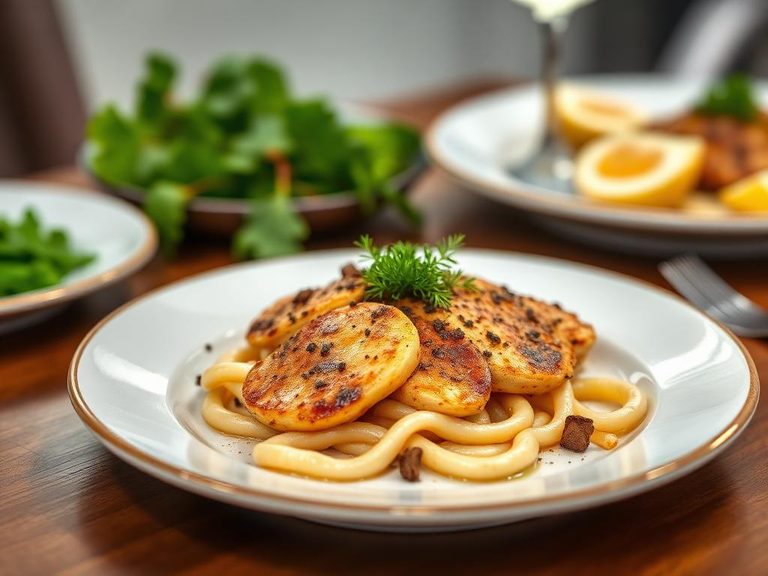
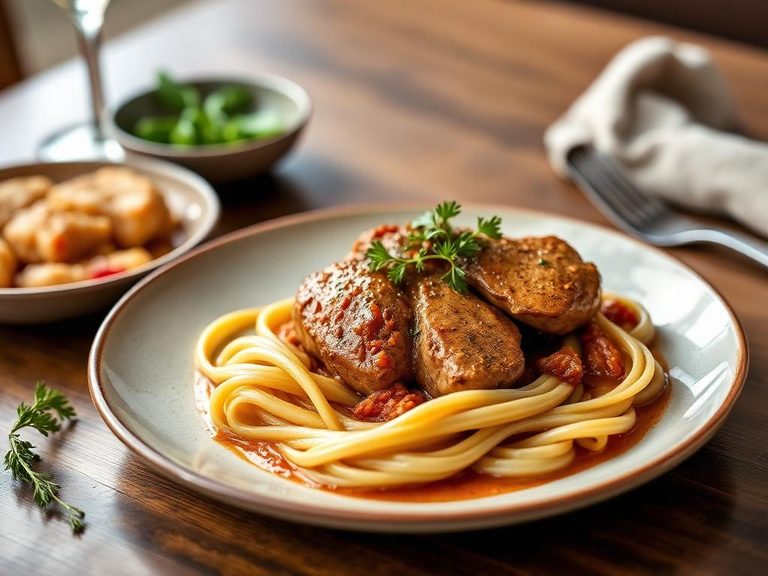

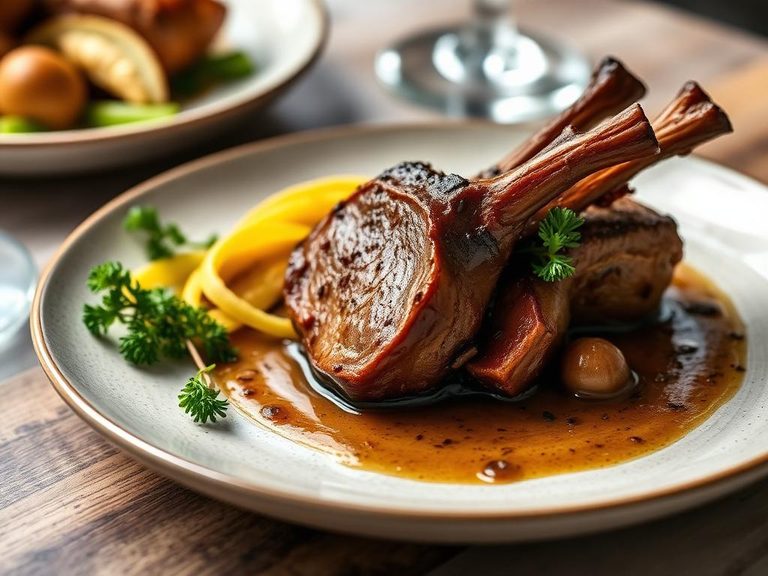
🌍 Where it's eaten
💡 Did you know?
The 'blade chop' gets its name from the flat, blade-like bone from the scapula that runs through it, which helps conduct heat and adds flavor during cooking.
Full nutrition (USDA data · scales with serving)
| Water | 76.3 g |
| Energy | 110 kcal |
| Energy | 459 kj |
| Protein | 19.6 g |
| Total lipid (fat) | 2.9 g |
| Ash | 1.0 g |
| Carbohydrate, by difference | 0.00 g |
| Fiber, total dietary | 0.00 g |
| Total Sugars | 0.00 g |
| Calcium, Ca | 23.0 mg |
| Iron, Fe | 1.3 mg |
| Magnesium, Mg | 33.0 mg |
| Phosphorus, P | 209 mg |
| Potassium, K | 203 mg |
| Sodium, Na | 92.0 mg |
| Zinc, Zn | 3.4 mg |
| Copper, Cu | 0.08 mg |
| Manganese, Mn | 0.01 mg |
| Selenium, Se | 15.8 ug |
| Vitamin C, total ascorbic acid | 0.00 mg |
| Thiamin | 0.11 mg |
| Riboflavin | 0.43 mg |
| Niacin | 4.6 mg |
| Pantothenic acid | 1.1 mg |
| Vitamin B-6 | 0.47 mg |
| Folate, total | 3.0 ug |
| Folic acid | 0.00 ug |
| Folate, food | 3.0 ug |
| Folate, DFE | 3.0 ug |
| Choline, total | 99.1 mg |
| Betaine | 21.0 mg |
| Vitamin B-12 | 2.9 ug |
| Vitamin B-12, added | 0.00 ug |
| Vitamin A, RAE | 0.00 ug |
| Retinol | 0.00 ug |
| Carotene, beta | 0.00 ug |
| Carotene, alpha | 0.00 ug |
| Cryptoxanthin, beta | 0.00 ug |
| Vitamin A, IU | 0.00 iu |
| Lycopene | 0.00 ug |
| Lutein + zeaxanthin | 0.00 ug |
| Vitamin E (alpha-tocopherol) | 0.26 mg |
| Vitamin E, added | 0.00 mg |
| Vitamin D (D2 + D3), International Units | 47.0 iu |
| Vitamin D (D2 + D3) | 1.2 ug |
| Vitamin D3 (cholecalciferol) | 1.2 ug |
| Vitamin K (phylloquinone) | 1.0 ug |
| Alcohol, ethyl | 0.00 g |
| Caffeine | 0.00 mg |
| Theobromine | 0.00 mg |
Fat & fatty acid profile (per 100g)
| Fatty acids, total saturated | 1.1 g |
| SFA 4:0 | 0.00 g |
| SFA 6:0 | 0.00 g |
| SFA 8:0 | 0.00 g |
| SFA 10:0 | 0.00 g |
| SFA 12:0 | 0.00 g |
| SFA 14:0 | 0.06 g |
| SFA 16:0 | 0.62 g |
| SFA 17:0 | 0.03 g |
| SFA 18:0 | 0.39 g |
| SFA 20:0 | 0.00 g |
| SFA 24:0 | 0.01 g |
| Fatty acids, total monounsaturated | 1.4 g |
| MUFA 14:1 | 0.01 g |
| MUFA 16:1 | 0.09 g |
| MUFA 16:1 c | 0.09 g |
| MUFA 17:1 | 0.03 g |
| MUFA 18:1 | 1.2 g |
| MUFA 18:1 c | 1.1 g |
| MUFA 20:1 | 0.00 g |
| MUFA 22:1 | 0.00 g |
| Fatty acids, total polyunsaturated | 0.17 g |
| PUFA 18:2 | 0.14 g |
| PUFA 18:2 n-6 c,c | 0.13 g |
| PUFA 18:2 CLAs | 0.01 g |
| PUFA 18:3 | 0.00 g |
| PUFA 18:4 | 0.00 g |
| PUFA 20:2 n-6 c,c | 0.00 g |
| PUFA 20:4 | 0.03 g |
| PUFA 20:5 n-3 (EPA) | 0.00 g |
| PUFA 22:5 n-3 (DPA) | 0.00 g |
| PUFA 22:6 n-3 (DHA) | 0.00 g |
| Fatty acids, total trans | 0.11 g |
| Fatty acids, total trans-monoenoic | 0.11 g |
| TFA 18:1 t | 0.11 g |
| Cholesterol | 60.0 mg |
Amino acid profile (per 100g)
| Tryptophan | 0.20 g |
| Threonine | 0.86 g |
| Isoleucine | 0.97 g |
| Leucine | 1.6 g |
| Lysine | 1.6 g |
| Methionine | 0.46 g |
| Cystine | 0.22 g |
| Phenylalanine | 0.79 g |
| Tyrosine | 0.63 g |
| Valine | 1.1 g |
| Arginine | 1.2 g |
| Histidine | 0.71 g |
| Alanine | 1.2 g |
| Aspartic acid | 1.7 g |
| Glutamic acid | 3.1 g |
| Glycine | 1.0 g |
| Proline | 0.82 g |
| Serine | 0.73 g |
| Hydroxyproline | 0.10 g |
FAQ
How is veal shoulder blade different from beef chuck?
Veal comes from young calves (under 6 months), so it's much more tender, milder in flavor, and leaner than mature beef chuck, which comes from older cattle and has more connective tissue and fat.
What's the best way to cook this lean cut without drying it out?
Quick-cooking methods are key: pound it thin for scaloppine or schnitzel, sauté it hot and fast, or braise it slowly in liquid. Avoid overcooking; aim for an internal temperature of 145°F (63°C) for medium.
Is veal considered a sustainable meat choice?
Sustainability varies greatly by production system. Veal from dairy byproducts (using male calves from the dairy industry) can be a way to utilize resources that might otherwise be wasted. Look for labels indicating pasture-raised or high-welfare farming practices for more ethical options.
Nutrient density (calculated · NRF9.3)
Nutrient Rich Foods index: beneficial nutrients (protein, fiber, vitamins, minerals) minus saturated fat, added sugar & sodium, per 100 kcal.
NRF9.3 index — Fulgoni, Keast & Drewnowski, 2009. Computed from USDA nutrients.
Weight-loss friendliness (composite index)
Energy density 1.10 kcal/g · 71% calories from protein · 0.0 g fiber · 0.0 g sugar per 100 g.
Composite of energy density (Rolls et al., 1999), protein & fiber satiety, minus sugar. A calculated heuristic — ranks satiety-per-calorie, not a clinical measure.
Dietary load (calculated from USDA values)
Potential renal acid load. Positive = acid-forming, negative = alkaline-forming.
Sodium-to-potassium ratio: 0.45 (lower is better — aim for ≤ 1)
Sodium:potassium per WHO potassium guidance. Computed from USDA nutrients.