

Veal, loin, separable lean only, raw
Whole food · Lamb, Veal, and Game Products

Photo: Wikipedia
Veal loin is a premium, tender cut from the young bovine, prized for its delicate, mild flavor and fine-grained, buttery texture. Nutritionally, it's a powerhouse of lean protein with virtually no carbohydrates and very low fat, making it an excellent choice for high-protein, low-carb diets. Its pale pink hue and subtle sweetness distinguish it from more robustly flavored adult beef.
Calorie split: 77% protein · 0% carbs · 23% fat
↓ Full nutrition💚 Why it's loved
People love veal loin for its refined, subtle flavor that acts as a canvas for sauces and seasonings, and its consistently tender, melt-in-the-mouth texture when cooked properly. It's a centerpiece of classic European fine dining, representing elegance and culinary tradition.
⚠️ Watch-outs & how to enjoy it better
Its delicate flavor can be lost if overcooked, turning dry and tough, which requires careful temperature control. Some consumers also have ethical concerns about veal production. To counteract dryness, use a meat thermometer to cook to a precise medium-rare (145°F/63°C) and let it rest before slicing.
Key benefits
- Exceptionally high in complete protein for muscle maintenance and growth.
- Very low in fat and contains no carbohydrates or sugar.
- Rich in essential nutrients like vitamin B12, zinc, and selenium.
- Leaner than many beef cuts, supporting heart-healthy diets.
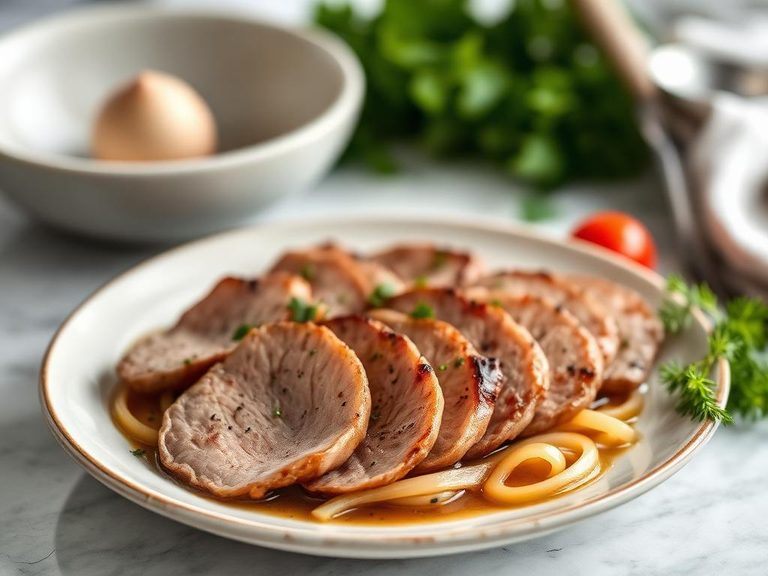
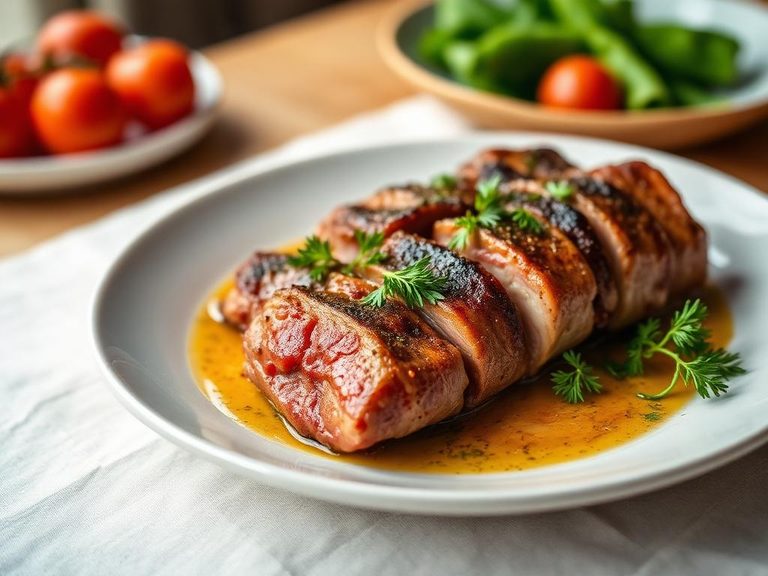
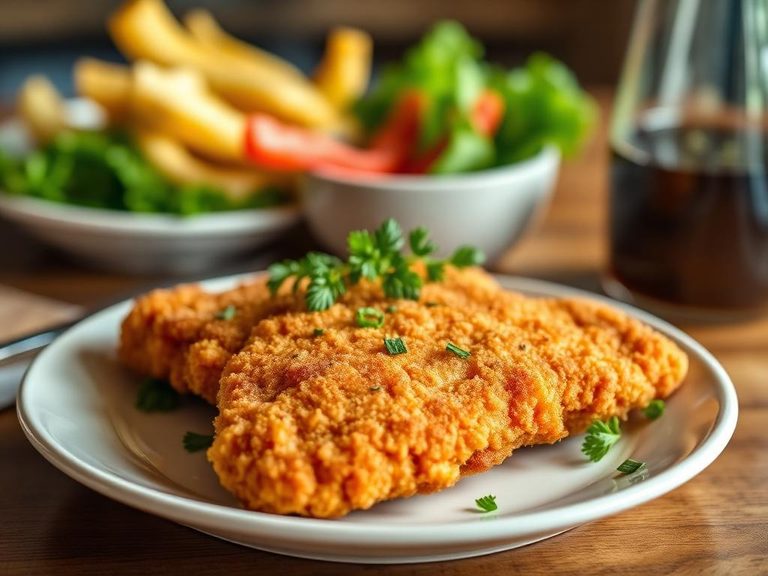
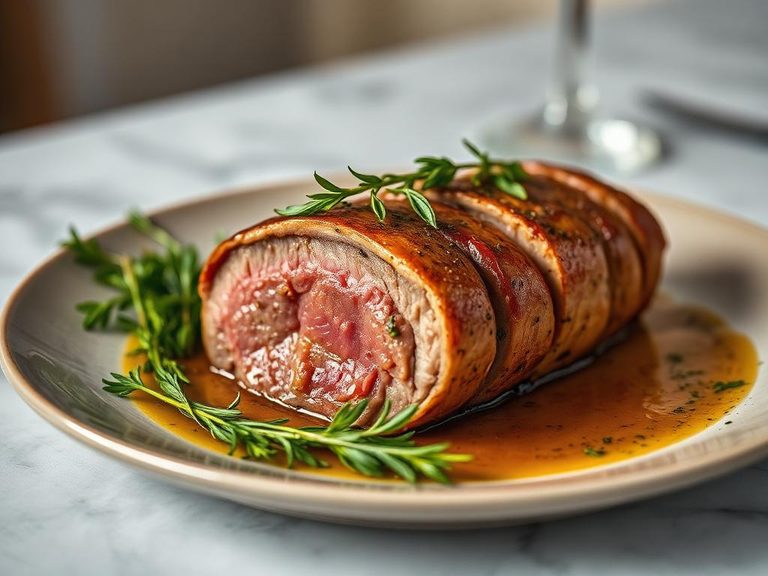
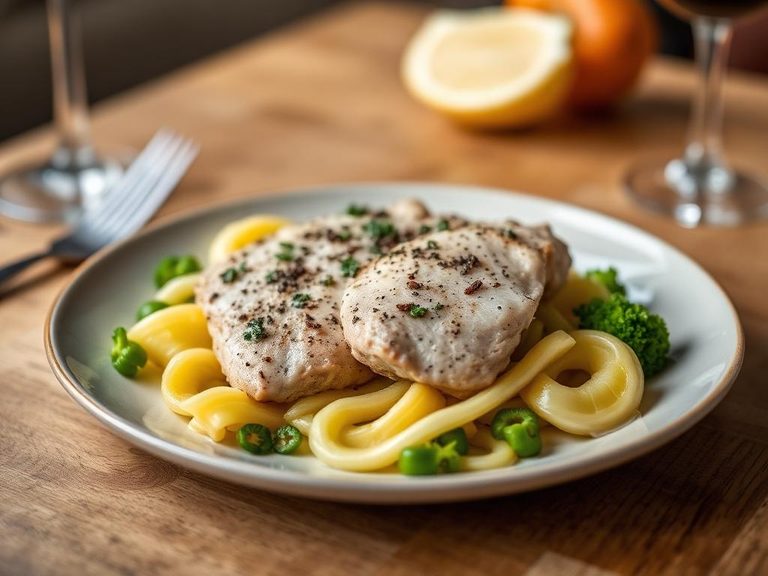
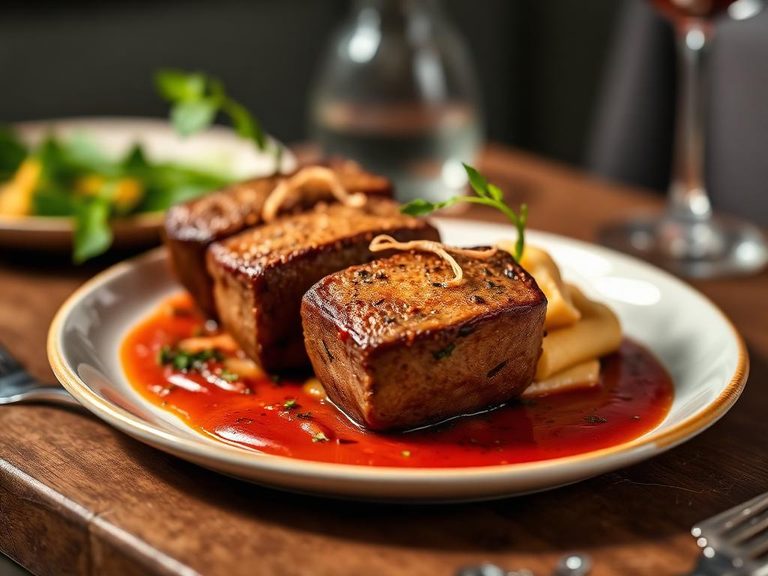
🍽️ Popular dishes
🌍 Where it's eaten
💡 Did you know?
The word 'schnitzel' comes from the German word for 'cutlet,' and the dish's iconic thin, breaded form was popularized in Vienna, though it's now a global staple often made with veal.
Full nutrition (USDA data · scales with serving)
| Water | 74.8 g |
| Energy | 114 kcal |
| Energy | 475 kj |
| Protein | 21.9 g |
| Total lipid (fat) | 2.9 g |
| Ash | 1.0 g |
| Carbohydrate, by difference | 0.00 g |
| Fiber, total dietary | 0.00 g |
| Total Sugars | 0.00 g |
| Calcium, Ca | 11.0 mg |
| Iron, Fe | 0.85 mg |
| Magnesium, Mg | 47.0 mg |
| Phosphorus, P | 237 mg |
| Potassium, K | 260 mg |
| Sodium, Na | 99.0 mg |
| Zinc, Zn | 2.1 mg |
| Copper, Cu | 0.09 mg |
| Manganese, Mn | 0.01 mg |
| Selenium, Se | 18.0 ug |
| Vitamin C, total ascorbic acid | 0.00 mg |
| Thiamin | 0.09 mg |
| Riboflavin | 0.31 mg |
| Niacin | 7.3 mg |
| Pantothenic acid | 0.69 mg |
| Vitamin B-6 | 0.68 mg |
| Folate, total | 3.0 ug |
| Folic acid | 0.00 ug |
| Folate, food | 3.0 ug |
| Folate, DFE | 3.0 ug |
| Choline, total | 111 mg |
| Betaine | 23.4 mg |
| Vitamin B-12 | 2.6 ug |
| Vitamin B-12, added | 0.00 ug |
| Vitamin A, RAE | 0.00 ug |
| Retinol | 0.00 ug |
| Carotene, beta | 0.00 ug |
| Carotene, alpha | 0.00 ug |
| Cryptoxanthin, beta | 0.00 ug |
| Vitamin A, IU | 0.00 iu |
| Lycopene | 0.00 ug |
| Lutein + zeaxanthin | 0.00 ug |
| Vitamin E (alpha-tocopherol) | 0.27 mg |
| Vitamin E, added | 0.00 mg |
| Tocopherol, beta | 0.00 mg |
| Tocopherol, gamma | 0.04 mg |
| Tocopherol, delta | 0.00 mg |
| Vitamin D (D2 + D3), International Units | 48.0 iu |
| Vitamin D (D2 + D3) | 1.2 ug |
| Vitamin D3 (cholecalciferol) | 1.2 ug |
| Vitamin K (phylloquinone) | 1.1 ug |
| Alcohol, ethyl | 0.00 g |
| Caffeine | 0.00 mg |
| Theobromine | 0.00 mg |
Fat & fatty acid profile (per 100g)
| Fatty acids, total saturated | 1.1 g |
| SFA 4:0 | 0.00 g |
| SFA 6:0 | 0.00 g |
| SFA 8:0 | 0.00 g |
| SFA 10:0 | 0.00 g |
| SFA 12:0 | 0.00 g |
| SFA 14:0 | 0.06 g |
| SFA 16:0 | 0.62 g |
| SFA 17:0 | 0.03 g |
| SFA 18:0 | 0.39 g |
| SFA 20:0 | 0.00 g |
| SFA 24:0 | 0.01 g |
| Fatty acids, total monounsaturated | 1.4 g |
| MUFA 14:1 | 0.01 g |
| MUFA 16:1 | 0.09 g |
| MUFA 16:1 c | 0.09 g |
| MUFA 17:1 | 0.03 g |
| MUFA 18:1 | 1.2 g |
| MUFA 18:1 c | 1.1 g |
| MUFA 20:1 | 0.00 g |
| MUFA 22:1 | 0.00 g |
| Fatty acids, total polyunsaturated | 0.19 g |
| PUFA 18:2 | 0.16 g |
| PUFA 18:2 n-6 c,c | 0.15 g |
| PUFA 18:2 CLAs | 0.01 g |
| PUFA 18:3 | 0.00 g |
| PUFA 18:4 | 0.00 g |
| PUFA 20:2 n-6 c,c | 0.00 g |
| PUFA 20:4 | 0.03 g |
| PUFA 20:5 n-3 (EPA) | 0.00 g |
| PUFA 22:5 n-3 (DPA) | 0.00 g |
| PUFA 22:6 n-3 (DHA) | 0.00 g |
| Fatty acids, total trans | 0.11 g |
| Fatty acids, total trans-monoenoic | 0.11 g |
| TFA 18:1 t | 0.11 g |
| Cholesterol | 55.0 mg |
Amino acid profile (per 100g)
| Tryptophan | 0.22 g |
| Threonine | 0.95 g |
| Isoleucine | 1.1 g |
| Leucine | 1.7 g |
| Lysine | 1.8 g |
| Methionine | 0.51 g |
| Cystine | 0.25 g |
| Phenylalanine | 0.88 g |
| Tyrosine | 0.70 g |
| Valine | 1.2 g |
| Arginine | 1.3 g |
| Histidine | 0.79 g |
| Alanine | 1.3 g |
| Aspartic acid | 1.9 g |
| Glutamic acid | 3.5 g |
| Glycine | 1.1 g |
| Proline | 0.91 g |
| Serine | 0.82 g |
| Hydroxyproline | 0.11 g |
FAQ
How is veal different from beef?
Veal comes from young calves (typically 6-8 months old), resulting in a lighter color, more tender texture, and milder, more delicate flavor compared to the deeper, beefier taste of adult cattle.
What's the best way to cook veal loin to keep it tender?
Quick, high-heat methods like pan-searing, grilling, or broiling are ideal. Cook to a medium-rare internal temperature of 145°F (63°C) and always let the meat rest for 5-10 minutes after cooking to allow the juices to redistribute.
Is veal loin a healthy choice?
Yes, it's one of the healthiest red meat options. It's extremely high in protein, low in fat (especially saturated fat), and provides important nutrients like B12 and zinc without the carbohydrates found in many other foods.
Nutrient density (calculated · NRF9.3)
Nutrient Rich Foods index: beneficial nutrients (protein, fiber, vitamins, minerals) minus saturated fat, added sugar & sodium, per 100 kcal.
NRF9.3 index — Fulgoni, Keast & Drewnowski, 2009. Computed from USDA nutrients.
Weight-loss friendliness (composite index)
Energy density 1.14 kcal/g · 77% calories from protein · 0.0 g fiber · 0.0 g sugar per 100 g.
Composite of energy density (Rolls et al., 1999), protein & fiber satiety, minus sugar. A calculated heuristic — ranks satiety-per-calorie, not a clinical measure.
Dietary load (calculated from USDA values)
Potential renal acid load. Positive = acid-forming, negative = alkaline-forming.
Sodium-to-potassium ratio: 0.38 (lower is better — aim for ≤ 1)
Sodium:potassium per WHO potassium guidance. Computed from USDA nutrients.