

Turkey, whole, dark meat, meat only, raw
Whole food · Poultry Products

Photo: Wikipedia
Raw, whole dark meat from a turkey (thighs and drumsticks) is a deep, ruby-red muscle meat with a rich, beefy flavor and a denser, more succulent texture than its white meat counterpart. Nutritionally, it's a lean protein powerhouse, offering over 21 grams of protein per 100 grams with minimal fat and virtually no carbohydrates. Its robust flavor profile makes it ideal for slow-cooking methods that break down connective tissue into tender, juicy results.
Calorie split: 79% protein · 1% carbs · 21% fat
↓ Full nutrition💚 Why it's loved
People love dark turkey meat for its deeper, more savory flavor and forgiving texture that stays moist during cooking. It's the star of holiday feasts and comfort food dishes, offering a heartier, more satisfying bite than leaner poultry.
⚠️ Watch-outs & how to enjoy it better
Its higher fat content compared to breast meat can be a concern for those strictly monitoring saturated fat intake. To mitigate, trim visible skin and fat before cooking and opt for roasting, grilling, or braising to allow excess fat to render off. It is also a common allergen for some individuals.
Key benefits
- Excellent source of high-quality protein for muscle maintenance.
- Very low in carbohydrates, suitable for low-carb and ketogenic diets.
- Contains significant B vitamins, especially niacin and B6.
- Good source of minerals like selenium and phosphorus.
- Higher in iron and zinc compared to turkey breast.
🍽️ Popular dishes


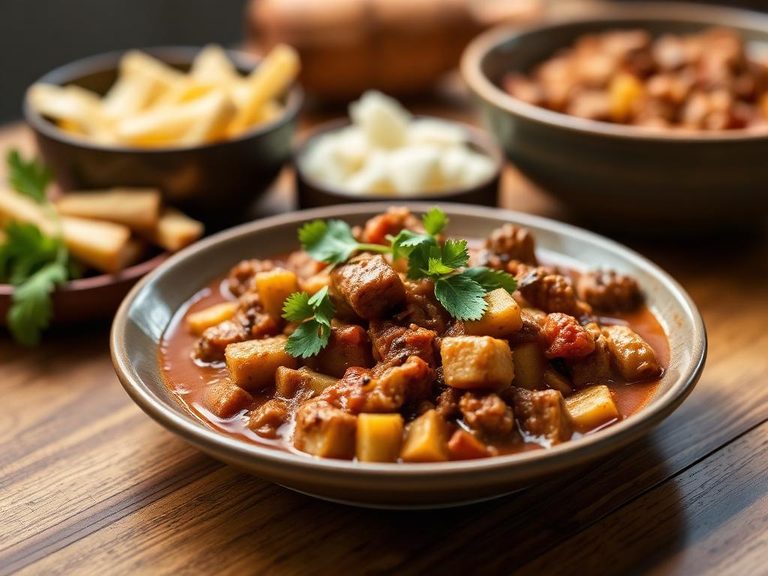
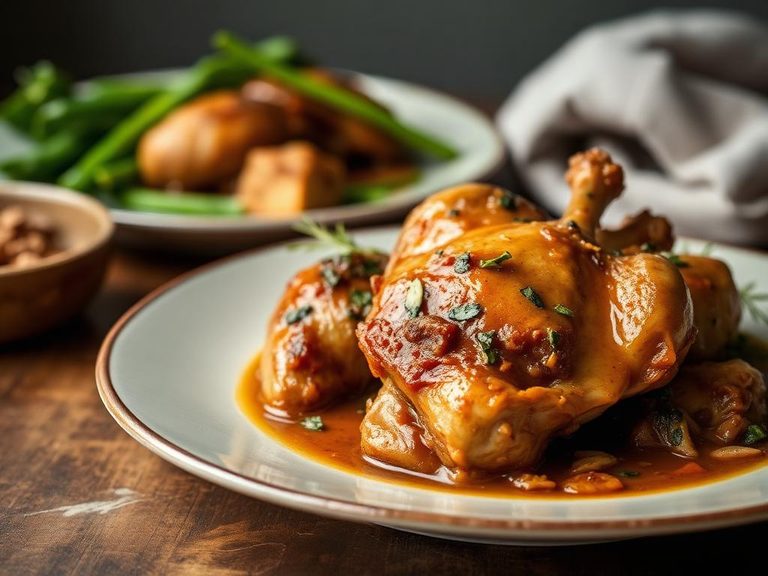

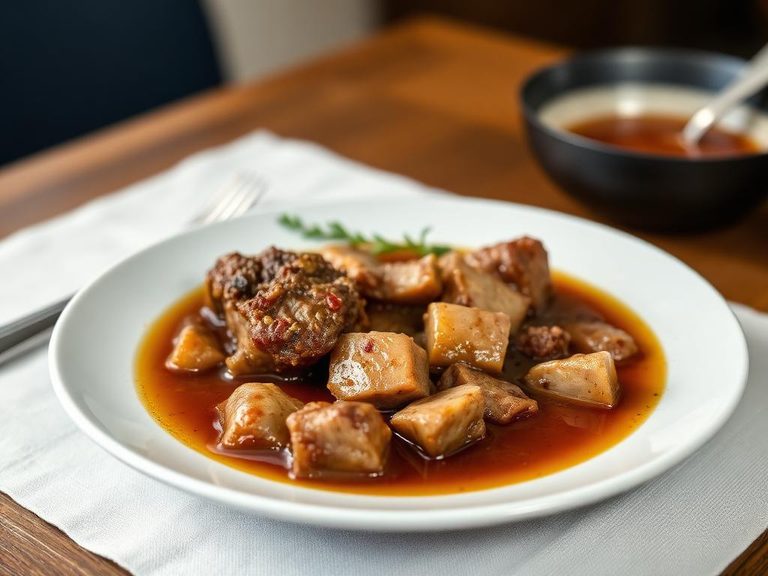
🌍 Where it's eaten
💡 Did you know?
A turkey's dark meat gets its color from myoglobin, a protein that stores oxygen in muscle cells, which is more abundant in the legs and thighs because turkeys spend most of their time walking.
Full nutrition (USDA data · scales with serving)
| Water | 76.0 g |
| Energy | 108 kcal |
| Energy | 453 kj |
| Protein | 21.3 g |
| Total lipid (fat) | 2.5 g |
| Ash | 1.0 g |
| Carbohydrate, by difference | 0.15 g |
| Fiber, total dietary | 0.00 g |
| Total Sugars | 0.10 g |
| Sucrose | 0.10 g |
| Glucose | 0.00 g |
| Fructose | 0.00 g |
| Lactose | 0.00 g |
| Maltose | 0.00 g |
| Galactose | 0.00 g |
| Starch | 0.05 g |
| Calcium, Ca | 11.0 mg |
| Iron, Fe | 1.0 mg |
| Magnesium, Mg | 25.0 mg |
| Phosphorus, P | 176 mg |
| Potassium, K | 226 mg |
| Sodium, Na | 124 mg |
| Zinc, Zn | 2.6 mg |
| Copper, Cu | 0.09 mg |
| Manganese, Mn | 0.01 mg |
| Selenium, Se | 22.4 ug |
| Vitamin C, total ascorbic acid | 0.00 mg |
| Thiamin | 0.06 mg |
| Riboflavin | 0.26 mg |
| Niacin | 5.7 mg |
| Pantothenic acid | 0.94 mg |
| Vitamin B-6 | 0.44 mg |
| Folate, total | 7.0 ug |
| Folic acid | 0.00 ug |
| Folate, food | 7.0 ug |
| Folate, DFE | 7.0 ug |
| Choline, total | 69.6 mg |
| Vitamin B-12 | 2.0 ug |
| Vitamin B-12, added | 0.00 ug |
| Vitamin A, RAE | 13.0 ug |
| Retinol | 13.0 ug |
| Carotene, beta | 0.00 ug |
| Carotene, alpha | 0.00 ug |
| Cryptoxanthin, beta | 0.00 ug |
| Vitamin A, IU | 43.0 iu |
| Lycopene | 0.00 ug |
| Lutein + zeaxanthin | 0.00 ug |
| Vitamin E (alpha-tocopherol) | 0.12 mg |
| Vitamin E, added | 0.00 mg |
| Tocopherol, beta | 0.00 mg |
| Tocopherol, gamma | 0.03 mg |
| Tocopherol, delta | 0.01 mg |
| Tocotrienol, alpha | 0.00 mg |
| Tocotrienol, beta | 0.00 mg |
| Tocotrienol, gamma | 0.01 mg |
| Tocotrienol, delta | 0.00 mg |
| Vitamin D (D2 + D3), International Units | 13.0 iu |
| Vitamin D (D2 + D3) | 0.30 ug |
| Vitamin D3 (cholecalciferol) | 0.30 ug |
| Vitamin K (phylloquinone) | 0.00 ug |
| Alcohol, ethyl | 0.00 g |
| Caffeine | 0.00 mg |
| Theobromine | 0.00 mg |
Fat & fatty acid profile (per 100g)
| Fatty acids, total saturated | 0.68 g |
| SFA 4:0 | 0.00 g |
| SFA 6:0 | 0.00 g |
| SFA 8:0 | 0.00 g |
| SFA 10:0 | 0.00 g |
| SFA 12:0 | 0.01 g |
| SFA 14:0 | 0.02 g |
| SFA 16:0 | 0.44 g |
| SFA 18:0 | 0.19 g |
| Fatty acids, total monounsaturated | 0.76 g |
| MUFA 16:1 | 0.07 g |
| MUFA 18:1 | 0.67 g |
| MUFA 20:1 | 0.01 g |
| MUFA 22:1 | 0.00 g |
| Fatty acids, total polyunsaturated | 0.61 g |
| PUFA 18:2 | 0.52 g |
| PUFA 18:3 | 0.03 g |
| PUFA 18:4 | 0.00 g |
| PUFA 20:4 | 0.04 g |
| PUFA 20:5 n-3 (EPA) | 0.00 g |
| PUFA 22:5 n-3 (DPA) | 0.00 g |
| PUFA 22:6 n-3 (DHA) | 0.00 g |
| Cholesterol | 79.0 mg |
Amino acid profile (per 100g)
| Tryptophan | 0.23 g |
| Threonine | 0.77 g |
| Isoleucine | 0.61 g |
| Leucine | 1.5 g |
| Lysine | 1.8 g |
| Methionine | 0.56 g |
| Cystine | 0.20 g |
| Phenylalanine | 0.69 g |
| Tyrosine | 0.63 g |
| Valine | 0.68 g |
| Arginine | 1.2 g |
| Histidine | 0.58 g |
| Alanine | 1.2 g |
| Aspartic acid | 1.7 g |
| Glutamic acid | 2.9 g |
| Glycine | 0.91 g |
| Proline | 1.1 g |
| Serine | 0.84 g |
FAQ
Why is dark meat darker and more flavorful than white meat?
Dark meat contains more myoglobin (an oxygen-storing protein) and fat, which gives it its deeper color and richer, juicier taste. It comes from muscles the turkey uses frequently for walking.
How should I cook raw turkey dark meat to keep it tender?
Moist-heat methods like braising, stewing, or slow-roasting are ideal. These techniques break down the collagen in the connective tissue, resulting in tender, pull-apart meat. Avoid overcooking, which can make it tough.
Is dark meat less healthy than white meat?
Not necessarily. While it has slightly more fat and calories, it's also richer in certain nutrients like iron, zinc, and B vitamins. The fat is mostly unsaturated, and the difference is minimal in the context of a balanced diet.
Nutrient density (calculated · NRF9.3)
Nutrient Rich Foods index: beneficial nutrients (protein, fiber, vitamins, minerals) minus saturated fat, added sugar & sodium, per 100 kcal.
NRF9.3 index — Fulgoni, Keast & Drewnowski, 2009. Computed from USDA nutrients.
Weight-loss friendliness (composite index)
Energy density 1.08 kcal/g · 79% calories from protein · 0.0 g fiber · 0.1 g sugar per 100 g.
Composite of energy density (Rolls et al., 1999), protein & fiber satiety, minus sugar. A calculated heuristic — ranks satiety-per-calorie, not a clinical measure.
Dietary load (calculated from USDA values)
Potential renal acid load. Positive = acid-forming, negative = alkaline-forming.
Sodium-to-potassium ratio: 0.55 (lower is better — aim for ≤ 1)
Sodium:potassium per WHO potassium guidance. Computed from USDA nutrients.