

Tomatoes, red, ripe, cooked
Whole food · Vegetables and Vegetable Products
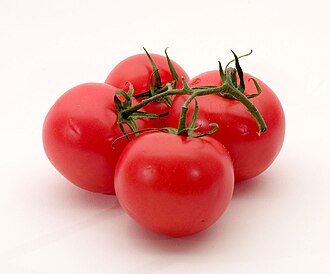
Photo: Wikipedia
Cooked red tomatoes transform from firm and bright to soft, jammy, and deeply savory, their natural sweetness concentrating with heat. This simple preparation unlocks a rich, umami-packed flavor base that's the foundation of countless sauces and stews. Nutritionally, it's a low-calorie source of lycopene, a potent antioxidant whose bioavailability is significantly increased by cooking.
Calorie split: 18% protein · 77% carbs · 5% fat
↓ Full nutrition💚 Why it's loved
People love cooked tomatoes for their incredible versatility and the deep, savory umami flavor they provide as a base for sauces, soups, and braises. They represent comfort food across cultures, from Italian marinara to Indian curries, and their ability to meld with other ingredients is unmatched.
⚠️ Watch-outs & how to enjoy it better
Some individuals may experience heartburn or acid reflux due to their natural acidity, especially in large quantities. To counteract this, try pairing them with alkaline foods like dairy (e.g., a dollop of yogurt) or a pinch of baking soda in sauces, and avoid eating them close to bedtime.
Key benefits
- Excellent source of the antioxidant lycopene, linked to heart and skin health.
- Provides vitamin C for immune function and potassium for blood pressure regulation.
- Cooking breaks down cell walls, making nutrients like lycopene easier for the body to absorb.
- Low in calories and fat, making it a nutrient-dense addition to meals.
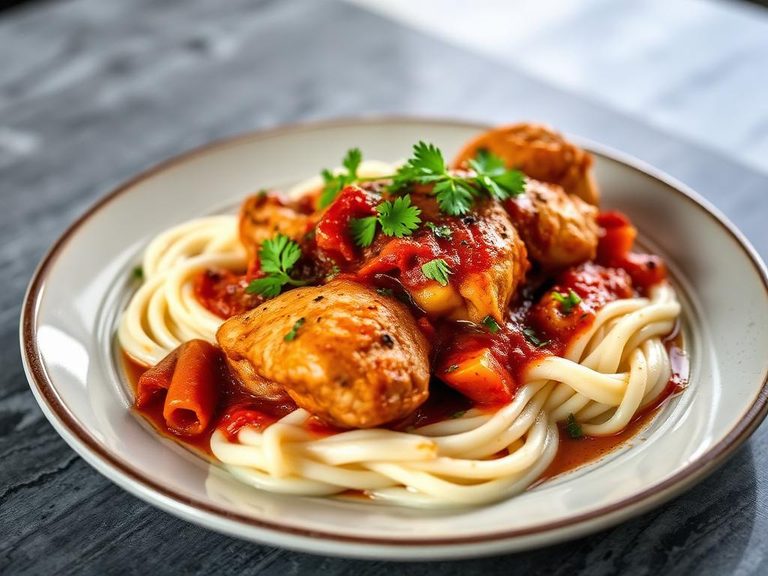
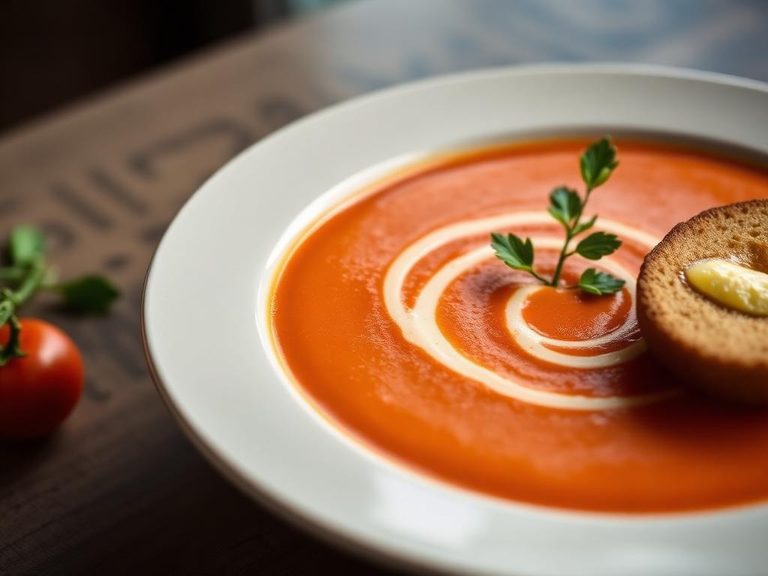
🍽️ Popular dishes
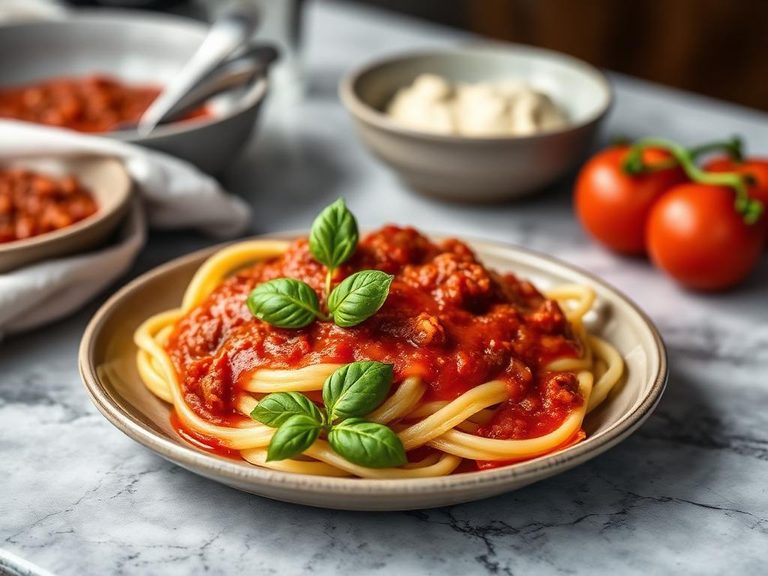
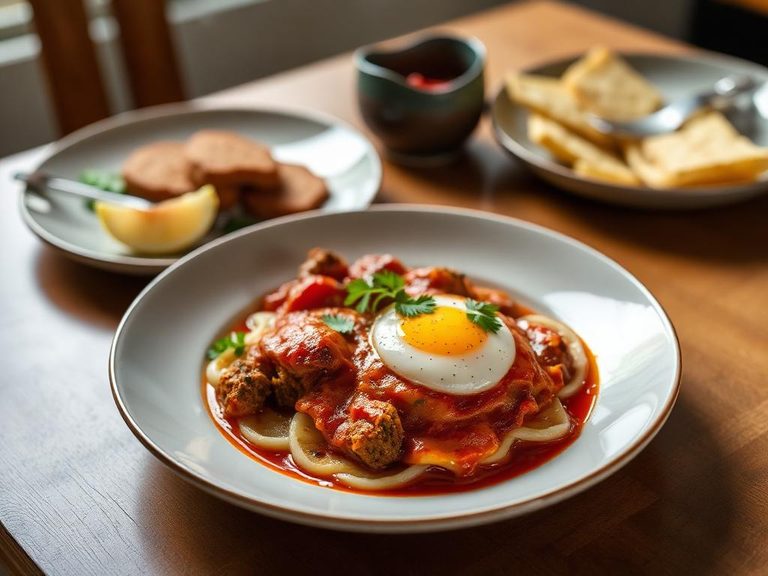
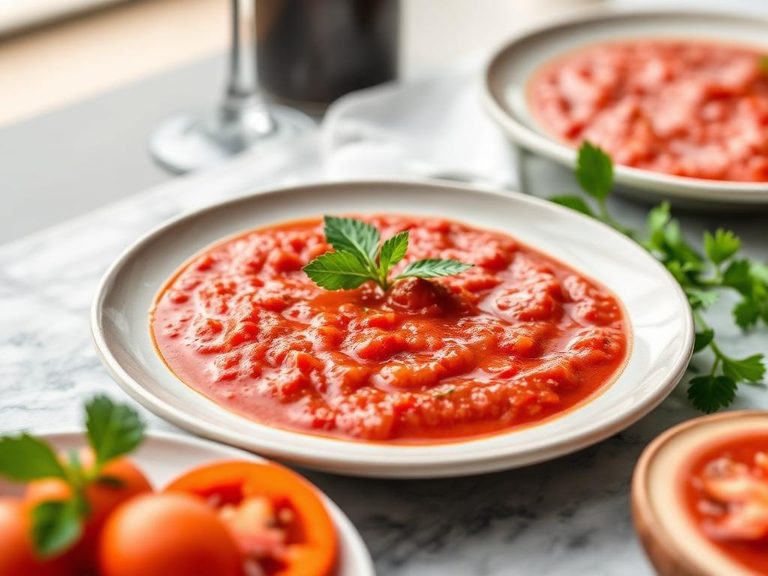

🌍 Where it's eaten
💡 Did you know?
The lycopene in cooked tomatoes is about 2.5 times more bioavailable than in raw tomatoes, and its absorption is further boosted when consumed with a little fat, like olive oil.
Full nutrition (USDA data · scales with serving)
| Water | 94.3 g |
| Energy | 18.0 kcal |
| Energy | 73.0 kj |
| Protein | 0.95 g |
| Total lipid (fat) | 0.11 g |
| Ash | 0.60 g |
| Carbohydrate, by difference | 4.0 g |
| Fiber, total dietary | 0.70 g |
| Total Sugars | 2.5 g |
| Sucrose | 0.00 g |
| Glucose | 1.2 g |
| Fructose | 1.3 g |
| Lactose | 0.00 g |
| Maltose | 0.00 g |
| Galactose | 0.00 g |
| Calcium, Ca | 11.0 mg |
| Iron, Fe | 0.68 mg |
| Magnesium, Mg | 9.0 mg |
| Phosphorus, P | 28.0 mg |
| Potassium, K | 218 mg |
| Sodium, Na | 11.0 mg |
| Zinc, Zn | 0.14 mg |
| Copper, Cu | 0.07 mg |
| Manganese, Mn | 0.10 mg |
| Selenium, Se | 0.50 ug |
| Vitamin C, total ascorbic acid | 22.8 mg |
| Thiamin | 0.04 mg |
| Riboflavin | 0.02 mg |
| Niacin | 0.53 mg |
| Pantothenic acid | 0.13 mg |
| Vitamin B-6 | 0.08 mg |
| Folate, total | 13.0 ug |
| Folic acid | 0.00 ug |
| Folate, food | 13.0 ug |
| Folate, DFE | 13.0 ug |
| Choline, total | 6.9 mg |
| Vitamin B-12 | 0.00 ug |
| Vitamin B-12, added | 0.00 ug |
| Vitamin A, RAE | 24.0 ug |
| Retinol | 0.00 ug |
| Carotene, beta | 293 ug |
| Carotene, alpha | 0.00 ug |
| Cryptoxanthin, beta | 0.00 ug |
| Vitamin A, IU | 489 iu |
| Lycopene | 3041 ug |
| Lutein + zeaxanthin | 94.0 ug |
| Vitamin E (alpha-tocopherol) | 0.56 mg |
| Vitamin E, added | 0.00 mg |
| Tocopherol, beta | 0.01 mg |
| Tocopherol, gamma | 0.21 mg |
| Tocopherol, delta | 0.01 mg |
| Tocotrienol, alpha | 0.00 mg |
| Tocotrienol, beta | 0.00 mg |
| Tocotrienol, gamma | 0.00 mg |
| Tocotrienol, delta | 0.00 mg |
| Vitamin D (D2 + D3), International Units | 0.00 iu |
| Vitamin D (D2 + D3) | 0.00 ug |
| Vitamin K (phylloquinone) | 2.8 ug |
| Vitamin K (Dihydrophylloquinone) | 0.00 ug |
| Alcohol, ethyl | 0.00 g |
| Caffeine | 0.00 mg |
| Theobromine | 0.00 mg |
Fat & fatty acid profile (per 100g)
| Fatty acids, total saturated | 0.01 g |
| SFA 4:0 | 0.00 g |
| SFA 6:0 | 0.00 g |
| SFA 8:0 | 0.00 g |
| SFA 10:0 | 0.00 g |
| SFA 12:0 | 0.00 g |
| SFA 14:0 | 0.00 g |
| SFA 16:0 | 0.01 g |
| SFA 18:0 | 0.00 g |
| Fatty acids, total monounsaturated | 0.02 g |
| MUFA 16:1 | 0.00 g |
| MUFA 18:1 | 0.02 g |
| MUFA 20:1 | 0.00 g |
| MUFA 22:1 | 0.00 g |
| Fatty acids, total polyunsaturated | 0.04 g |
| PUFA 18:2 | 0.04 g |
| PUFA 18:3 | 0.00 g |
| PUFA 18:4 | 0.00 g |
| PUFA 20:4 | 0.00 g |
| PUFA 20:5 n-3 (EPA) | 0.00 g |
| PUFA 22:5 n-3 (DPA) | 0.00 g |
| PUFA 22:6 n-3 (DHA) | 0.00 g |
| Fatty acids, total trans | 0.00 g |
| Cholesterol | 0.00 mg |
| Phytosterols | 9.0 mg |
Amino acid profile (per 100g)
| Tryptophan | 0.01 g |
| Threonine | 0.03 g |
| Isoleucine | 0.03 g |
| Leucine | 0.04 g |
| Lysine | 0.04 g |
| Methionine | 0.01 g |
| Cystine | 0.01 g |
| Phenylalanine | 0.03 g |
| Tyrosine | 0.02 g |
| Valine | 0.03 g |
| Arginine | 0.03 g |
| Histidine | 0.02 g |
| Alanine | 0.03 g |
| Aspartic acid | 0.15 g |
| Glutamic acid | 0.39 g |
| Glycine | 0.03 g |
| Proline | 0.02 g |
| Serine | 0.03 g |
FAQ
Why do cooked tomatoes have more available lycopene than raw ones?
Heat breaks down the thick plant cell walls, releasing the lycopene bound within. Cooking also converts it into a form that's more easily absorbed by the human digestive system.
Are canned cooked tomatoes as nutritious as fresh ones cooked at home?
Often, yes. Canned tomatoes are typically processed at peak ripeness, preserving nutrients. The cooking process for canning also increases lycopene availability. They are a convenient and nutritious staple.
How can I reduce the acidity of cooked tomatoes for sensitive stomachs?
You can add a small pinch of baking soda to the sauce (it will fizz), which neutralizes some acid. Simmering for a longer time also helps mellow the flavor. Serving with a dairy-based side can also help balance the meal.
Nutrient density (calculated · NRF9.3)
Nutrient Rich Foods index: beneficial nutrients (protein, fiber, vitamins, minerals) minus saturated fat, added sugar & sodium, per 100 kcal.
NRF9.3 index — Fulgoni, Keast & Drewnowski, 2009. Computed from USDA nutrients.
Weight-loss friendliness (composite index)
Energy density 0.18 kcal/g · 21% calories from protein · 0.7 g fiber · 2.5 g sugar per 100 g.
Composite of energy density (Rolls et al., 1999), protein & fiber satiety, minus sugar. A calculated heuristic — ranks satiety-per-calorie, not a clinical measure.
Dietary load (calculated from USDA values)
Potential renal acid load. Positive = acid-forming, negative = alkaline-forming.
Sodium-to-potassium ratio: 0.05 (lower is better — aim for ≤ 1)
Sodium:potassium per WHO potassium guidance. Computed from USDA nutrients.