

Tangerines, (mandarin oranges), raw
Whole food · Fruits and Fruit Juices
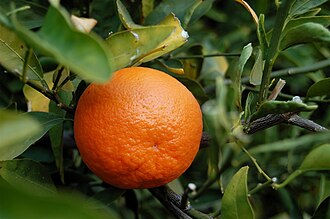
Photo: Wikipedia
A tangerine is a small, easy-to-peel citrus fruit with a vibrant orange skin and sweet, juicy segments. Its flavor is a bright, tangy-sweet burst, often more intense and less acidic than a common orange, with a tender, almost melt-in-your-mouth texture. Nutritionally, it's a low-calorie powerhouse, providing over 80% of your daily Vitamin C in just one fruit, along with a good dose of fiber.
Calorie split: 5% protein · 90% carbs · 5% fat
↓ Full nutrition💚 Why it's loved
People adore tangerines for their perfect snack-sized convenience—the peel comes off in seconds, and the segments are mess-free. Their intensely sweet, aromatic flavor and festive association with holidays like Lunar New Year make them a beloved seasonal treat.
⚠️ Watch-outs & how to enjoy it better
The natural sugars, while healthy, can cause a blood-sugar spike if eaten in large quantities alone. To counteract this, pair a tangerine with a handful of nuts or a piece of cheese to add protein and fat, which slows sugar absorption. The peel's oils can also irritate sensitive skin for some.
Key benefits
- Excellent source of immune-supporting Vitamin C.
- Provides dietary fiber for digestive health.
- Low in calories and naturally fat-free.
- Contains antioxidants like beta-carotene.
- Hydrating due to high water content.
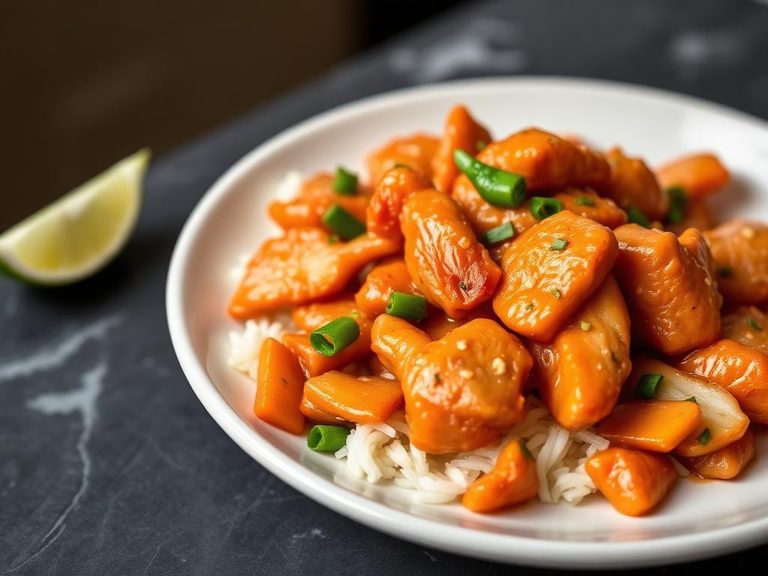
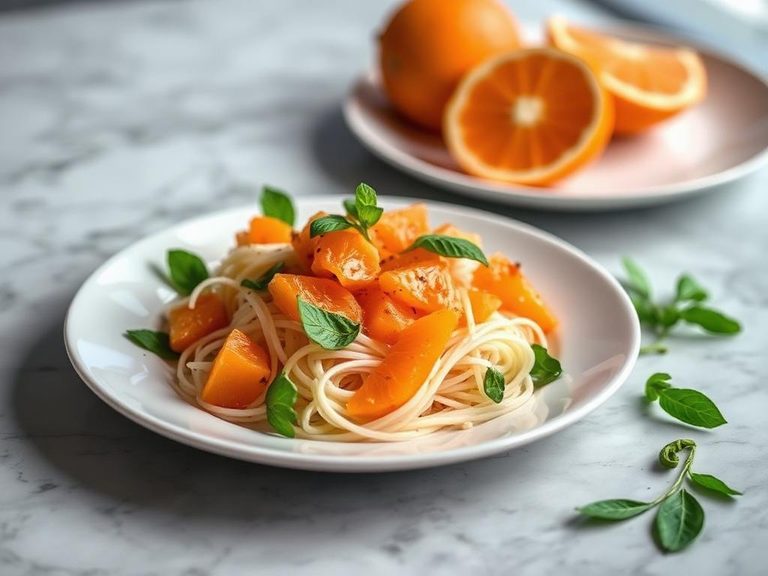
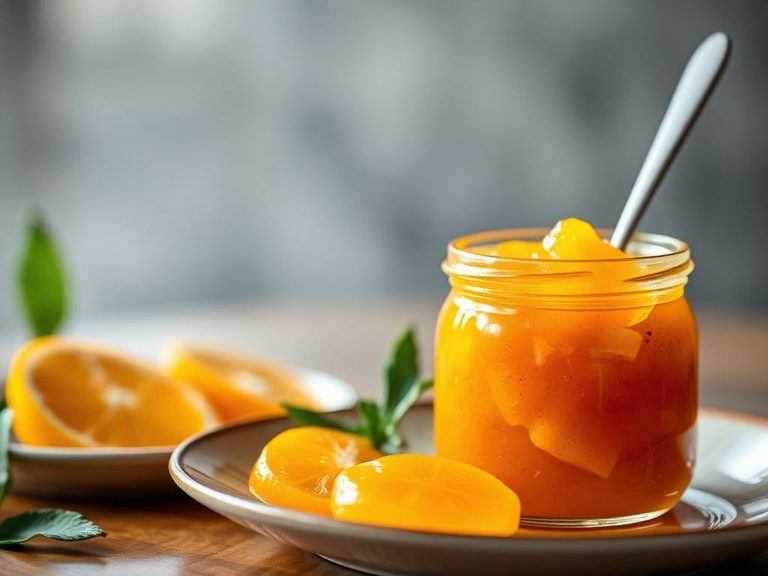
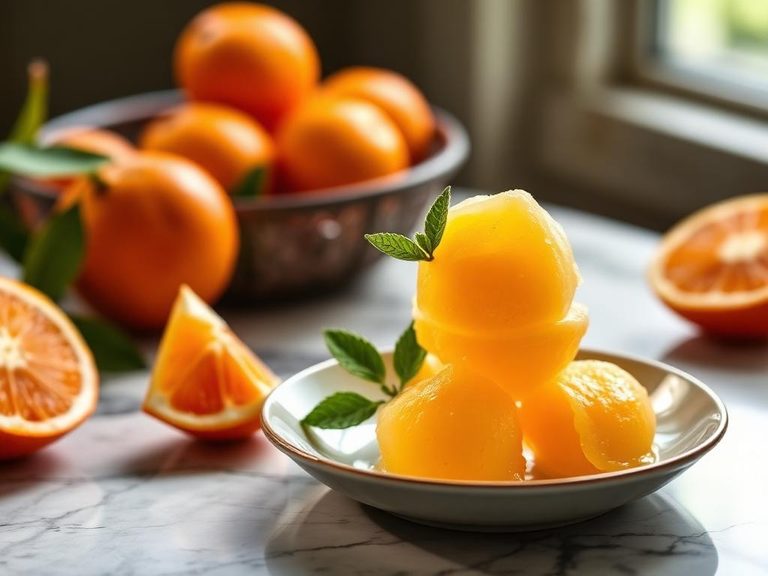
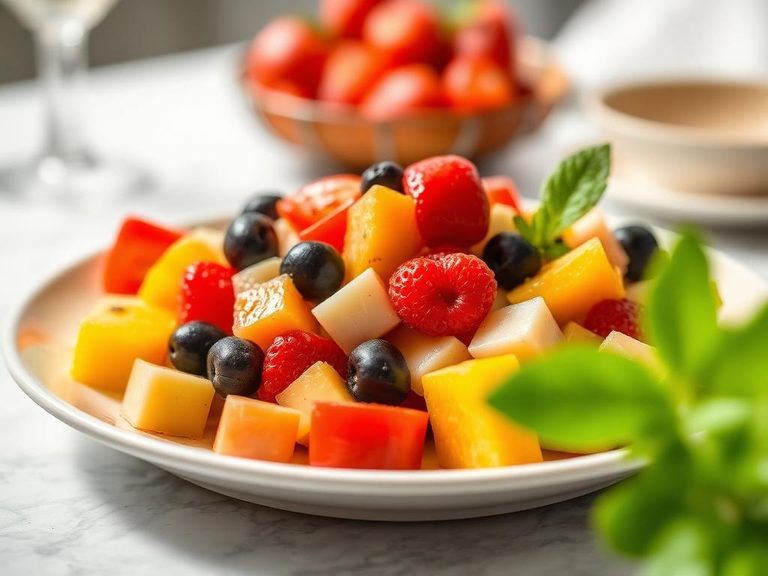
🍽️ Popular dishes

🌍 Where it's eaten
💡 Did you know?
The 'tangerine' gets its English name from Tanger, Morocco, a port city from which the fruit was first exported to Europe in the 19th century.
Full nutrition (USDA data · scales with serving)
| Water | 85.2 g |
| Energy | 53.0 kcal |
| Energy | 223 kj |
| Protein | 0.81 g |
| Total lipid (fat) | 0.31 g |
| Ash | 0.38 g |
| Carbohydrate, by difference | 13.3 g |
| Fiber, total dietary | 1.8 g |
| Total Sugars | 10.6 g |
| Sucrose | 6.0 g |
| Glucose | 2.1 g |
| Fructose | 2.4 g |
| Lactose | 0.00 g |
| Maltose | 0.00 g |
| Galactose | 0.00 g |
| Starch | 0.00 g |
| Calcium, Ca | 37.0 mg |
| Iron, Fe | 0.15 mg |
| Magnesium, Mg | 12.0 mg |
| Phosphorus, P | 20.0 mg |
| Potassium, K | 166 mg |
| Sodium, Na | 2.0 mg |
| Zinc, Zn | 0.07 mg |
| Copper, Cu | 0.04 mg |
| Manganese, Mn | 0.04 mg |
| Selenium, Se | 0.10 ug |
| Vitamin C, total ascorbic acid | 26.7 mg |
| Thiamin | 0.06 mg |
| Riboflavin | 0.04 mg |
| Niacin | 0.38 mg |
| Pantothenic acid | 0.22 mg |
| Vitamin B-6 | 0.08 mg |
| Folate, total | 16.0 ug |
| Folic acid | 0.00 ug |
| Folate, food | 16.0 ug |
| Folate, DFE | 16.0 ug |
| Choline, total | 10.2 mg |
| Betaine | 0.10 mg |
| Vitamin B-12 | 0.00 ug |
| Vitamin B-12, added | 0.00 ug |
| Vitamin A, RAE | 34.0 ug |
| Retinol | 0.00 ug |
| Carotene, beta | 155 ug |
| Carotene, alpha | 101 ug |
| Cryptoxanthin, beta | 407 ug |
| Vitamin A, IU | 681 iu |
| Lycopene | 0.00 ug |
| Lutein + zeaxanthin | 138 ug |
| Vitamin E (alpha-tocopherol) | 0.20 mg |
| Vitamin E, added | 0.00 mg |
| Tocopherol, beta | 0.00 mg |
| Tocopherol, gamma | 0.00 mg |
| Tocopherol, delta | 0.00 mg |
| Tocotrienol, alpha | 0.05 mg |
| Tocotrienol, beta | 0.00 mg |
| Tocotrienol, gamma | 0.00 mg |
| Tocotrienol, delta | 0.00 mg |
| Vitamin D (D2 + D3), International Units | 0.00 iu |
| Vitamin D (D2 + D3) | 0.00 ug |
| Vitamin K (phylloquinone) | 0.00 ug |
| Vitamin K (Dihydrophylloquinone) | 0.00 ug |
| Alcohol, ethyl | 0.00 g |
| Caffeine | 0.00 mg |
| Theobromine | 0.00 mg |
Fat & fatty acid profile (per 100g)
| Fatty acids, total saturated | 0.04 g |
| SFA 4:0 | 0.00 g |
| SFA 6:0 | 0.00 g |
| SFA 8:0 | 0.00 g |
| SFA 10:0 | 0.00 g |
| SFA 12:0 | 0.00 g |
| SFA 14:0 | 0.00 g |
| SFA 16:0 | 0.04 g |
| SFA 18:0 | 0.00 g |
| Fatty acids, total monounsaturated | 0.06 g |
| MUFA 16:1 | 0.01 g |
| MUFA 18:1 | 0.05 g |
| MUFA 20:1 | 0.00 g |
| MUFA 22:1 | 0.00 g |
| Fatty acids, total polyunsaturated | 0.07 g |
| PUFA 18:2 | 0.05 g |
| PUFA 18:3 | 0.02 g |
| PUFA 18:4 | 0.00 g |
| PUFA 20:4 | 0.00 g |
| PUFA 20:5 n-3 (EPA) | 0.00 g |
| PUFA 22:5 n-3 (DPA) | 0.00 g |
| PUFA 22:6 n-3 (DHA) | 0.00 g |
| Fatty acids, total trans | 0.00 g |
| Cholesterol | 0.00 mg |
Amino acid profile (per 100g)
| Tryptophan | 0.00 g |
| Threonine | 0.02 g |
| Isoleucine | 0.02 g |
| Leucine | 0.03 g |
| Lysine | 0.03 g |
| Methionine | 0.00 g |
| Cystine | 0.00 g |
| Phenylalanine | 0.02 g |
| Tyrosine | 0.01 g |
| Valine | 0.02 g |
| Arginine | 0.07 g |
| Histidine | 0.01 g |
| Alanine | 0.03 g |
| Aspartic acid | 0.13 g |
| Glutamic acid | 0.06 g |
| Glycine | 0.02 g |
| Proline | 0.07 g |
| Serine | 0.03 g |
FAQ
What's the difference between a tangerine and a mandarin orange?
The terms are often used interchangeably. Botanically, tangerines are a specific type of mandarin orange known for their deeper reddish-orange color and bolder flavor. All tangerines are mandarins, but not all mandarins are tangerines.
Can I eat the peel of a tangerine?
While the peel is edible and used in zesting and some teas, it's very bitter and tough when raw. It's best to use only the outer colored part (zest) in recipes, avoiding the white pith.
How do I choose and store tangerines?
Choose fruits that feel heavy for their size with smooth, firm skin. Store them at room temperature for up to a week, or in the refrigerator's crisper drawer for 2-3 weeks to extend freshness.
Nutrient density (calculated · NRF9.3)
Nutrient Rich Foods index: beneficial nutrients (protein, fiber, vitamins, minerals) minus saturated fat, added sugar & sodium, per 100 kcal.
NRF9.3 index — Fulgoni, Keast & Drewnowski, 2009. Computed from USDA nutrients.
Weight-loss friendliness (composite index)
Energy density 0.53 kcal/g · 6% calories from protein · 1.8 g fiber · 10.6 g sugar per 100 g.
Composite of energy density (Rolls et al., 1999), protein & fiber satiety, minus sugar. A calculated heuristic — ranks satiety-per-calorie, not a clinical measure.
Dietary load (calculated from USDA values)
Potential renal acid load. Positive = acid-forming, negative = alkaline-forming.
Sodium-to-potassium ratio: 0.01 (lower is better — aim for ≤ 1)
Sodium:potassium per WHO potassium guidance. Computed from USDA nutrients.