

Orange juice, no pulp, not fortified, not from concentrate, refrigerated
Whole food · Fruits and Fruit Juices
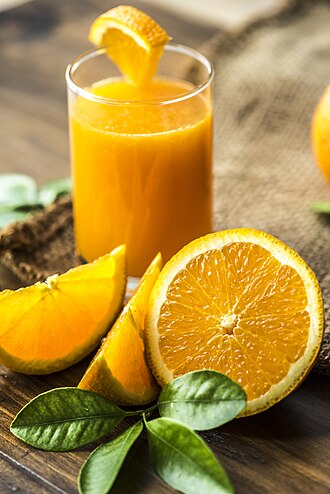
Photo: Wikipedia
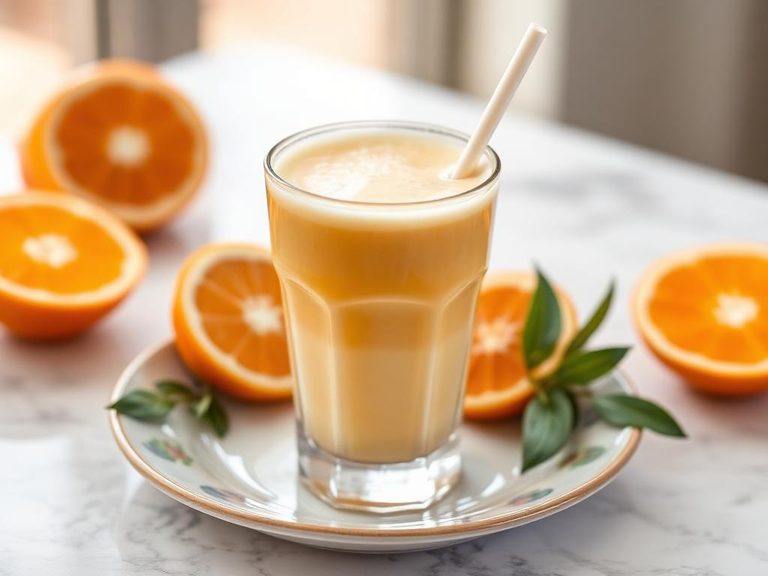
This is pure, freshly squeezed orange juice, chilled and ready to drink, with a vibrant, sun-kissed color and a smooth, pulp-free texture. It delivers a bright, sweet-tart flavor that's less intense than from-concentrate versions, with a more delicate, fresh-squeezed aroma. Nutritionally, it's a low-calorie source of natural carbohydrates and provides a notable dose of vitamin C.
Calorie split: 7% protein · 86% carbs · 7% fat
↓ Full nutrition💚 Why it's loved
People adore its pure, unadulterated orange flavor—a perfect balance of sweetness and acidity that feels like sunshine in a glass. It's a beloved breakfast staple and a versatile mixer for cocktails, smoothies, and marinades.
⚠️ Watch-outs & how to enjoy it better
Despite being natural, its high concentration of fruit sugars can cause rapid blood-sugar spikes, making portion control important for those managing diabetes. To mitigate this, pair it with a source of protein (like Greek yogurt) or healthy fat (like nuts) to slow sugar absorption. The acidity can also erode tooth enamel; rinse your mouth with water after drinking and avoid sipping it slowly over hours.
Key benefits
- Excellent source of vitamin C for immune support
- Provides natural, quick-digesting carbohydrates for energy
- Contains potassium, which supports heart and muscle function
- Hydrating due to its high water content
- Offers plant compounds like flavonoids with antioxidant properties
🍽️ Popular dishes
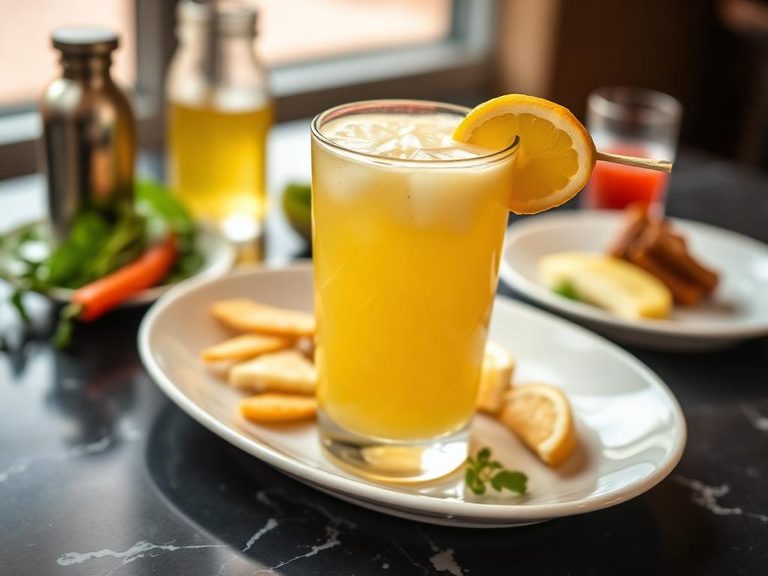
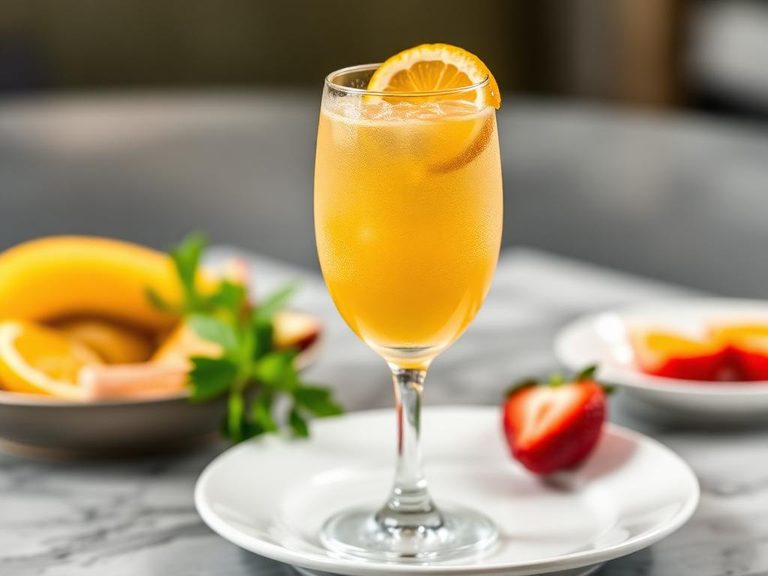
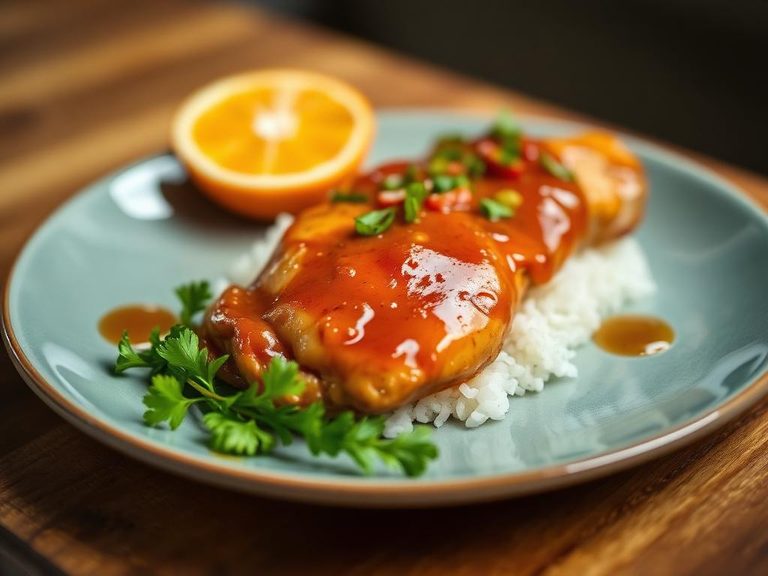
🌍 Where it's eaten
💡 Did you know?
A single glass of orange juice can contain the juice of about 4-5 oranges, meaning you consume far more fruit (and sugar) in liquid form than if you ate them whole.
Full nutrition (USDA data · scales with serving)
| Water | 88.5 g |
| Energy (Atwater General Factors) | 46.5 kcal |
| Energy (Atwater Specific Factors) | 45.0 kcal |
| Nitrogen | 0.13 g |
| Protein | 0.81 g |
| Total lipid (fat) | 0.36 g |
| Ash | 0.34 g |
| Carbohydrate, by difference | 10.0 g |
| Sugars, Total | 8.1 g |
| Sucrose | 4.1 g |
| Glucose | 1.8 g |
| Fructose | 2.1 g |
| Lactose | 0.00 g |
| Maltose | 0.00 g |
| Galactose | 0.00 g |
| Citric acid | 757 mg |
| Malic acid | 160 mg |
| Oxalic acid | 0.00 mg |
| Quinic acid | 0.00 mg |
| Calcium, Ca | 9.3 mg |
| Iron, Fe | 0.07 mg |
| Magnesium, Mg | 10.3 mg |
| Phosphorus, P | 19.0 mg |
| Potassium, K | 183 mg |
| Sodium, Na | 0.07 mg |
| Zinc, Zn | 0.03 mg |
| Copper, Cu | 0.04 mg |
| Manganese, Mn | 0.03 mg |
| Vitamin C, total ascorbic acid | 30.5 mg |
| Thiamin | 0.07 mg |
| Niacin | 0.03 mg |
| Vitamin B-6 | 0.04 mg |
| Folate, total | 29.0 ug |
Fat & fatty acid profile (per 100g)
Estimated from Orange juice, frozen concentrate, unsweetened, undiluted — USDA does not publish this profile for Orange juice.
| Fatty acids, total saturated | 0.06 g |
| SFA 4:0 | 0.00 g |
| SFA 6:0 | 0.00 g |
| SFA 8:0 | 0.00 g |
| SFA 10:0 | 0.00 g |
| SFA 12:0 | 0.00 g |
| SFA 14:0 | 0.00 g |
| SFA 15:0 | 0.00 g |
| SFA 16:0 | 0.04 g |
| SFA 17:0 | 0.00 g |
| SFA 18:0 | 0.01 g |
| SFA 20:0 | 0.00 g |
| SFA 22:0 | 0.00 g |
| SFA 24:0 | 0.00 g |
| Fatty acids, total monounsaturated | 0.05 g |
| MUFA 14:1 | 0.00 g |
| MUFA 15:1 | 0.00 g |
| MUFA 16:1 | 0.01 g |
| MUFA 16:1 c | 0.01 g |
| MUFA 17:1 | 0.00 g |
| MUFA 18:1 | 0.04 g |
| MUFA 18:1 c | 0.04 g |
| MUFA 20:1 | 0.00 g |
| MUFA 22:1 | 0.00 g |
| MUFA 22:1 c | 0.00 g |
| MUFA 24:1 c | 0.00 g |
| Fatty acids, total polyunsaturated | 0.06 g |
| PUFA 18:2 | 0.05 g |
| PUFA 18:2 n-6 c,c | 0.05 g |
| PUFA 18:2 CLAs | 0.00 g |
| PUFA 18:3 | 0.02 g |
| PUFA 18:3 n-3 c,c,c (ALA) | 0.02 g |
| PUFA 18:3 n-6 c,c,c | 0.00 g |
| PUFA 18:3i | 0.00 g |
| PUFA 18:4 | 0.00 g |
| PUFA 20:2 n-6 c,c | 0.00 g |
| PUFA 20:3 | 0.00 g |
| PUFA 20:3 n-3 | 0.00 g |
| PUFA 20:3 n-6 | 0.00 g |
| PUFA 20:4 | 0.00 g |
| PUFA 20:5 n-3 (EPA) | 0.00 g |
| PUFA 22:4 | 0.00 g |
| PUFA 22:5 n-3 (DPA) | 0.00 g |
| PUFA 22:6 n-3 (DHA) | 0.00 g |
| Fatty acids, total trans | 0.00 g |
| Fatty acids, total trans-monoenoic | 0.00 g |
| TFA 16:1 t | 0.00 g |
| TFA 18:1 t | 0.00 g |
| TFA 22:1 t | 0.00 g |
| TFA 18:2 t not further defined | 0.00 g |
| Fatty acids, total trans-polyenoic | 0.00 g |
| Cholesterol | 0.00 mg |
Amino acid profile (per 100g)
Estimated from Orange juice, frozen concentrate, unsweetened, undiluted — USDA does not publish this profile for Orange juice.
| Tryptophan | 0.01 g |
| Threonine | 0.04 g |
| Isoleucine | 0.03 g |
| Leucine | 0.05 g |
| Lysine | 0.06 g |
| Methionine | 0.01 g |
| Cystine | 0.01 g |
| Phenylalanine | 0.04 g |
| Tyrosine | 0.02 g |
| Valine | 0.05 g |
| Arginine | 0.31 g |
| Histidine | 0.02 g |
| Alanine | 0.07 g |
| Aspartic acid | 0.44 g |
| Glutamic acid | 0.15 g |
| Glycine | 0.04 g |
| Proline | 0.38 g |
| Serine | 0.08 g |
| Hydroxyproline | 0.00 g |
FAQ
Is not-from-concentrate juice healthier than from-concentrate?
Nutritionally, they are very similar. Not-from-concentrate is often perceived as fresher and may retain slightly more volatile flavor compounds, but both are pasteurized and contain comparable levels of vitamins and sugars.
Why is there no added sugar listed, yet it tastes sweet?
The sweetness comes entirely from the natural fructose (fruit sugar) present in the oranges themselves. No granulated sugar is added, but the concentration of natural sugars is high.
Can I use this for cooking and baking?
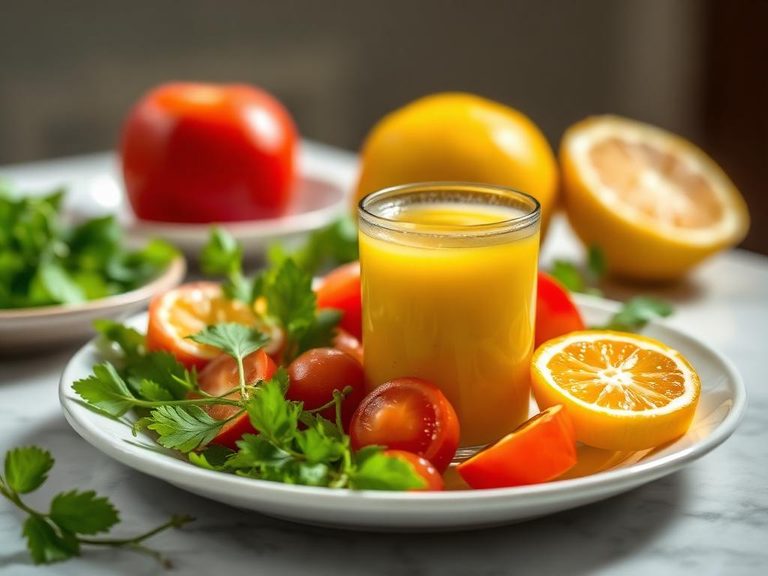
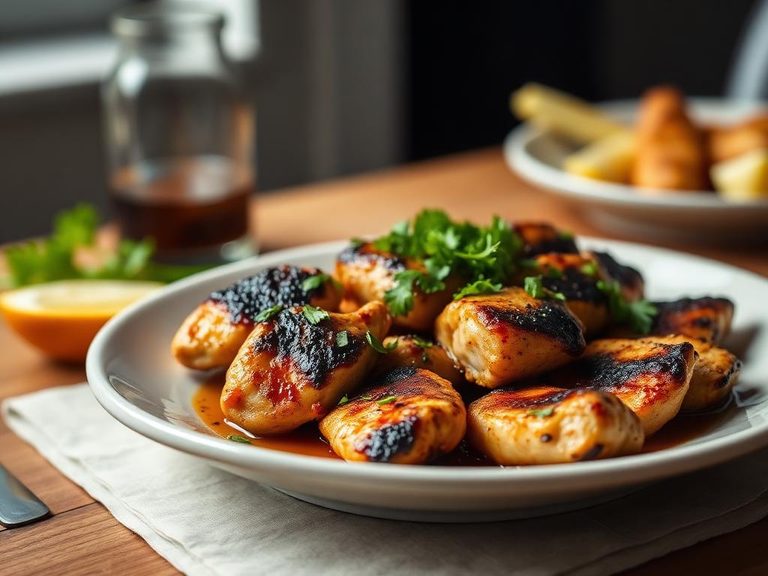
Absolutely. It's excellent for deglazing pans, making sauces (like for orange chicken), in salad dressings, or as a liquid in cakes and muffins for a bright citrus flavor.
Nutrient density (calculated · NRF9.3)
Nutrient Rich Foods index: beneficial nutrients (protein, fiber, vitamins, minerals) minus saturated fat, added sugar & sodium, per 100 kcal.
NRF9.3 index — Fulgoni, Keast & Drewnowski, 2009. Computed from USDA nutrients.
Weight-loss friendliness (composite index)
Energy density 0.47 kcal/g · 7% calories from protein · 0.0 g fiber · 0.0 g sugar per 100 g.
Composite of energy density (Rolls et al., 1999), protein & fiber satiety, minus sugar. A calculated heuristic — ranks satiety-per-calorie, not a clinical measure.
Dietary load (calculated from USDA values)
Potential renal acid load. Positive = acid-forming, negative = alkaline-forming.
Sodium-to-potassium ratio: 0.00 (lower is better — aim for ≤ 1)
Sodium:potassium per WHO potassium guidance. Computed from USDA nutrients.