

Macaroni and cheese, dry mix, prepared with 2% milk and 80% stick margarine from dry mix
Whole food · Meals, Entrees, and Side Dishes
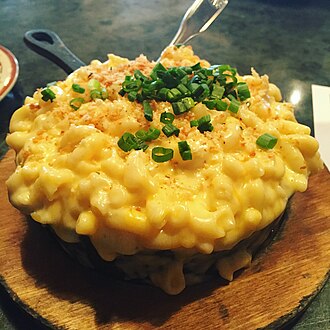
Photo: Wikipedia
This is the quintessential, nostalgic comfort food: tender elbow macaroni coated in a rich, creamy, and distinctly yellow cheese sauce. The texture is smooth and velvety, with the pasta providing a soft, chewy contrast to the velvety sauce. At 190 kcal per 100g, it's a calorie-dense, energy-rich dish that delivers a satisfying blend of fat and carbohydrates.
Calorie split: 10% protein · 50% carbs · 39% fat
↓ Full nutrition💚 Why it's loved
People love it for its deep, savory, umami-rich cheese flavor and the nostalgic, comforting feeling it evokes. It's incredibly versatile, serving as a simple side dish, a main course, or a base for countless variations with added proteins or vegetables.
⚠️ Watch-outs & how to enjoy it better
The dish can be high in sodium, saturated fat, and refined carbohydrates, which may cause blood-sugar spikes and is a concern for those managing heart health or diabetes. To counteract this, pair it with a side of steamed broccoli or a lean protein like grilled chicken to add fiber and slow digestion, and practice portion control by using a smaller bowl.
Key benefits
- Provides a quick source of energy from carbohydrates and fats
- Contains a moderate amount of protein from the pasta and milk
- Offers a convenient and comforting meal option
- Can be a good source of calcium when made with milk
- Highly palatable, which can be beneficial for encouraging food intake in some individuals
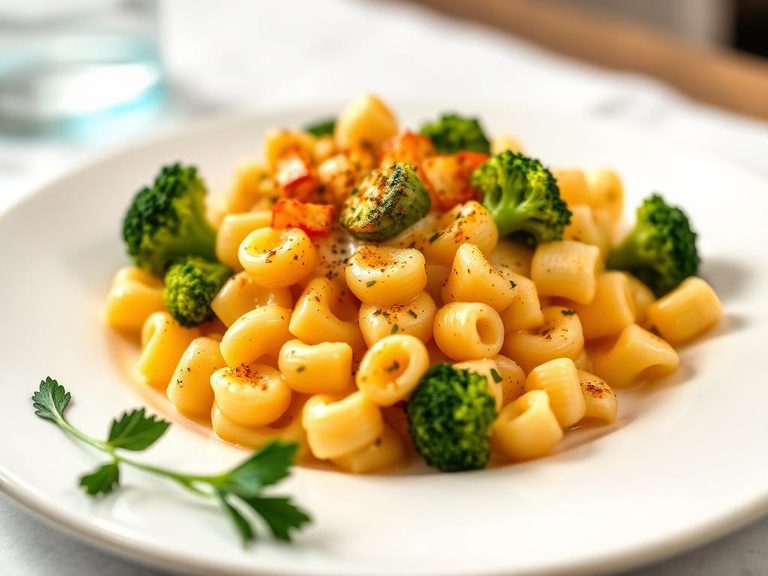
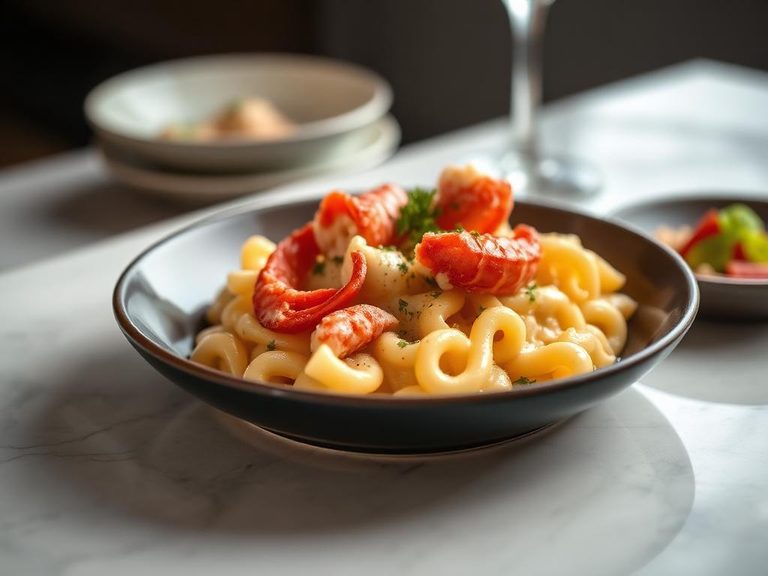
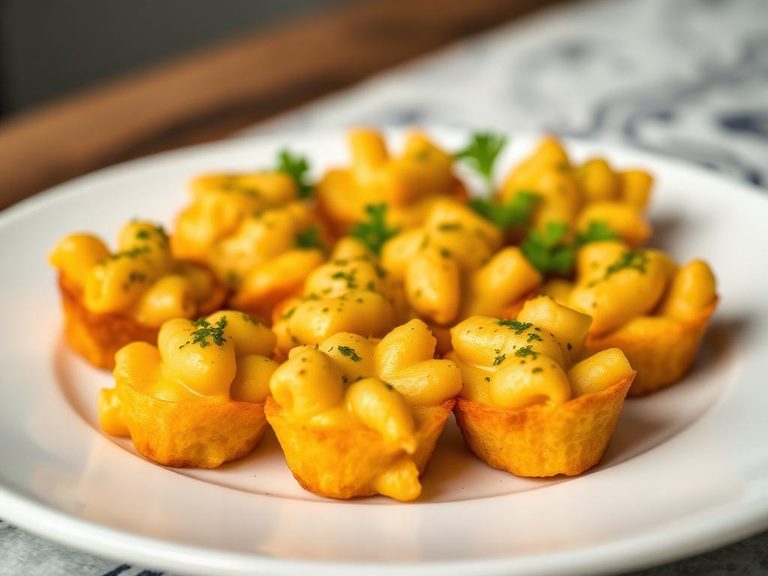
🍽️ Popular dishes
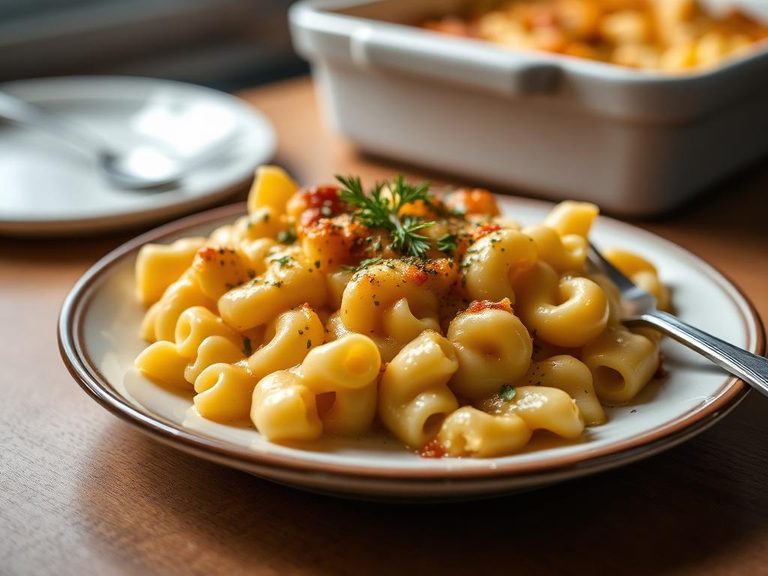
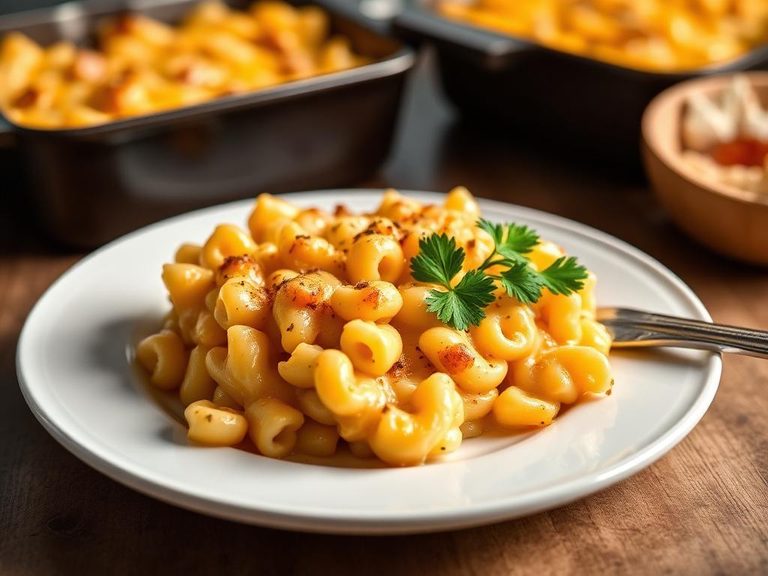
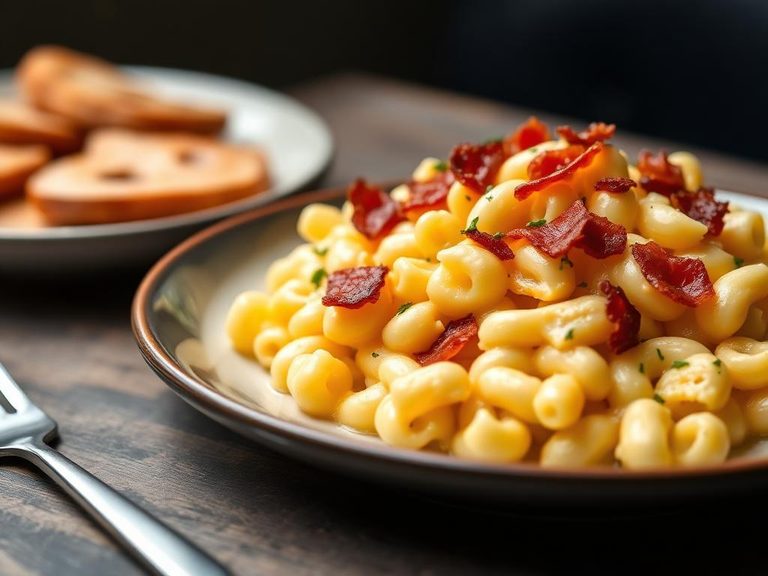
🌍 Where it's eaten
💡 Did you know?
The earliest known recipe for a pasta and cheese dish, called 'makerouns,' was recorded in a 1390 English cookbook called 'The Forme of Cury,' which was written by the cooks of King Richard II.
Full nutrition (USDA data · scales with serving)
| Water | 61.6 g |
| Energy | 190 kcal |
| Energy | 794 kj |
| Protein | 4.9 g |
| Total lipid (fat) | 8.3 g |
| Ash | 1.3 g |
| Carbohydrate, by difference | 23.9 g |
| Fiber, total dietary | 1.2 g |
| Total Sugars | 4.3 g |
| Sucrose | 0.00 g |
| Glucose | 0.00 g |
| Fructose | 0.00 g |
| Lactose | 3.0 g |
| Maltose | 1.3 g |
| Galactose | 0.00 g |
| Starch | 17.5 g |
| Calcium, Ca | 63.0 mg |
| Iron, Fe | 0.99 mg |
| Magnesium, Mg | 17.0 mg |
| Phosphorus, P | 112 mg |
| Potassium, K | 129 mg |
| Sodium, Na | 338 mg |
| Zinc, Zn | 0.47 mg |
| Copper, Cu | 0.07 mg |
| Manganese, Mn | 0.24 mg |
| Selenium, Se | 12.5 ug |
| Thiamin | 0.18 mg |
| Riboflavin | 0.18 mg |
| Niacin | 1.2 mg |
| Pantothenic acid | 0.43 mg |
| Vitamin B-6 | 0.06 mg |
| Folate, total | 70.0 ug |
| Folic acid | 63.0 ug |
| Folate, food | 6.0 ug |
| Folate, DFE | 114 ug |
| Choline, total | 26.9 mg |
| Betaine | 15.3 mg |
| Vitamin B-12 | 0.16 ug |
| Vitamin K (phylloquinone) | 6.4 ug |
| Vitamin K (Dihydrophylloquinone) | 5.9 ug |
Fat & fatty acid profile (per 100g)
| Fatty acids, total saturated | 1.8 g |
| SFA 4:0 | 0.02 g |
| SFA 6:0 | 0.01 g |
| SFA 8:0 | 0.01 g |
| SFA 10:0 | 0.02 g |
| SFA 12:0 | 0.03 g |
| SFA 14:0 | 0.09 g |
| SFA 15:0 | 0.01 g |
| SFA 16:0 | 1.0 g |
| SFA 17:0 | 0.01 g |
| SFA 18:0 | 0.51 g |
| SFA 20:0 | 0.02 g |
| SFA 22:0 | 0.02 g |
| SFA 24:0 | 0.01 g |
| Fatty acids, total monounsaturated | 3.7 g |
| MUFA 14:1 | 0.01 g |
| MUFA 15:1 | 0.00 g |
| MUFA 16:1 | 0.02 g |
| MUFA 16:1 c | 0.02 g |
| MUFA 17:1 | 0.01 g |
| MUFA 18:1 | 3.6 g |
| MUFA 18:1 c | 2.5 g |
| MUFA 20:1 | 0.01 g |
| MUFA 22:1 | 0.00 g |
| MUFA 22:1 c | 0.00 g |
| MUFA 24:1 c | 0.00 g |
| Fatty acids, total polyunsaturated | 1.9 g |
| PUFA 18:2 | 1.7 g |
| PUFA 18:2 n-6 c,c | 1.6 g |
| PUFA 18:2 CLAs | 0.01 g |
| PUFA 18:3 | 0.20 g |
| PUFA 18:3 n-3 c,c,c (ALA) | 0.19 g |
| PUFA 18:3 n-6 c,c,c | 0.01 g |
| PUFA 18:4 | 0.00 g |
| PUFA 20:2 n-6 c,c | 0.00 g |
| PUFA 20:3 | 0.00 g |
| PUFA 20:3 n-3 | 0.00 g |
| PUFA 20:3 n-6 | 0.00 g |
| PUFA 20:4 | 0.01 g |
| PUFA 20:5 n-3 (EPA) | 0.00 g |
| PUFA 22:4 | 0.00 g |
| PUFA 22:5 n-3 (DPA) | 0.00 g |
| PUFA 22:6 n-3 (DHA) | 0.00 g |
| Fatty acids, total trans | 1.2 g |
| Fatty acids, total trans-monoenoic | 1.1 g |
| TFA 16:1 t | 0.00 g |
| TFA 18:1 t | 1.1 g |
| TFA 22:1 t | 0.00 g |
| TFA 18:2 t not further defined | 0.10 g |
| Fatty acids, total trans-polyenoic | 0.10 g |
| Cholesterol | 3.0 mg |
Amino acid profile (per 100g)
| Tryptophan | 0.06 g |
| Threonine | 0.20 g |
| Isoleucine | 0.25 g |
| Leucine | 0.45 g |
| Lysine | 0.19 g |
| Methionine | 0.06 g |
| Cystine | 0.11 g |
| Phenylalanine | 0.29 g |
| Tyrosine | 0.17 g |
| Valine | 0.28 g |
| Arginine | 0.22 g |
| Histidine | 0.12 g |
| Alanine | 0.20 g |
| Aspartic acid | 0.30 g |
| Glutamic acid | 1.8 g |
| Glycine | 0.18 g |
| Proline | 0.68 g |
| Serine | 0.30 g |
FAQ
What is the difference between using 2% milk and whole milk in macaroni and cheese?
Using 2% milk results in a slightly lighter, less rich sauce with fewer calories and less fat compared to whole milk, which creates a creamier, more decadent texture.
Is stick margarine a healthy substitute for butter in macaroni and cheese?
Stick margarine is often lower in saturated fat than butter but may contain trans fats, depending on the brand. It can be a suitable alternative for those monitoring saturated fat intake, but checking the label for trans fats is recommended.
How can I make this dish healthier?
You can boost the nutritional value by adding vegetables like broccoli, spinach, or peas, using whole-grain pasta, and incorporating a lean protein such as chicken or turkey. Reducing the amount of margarine or cheese can also lower the fat content.
Nutrient density (calculated · NRF9.3)
Nutrient Rich Foods index: beneficial nutrients (protein, fiber, vitamins, minerals) minus saturated fat, added sugar & sodium, per 100 kcal.
NRF9.3 index — Fulgoni, Keast & Drewnowski, 2009. Computed from USDA nutrients.
Weight-loss friendliness (composite index)
Energy density 1.90 kcal/g · 10% calories from protein · 1.2 g fiber · 4.3 g sugar per 100 g.
Composite of energy density (Rolls et al., 1999), protein & fiber satiety, minus sugar. A calculated heuristic — ranks satiety-per-calorie, not a clinical measure.
Dietary load (calculated from USDA values)
Potential renal acid load. Positive = acid-forming, negative = alkaline-forming.
Sodium-to-potassium ratio: 2.62 (lower is better — aim for ≤ 1)
Sodium:potassium per WHO potassium guidance. Computed from USDA nutrients.