

Lamb, New Zealand, imported, tongue - swiss cut, cooked, soaked and simmered
Whole food · Lamb, Veal, and Game Products
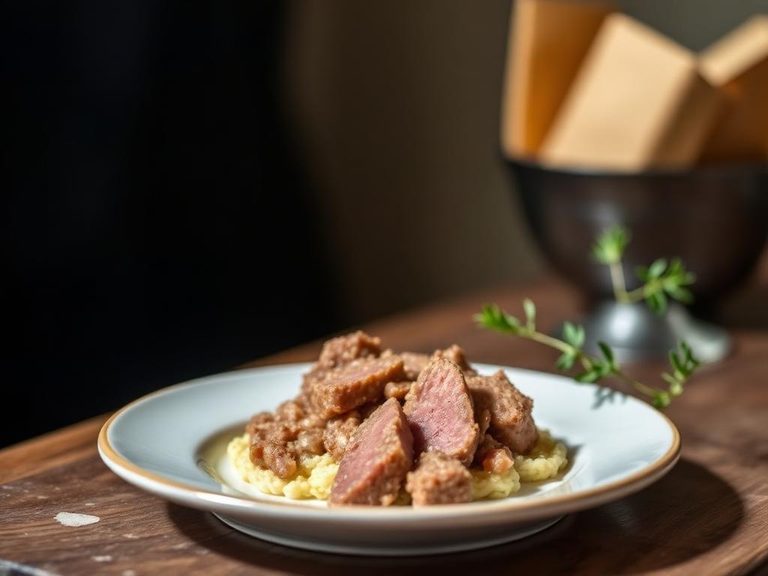
This is a premium cut of New Zealand lamb tongue, sliced in the Swiss style and fully cooked after a traditional soaking and simmering process. The texture is uniquely tender and velvety, with a rich, deep lamb flavor that is milder than other offal. Nutritionally, it is a high-protein, high-fat food with virtually no carbohydrates.
Calorie split: 26% protein · 1% carbs · 73% fat
↓ Full nutrition💚 Why it's loved
People love its luxurious, melt-in-the-mouth texture and concentrated, savory flavor that is less gamey than liver. It's prized in gourmet cooking for its versatility, serving as a sophisticated appetizer or a hearty component in main courses.
⚠️ Watch-outs & how to enjoy it better
The high fat and calorie density may not suit low-fat diets, and some find the texture or origin (offal) unappealing. To balance a meal, pair it with fiber-rich vegetables like roasted Brussels sprouts or a crisp salad, and practice portion control by using it as a featured protein rather than the sole component.
Key benefits
- Excellent source of complete protein for muscle maintenance.
- Rich in bioavailable iron and zinc.
- Contains vitamin B12, essential for nerve function.
- Provides healthy fats, including conjugated linoleic acid (CLA).
- Naturally low in carbohydrates.
🍽️ Popular dishes
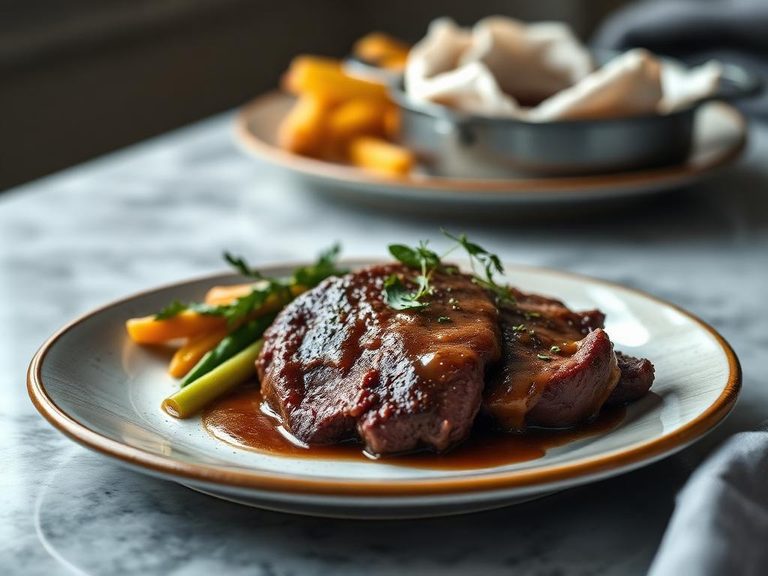
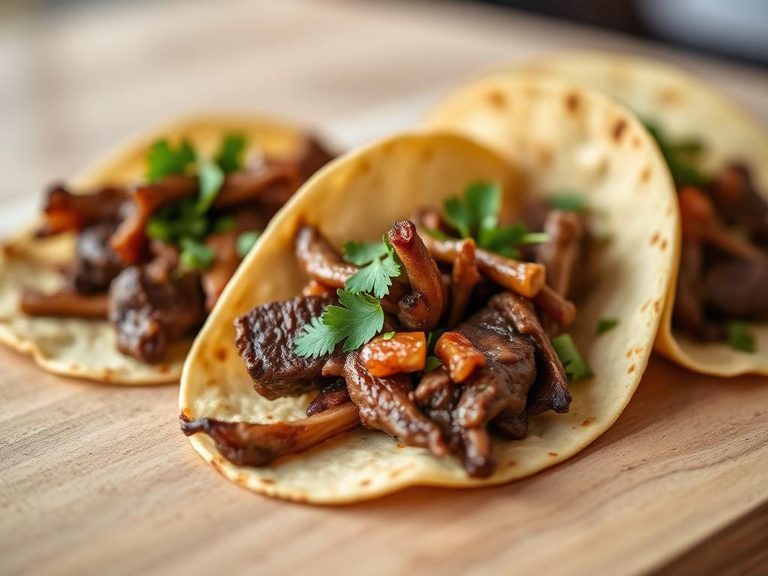
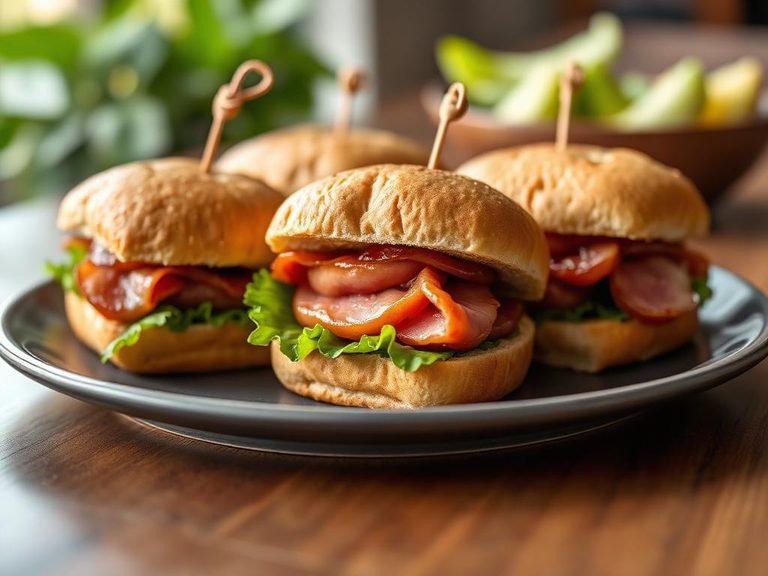
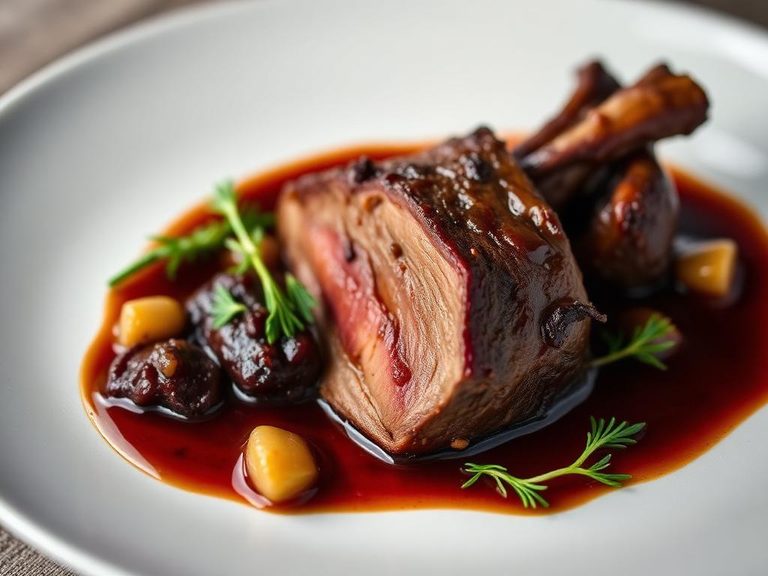
🌍 Where it's eaten
💡 Did you know?
The 'Swiss cut' refers to a specific preparation where the tongue is sliced thinly against the grain after cooking, a technique that maximizes tenderness for sandwiches and salads.
Full nutrition (USDA data · scales with serving)
| Water | 58.7 g |
| Energy | 272 kcal |
| Energy | 1138 kj |
| Protein | 17.5 g |
| Total lipid (fat) | 22.0 g |
| Ash | 0.84 g |
| Carbohydrate, by difference | 0.86 g |
| Fiber, total dietary | 0.00 g |
| Total Sugars | 0.00 g |
| Calcium, Ca | 6.0 mg |
| Iron, Fe | 1.7 mg |
| Magnesium, Mg | 15.0 mg |
| Phosphorus, P | 143 mg |
| Potassium, K | 132 mg |
| Sodium, Na | 52.0 mg |
| Zinc, Zn | 2.1 mg |
| Copper, Cu | 0.20 mg |
| Manganese, Mn | 0.02 mg |
| Selenium, Se | 9.1 ug |
| Vitamin C, total ascorbic acid | 0.00 mg |
| Thiamin | 0.04 mg |
| Riboflavin | 0.34 mg |
| Niacin | 2.3 mg |
| Pantothenic acid | 0.58 mg |
| Vitamin B-6 | 0.08 mg |
| Vitamin B-12 | 5.2 ug |
| Vitamin A, RAE | 1.0 ug |
| Retinol | 1.0 ug |
| Carotene, beta | 0.00 ug |
| Carotene, alpha | 0.00 ug |
| Cryptoxanthin, beta | 0.00 ug |
| Vitamin A, IU | 5.0 iu |
| Lycopene | 0.00 ug |
| Lutein + zeaxanthin | 0.00 ug |
| Vitamin E (alpha-tocopherol) | 0.16 mg |
| Vitamin D (D2 + D3), International Units | 12.0 iu |
| Vitamin D (D2 + D3) | 0.30 ug |
| Vitamin D3 (cholecalciferol) | 0.30 ug |
| Alcohol, ethyl | 0.00 g |
| Caffeine | 0.00 mg |
| Theobromine | 0.00 mg |
Fat & fatty acid profile (per 100g)
| Fatty acids, total saturated | 7.3 g |
| SFA 4:0 | 0.00 g |
| SFA 6:0 | 0.00 g |
| SFA 8:0 | 0.00 g |
| SFA 10:0 | 0.03 g |
| SFA 12:0 | 0.03 g |
| SFA 14:0 | 0.38 g |
| SFA 16:0 | 3.1 g |
| SFA 17:0 | 0.38 g |
| SFA 18:0 | 3.4 g |
| SFA 20:0 | 0.02 g |
| SFA 22:0 | 0.02 g |
| SFA 24:0 | 0.00 g |
| Fatty acids, total monounsaturated | 7.8 g |
| MUFA 14:1 | 0.03 g |
| MUFA 15:1 | 0.00 g |
| MUFA 16:1 | 0.31 g |
| MUFA 16:1 c | 0.28 g |
| MUFA 17:1 | 0.00 g |
| MUFA 18:1 | 7.4 g |
| MUFA 18:1 c | 6.7 g |
| MUFA 20:1 | 0.00 g |
| MUFA 22:1 | 0.00 g |
| MUFA 22:1 c | 0.00 g |
| MUFA 24:1 c | 0.00 g |
| Fatty acids, total polyunsaturated | 1.3 g |
| PUFA 18:2 | 0.85 g |
| PUFA 18:2 n-6 c,c | 0.42 g |
| PUFA 18:2 CLAs | 0.43 g |
| PUFA 18:3 | 0.28 g |
| PUFA 18:3 n-3 c,c,c (ALA) | 0.28 g |
| PUFA 18:3 n-6 c,c,c | 0.00 g |
| PUFA 18:4 | 0.00 g |
| PUFA 20:2 n-6 c,c | 0.00 g |
| PUFA 20:3 | 0.00 g |
| PUFA 20:3 n-3 | 0.00 g |
| PUFA 20:3 n-6 | 0.00 g |
| PUFA 20:4 | 0.04 g |
| PUFA 20:4 n-6 | 0.04 g |
| PUFA 20:5 n-3 (EPA) | 0.03 g |
| PUFA 22:5 n-3 (DPA) | 0.04 g |
| PUFA 22:6 n-3 (DHA) | 0.01 g |
| Fatty acids, total trans | 0.75 g |
| Fatty acids, total trans-monoenoic | 0.75 g |
| TFA 16:1 t | 0.03 g |
| TFA 18:1 t | 0.72 g |
| TFA 18:2 t,t | 0.00 g |
| Fatty acids, total trans-polyenoic | 0.00 g |
| Cholesterol | 126 mg |
Amino acid profile (per 100g)
| Tryptophan | 0.19 g |
| Threonine | 0.83 g |
| Isoleucine | 0.78 g |
| Leucine | 1.4 g |
| Lysine | 1.5 g |
| Methionine | 0.57 g |
| Cystine | 0.23 g |
| Phenylalanine | 0.69 g |
| Tyrosine | 0.61 g |
| Valine | 0.89 g |
| Arginine | 1.2 g |
| Histidine | 0.37 g |
| Alanine | 0.87 g |
| Glutamic acid | 2.4 g |
| Glycine | 0.75 g |
| Proline | 0.56 g |
| Serine | 0.60 g |
FAQ
What does lamb tongue taste like?
It has a rich, deep lamb flavor that is milder and less gamey than liver. The texture is exceptionally tender, smooth, and velvety when properly cooked.
Is lamb tongue high in fat?
Yes, it is a high-fat cut, with about 22 grams of fat per 100g serving. This contributes to its rich flavor and tender mouthfeel.
How is 'soaked and simmered' preparation different?
Soaking helps draw out any residual blood or impurities, while a long, gentle simmer is the traditional method to break down the tough connective tissue and render the tongue perfectly tender.
Nutrient density (calculated · NRF9.3)
Nutrient Rich Foods index: beneficial nutrients (protein, fiber, vitamins, minerals) minus saturated fat, added sugar & sodium, per 100 kcal.
NRF9.3 index — Fulgoni, Keast & Drewnowski, 2009. Computed from USDA nutrients.
Weight-loss friendliness (composite index)
Energy density 2.72 kcal/g · 26% calories from protein · 0.0 g fiber · 0.0 g sugar per 100 g.
Composite of energy density (Rolls et al., 1999), protein & fiber satiety, minus sugar. A calculated heuristic — ranks satiety-per-calorie, not a clinical measure.
Dietary load (calculated from USDA values)
Potential renal acid load. Positive = acid-forming, negative = alkaline-forming.
Sodium-to-potassium ratio: 0.39 (lower is better — aim for ≤ 1)
Sodium:potassium per WHO potassium guidance. Computed from USDA nutrients.