

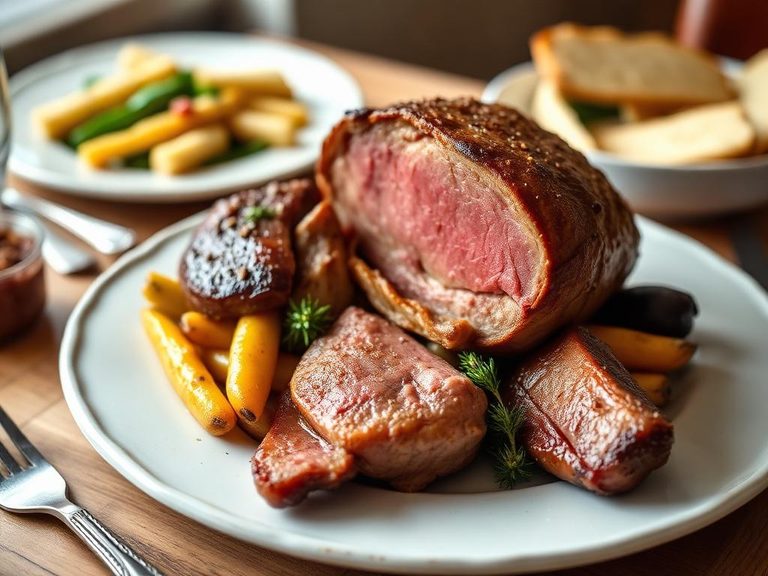
Lamb, New Zealand, imported, netted shoulder, rolled, boneless, separable lean only, cooked, slow roasted
Whole food · Lamb, Veal, and Game Products
This is a premium cut of lean New Zealand lamb, slow-roasted to tender perfection. The meat is exceptionally lean and clean-tasting, with a fine, delicate texture that practically melts in your mouth. It delivers a powerful protein punch with virtually no carbohydrates, making it a cornerstone of high-protein, low-carb diets.
Calorie split: 51% protein · 0% carbs · 49% fat
↓ Full nutrition💚 Why it's loved
People adore this cut for its pure, sweet lamb flavor and supremely tender texture when slow-roasted. Its versatility shines in everything from elegant Sunday roasts to hearty stews, making it a cultural staple for celebratory meals in many cuisines.
⚠️ Watch-outs & how to enjoy it better
The primary caution is its high protein and fat content, which can be heavy for those with specific digestive sensitivities or on strict low-fat medical diets. To counteract richness, pair it with fiber-rich vegetables like roasted root veggies or a sharp, acidic salad to cut through the fat and aid digestion.
Key benefits
- Exceptionally high in complete protein for muscle maintenance.
- Naturally zero carbohydrates, sugars, and fiber.
- Source of essential minerals like iron, zinc, and selenium.
- Lean cut provides high-quality protein with moderate fat.
- Slow-roasting maximizes tenderness and flavor development.
🍽️ Popular dishes
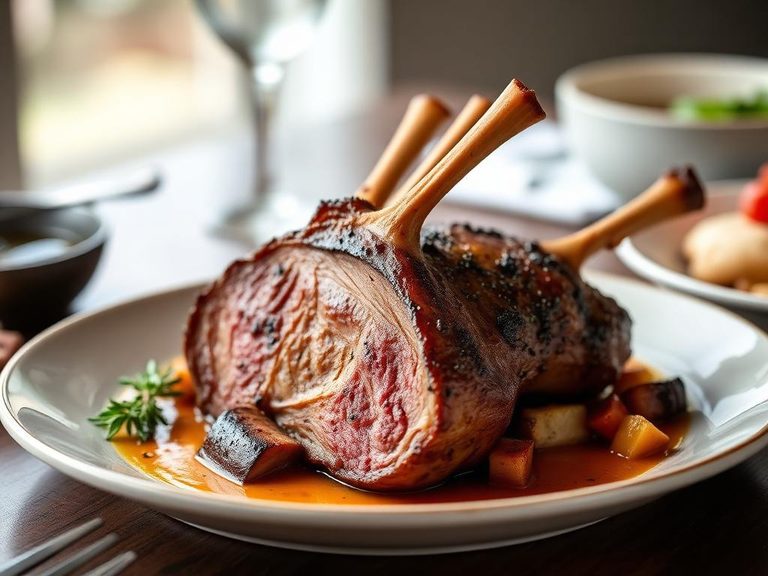
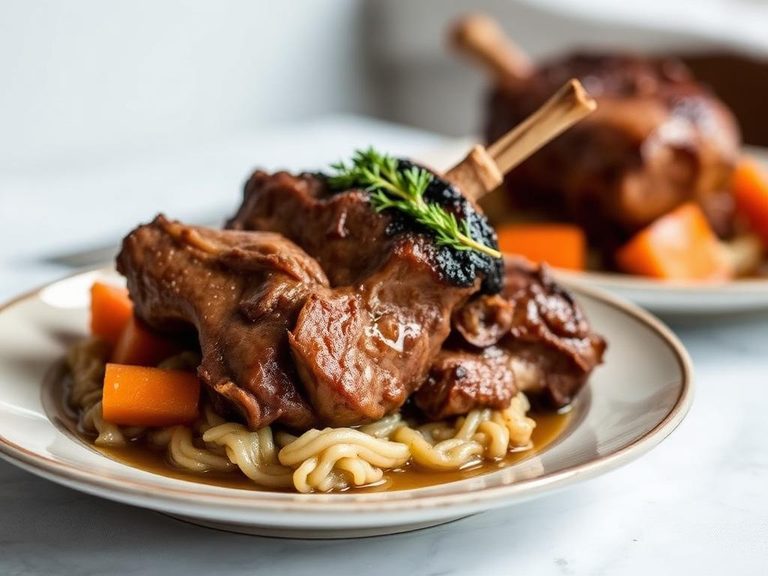
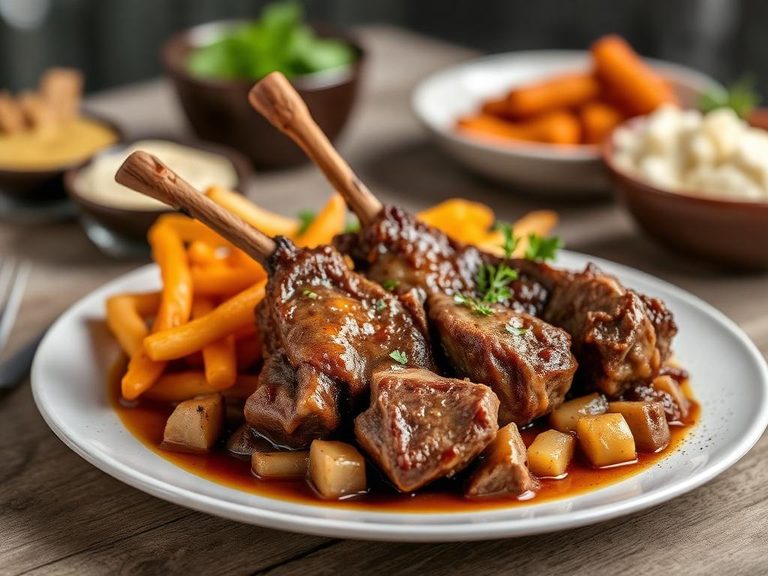
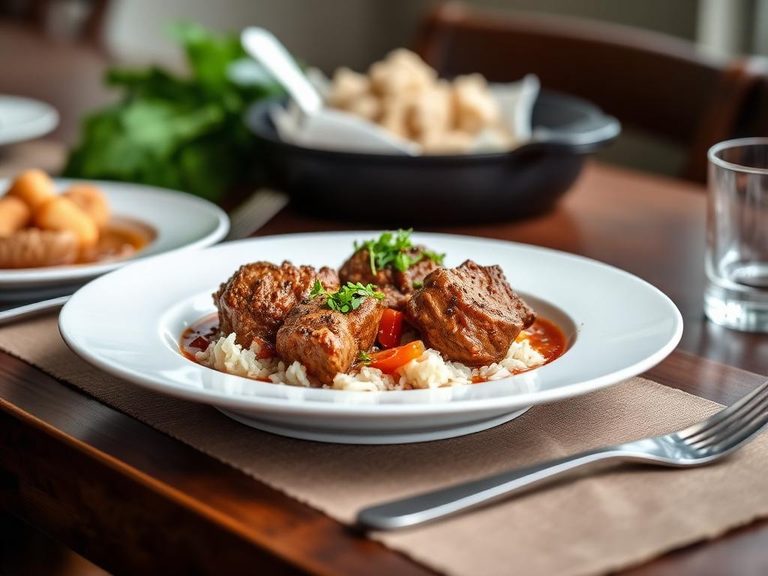
🌍 Where it's eaten
💡 Did you know?
New Zealand's lamb industry is so iconic that the country has more sheep than people, with a ratio of roughly 5 sheep for every 1 human.
Full nutrition (USDA data · scales with serving)
| Water | 64.2 g |
| Energy | 199 kcal |
| Energy | 831 kj |
| Protein | 25.1 g |
| Total lipid (fat) | 10.9 g |
| Ash | 1.1 g |
| Carbohydrate, by difference | 0.00 g |
| Fiber, total dietary | 0.00 g |
| Total Sugars | 0.00 g |
| Calcium, Ca | 7.0 mg |
| Iron, Fe | 1.4 mg |
| Magnesium, Mg | 23.0 mg |
| Phosphorus, P | 197 mg |
| Potassium, K | 337 mg |
| Sodium, Na | 65.0 mg |
| Zinc, Zn | 5.0 mg |
| Copper, Cu | 0.12 mg |
| Manganese, Mn | 0.01 mg |
| Selenium, Se | 4.7 ug |
| Vitamin C, total ascorbic acid | 0.00 mg |
| Thiamin | 0.12 mg |
| Riboflavin | 0.19 mg |
| Niacin | 4.3 mg |
| Pantothenic acid | 0.80 mg |
| Vitamin B-6 | 0.12 mg |
| Vitamin B-12 | 2.3 ug |
| Vitamin A, RAE | 6.0 ug |
| Retinol | 6.0 ug |
| Carotene, beta | 0.00 ug |
| Carotene, alpha | 0.00 ug |
| Cryptoxanthin, beta | 0.00 ug |
| Vitamin A, IU | 19.0 iu |
| Lycopene | 0.00 ug |
| Lutein + zeaxanthin | 0.00 ug |
| Vitamin E (alpha-tocopherol) | 0.34 mg |
| Vitamin D (D2 + D3), International Units | 2.0 iu |
| Vitamin D (D2 + D3) | 0.10 ug |
| Vitamin D3 (cholecalciferol) | 0.10 ug |
| Alcohol, ethyl | 0.00 g |
| Caffeine | 0.00 mg |
| Theobromine | 0.00 mg |
Fat & fatty acid profile (per 100g)
| Fatty acids, total saturated | 3.3 g |
| SFA 4:0 | 0.00 g |
| SFA 6:0 | 0.00 g |
| SFA 8:0 | 0.00 g |
| SFA 10:0 | 0.02 g |
| SFA 12:0 | 0.02 g |
| SFA 14:0 | 0.24 g |
| SFA 16:0 | 1.5 g |
| SFA 17:0 | 0.14 g |
| SFA 18:0 | 1.4 g |
| SFA 20:0 | 0.01 g |
| SFA 22:0 | 0.01 g |
| SFA 24:0 | 0.00 g |
| Fatty acids, total monounsaturated | 2.3 g |
| MUFA 14:1 | 0.01 g |
| MUFA 15:1 | 0.00 g |
| MUFA 16:1 | 0.09 g |
| MUFA 16:1 c | 0.08 g |
| MUFA 17:1 | 0.00 g |
| MUFA 18:1 | 2.2 g |
| MUFA 18:1 c | 2.0 g |
| MUFA 20:1 | 0.00 g |
| MUFA 22:1 | 0.00 g |
| MUFA 22:1 c | 0.00 g |
| MUFA 24:1 c | 0.00 g |
| Fatty acids, total polyunsaturated | 0.50 g |
| PUFA 18:2 | 0.29 g |
| PUFA 18:2 n-6 c,c | 0.16 g |
| PUFA 18:2 CLAs | 0.13 g |
| PUFA 18:3 | 0.13 g |
| PUFA 18:3 n-3 c,c,c (ALA) | 0.13 g |
| PUFA 18:3 n-6 c,c,c | 0.00 g |
| PUFA 18:4 | 0.00 g |
| PUFA 20:2 n-6 c,c | 0.00 g |
| PUFA 20:3 | 0.00 g |
| PUFA 20:3 n-3 | 0.00 g |
| PUFA 20:3 n-6 | 0.00 g |
| PUFA 20:4 | 0.03 g |
| PUFA 20:4 n-6 | 0.03 g |
| PUFA 20:5 n-3 (EPA) | 0.02 g |
| PUFA 22:5 n-3 (DPA) | 0.03 g |
| PUFA 22:6 n-3 (DHA) | 0.00 g |
| Fatty acids, total trans | 0.26 g |
| Fatty acids, total trans-monoenoic | 0.25 g |
| TFA 16:1 t | 0.01 g |
| TFA 18:1 t | 0.24 g |
| TFA 18:2 t,t | 0.01 g |
| Fatty acids, total trans-polyenoic | 0.01 g |
| Cholesterol | 79.0 mg |
Amino acid profile (per 100g)
| Tryptophan | 0.28 g |
| Threonine | 1.2 g |
| Isoleucine | 1.1 g |
| Leucine | 1.9 g |
| Lysine | 2.2 g |
| Methionine | 0.82 g |
| Cystine | 0.33 g |
| Phenylalanine | 0.99 g |
| Tyrosine | 0.87 g |
| Valine | 1.3 g |
| Arginine | 1.7 g |
| Histidine | 0.53 g |
| Alanine | 1.3 g |
| Glutamic acid | 3.5 g |
| Glycine | 1.1 g |
| Proline | 0.81 g |
| Serine | 0.86 g |
FAQ
What does 'separable lean only' mean?
It means the nutritional values are for the lean muscle meat only, after any large, visible pieces of fat have been trimmed away. This results in a leaner nutritional profile than the whole cut.
Why is it 'netted'?
The meat is rolled and tied in a net to maintain a uniform, compact shape during cooking. This ensures even roasting and makes it easy to carve into neat, round slices.
Is this the same as lamb leg?
No. This is from the shoulder, which has more connective tissue and benefits greatly from slow, moist cooking methods to become tender. Leg is a leaner, more uniform muscle often suited for quicker roasting.
Nutrient density (calculated · NRF9.3)
Nutrient Rich Foods index: beneficial nutrients (protein, fiber, vitamins, minerals) minus saturated fat, added sugar & sodium, per 100 kcal.
NRF9.3 index — Fulgoni, Keast & Drewnowski, 2009. Computed from USDA nutrients.
Weight-loss friendliness (composite index)
Energy density 1.99 kcal/g · 51% calories from protein · 0.0 g fiber · 0.0 g sugar per 100 g.
Composite of energy density (Rolls et al., 1999), protein & fiber satiety, minus sugar. A calculated heuristic — ranks satiety-per-calorie, not a clinical measure.
Dietary load (calculated from USDA values)
Potential renal acid load. Positive = acid-forming, negative = alkaline-forming.
Sodium-to-potassium ratio: 0.19 (lower is better — aim for ≤ 1)
Sodium:potassium per WHO potassium guidance. Computed from USDA nutrients.