

Lamb, Australian, imported, fresh, rib chop, frenched, denuded, bone-in, separable lean only, trimmed to 0" fat, cooked, grilled
Whole food · Lamb, Veal, and Game Products
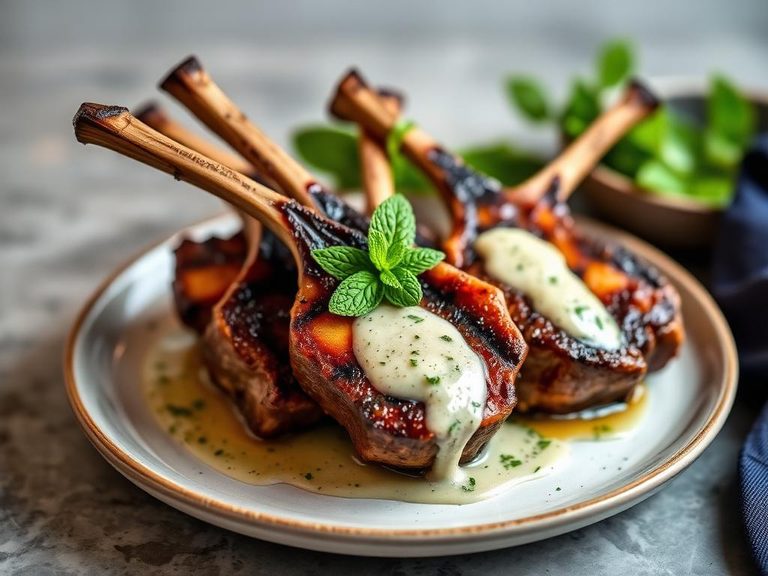
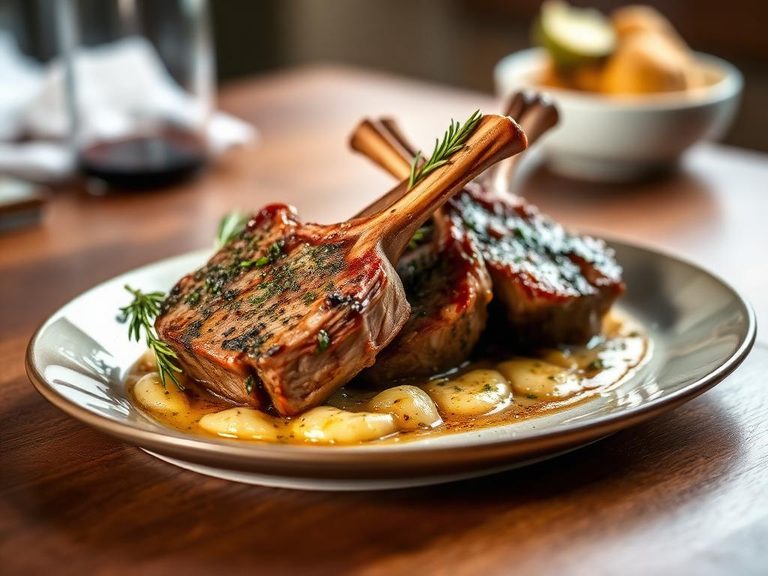
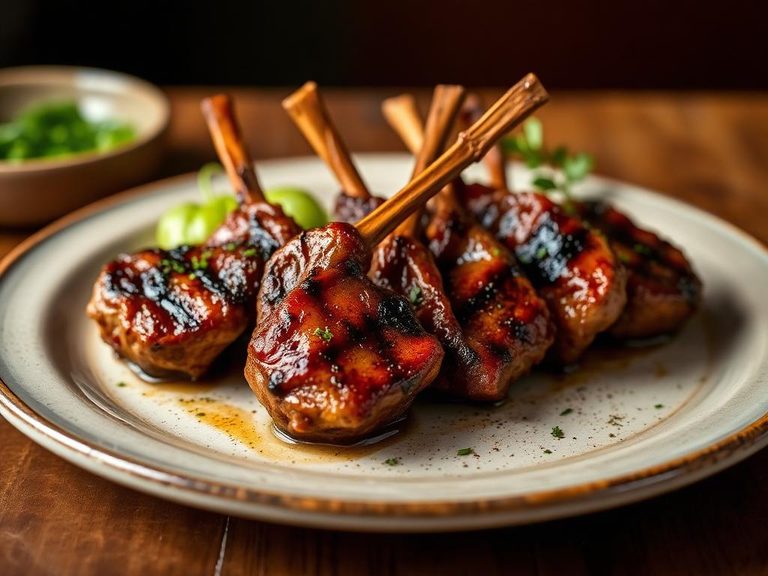
This is a premium cut of Australian lamb—a rib chop that has been frenched (bones cleaned for elegant presentation) and denuded (excess outer fat and connective tissue removed), then grilled to bring out its rich, meaty depth. The result is a deeply savory, tender chop with a slightly caramelized exterior and a satisfying, lean bite. At just 236 calories per 100g with over 33g of protein and virtually zero carbohydrates, it stands as a powerhouse of high-quality animal protein.
Calorie split: 56% protein · 0% carbs · 44% fat
↓ Full nutrition💚 Why it's loved
People adore this cut for its extraordinary flavor concentration—grilled lamb rib chops deliver a distinctive, slightly gamey richness with a caramelized crust that is unmatched by many other proteins. The frenched bone adds dramatic visual appeal to any plate, making it a staple at celebratory dinners, barbecue gatherings, and fine-dining restaurants across cultures from the Middle East to Australia.
⚠️ Watch-outs & how to enjoy it better
Despite the denuding process, this cut still carries meaningful saturated fat and purines, which may concern individuals with gout, cardiovascular concerns, or specific renal conditions. Those managing sodium intake should also be cautious with marinades or rubs often paired with lamb. To counteract, pair the chop with fiber-rich vegetables like roasted root vegetables or a leafy salad, limit portion size to one chop per serving, and use herbs and citrus rather than heavy salt-based rubs.
Key benefits
- Extremely high protein density at 33.17g per 100g supports muscle maintenance and satiety
- Virtually zero carbohydrates and no sugar, making it ideal for low-carb and ketogenic dietary patterns
- Rich in bioavailable iron, zinc, and B12—nutrients critical for energy metabolism and red blood cell production
- Grilling renders out excess fat without needing added cooking oils, keeping total fat moderate at 11.5g
- The frenched and denuded preparation minimizes saturated fat compared to untrimmed rib chops
🍽️ Popular dishes
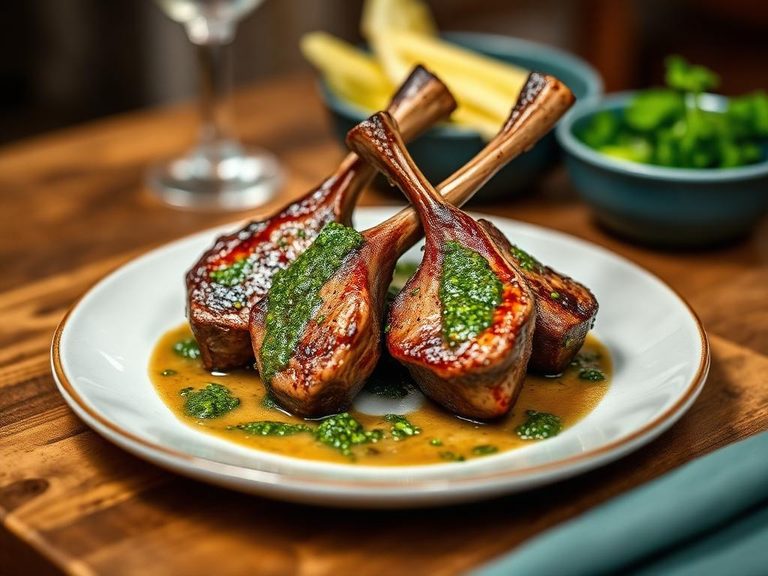
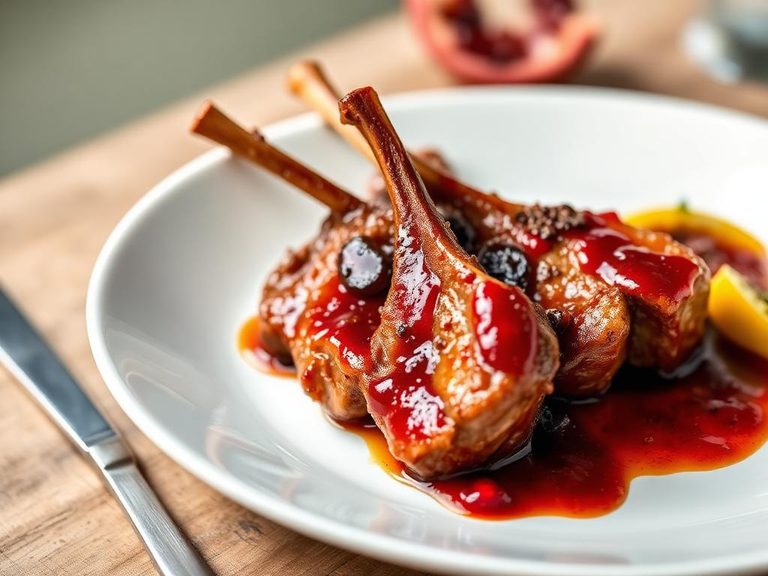
🌍 Where it's eaten
💡 Did you know?
Australia is actually the world's largest per-capita consumer of lamb—Australians eat roughly 9kg per person annually, far more than most countries, and lamb rib chops are considered a national favorite at summer barbecues known as "sizzlers."
Full nutrition (USDA data · scales with serving)
| Water | 55.4 g |
| Energy | 236 kcal |
| Energy | 988 kj |
| Protein | 33.2 g |
| Total lipid (fat) | 11.5 g |
| Ash | 1.3 g |
| Carbohydrate, by difference | 0.00 g |
| Fiber, total dietary | 0.00 g |
| Total Sugars | 0.00 g |
| Calcium, Ca | 10.0 mg |
| Iron, Fe | 2.5 mg |
| Magnesium, Mg | 28.0 mg |
| Phosphorus, P | 220 mg |
| Potassium, K | 294 mg |
| Sodium, Na | 85.0 mg |
| Zinc, Zn | 3.8 mg |
| Copper, Cu | 0.15 mg |
| Manganese, Mn | 0.01 mg |
| Selenium, Se | 15.4 ug |
| Vitamin C, total ascorbic acid | 0.00 mg |
| Thiamin | 0.16 mg |
| Riboflavin | 0.43 mg |
| Niacin | 9.1 mg |
| Pantothenic acid | 0.68 mg |
| Vitamin B-6 | 0.59 mg |
| Vitamin B-12 | 1.8 ug |
| Vitamin B-12, added | 0.00 ug |
| Vitamin A, RAE | 5.0 ug |
| Retinol | 5.0 ug |
| Carotene, beta | 0.00 ug |
| Carotene, alpha | 0.00 ug |
| Cryptoxanthin, beta | 0.00 ug |
| Vitamin A, IU | 15.0 iu |
| Lycopene | 0.00 ug |
| Lutein + zeaxanthin | 0.00 ug |
| Vitamin E (alpha-tocopherol) | 0.40 mg |
| Vitamin E, added | 0.00 mg |
| Vitamin D (D2 + D3), International Units | 0.00 iu |
| Vitamin D (D2 + D3) | 0.00 ug |
| Vitamin D2 (ergocalciferol) | 0.00 ug |
| Vitamin D3 (cholecalciferol) | 0.00 ug |
| Alcohol, ethyl | 0.00 g |
| Caffeine | 0.00 mg |
| Theobromine | 0.00 mg |
Fat & fatty acid profile (per 100g)
| Fatty acids, total saturated | 5.6 g |
| SFA 4:0 | 0.00 g |
| SFA 6:0 | 0.00 g |
| SFA 8:0 | 0.00 g |
| SFA 10:0 | 0.01 g |
| SFA 12:0 | 0.02 g |
| SFA 14:0 | 0.36 g |
| SFA 15:0 | 0.06 g |
| SFA 16:0 | 2.8 g |
| SFA 17:0 | 0.15 g |
| SFA 18:0 | 2.2 g |
| SFA 20:0 | 0.01 g |
| SFA 22:0 | 0.03 g |
| SFA 24:0 | 0.00 g |
| Fatty acids, total monounsaturated | 4.7 g |
| MUFA 14:1 | 0.01 g |
| MUFA 15:1 | 0.00 g |
| MUFA 16:1 | 0.15 g |
| MUFA 17:1 | 0.00 g |
| MUFA 18:1 | 4.5 g |
| MUFA 18:1 c | 4.0 g |
| MUFA 20:1 | 0.01 g |
| MUFA 22:1 | 0.00 g |
| MUFA 22:1 c | 0.00 g |
| Fatty acids, total polyunsaturated | 0.64 g |
| PUFA 18:2 | 0.41 g |
| PUFA 18:2 n-6 c,c | 0.26 g |
| PUFA 18:2 CLAs | 0.01 g |
| PUFA 18:3 | 0.11 g |
| PUFA 18:3 n-3 c,c,c (ALA) | 0.11 g |
| PUFA 18:3 n-6 c,c,c | 0.00 g |
| PUFA 18:4 | 0.00 g |
| PUFA 20:2 n-6 c,c | 0.00 g |
| PUFA 20:3 | 0.00 g |
| PUFA 20:4 | 0.05 g |
| PUFA 20:5 n-3 (EPA) | 0.02 g |
| PUFA 22:5 n-3 (DPA) | 0.03 g |
| PUFA 22:6 n-3 (DHA) | 0.01 g |
| Fatty acids, total trans | 0.62 g |
| Fatty acids, total trans-monoenoic | 0.48 g |
| TFA 18:1 t | 0.48 g |
| TFA 18:2 t not further defined | 0.14 g |
| Fatty acids, total trans-polyenoic | 0.14 g |
| Cholesterol | 103 mg |
Amino acid profile (per 100g)
| Tryptophan | 0.34 g |
| Threonine | 1.4 g |
| Isoleucine | 1.4 g |
| Leucine | 2.4 g |
| Lysine | 2.5 g |
| Methionine | 0.80 g |
| Cystine | 0.34 g |
| Phenylalanine | 1.2 g |
| Tyrosine | 1.0 g |
| Valine | 1.5 g |
| Arginine | 2.0 g |
| Histidine | 0.87 g |
| Alanine | 1.9 g |
| Aspartic acid | 2.7 g |
| Glutamic acid | 4.4 g |
| Glycine | 1.8 g |
| Proline | 1.4 g |
| Serine | 1.2 g |
FAQ
How does grilling compare to other cooking methods for this cut?
Grilling at high heat creates a Maillard reaction on the surface, locking in juices and developing exceptional flavor without added fat. Pan-searing or broiling can approximate this result, but true open-flame grilling imparts a subtle smokiness that enhances the lamb's natural richness.
Is lamb rib chop suitable for a low-fat diet?
While this specific cut is denuded and trimmed to near-zero added fat, the meat itself still contains 11.5g of fat per 100g, about 30% of calories from fat. It is moderate rather than low-fat, but the fat present is predominantly monounsaturated, making it a reasonable choice in a balanced diet when portion-controlled.
Why does lamb sometimes taste "gamey"?
The distinctive flavor in lamb comes from branched-chain fatty acids such as 4-methyloctanoic acid, which are more concentrated in the fat near the spine and shoulder. Rib chops, particularly leaner ones like this, tend to have a milder, sweeter taste compared to the leg or shoulder cuts.
What internal temperature should I aim for when grilling?
For medium-rare, target 63°C (145°F) with a 3-minute rest. For medium, aim for 71°C (160°F). Rib chops are lean and can dry out quickly, so pulling them a few degrees before your target and allowing resting time ensures the juices redistribute evenly.
How does Australian lamb differ from New Zealand lamb?
Australian lamb is typically farmed on large open pastures with a more varied diet of native forage, resulting in a slightly richer, more robust flavor. New Zealand lamb, raised on lush green pastures, tends to have a milder, grass-sweet taste. Both are excellent, but Australian lamb often finishes with a stronger meaty character when grilled.
Nutrient density (calculated · NRF9.3)
Nutrient Rich Foods index: beneficial nutrients (protein, fiber, vitamins, minerals) minus saturated fat, added sugar & sodium, per 100 kcal.
NRF9.3 index — Fulgoni, Keast & Drewnowski, 2009. Computed from USDA nutrients.
Weight-loss friendliness (composite index)
Energy density 2.36 kcal/g · 56% calories from protein · 0.0 g fiber · 0.0 g sugar per 100 g.
Composite of energy density (Rolls et al., 1999), protein & fiber satiety, minus sugar. A calculated heuristic — ranks satiety-per-calorie, not a clinical measure.
Dietary load (calculated from USDA values)
Potential renal acid load. Positive = acid-forming, negative = alkaline-forming.
Sodium-to-potassium ratio: 0.29 (lower is better — aim for ≤ 1)
Sodium:potassium per WHO potassium guidance. Computed from USDA nutrients.