

Grapefruit, raw, pink and red, all areas
Whole food · Fruits and Fruit Juices
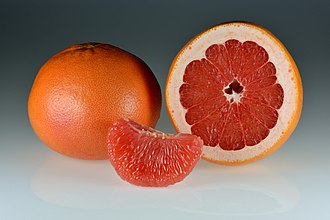
Photo: Wikipedia
Pink and red grapefruit is a citrus fruit with a vibrant, sunset-colored flesh that offers a unique balance of sweet and tart flavors. Its juicy, tender segments provide a refreshing burst, while its low calorie count and notable fiber content make it a nutritionally smart choice for a snack or light meal.
Calorie split: 7% protein · 91% carbs · 3% fat
↓ Full nutrition💚 Why it's loved
People love it for its refreshing, complex flavor that's both tangy and subtly sweet, making it a perfect morning pick-me-up. Its vibrant color and ease of preparation—just slice in half and scoop—have cemented its place in breakfast culture worldwide.
⚠️ Watch-outs & how to enjoy it better
The fruit's natural acidity can be harsh on tooth enamel and may cause heartburn in those with acid reflux. It also contains compounds that can interfere with the metabolism of certain medications (like some statins and blood pressure drugs). To counteract acidity, rinse your mouth with water after eating and avoid brushing teeth immediately; for medication concerns, consult a doctor or pharmacist about safe consumption timing.
Key benefits
- Low in calories, ideal for weight management
- Good source of dietary fiber for digestive health
- Rich in vitamin C, an important antioxidant
- Contains lycopene, a pigment linked to heart health
- High water content supports hydration
🍽️ Popular dishes
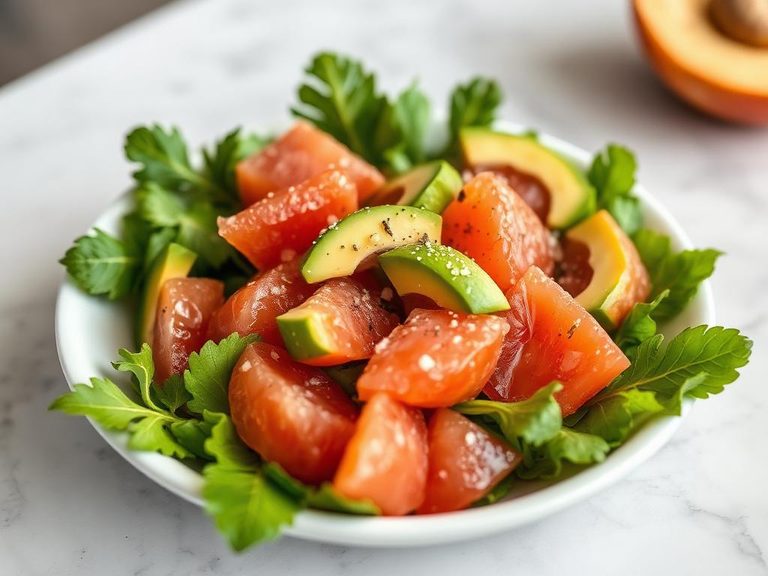
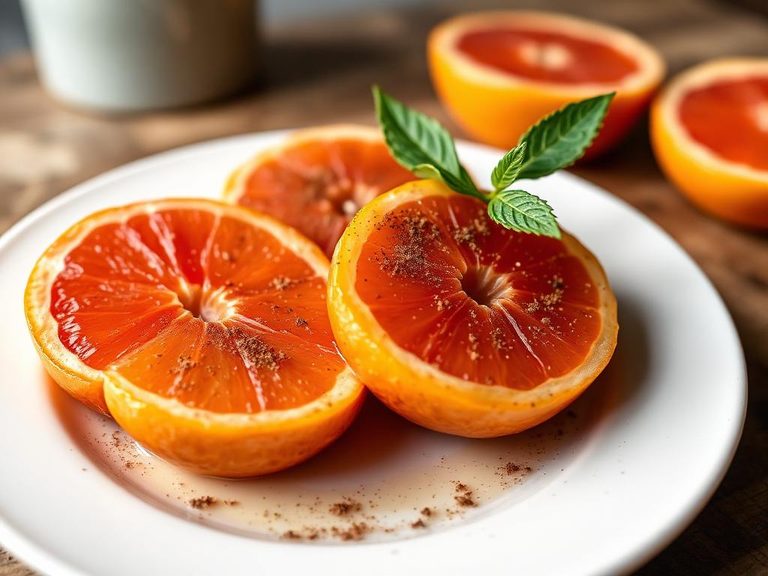
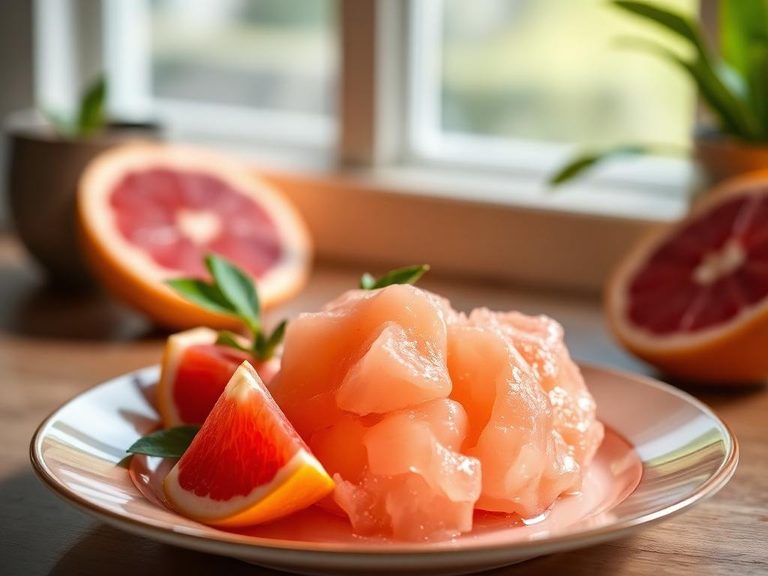
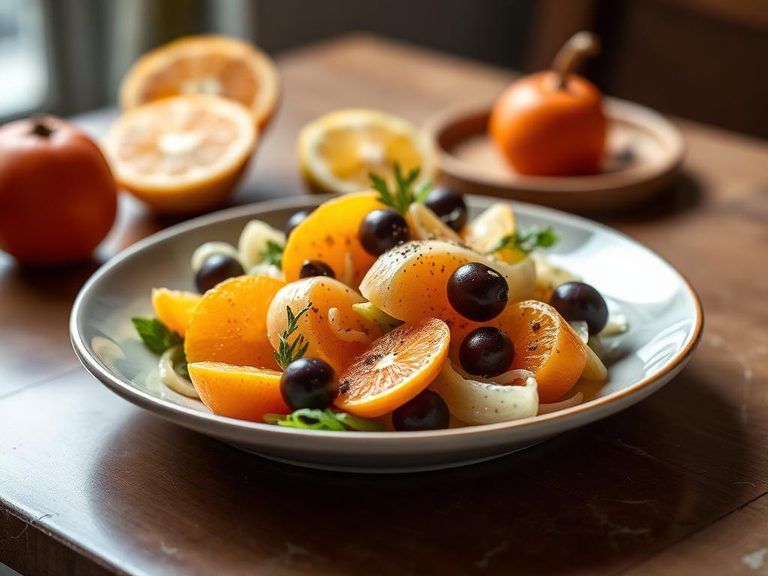
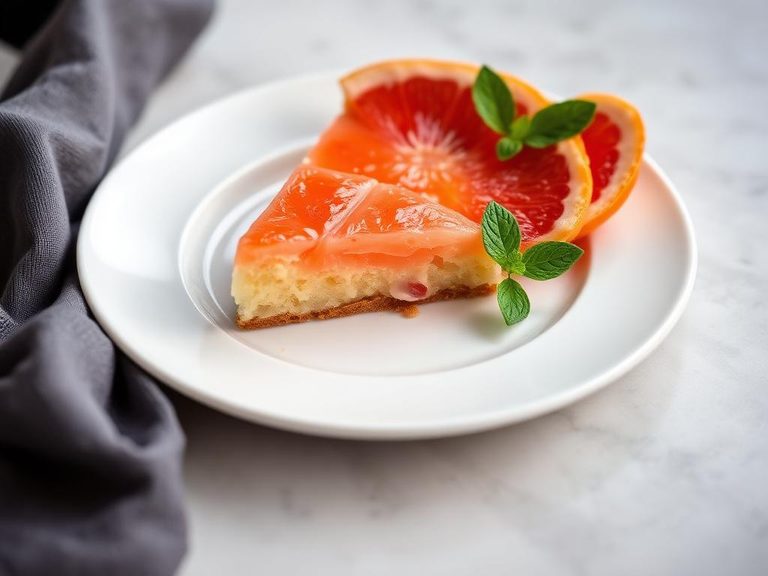

🌍 Where it's eaten
💡 Did you know?
The pink and red color in grapefruit comes from lycopene, the same antioxidant that gives tomatoes and watermelons their red hue, which is unusual for a citrus fruit.
Full nutrition (USDA data · scales with serving)
| Water | 88.1 g |
| Energy | 42.0 kcal |
| Energy | 176 kj |
| Protein | 0.77 g |
| Total lipid (fat) | 0.14 g |
| Ash | 0.36 g |
| Carbohydrate, by difference | 10.7 g |
| Fiber, total dietary | 1.6 g |
| Total Sugars | 6.9 g |
| Sucrose | 3.5 g |
| Glucose | 1.6 g |
| Fructose | 1.8 g |
| Lactose | 0.00 g |
| Maltose | 0.00 g |
| Galactose | 0.00 g |
| Starch | 0.00 g |
| Calcium, Ca | 22.0 mg |
| Iron, Fe | 0.08 mg |
| Magnesium, Mg | 9.0 mg |
| Phosphorus, P | 18.0 mg |
| Potassium, K | 135 mg |
| Sodium, Na | 0.00 mg |
| Zinc, Zn | 0.07 mg |
| Copper, Cu | 0.03 mg |
| Manganese, Mn | 0.02 mg |
| Selenium, Se | 0.10 ug |
| Vitamin C, total ascorbic acid | 31.2 mg |
| Thiamin | 0.04 mg |
| Riboflavin | 0.03 mg |
| Niacin | 0.20 mg |
| Pantothenic acid | 0.26 mg |
| Vitamin B-6 | 0.05 mg |
| Folate, total | 13.0 ug |
| Folic acid | 0.00 ug |
| Folate, food | 13.0 ug |
| Folate, DFE | 13.0 ug |
| Choline, total | 7.7 mg |
| Betaine | 0.10 mg |
| Vitamin B-12 | 0.00 ug |
| Vitamin B-12, added | 0.00 ug |
| Vitamin A, RAE | 58.0 ug |
| Retinol | 0.00 ug |
| Carotene, beta | 686 ug |
| Carotene, alpha | 3.0 ug |
| Cryptoxanthin, beta | 6.0 ug |
| Vitamin A, IU | 1150 iu |
| Lycopene | 1419 ug |
| Lutein + zeaxanthin | 5.0 ug |
| Vitamin E (alpha-tocopherol) | 0.13 mg |
| Vitamin E, added | 0.00 mg |
| Tocopherol, beta | 0.00 mg |
| Tocopherol, gamma | 0.00 mg |
| Tocopherol, delta | 0.00 mg |
| Tocotrienol, alpha | 0.02 mg |
| Tocotrienol, beta | 0.00 mg |
| Tocotrienol, gamma | 0.00 mg |
| Tocotrienol, delta | 0.00 mg |
| Vitamin D (D2 + D3), International Units | 0.00 iu |
| Vitamin D (D2 + D3) | 0.00 ug |
| Vitamin K (phylloquinone) | 0.00 ug |
| Vitamin K (Dihydrophylloquinone) | 0.00 ug |
| Alcohol, ethyl | 0.00 g |
| Caffeine | 0.00 mg |
| Theobromine | 0.00 mg |
Fat & fatty acid profile (per 100g)
| Fatty acids, total saturated | 0.02 g |
| SFA 4:0 | 0.00 g |
| SFA 6:0 | 0.00 g |
| SFA 8:0 | 0.00 g |
| SFA 10:0 | 0.00 g |
| SFA 12:0 | 0.00 g |
| SFA 14:0 | 0.00 g |
| SFA 16:0 | 0.02 g |
| SFA 18:0 | 0.00 g |
| Fatty acids, total monounsaturated | 0.02 g |
| MUFA 16:1 | 0.00 g |
| MUFA 18:1 | 0.02 g |
| MUFA 20:1 | 0.00 g |
| MUFA 22:1 | 0.00 g |
| Fatty acids, total polyunsaturated | 0.04 g |
| PUFA 18:2 | 0.03 g |
| PUFA 18:3 | 0.01 g |
| PUFA 18:4 | 0.00 g |
| PUFA 20:4 | 0.00 g |
| PUFA 20:5 n-3 (EPA) | 0.00 g |
| PUFA 22:5 n-3 (DPA) | 0.00 g |
| PUFA 22:6 n-3 (DHA) | 0.00 g |
| Fatty acids, total trans | 0.00 g |
| Cholesterol | 0.00 mg |
Amino acid profile (per 100g)
| Tryptophan | 0.01 g |
| Threonine | 0.01 g |
| Isoleucine | 0.01 g |
| Leucine | 0.01 g |
| Lysine | 0.02 g |
| Methionine | 0.01 g |
| Cystine | 0.01 g |
| Phenylalanine | 0.01 g |
| Tyrosine | 0.01 g |
| Valine | 0.01 g |
| Arginine | 0.09 g |
| Histidine | 0.01 g |
| Alanine | 0.02 g |
| Aspartic acid | 0.14 g |
| Glutamic acid | 0.20 g |
| Glycine | 0.01 g |
| Proline | 0.06 g |
| Serine | 0.03 g |
FAQ
Is grapefruit really bad to eat with certain medications?
Yes. Grapefruit contains furanocoumarins that can inhibit an enzyme (CYP3A4) in your gut, potentially increasing the concentration and effect of some medications to dangerous levels. This is a serious interaction for drugs like certain statins (e.g., simvastatin), calcium channel blockers, and some anti-anxiety medications. Always check with your doctor or pharmacist.
Why is my grapefruit sometimes bitter?
The bitterness comes from compounds called naringin and limonin, which are more concentrated in the white pith and membranes. Pink and red varieties are generally bred to be sweeter and less bitter than white grapefruit. Chilling the fruit well before eating can also reduce perceived bitterness.
How do I pick a ripe grapefruit?
Look for fruit that feels heavy for its size, indicating high juice content. The skin should be smooth and firm, with a slight give when gently squeezed. Avoid fruit with soft spots or a dull, wrinkled appearance. For pink/red varieties, a deeper, more uniform color often correlates with better flavor.
Nutrient density (calculated · NRF9.3)
Nutrient Rich Foods index: beneficial nutrients (protein, fiber, vitamins, minerals) minus saturated fat, added sugar & sodium, per 100 kcal.
NRF9.3 index — Fulgoni, Keast & Drewnowski, 2009. Computed from USDA nutrients.
Weight-loss friendliness (composite index)
Energy density 0.42 kcal/g · 7% calories from protein · 1.6 g fiber · 6.9 g sugar per 100 g.
Composite of energy density (Rolls et al., 1999), protein & fiber satiety, minus sugar. A calculated heuristic — ranks satiety-per-calorie, not a clinical measure.
Dietary load (calculated from USDA values)
Potential renal acid load. Positive = acid-forming, negative = alkaline-forming.
Sodium-to-potassium ratio: 0.00 (lower is better — aim for ≤ 1)
Sodium:potassium per WHO potassium guidance. Computed from USDA nutrients.