

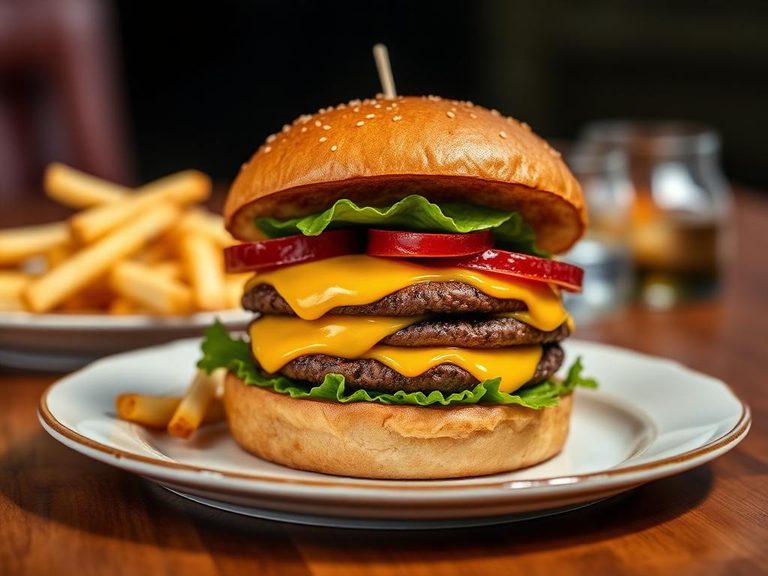
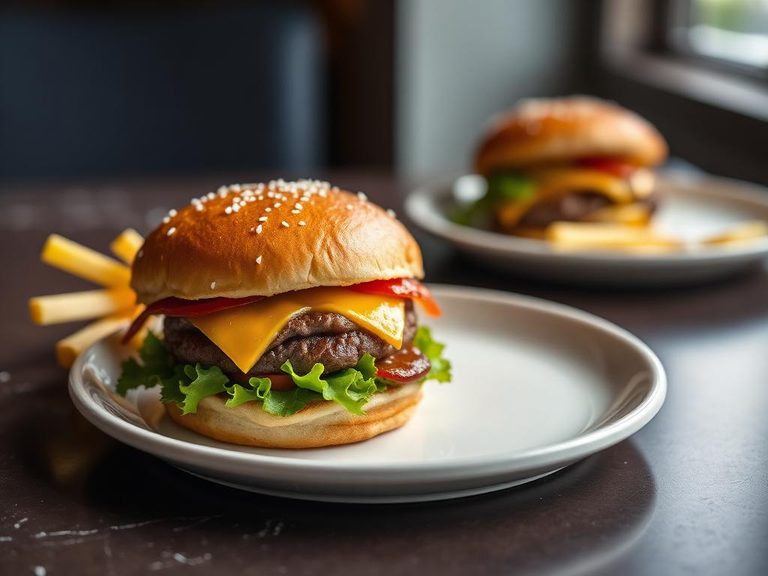
Fast foods, cheeseburger; double, regular patty; double decker bun with condiments and special sauce
Whole food · Fast Foods
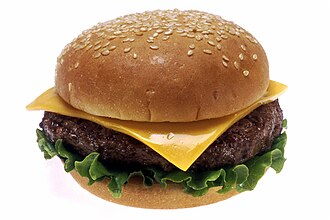
Photo: Wikipedia
This is the iconic, towering double-decker cheeseburger, a symphony of two beef patties, melted American cheese, crisp lettuce, pickles, onions, and a signature tangy special sauce, all held together by a soft, toasted sesame seed bun. Each bite delivers a satisfying contrast of savory, salty, and sweet notes with a rich, juicy texture from the beef and a creamy finish from the sauce and cheese. Nutritionally, it's a calorie-dense meal, packing a solid 11.94g of protein per 100g, but also a significant 14.1g of fat and 21.53g of carbohydrates, making it a substantial energy source.
Calorie split: 18% protein · 33% carbs · 49% fat
↓ Full nutrition💚 Why it's loved
People adore it for its legendary, crave-worthy flavor profile—the perfect balance of savory beef, tangy sauce, and melted cheese that defines fast-food comfort. It's a cultural icon, a nostalgic treat, and a go-to for a quick, satisfying meal that delivers on taste and texture.
⚠️ Watch-outs & how to enjoy it better
The high fat, sodium, and refined carbohydrate content can lead to blood-sugar spikes and may be concerning for those monitoring heart health or calorie intake. To counteract, consider pairing it with a side salad or steamed vegetables to increase fiber, practicing portion control by eating only half, and choosing water or unsweetened tea as a beverage to avoid added sugars.
Key benefits
- Provides a substantial protein source from the beef patties for muscle maintenance.
- Offers a quick and convenient source of energy due to its high calorie and carbohydrate content.
- Contains calcium from the cheese, contributing to bone health.
- The combination of protein, fat, and carbs can promote satiety and fullness.
🍽️ Popular dishes
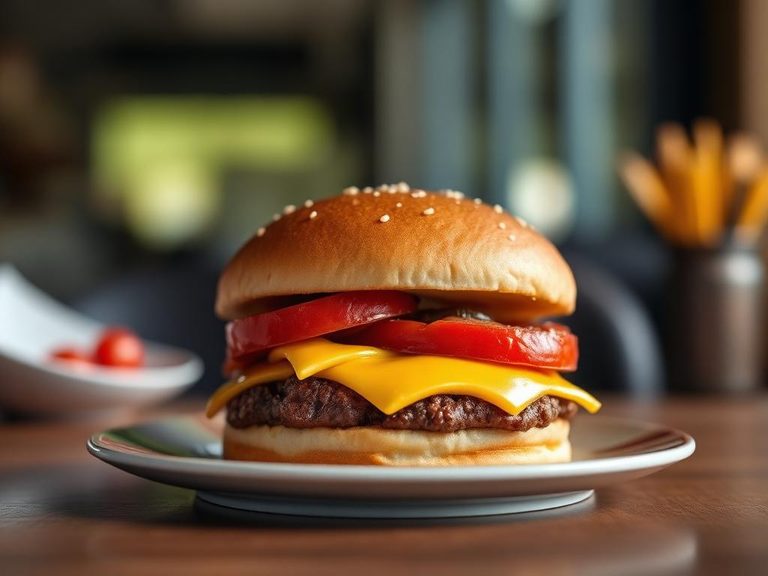
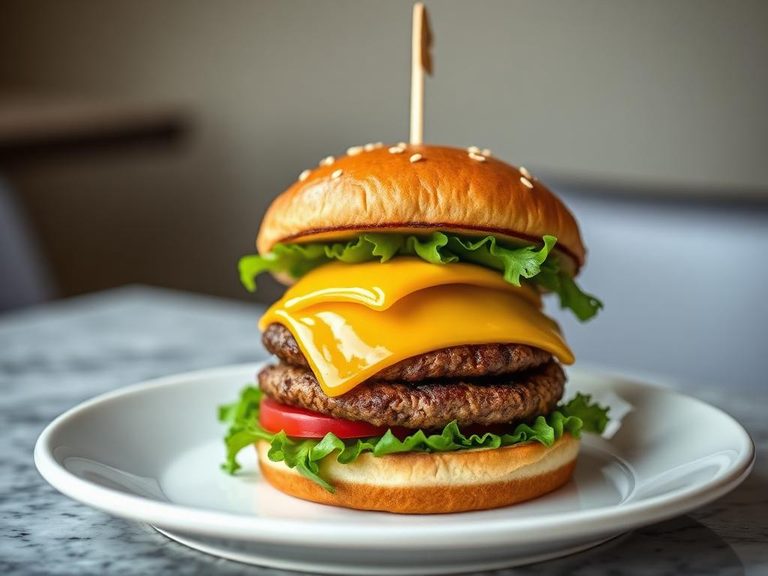
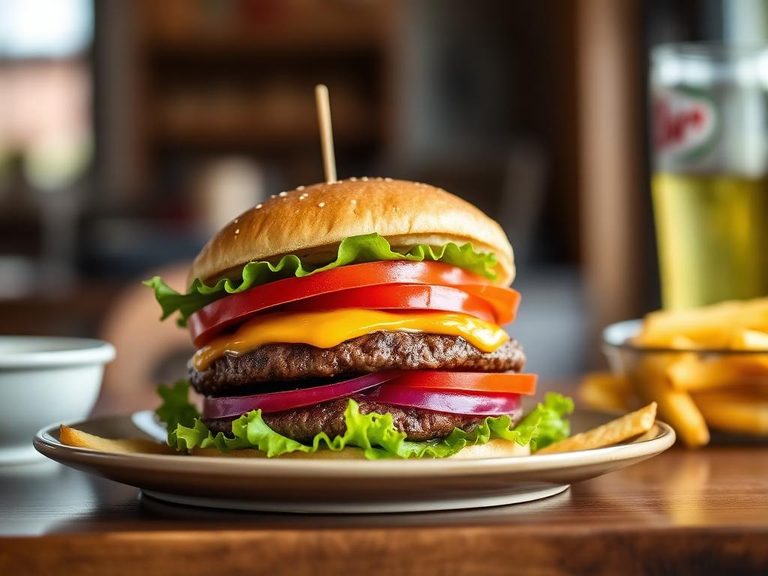
🌍 Where it's eaten
💡 Did you know?
The 'special sauce' for the iconic Big Mac was originally called 'Special Sauce' but was renamed 'Secret Sauce' in the 1970s, and its exact recipe remains a closely guarded trade secret, though it's often compared to a Thousand Island dressing.
Full nutrition (USDA data · scales with serving)
| Water | 50.5 g |
| Energy | 261 kcal |
| Energy | 1091 kj |
| Protein | 11.9 g |
| Total lipid (fat) | 14.1 g |
| Ash | 1.9 g |
| Carbohydrate, by difference | 21.5 g |
| Fiber, total dietary | 1.4 g |
| Total Sugars | 3.3 g |
| Sucrose | 0.32 g |
| Glucose | 1.1 g |
| Fructose | 1.3 g |
| Lactose | 0.29 g |
| Maltose | 0.25 g |
| Starch | 14.1 g |
| Calcium, Ca | 127 mg |
| Iron, Fe | 1.4 mg |
| Magnesium, Mg | 25.0 mg |
| Phosphorus, P | 136 mg |
| Potassium, K | 182 mg |
| Sodium, Na | 485 mg |
| Zinc, Zn | 2.2 mg |
| Copper, Cu | 0.13 mg |
| Manganese, Mn | 0.21 mg |
| Selenium, Se | 25.9 ug |
| Vitamin C, total ascorbic acid | 0.30 mg |
| Thiamin | 0.18 mg |
| Riboflavin | 0.20 mg |
| Niacin | 3.6 mg |
| Pantothenic acid | 0.44 mg |
| Vitamin B-6 | 0.17 mg |
| Folate, total | 27.0 ug |
| Folic acid | 18.0 ug |
| Folate, food | 9.0 ug |
| Folate, DFE | 40.0 ug |
| Choline, total | 31.5 mg |
| Vitamin B-12 | 1.3 ug |
| Vitamin B-12, added | 0.00 ug |
| Vitamin A, RAE | 27.0 ug |
| Retinol | 22.0 ug |
| Carotene, beta | 59.0 ug |
| Carotene, alpha | 1.0 ug |
| Cryptoxanthin, beta | 2.0 ug |
| Vitamin A, IU | 174 iu |
| Lycopene | 0.00 ug |
| Lutein + zeaxanthin | 50.0 ug |
| Vitamin E (alpha-tocopherol) | 0.06 mg |
| Vitamin E, added | 0.00 mg |
| Tocopherol, beta | 0.00 mg |
| Tocopherol, gamma | 1.0 mg |
| Tocopherol, delta | 0.87 mg |
| Tocotrienol, beta | 0.00 mg |
| Tocotrienol, gamma | 0.00 mg |
| Tocotrienol, delta | 0.00 mg |
| Vitamin D (D2 + D3), International Units | 5.0 iu |
| Vitamin D (D2 + D3) | 0.10 ug |
| Vitamin K (phylloquinone) | 16.4 ug |
| Vitamin K (Dihydrophylloquinone) | 0.00 ug |
| Alcohol, ethyl | 0.00 g |
| Caffeine | 0.00 mg |
| Theobromine | 0.00 mg |
Fat & fatty acid profile (per 100g)
| Fatty acids, total saturated | 5.0 g |
| SFA 4:0 | 0.09 g |
| SFA 6:0 | 0.03 g |
| SFA 8:0 | 0.02 g |
| SFA 10:0 | 0.05 g |
| SFA 12:0 | 0.06 g |
| SFA 14:0 | 0.40 g |
| SFA 15:0 | 0.05 g |
| SFA 16:0 | 2.8 g |
| SFA 17:0 | 0.09 g |
| SFA 18:0 | 1.4 g |
| SFA 20:0 | 0.03 g |
| SFA 22:0 | 0.02 g |
| SFA 24:0 | 0.00 g |
| Fatty acids, total monounsaturated | 5.1 g |
| MUFA 14:1 | 0.07 g |
| MUFA 15:1 | 0.00 g |
| MUFA 16:1 | 0.29 g |
| MUFA 17:1 | 0.00 g |
| MUFA 18:1 | 4.7 g |
| MUFA 20:1 | 0.05 g |
| MUFA 22:1 | 0.02 g |
| Fatty acids, total polyunsaturated | 3.8 g |
| PUFA 18:2 | 3.3 g |
| PUFA 18:3 | 0.45 g |
| PUFA 18:4 | 0.05 g |
| PUFA 20:2 n-6 c,c | 0.00 g |
| PUFA 20:3 | 0.00 g |
| PUFA 20:4 | 0.02 g |
| PUFA 20:5 n-3 (EPA) | 0.00 g |
| PUFA 22:5 n-3 (DPA) | 0.00 g |
| PUFA 22:6 n-3 (DHA) | 0.00 g |
| Cholesterol | 36.0 mg |
Amino acid profile (per 100g)
| Tryptophan | 0.11 g |
| Threonine | 0.39 g |
| Isoleucine | 0.44 g |
| Leucine | 0.81 g |
| Lysine | 0.67 g |
| Methionine | 0.24 g |
| Cystine | 0.15 g |
| Phenylalanine | 0.45 g |
| Tyrosine | 0.24 g |
| Valine | 0.52 g |
| Arginine | 0.58 g |
| Histidine | 0.29 g |
| Alanine | 0.61 g |
| Aspartic acid | 0.74 g |
| Glutamic acid | 2.4 g |
| Glycine | 0.70 g |
| Proline | 0.86 g |
| Serine | 0.44 g |
FAQ
How much protein is in a double cheeseburger?
Based on the provided data, a double cheeseburger contains approximately 11.94 grams of protein per 100 grams. A typical single serving (around 215g) would provide about 25.7 grams of protein.
Is this burger high in fat?
Yes, with 14.1 grams of fat per 100 grams, it is considered high in fat, particularly saturated fat from the beef and cheese. This contributes significantly to its calorie density.
Can I eat this as part of a balanced diet?
In moderation, yes. Pairing it with fiber-rich vegetables, controlling portion size, and balancing your overall daily intake can make it an occasional part of a balanced diet.
Nutrient density (calculated · NRF9.3)
Nutrient Rich Foods index: beneficial nutrients (protein, fiber, vitamins, minerals) minus saturated fat, added sugar & sodium, per 100 kcal.
NRF9.3 index — Fulgoni, Keast & Drewnowski, 2009. Computed from USDA nutrients.
Weight-loss friendliness (composite index)
Energy density 2.61 kcal/g · 18% calories from protein · 1.4 g fiber · 3.3 g sugar per 100 g.
Composite of energy density (Rolls et al., 1999), protein & fiber satiety, minus sugar. A calculated heuristic — ranks satiety-per-calorie, not a clinical measure.
Dietary load (calculated from USDA values)
Potential renal acid load. Positive = acid-forming, negative = alkaline-forming.
Sodium-to-potassium ratio: 2.66 (lower is better — aim for ≤ 1)
Sodium:potassium per WHO potassium guidance. Computed from USDA nutrients.