

Corn, sweet, yellow, canned, brine pack, regular pack, solids and liquids
Whole food · Vegetables and Vegetable Products
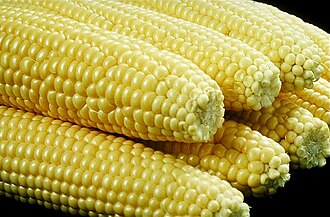
Photo: Wikipedia
This is sweet yellow corn, harvested at peak ripeness and preserved in a light brine, offering a tender, juicy bite with a bright, sugary pop. The canning process locks in its signature golden color and a satisfyingly soft, yet slightly crisp texture. It's a convenient, low-calorie source of quick energy, providing nearly 14 grams of carbohydrates per 100g serving.
Calorie split: 11% protein · 79% carbs · 10% fat
↓ Full nutrition💚 Why it's loved
People love it for its comforting, nostalgic sweetness and incredible versatility—it's equally at home in a summer salad, a hearty soup, or as a simple side. Its vibrant color and satisfying crunch make it a staple in countless home-cooked meals across cultures.
⚠️ Watch-outs & how to enjoy it better
The brine can be high in sodium, and its natural sugars can cause a rapid blood-sugar spike if eaten alone. To counteract this, rinse the corn well to reduce sodium, and pair it with a source of protein (like beans or chicken) or healthy fat (like avocado or olive oil) to slow digestion and create a more balanced meal.
Key benefits
- Provides quick-release energy from natural sugars and starches
- Good source of dietary fiber for digestive health
- Contains essential minerals like phosphorus and magnesium
- Convenient, shelf-stable, and ready-to-eat with minimal preparation
- Naturally low in fat and a source of plant-based protein
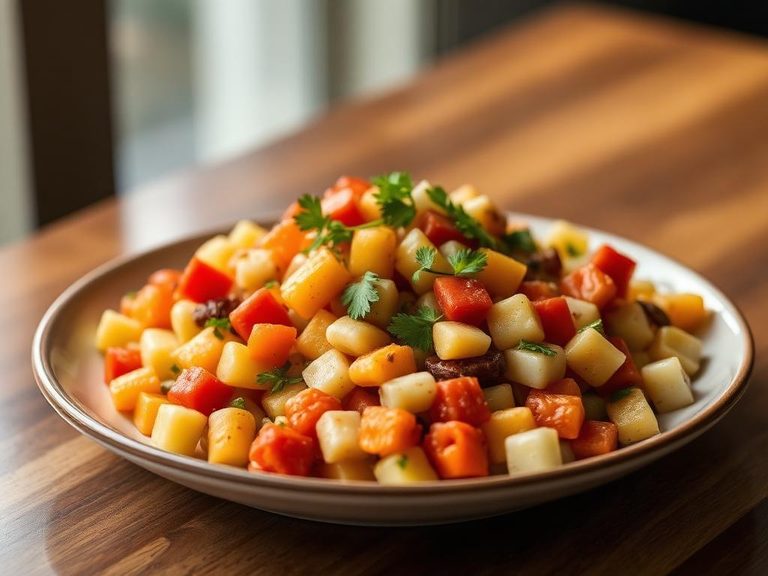
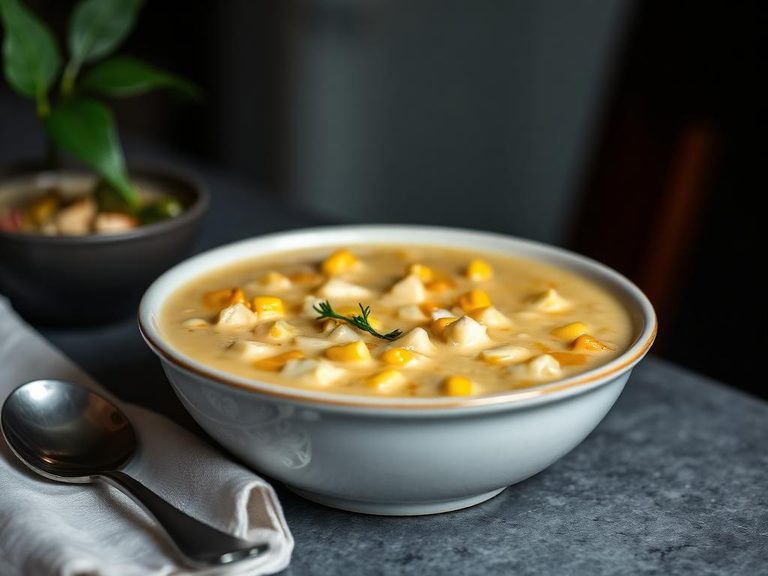
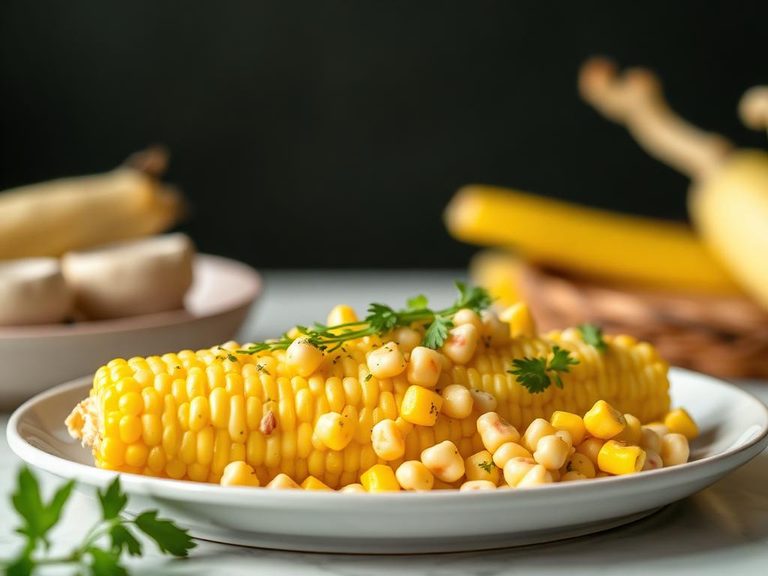
🍽️ Popular dishes
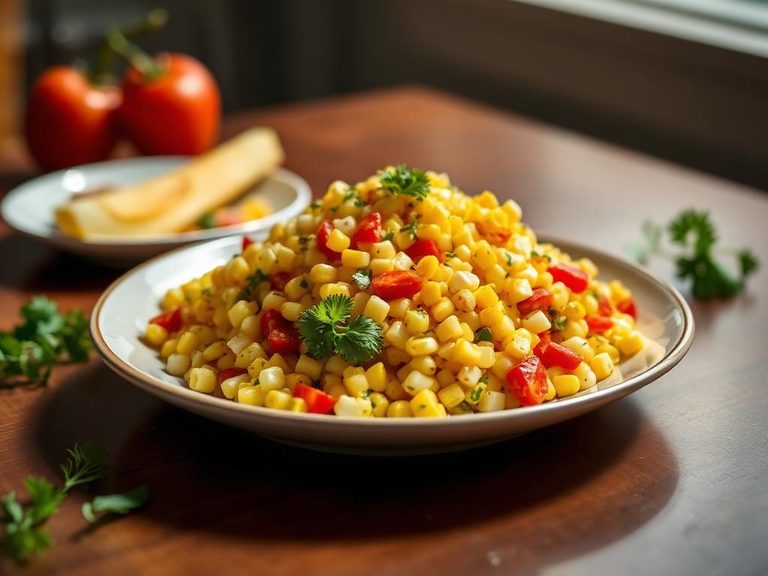
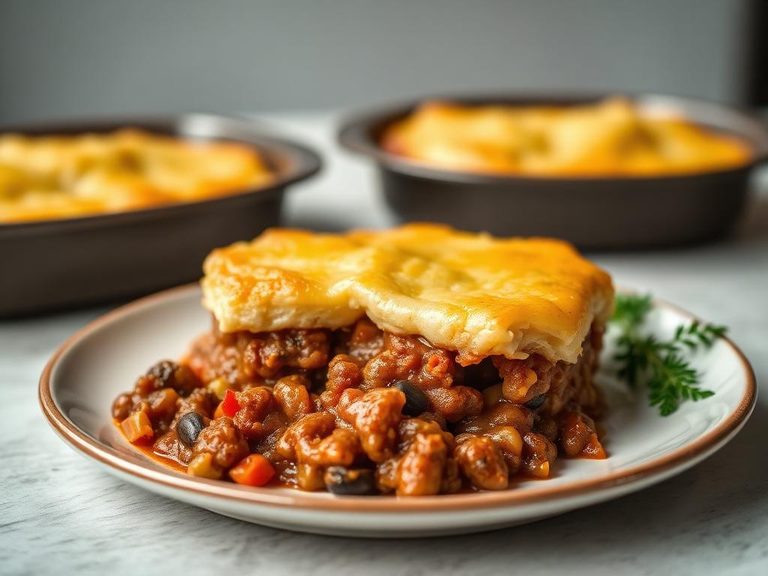

🌍 Where it's eaten
💡 Did you know?
The average ear of corn has an even number of rows, typically 16, and each silk strand connects to a single kernel on the cob.
Full nutrition (USDA data · scales with serving)
| Water | 82.6 g |
| Energy | 61.0 kcal |
| Energy | 254 kj |
| Protein | 1.9 g |
| Total lipid (fat) | 0.77 g |
| Ash | 0.80 g |
| Carbohydrate, by difference | 13.9 g |
| Fiber, total dietary | 1.7 g |
| Total Sugars | 4.2 g |
| Sucrose | 3.6 g |
| Glucose | 0.26 g |
| Fructose | 0.17 g |
| Lactose | 0.00 g |
| Maltose | 0.07 g |
| Galactose | 0.00 g |
| Calcium, Ca | 4.0 mg |
| Iron, Fe | 0.36 mg |
| Magnesium, Mg | 15.0 mg |
| Phosphorus, P | 46.0 mg |
| Potassium, K | 136 mg |
| Sodium, Na | 195 mg |
| Zinc, Zn | 0.39 mg |
| Copper, Cu | 0.03 mg |
| Manganese, Mn | 0.08 mg |
| Selenium, Se | 0.50 ug |
| Fluoride, F | 18.0 ug |
| Vitamin C, total ascorbic acid | 2.6 mg |
| Thiamin | 0.01 mg |
| Riboflavin | 0.01 mg |
| Niacin | 0.88 mg |
| Pantothenic acid | 0.52 mg |
| Vitamin B-6 | 0.04 mg |
| Folate, total | 38.0 ug |
| Folic acid | 0.00 ug |
| Folate, food | 38.0 ug |
| Folate, DFE | 38.0 ug |
| Choline, total | 16.6 mg |
| Vitamin B-12 | 0.00 ug |
| Vitamin B-12, added | 0.00 ug |
| Vitamin A, RAE | 2.0 ug |
| Retinol | 0.00 ug |
| Carotene, beta | 9.0 ug |
| Carotene, alpha | 10.0 ug |
| Cryptoxanthin, beta | 14.0 ug |
| Vitamin A, IU | 34.0 iu |
| Lycopene | 0.00 ug |
| Lutein + zeaxanthin | 650 ug |
| Vitamin E (alpha-tocopherol) | 0.03 mg |
| Vitamin E, added | 0.00 mg |
| Tocopherol, beta | 0.00 mg |
| Tocopherol, gamma | 0.00 mg |
| Tocopherol, delta | 0.00 mg |
| Tocotrienol, alpha | 0.12 mg |
| Tocotrienol, beta | 0.00 mg |
| Tocotrienol, gamma | 1.3 mg |
| Tocotrienol, delta | 0.00 mg |
| Vitamin D (D2 + D3), International Units | 0.00 iu |
| Vitamin D (D2 + D3) | 0.00 ug |
| Vitamin K (phylloquinone) | 0.00 ug |
| Alcohol, ethyl | 0.00 g |
| Caffeine | 0.00 mg |
| Theobromine | 0.00 mg |
Fat & fatty acid profile (per 100g)
| Fatty acids, total saturated | 0.08 g |
| SFA 4:0 | 0.00 g |
| SFA 6:0 | 0.00 g |
| SFA 8:0 | 0.00 g |
| SFA 10:0 | 0.00 g |
| SFA 12:0 | 0.00 g |
| SFA 14:0 | 0.00 g |
| SFA 16:0 | 0.07 g |
| SFA 18:0 | 0.00 g |
| Fatty acids, total monounsaturated | 0.14 g |
| MUFA 16:1 | 0.00 g |
| MUFA 18:1 | 0.14 g |
| MUFA 20:1 | 0.00 g |
| MUFA 22:1 | 0.00 g |
| Fatty acids, total polyunsaturated | 0.23 g |
| PUFA 18:2 | 0.23 g |
| PUFA 18:3 | 0.01 g |
| PUFA 18:4 | 0.00 g |
| PUFA 20:4 | 0.00 g |
| PUFA 20:5 n-3 (EPA) | 0.00 g |
| PUFA 22:5 n-3 (DPA) | 0.00 g |
| PUFA 22:6 n-3 (DHA) | 0.00 g |
| Fatty acids, total trans | 0.00 g |
| Cholesterol | 0.00 mg |
Amino acid profile (per 100g)
| Tryptophan | 0.01 g |
| Threonine | 0.08 g |
| Isoleucine | 0.08 g |
| Leucine | 0.21 g |
| Lysine | 0.08 g |
| Methionine | 0.04 g |
| Cystine | 0.02 g |
| Phenylalanine | 0.09 g |
| Tyrosine | 0.07 g |
| Valine | 0.11 g |
| Arginine | 0.08 g |
| Histidine | 0.05 g |
| Alanine | 0.18 g |
| Aspartic acid | 0.15 g |
| Glutamic acid | 0.39 g |
| Glycine | 0.08 g |
| Proline | 0.18 g |
| Serine | 0.09 g |
FAQ
Is canned corn as nutritious as fresh corn?
Yes, it's very comparable. The canning process preserves most vitamins and minerals, though some heat-sensitive nutrients like Vitamin C may be slightly reduced. It retains its full fiber and mineral content.
Should I drain the brine before using it?
It depends on the dish. For salads or side dishes, draining is recommended to remove excess sodium and a starchy taste. For soups, stews, or casseroles, you can add the liquid for extra corn flavor.
What does 'brine pack' mean?
It means the corn kernels are canned and preserved in a solution of water and salt (brine), as opposed to a 'cream style' or 'vacuum pack.' This method helps maintain the corn's texture and flavor.
Nutrient density (calculated · NRF9.3)
Nutrient Rich Foods index: beneficial nutrients (protein, fiber, vitamins, minerals) minus saturated fat, added sugar & sodium, per 100 kcal.
NRF9.3 index — Fulgoni, Keast & Drewnowski, 2009. Computed from USDA nutrients.
Weight-loss friendliness (composite index)
Energy density 0.61 kcal/g · 13% calories from protein · 1.7 g fiber · 4.2 g sugar per 100 g.
Composite of energy density (Rolls et al., 1999), protein & fiber satiety, minus sugar. A calculated heuristic — ranks satiety-per-calorie, not a clinical measure.
Dietary load (calculated from USDA values)
Potential renal acid load. Positive = acid-forming, negative = alkaline-forming.
Sodium-to-potassium ratio: 1.43 (lower is better — aim for ≤ 1)
Sodium:potassium per WHO potassium guidance. Computed from USDA nutrients.