

Cereals ready-to-eat, POST, Shredded Wheat, original big biscuit
Whole food · Breakfast Cereals

Photo: Wikipedia
This is a large, dense biscuit of shredded whole-wheat strands, toasted to a deep golden-brown. Its texture is famously crunchy and fibrous, requiring a good soak in milk to soften into a satisfying, nutty chew. Nutritionally, it's a powerhouse of complex carbohydrates and fiber, with a respectable protein content for a cereal.
Calorie split: 12% protein · 83% carbs · 5% fat
↓ Full nutrition💚 Why it's loved
People love its hearty, no-nonsense crunch and pure, toasty wheat flavor that isn't masked by added sugars. It's a versatile canvas, perfect for topping with fresh fruit or mixing into homemade granola bars.
⚠️ Watch-outs & how to enjoy it better
Its extreme density and high fiber content can cause digestive discomfort (bloating, gas) for those unaccustomed to it, and it requires significant chewing. To counteract this, start with a small portion, chew thoroughly, and ensure you drink plenty of water. Its plain taste can also be unappealing to those who prefer sweeter cereals.
Key benefits
- Exceptionally high in dietary fiber (12.4g per 100g)
- Low in fat (2.01g per 100g) and naturally very low in sugar (0.94g)
- Provides sustained energy from complex carbohydrates
- Good source of plant-based protein (11.37g per 100g)
- Whole-grain wheat provides essential minerals and B vitamins
🍽️ Popular dishes
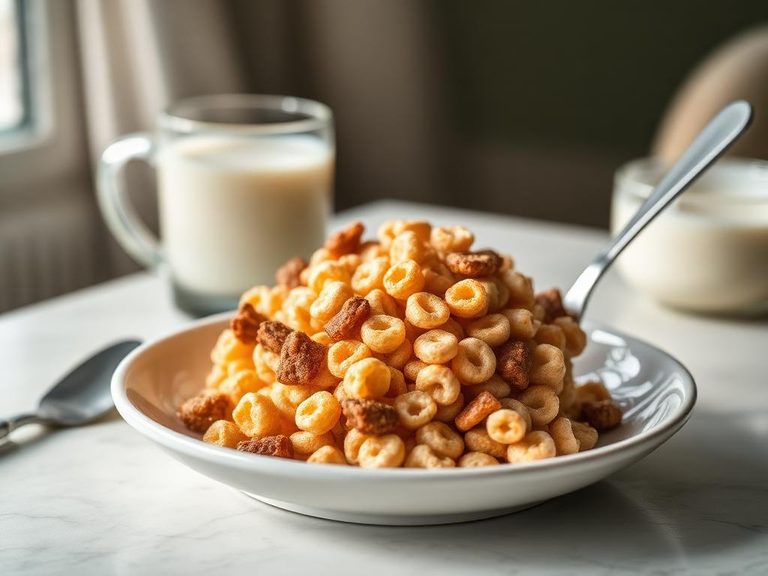
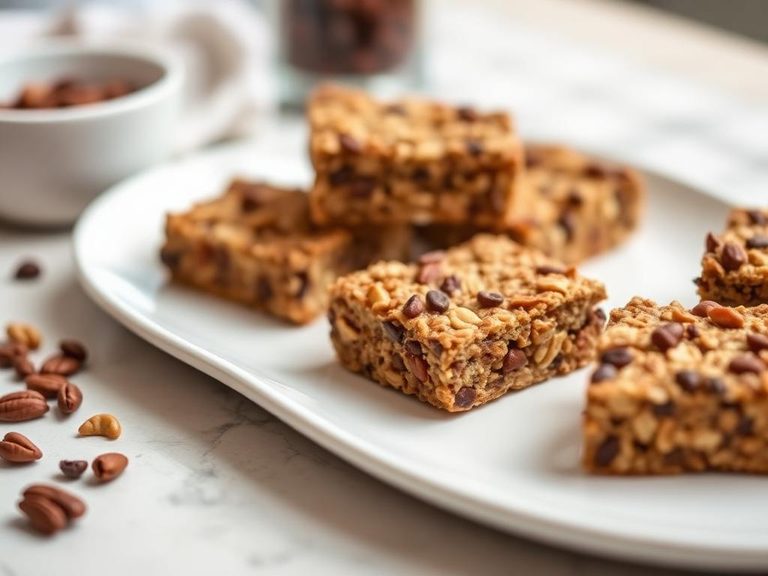
🌍 Where it's eaten
💡 Did you know?
The original Shredded Wheat was invented in 1892 by Henry Perky, a lawyer who, inspired by a meal of shredded wheat toast, believed a whole-grain cereal could be both nutritious and delicious.
Full nutrition (USDA data · scales with serving)
| Water | 6.1 g |
| Energy | 337 kcal |
| Energy | 1410 kj |
| Protein | 11.4 g |
| Total lipid (fat) | 2.0 g |
| Ash | 1.6 g |
| Carbohydrate, by difference | 79.0 g |
| Fiber, total dietary | 12.4 g |
| Total Sugars | 0.94 g |
| Sucrose | 0.55 g |
| Glucose | 0.00 g |
| Fructose | 0.00 g |
| Lactose | 0.00 g |
| Maltose | 0.00 g |
| Galactose | 0.00 g |
| Starch | 65.1 g |
| Calcium, Ca | 56.0 mg |
| Iron, Fe | 2.6 mg |
| Magnesium, Mg | 130 mg |
| Phosphorus, P | 375 mg |
| Potassium, K | 381 mg |
| Sodium, Na | 2.0 mg |
| Zinc, Zn | 2.9 mg |
| Copper, Cu | 0.38 mg |
| Manganese, Mn | 2.5 mg |
| Selenium, Se | 2.8 ug |
| Vitamin C, total ascorbic acid | 0.00 mg |
| Thiamin | 0.28 mg |
| Riboflavin | 0.09 mg |
| Niacin | 6.3 mg |
| Pantothenic acid | 0.31 mg |
| Vitamin B-6 | 0.17 mg |
| Folate, total | 43.0 ug |
| Folic acid | 0.00 ug |
| Folate, food | 43.0 ug |
| Folate, DFE | 43.0 ug |
| Choline, total | 23.1 mg |
| Betaine | 158 mg |
| Vitamin B-12 | 0.00 ug |
| Vitamin B-12, added | 0.00 ug |
| Vitamin A, RAE | 0.00 ug |
| Retinol | 0.00 ug |
| Carotene, beta | 0.00 ug |
| Carotene, alpha | 0.00 ug |
| Cryptoxanthin, beta | 0.00 ug |
| Vitamin A, IU | 0.00 iu |
| Lycopene | 0.00 ug |
| Lutein + zeaxanthin | 0.00 ug |
| Vitamin E (alpha-tocopherol) | 0.00 mg |
| Vitamin E, added | 0.00 mg |
| Vitamin D (D2 + D3), International Units | 0.00 iu |
| Vitamin D (D2 + D3) | 0.00 ug |
| Vitamin K (phylloquinone) | 1.4 ug |
| Vitamin K (Dihydrophylloquinone) | 0.00 ug |
| Alcohol, ethyl | 0.00 g |
| Caffeine | 0.00 mg |
| Theobromine | 0.00 mg |
Fat & fatty acid profile (per 100g)
| Fatty acids, total saturated | 0.41 g |
| SFA 4:0 | 0.00 g |
| SFA 6:0 | 0.00 g |
| SFA 8:0 | 0.00 g |
| SFA 10:0 | 0.00 g |
| SFA 12:0 | 0.00 g |
| SFA 14:0 | 0.00 g |
| SFA 15:0 | 0.00 g |
| SFA 16:0 | 0.39 g |
| SFA 17:0 | 0.00 g |
| SFA 18:0 | 0.02 g |
| SFA 20:0 | 0.00 g |
| SFA 22:0 | 0.00 g |
| SFA 24:0 | 0.00 g |
| Fatty acids, total monounsaturated | 0.29 g |
| MUFA 14:1 | 0.00 g |
| MUFA 15:1 | 0.00 g |
| MUFA 16:1 | 0.00 g |
| MUFA 17:1 | 0.00 g |
| MUFA 18:1 | 0.27 g |
| MUFA 20:1 | 0.02 g |
| MUFA 22:1 | 0.00 g |
| Fatty acids, total polyunsaturated | 1.2 g |
| PUFA 18:2 | 1.1 g |
| PUFA 18:3 | 0.08 g |
| PUFA 18:4 | 0.00 g |
| PUFA 20:2 n-6 c,c | 0.00 g |
| PUFA 20:3 | 0.00 g |
| PUFA 20:4 | 0.00 g |
| PUFA 20:5 n-3 (EPA) | 0.00 g |
| PUFA 22:5 n-3 (DPA) | 0.00 g |
| PUFA 22:6 n-3 (DHA) | 0.00 g |
| Fatty acids, total trans | 0.00 g |
| Cholesterol | 0.00 mg |
Amino acid profile (per 100g)
| Tryptophan | 0.14 g |
| Threonine | 0.31 g |
| Isoleucine | 0.34 g |
| Leucine | 0.68 g |
| Lysine | 0.32 g |
| Methionine | 0.17 g |
| Cystine | 0.24 g |
| Phenylalanine | 0.46 g |
| Tyrosine | 0.13 g |
| Valine | 0.45 g |
| Arginine | 0.45 g |
| Histidine | 0.23 g |
| Alanine | 0.39 g |
| Aspartic acid | 0.53 g |
| Glutamic acid | 3.0 g |
| Glycine | 0.43 g |
| Proline | 0.97 g |
| Serine | 0.49 g |
FAQ
Why is it called a 'big biscuit'?
It refers to the large, round, single-serving size of the cereal piece, which is significantly bigger than bite-sized cereals and is often called a 'biscuit' in British English.
How do I eat it without breaking my teeth?
Pour cold milk over it and let it soak for 2-3 minutes. The dense wheat strands will absorb the liquid and soften into a pleasantly chewy texture.
Is it gluten-free?
No. It is made entirely from whole-wheat flour and is a common source of gluten, making it unsuitable for those with celiac disease or gluten sensitivity.
Nutrient density (calculated · NRF9.3)
Nutrient Rich Foods index: beneficial nutrients (protein, fiber, vitamins, minerals) minus saturated fat, added sugar & sodium, per 100 kcal.
NRF9.3 index — Fulgoni, Keast & Drewnowski, 2009. Computed from USDA nutrients.
Weight-loss friendliness (composite index)
Energy density 3.37 kcal/g · 13% calories from protein · 12.4 g fiber · 0.9 g sugar per 100 g.
Composite of energy density (Rolls et al., 1999), protein & fiber satiety, minus sugar. A calculated heuristic — ranks satiety-per-calorie, not a clinical measure.
Dietary load (calculated from USDA values)
Potential renal acid load. Positive = acid-forming, negative = alkaline-forming.
Sodium-to-potassium ratio: 0.01 (lower is better — aim for ≤ 1)
Sodium:potassium per WHO potassium guidance. Computed from USDA nutrients.