

Beverages, Meal supplement drink, canned, peanut flavor
Whole food · Beverages

Photo: Wikipedia
This is a creamy, canned, ready-to-drink meal supplement with a distinct roasted peanut flavor and a smooth, slightly thick texture. It's a calorie-dense, portable option designed for quick energy and nutritional support. The nutrition profile is balanced, with a notable 3.5g of protein and a significant 14.74g of carbohydrates per 100g.
Calorie split: 14% protein · 59% carbs · 27% fat
↓ Full nutrition💚 Why it's loved
People love it for its comforting, nostalgic roasted peanut taste and the sheer convenience of having a nutritious drink ready to go. It's a familiar, savory-sweet flavor profile that many find satisfying and energizing.
⚠️ Watch-outs & how to enjoy it better
As a canned, processed supplement, it may contain added sodium and stabilizers. Its high carbohydrate content could cause blood-sugar spikes if consumed alone, and peanuts are a common allergen. To counteract this, pair it with a source of fiber or fat (like a handful of nuts) and practice portion control, using it as part of a varied diet rather than a sole nutrition source.
Key benefits
- Provides quick, calorie-dense energy for busy schedules.
- Offers a convenient source of plant-based protein from peanuts.
- Shelf-stable and portable, requiring no preparation.
- Can serve as a supplemental snack or light meal replacement.
🍽️ Popular dishes
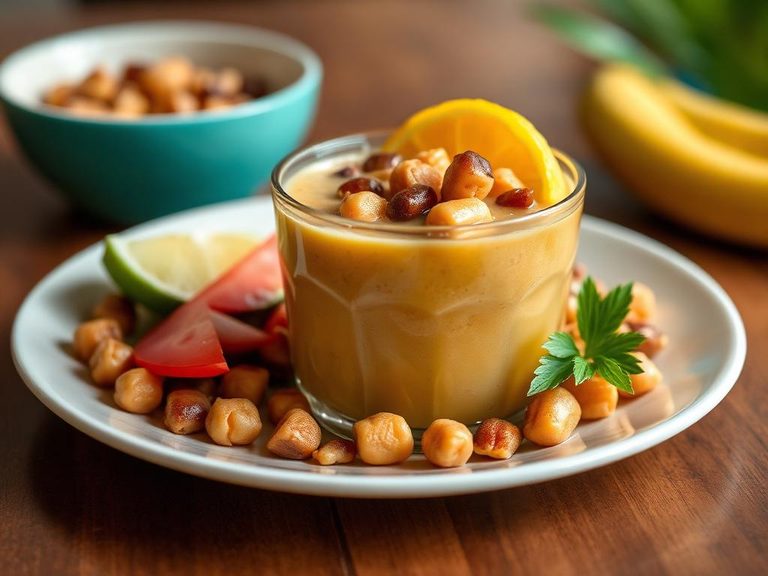

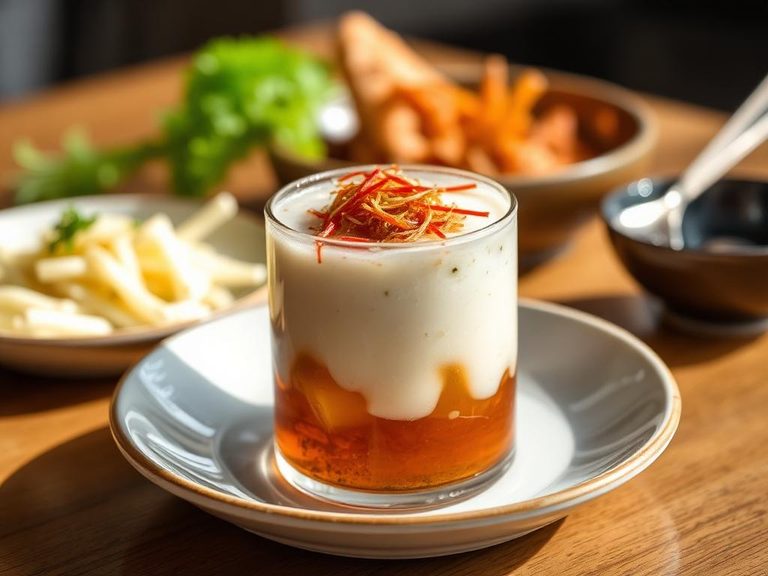
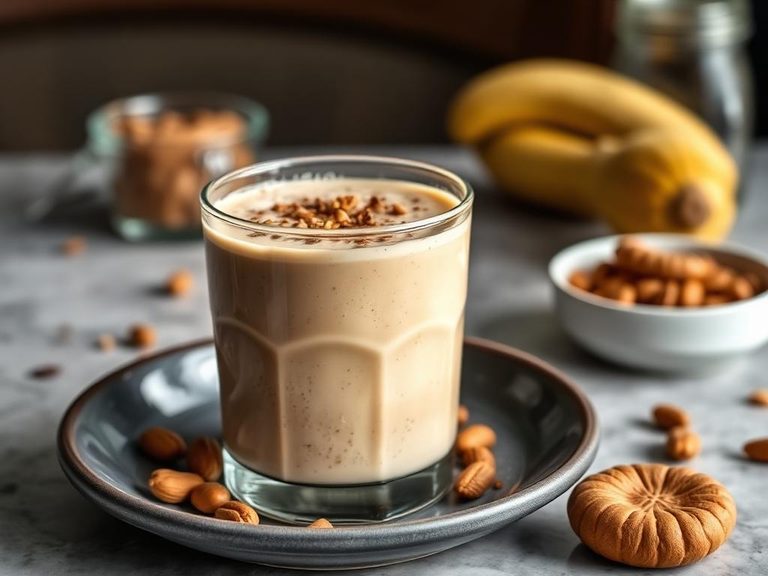
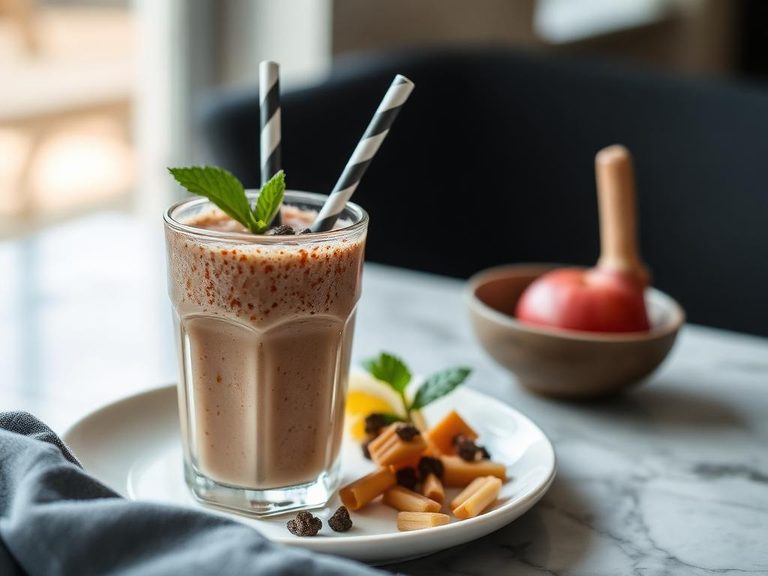
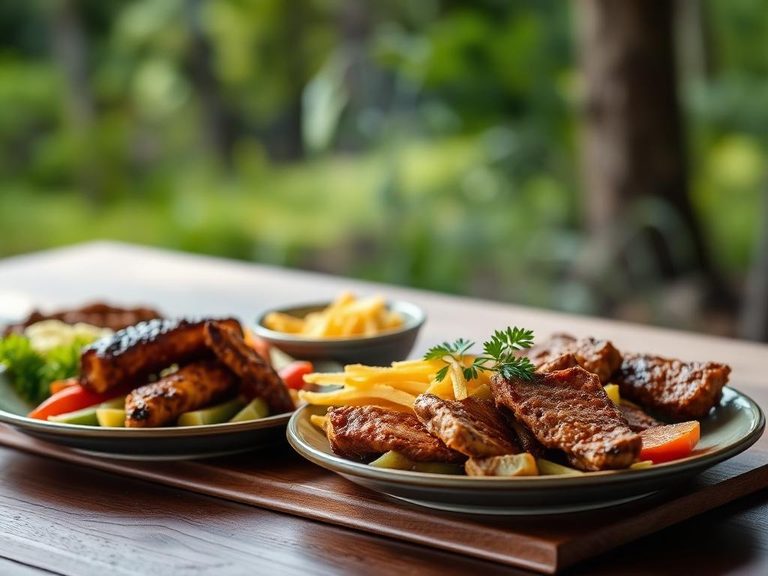
🌍 Where it's eaten
💡 Did you know?
Peanuts aren't nuts at all; they are legumes that grow underground, which is why this drink's flavor is more akin to a savory bean paste than a tree nut milk.
Full nutrition (USDA data · scales with serving)
| Water | 77.8 g |
| Energy | 101 kcal |
| Energy | 421 kj |
| Protein | 3.5 g |
| Total lipid (fat) | 3.1 g |
| Ash | 0.90 g |
| Carbohydrate, by difference | 14.7 g |
| Sucrose | 6.1 g |
| Glucose | 0.37 g |
| Fructose | 0.00 g |
| Lactose | 3.4 g |
| Maltose | 0.00 g |
| Starch | 1.4 g |
| Calcium, Ca | 110 mg |
| Iron, Fe | 2.2 mg |
| Magnesium, Mg | 16.0 mg |
| Phosphorus, P | 110 mg |
| Potassium, K | 160 mg |
| Sodium, Na | 54.0 mg |
| Zinc, Zn | 0.42 mg |
| Copper, Cu | 0.03 mg |
| Manganese, Mn | 0.07 mg |
| Vitamin C, total ascorbic acid | 0.70 mg |
| Thiamin | 0.43 mg |
| Riboflavin | 1.3 mg |
| Niacin | 6.6 mg |
| Pantothenic acid | 1.7 mg |
| Vitamin B-6 | 0.54 mg |
| Vitamin B-12 | 0.53 ug |
| Vitamin E (alpha-tocopherol) | 0.09 mg |
| Tocopherol, beta | 0.03 mg |
| Tocopherol, gamma | 0.52 mg |
| Tocopherol, delta | 0.17 mg |
| Tocotrienol, alpha | 0.00 mg |
| Tocotrienol, beta | 0.00 mg |
| Tocotrienol, gamma | 0.04 mg |
| Tocotrienol, delta | 0.00 mg |
Fat & fatty acid profile (per 100g)
| Fatty acids, total saturated | 0.57 g |
| SFA 4:0 | 0.00 g |
| SFA 6:0 | 0.00 g |
| SFA 8:0 | 0.00 g |
| SFA 10:0 | 0.01 g |
| SFA 12:0 | 0.00 g |
| SFA 14:0 | 0.01 g |
| SFA 15:0 | 0.00 g |
| SFA 16:0 | 0.25 g |
| SFA 17:0 | 0.00 g |
| SFA 18:0 | 0.20 g |
| SFA 20:0 | 0.03 g |
| SFA 22:0 | 0.05 g |
| SFA 24:0 | 0.02 g |
| Fatty acids, total monounsaturated | 1.9 g |
| MUFA 14:1 | 0.00 g |
| MUFA 15:1 | 0.00 g |
| MUFA 16:1 | 0.00 g |
| MUFA 16:1 c | 0.00 g |
| MUFA 17:1 | 0.00 g |
| MUFA 18:1 | 1.9 g |
| MUFA 18:1 c | 1.5 g |
| MUFA 20:1 | 0.02 g |
| MUFA 22:1 | 0.00 g |
| MUFA 22:1 c | 0.00 g |
| MUFA 24:1 c | 0.00 g |
| Fatty acids, total polyunsaturated | 0.18 g |
| PUFA 18:2 | 0.17 g |
| PUFA 18:2 n-6 c,c | 0.13 g |
| PUFA 18:2 CLAs | 0.00 g |
| PUFA 18:3 | 0.01 g |
| PUFA 18:3 n-3 c,c,c (ALA) | 0.01 g |
| PUFA 18:3 n-6 c,c,c | 0.00 g |
| PUFA 18:4 | 0.00 g |
| PUFA 20:2 n-6 c,c | 0.00 g |
| PUFA 20:3 | 0.00 g |
| PUFA 20:3 n-3 | 0.00 g |
| PUFA 20:3 n-6 | 0.00 g |
| PUFA 20:4 | 0.00 g |
| PUFA 20:5 n-3 (EPA) | 0.00 g |
| PUFA 22:4 | 0.00 g |
| PUFA 22:5 n-3 (DPA) | 0.00 g |
| PUFA 22:6 n-3 (DHA) | 0.00 g |
| Fatty acids, total trans | 0.41 g |
| Fatty acids, total trans-monoenoic | 0.37 g |
| TFA 16:1 t | 0.00 g |
| TFA 18:1 t | 0.37 g |
| TFA 22:1 t | 0.00 g |
| TFA 18:2 t not further defined | 0.04 g |
| Fatty acids, total trans-polyenoic | 0.04 g |
Amino acid profile (per 100g)
| Tryptophan | 0.04 g |
| Threonine | 0.11 g |
| Isoleucine | 0.14 g |
| Leucine | 0.34 g |
| Lysine | 0.23 g |
| Methionine | 0.10 g |
| Cystine | 0.01 g |
| Phenylalanine | 0.18 g |
| Tyrosine | 0.15 g |
| Valine | 0.20 g |
| Arginine | 0.12 g |
| Histidine | 0.06 g |
| Alanine | 0.14 g |
| Aspartic acid | 0.33 g |
| Glutamic acid | 0.78 g |
| Glycine | 0.10 g |
| Proline | 0.42 g |
| Serine | 0.20 g |
| Hydroxyproline | 0.00 g |
FAQ
Is this a complete meal replacement?
No, it's typically classified as a meal supplement or snack. It lacks sufficient fiber and micronutrients to replace a full, balanced meal long-term.
Why is there 0g of sugar listed?
The nutrition data likely refers to 'added sugars.' The drink's carbohydrate content comes from natural peanut sugars and other carbohydrate sources like maltodextrin or corn syrup solids.
Can I use this in cooking or baking?
Yes, its peanut flavor makes it a great liquid base for smoothies, oatmeal, pancake batter, or even as a creamy addition to savory sauces for a protein boost.
Nutrient density (calculated · NRF9.3)
Nutrient Rich Foods index: beneficial nutrients (protein, fiber, vitamins, minerals) minus saturated fat, added sugar & sodium, per 100 kcal.
NRF9.3 index — Fulgoni, Keast & Drewnowski, 2009. Computed from USDA nutrients.
Weight-loss friendliness (composite index)
Energy density 1.01 kcal/g · 14% calories from protein · 0.0 g fiber · 0.0 g sugar per 100 g.
Composite of energy density (Rolls et al., 1999), protein & fiber satiety, minus sugar. A calculated heuristic — ranks satiety-per-calorie, not a clinical measure.
Dietary load (calculated from USDA values)
Potential renal acid load. Positive = acid-forming, negative = alkaline-forming.
Sodium-to-potassium ratio: 0.34 (lower is better — aim for ≤ 1)
Sodium:potassium per WHO potassium guidance. Computed from USDA nutrients.