

Beverages, coffee, brewed, espresso, restaurant-prepared
Whole food · Beverages

Photo: Wikipedia
Beverages, coffee, brewed, espresso, restaurant-prepared is a concentrated, intense shot of coffee brewed by forcing hot water through finely-ground beans under high pressure. It delivers a bold, robust flavor with a rich, slightly viscous texture and a signature layer of golden-brown crema on top. Nutritionally, it is extremely low in calories, providing just 9 kcal per 100g, with minimal protein and carbs and negligible fat, sugar, or fiber.
Calorie split: 5% protein · 76% carbs · 18% fat
↓ Full nutrition💚 Why it's loved
People love espresso for its intense, concentrated flavor profile and the ritualistic, almost ceremonial experience of its preparation. It serves as the versatile base for countless coffee drinks, from lattes to cappuccinos, and is deeply embedded in social and cultural traditions worldwide.
⚠️ Watch-outs & how to enjoy it better
Espresso's high caffeine concentration can cause jitters, anxiety, or sleep disruption in sensitive individuals. To counteract this, opt for a smaller portion (a single shot), avoid consuming it late in the day, or pair it with a small amount of fat or protein (like a piece of cheese or nuts) to slow caffeine absorption. Additionally, its natural acidity may irritate some people's stomachs; consuming it with food or choosing a lower-acid bean variety can help mitigate this.
Key benefits
- Extremely low in calories, supporting weight management goals
- Rich in antioxidants, particularly chlorogenic acids, which may help reduce inflammation
- Provides a quick, potent caffeine boost for enhanced alertness and focus
- Contains zero sugar and no fat in its pure form
- May support short-term metabolic rate and physical performance
🍽️ Popular dishes

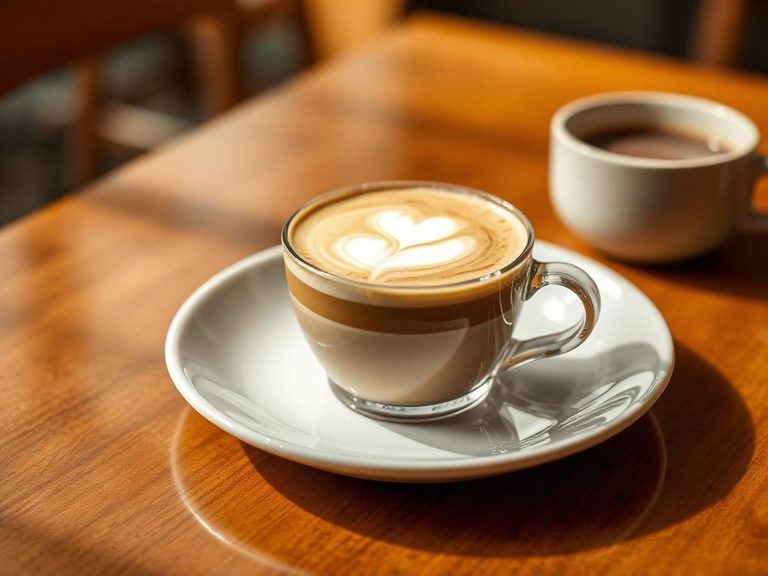
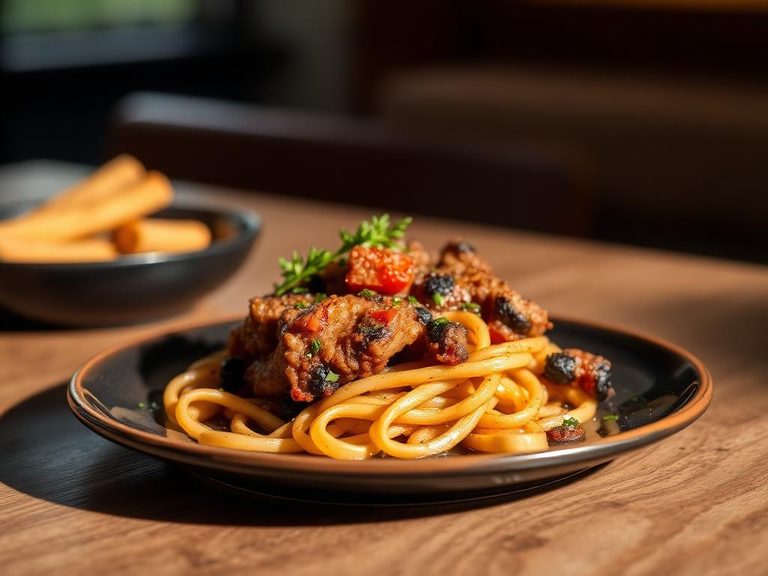


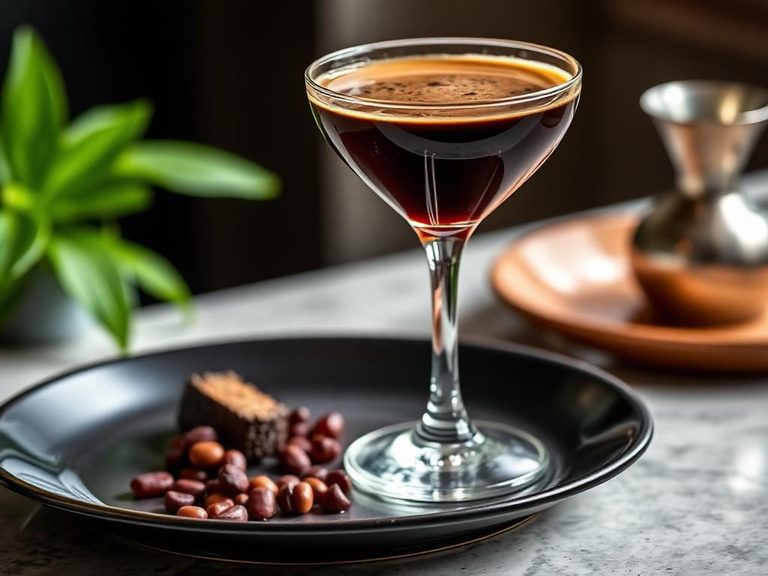
🌍 Where it's eaten
💡 Did you know?
The term 'espresso' is often mistakenly thought to mean 'express' (fast), but it actually derives from the Italian word for 'expressed' or 'forced out,' referring to the pressure used in the brewing process.
Full nutrition (USDA data · scales with serving)
| Water | 97.8 g |
| Energy | 9.0 kcal |
| Energy | 36.0 kj |
| Protein | 0.12 g |
| Total lipid (fat) | 0.18 g |
| Ash | 0.23 g |
| Carbohydrate, by difference | 1.7 g |
| Fiber, total dietary | 0.00 g |
| Total Sugars | 0.00 g |
| Calcium, Ca | 2.0 mg |
| Iron, Fe | 0.13 mg |
| Magnesium, Mg | 80.0 mg |
| Phosphorus, P | 7.0 mg |
| Potassium, K | 115 mg |
| Sodium, Na | 14.0 mg |
| Zinc, Zn | 0.05 mg |
| Copper, Cu | 0.05 mg |
| Manganese, Mn | 0.05 mg |
| Selenium, Se | 0.00 ug |
| Vitamin C, total ascorbic acid | 0.20 mg |
| Thiamin | 0.00 mg |
| Riboflavin | 0.18 mg |
| Niacin | 5.2 mg |
| Pantothenic acid | 0.03 mg |
| Vitamin B-6 | 0.00 mg |
| Folate, total | 1.0 ug |
| Folic acid | 0.00 ug |
| Folate, food | 1.0 ug |
| Folate, DFE | 1.0 ug |
| Choline, total | 2.6 mg |
| Vitamin B-12 | 0.00 ug |
| Vitamin B-12, added | 0.00 ug |
| Vitamin A, RAE | 0.00 ug |
| Retinol | 0.00 ug |
| Carotene, beta | 0.00 ug |
| Carotene, alpha | 0.00 ug |
| Cryptoxanthin, beta | 0.00 ug |
| Vitamin A, IU | 0.00 iu |
| Lycopene | 0.00 ug |
| Lutein + zeaxanthin | 0.00 ug |
| Vitamin E (alpha-tocopherol) | 0.01 mg |
| Vitamin E, added | 0.00 mg |
| Tocopherol, beta | 0.00 mg |
| Tocopherol, gamma | 0.01 mg |
| Tocopherol, delta | 0.00 mg |
| Vitamin D (D2 + D3), International Units | 0.00 iu |
| Vitamin D (D2 + D3) | 0.00 ug |
| Vitamin K (phylloquinone) | 0.10 ug |
| Alcohol, ethyl | 0.00 g |
| Caffeine | 212 mg |
| Theobromine | 0.00 mg |
Fat & fatty acid profile (per 100g)
| Fatty acids, total saturated | 0.09 g |
| SFA 4:0 | 0.00 g |
| SFA 6:0 | 0.00 g |
| SFA 8:0 | 0.00 g |
| SFA 10:0 | 0.00 g |
| SFA 12:0 | 0.00 g |
| SFA 13:0 | 0.00 g |
| SFA 14:0 | 0.00 g |
| SFA 15:0 | 0.00 g |
| SFA 16:0 | 0.05 g |
| SFA 17:0 | 0.00 g |
| SFA 18:0 | 0.00 g |
| SFA 20:0 | 0.00 g |
| SFA 22:0 | 0.00 g |
| SFA 24:0 | 0.00 g |
| Fatty acids, total monounsaturated | 0.00 g |
| MUFA 14:1 | 0.00 g |
| MUFA 15:1 | 0.00 g |
| MUFA 16:1 | 0.00 g |
| MUFA 17:1 | 0.00 g |
| MUFA 18:1 | 0.00 g |
| MUFA 18:1 c | 0.01 g |
| MUFA 20:1 | 0.00 g |
| MUFA 22:1 | 0.00 g |
| Fatty acids, total polyunsaturated | 0.09 g |
| PUFA 18:2 | 0.09 g |
| PUFA 18:3 | 0.00 g |
| PUFA 18:3 n-3 c,c,c (ALA) | 0.00 g |
| PUFA 18:3 n-6 c,c,c | 0.00 g |
| PUFA 18:4 | 0.00 g |
| PUFA 20:2 n-6 c,c | 0.00 g |
| PUFA 20:3 | 0.00 g |
| PUFA 20:4 | 0.00 g |
| PUFA 20:5 n-3 (EPA) | 0.00 g |
| PUFA 22:5 n-3 (DPA) | 0.00 g |
| PUFA 22:6 n-3 (DHA) | 0.00 g |
| Fatty acids, total trans | 0.00 g |
| Fatty acids, total trans-monoenoic | 0.00 g |
| TFA 18:1 t | 0.00 g |
| Cholesterol | 0.00 mg |
Amino acid profile (per 100g)
Estimated from Beverages, carbonated, tonic water — USDA does not publish this profile for Beverages.
| Tryptophan | 0.00 g |
| Threonine | 0.00 g |
| Isoleucine | 0.00 g |
| Leucine | 0.00 g |
| Lysine | 0.00 g |
| Methionine | 0.00 g |
| Cystine | 0.00 g |
| Phenylalanine | 0.00 g |
| Tyrosine | 0.00 g |
| Valine | 0.00 g |
| Arginine | 0.00 g |
| Histidine | 0.00 g |
| Alanine | 0.00 g |
| Aspartic acid | 0.00 g |
| Glutamic acid | 0.00 g |
| Glycine | 0.00 g |
| Proline | 0.00 g |
| Serine | 0.00 g |
FAQ
How does espresso differ from regular brewed coffee?
Espresso is made by forcing hot water through finely-ground beans under high pressure, resulting in a concentrated, small-volume shot with a rich crema. Regular brewed coffee uses gravity or immersion with coarser grounds and more water, yielding a larger, less intense beverage.
Is espresso higher in caffeine than regular coffee?
Per ounce, espresso has more caffeine than regular coffee. However, a typical single shot (1 oz) contains about 63 mg of caffeine, while a standard 8 oz cup of brewed coffee has about 95 mg. So, a full cup of brewed coffee usually has more total caffeine than a single espresso shot.
Can I make espresso at home without a machine?
While traditional espresso requires a high-pressure machine, you can approximate it with a Moka pot (stovetop espresso maker) or an AeroPress with a fine grind and short brew time. These methods produce a strong, concentrated coffee but lack the true crema and pressure of a commercial espresso machine.
Nutrient density (calculated · NRF9.3)
Nutrient Rich Foods index: beneficial nutrients (protein, fiber, vitamins, minerals) minus saturated fat, added sugar & sodium, per 100 kcal.
NRF9.3 index — Fulgoni, Keast & Drewnowski, 2009. Computed from USDA nutrients.
Weight-loss friendliness (composite index)
Energy density 0.09 kcal/g · 5% calories from protein · 0.0 g fiber · 0.0 g sugar per 100 g.
Composite of energy density (Rolls et al., 1999), protein & fiber satiety, minus sugar. A calculated heuristic — ranks satiety-per-calorie, not a clinical measure.
Dietary load (calculated from USDA values)
Potential renal acid load. Positive = acid-forming, negative = alkaline-forming.
Sodium-to-potassium ratio: 0.12 (lower is better — aim for ≤ 1)
Sodium:potassium per WHO potassium guidance. Computed from USDA nutrients.